
Average cost for lawn irrigation system installations typically range from $1,800 to $5,200 for a standard residential property, with most homeowners spending between $2,200 and $4,600 depending on yard size and system complexity.
| System Type | Cost Range (¼ acre) | Best For |
|---|---|---|
| Above-ground | $425-$2,000 | DIY, temporary solutions |
| In-ground | $1,740-$3,454 | Permanent, aesthetic appearance |
| Drip irrigation | $450-$1,500 | Garden beds, water conservation |
Have you ever looked at your lawn during a hot summer day and wondered how to keep it lush and green without spending hours with a hose? A properly installed irrigation system might be the answer, but understanding the costs involved is crucial before making this investment.
Lawn irrigation systems do more than just water your grass. They save time, conserve water, and can significantly improve your property’s curb appeal. But with so many options and factors affecting price, figuring out what you’ll actually pay can feel overwhelming.
I’m Scott McLeod, owner of McLeod Landscaping, and with over three decades of experience installing and maintaining irrigation systems, I’ve helped hundreds of property owners steer the average cost for lawn irrigation system installations throughout the Merrimack Valley area.
Common average cost for lawn irrigation system vocab:
Looking ahead to 2025, it’s helpful to understand what you might expect to pay for keeping your lawn lush and green. The average cost for lawn irrigation system installation nationwide sits at approximately $2,540, with most homeowners investing between $1,695 and $3,530 for a typical quarter-acre property. Of course, your actual costs may vary significantly depending on your specific needs and property characteristics.
For larger properties or those seeking premium systems with all the bells and whistles, costs can climb quickly. High-end installations with smart technology and extensive coverage can exceed $10,000, particularly for properties spanning an acre or more. When irrigation professionals calculate your quote, they typically think in terms of square footage, charging between $0.20 and $1 per square foot. For acreage calculations, expect rates from $6,000 to $10,000 per acre.
Please note that all pricing information presented here is based on internet research data and industry averages, not specific quotes from McLeod Landscaping.
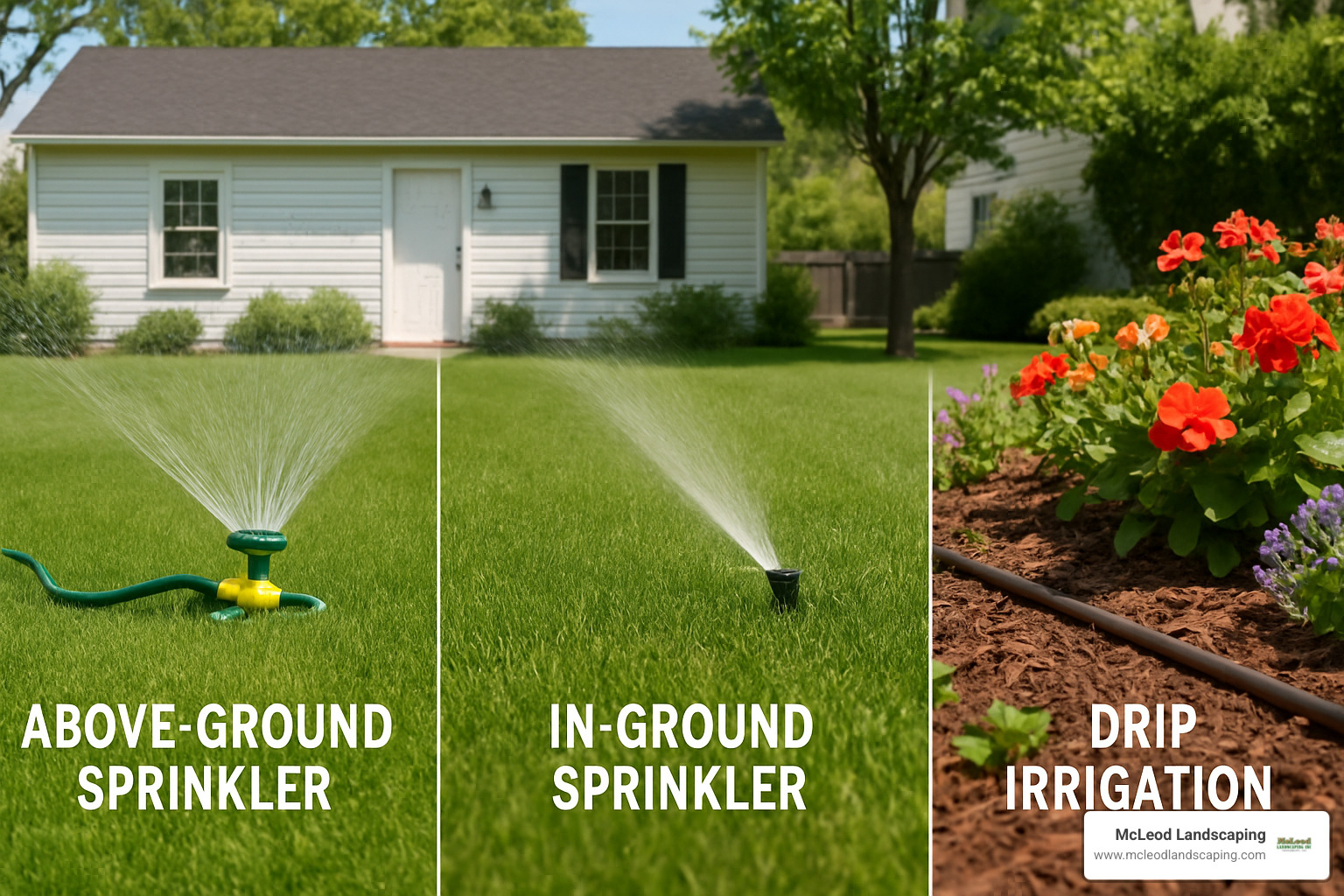
When considering your options, understanding the three main system types and their cost differences can help you make an informed decision:
| System Type | Average Cost (¼ acre) | Pros | Cons |
|---|---|---|---|
| Above-ground | $425-$2,000 | • Lower initial cost • Easy DIY installation • No trenching required |
• Less aesthetic appeal • Tripping hazard • Shorter lifespan |
| In-ground | $1,740-$3,454 | • Invisible when not in use • Increases property value • Longer lifespan (20+ years) |
• Higher initial cost • Professional installation recommended • Requires trenching |
| Drip irrigation | $450-$1,500 | • Most water-efficient • Targeted watering • Reduces weed growth |
• Best for gardens, not lawns • More maintenance • Limited coverage area |
Here’s something many homeowners find encouraging: the cost per square foot typically decreases as your yard size increases. This “economy of scale” happens because certain fixed costs (like controllers and backflow preventers) are spread across a larger area. In simple terms, you might pay proportionally less for irrigating a half-acre than you would for a quarter-acre.
I’ve found that many of my clients appreciate understanding these cost factors upfront, as it helps them budget appropriately for their dream lawn. Whether you’re considering a simple system or something more elaborate, knowing these price ranges can help set realistic expectations.
Average Lawn Sprinkler System Cost
When planning your irrigation budget, three primary factors will determine your costs: property size, number of zones required, and the type of system you choose. Let’s break down each factor to help you estimate your investment more accurately.
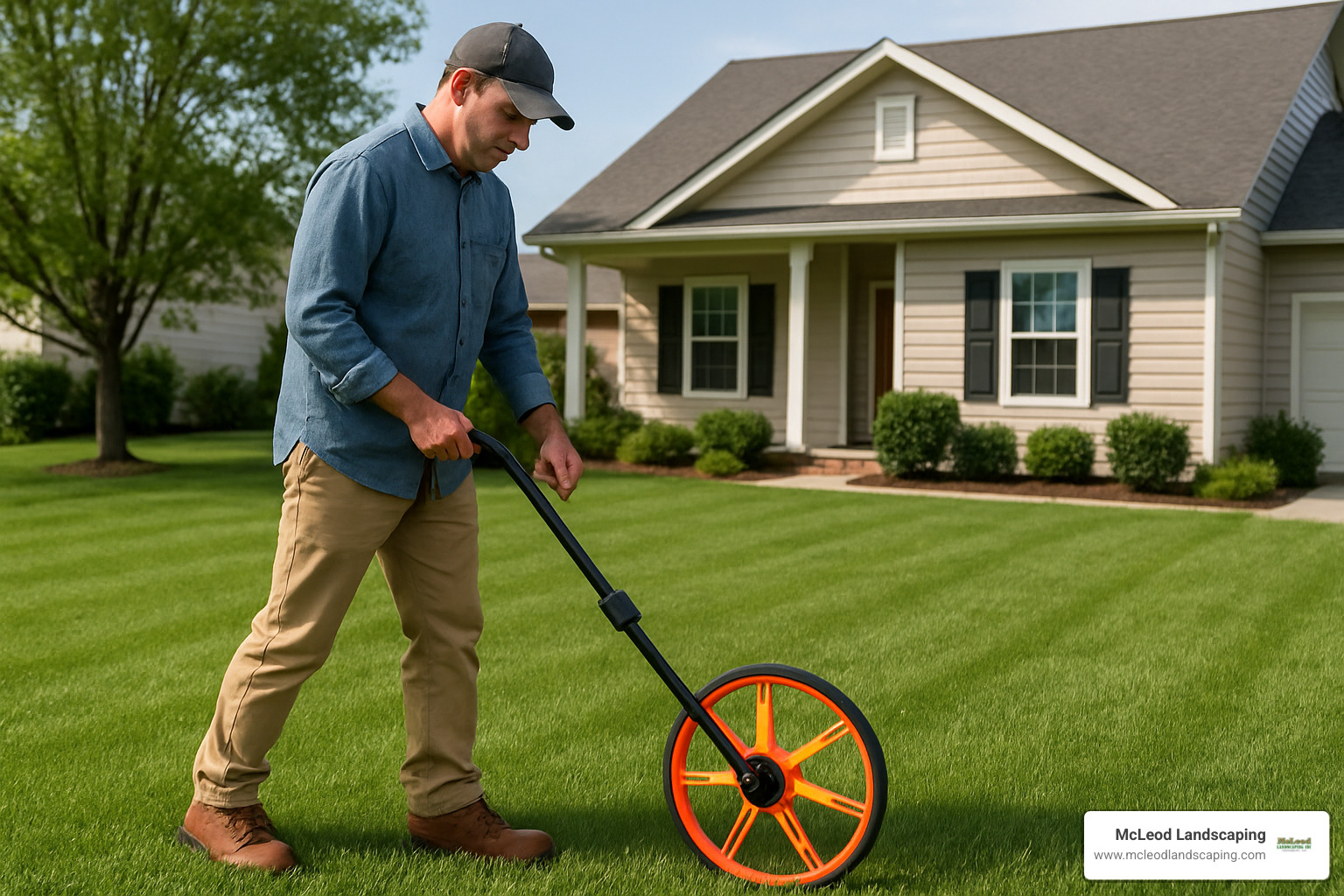
The size of your lawn is perhaps the most significant cost factor in your irrigation journey. Think of it like buying clothes – the more fabric needed, the higher the price tag! For a small lawn (5,000 sq ft), you’re typically looking at $1,400–$3,000 for a complete system. This jumps to $2,200–$4,700 for a medium lawn (10,000 sq ft), which happens to be about the size of an average American yard (roughly a quarter-acre).
If you’ve got more substantial green space to manage, a large lawn (20,000 sq ft) will generally run between $4,100–$7,800, while an extra-large lawn (40,000 sq ft) might set you back $7,200–$12,600.
Here in the Merrimack Valley area, including towns like Andover, Billerica, and Chelmsford, most of our residential clients fall into the small to medium range. The good news? The cost per square foot actually decreases as your yard size increases – a rare case where going bigger offers better value! This happens because certain fixed costs (like controllers and backflow preventers) get spread across more square footage.
Think of irrigation zones as the rooms in your house – each with its own purpose and needs. Your average cost for lawn irrigation system will climb with each zone you add, but for good reason.
The first zone typically costs between $550–$1,000, with each additional zone running in the same range. A standard quarter-acre property usually requires 3-5 zones for proper coverage, bringing total costs to around $2,900–$5,300 for a five-zone system.
But why bother with multiple zones? Well, your property isn’t uniform. Some areas bask in full sun while others enjoy shade. Your vegetable garden has different water needs than your Kentucky bluegrass. And most importantly, your home’s water pressure simply can’t handle running every sprinkler simultaneously.
When I’m designing systems for clients in Massachusetts, I pay special attention to slopes (to prevent wasteful runoff), sun exposure variations, and different plant types. A thoughtfully zoned system doesn’t just water better – it saves money long-term by using water more efficiently.
Your irrigation system type is like choosing between a luxury sedan, a pickup truck, or a hybrid – each has its place depending on your needs and budget.
In-ground systems ($2,000–$6,500 for average yards) are the gold standard for most homeowners. Like a well-custom suit, they offer clean lines and a professional appearance. The pipes hide underground while sprinkler heads pop up only when in use, then disappear back into the lawn. They’re the most popular choice for established properties where aesthetics matter, and they typically last 20+ years with proper maintenance.
For the budget-conscious or those in temporary situations, above-ground systems ($425–$2,000) provide a practical alternative. These visible hoses and portable sprinklers lack the polish of in-ground systems but get the job done without the commitment of trenching and permanent installation.
The water-conservation champions are drip irrigation systems ($450–$1,500 per zone), which deliver moisture directly to plant roots through small tubes with emitters. They’re perfect for garden beds and can reduce water usage by up to 65% compared to traditional sprinklers. Many of my clients opt for hybrid approaches – in-ground sprinklers for lawns and drip irrigation for flower beds and vegetable gardens.
Our New England climate, with its unpredictable rainfall patterns, benefits particularly from systems that can adapt to both summer heat waves and spring downpours. The right system for you ultimately depends on your property’s specific characteristics, your aesthetic preferences, and of course, your budget.
Cost to Install Lawn Sprinkler System
Understanding the full picture of irrigation costs means looking beyond just the basic installation. Several factors can significantly impact your total investment, from installation challenges to smart technology and ongoing maintenance.

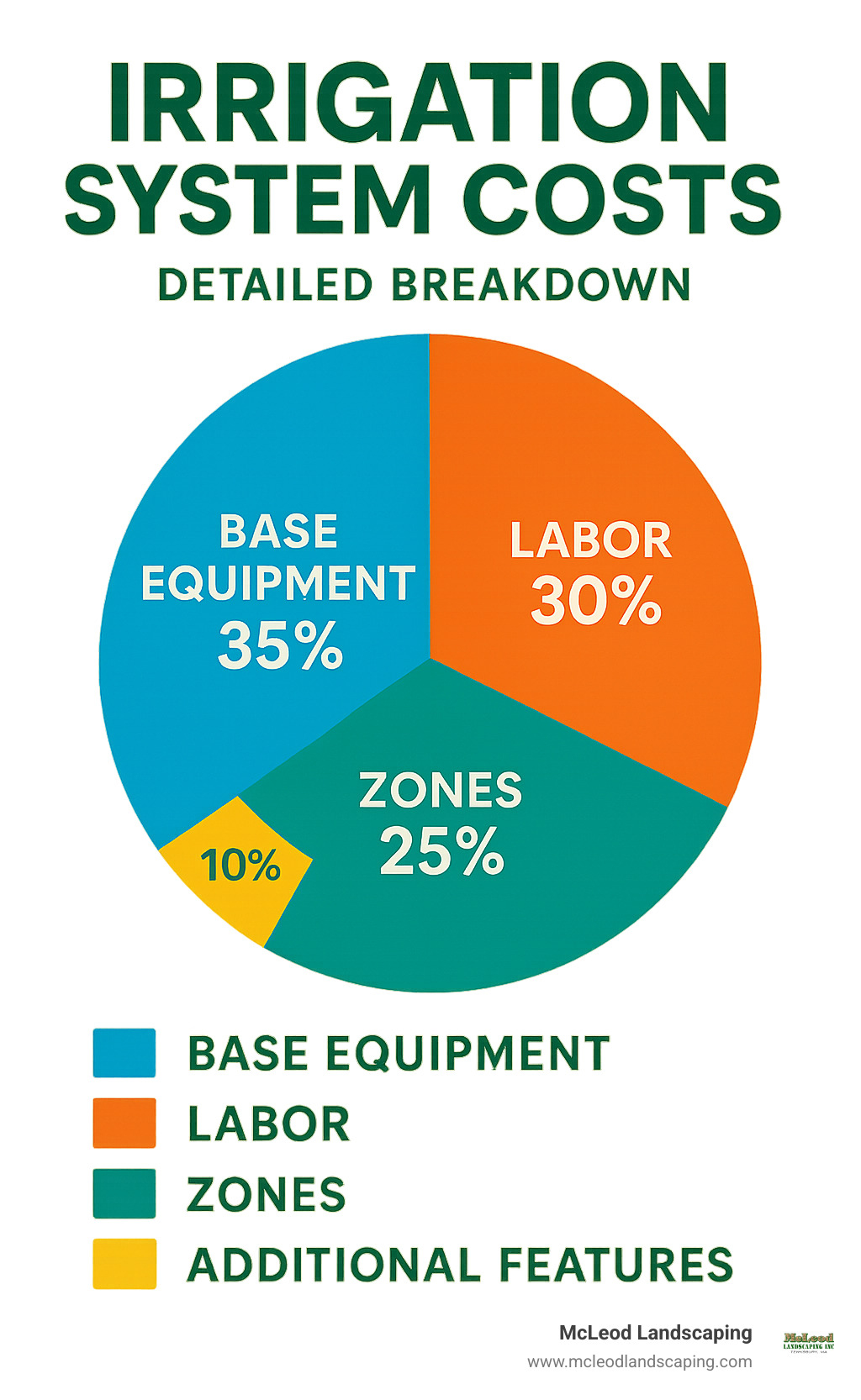
When budgeting for your irrigation system, labor typically accounts for about 60% of your total project cost. It’s the biggest slice of the pie! Professional installers generally charge between $50 and $100 per hour, with most residential systems requiring 8-16 hours for a proper in-ground installation.
Trenching is where things can get interesting (and sometimes expensive). Expect to pay between $4 and $12 per linear foot, with costs climbing if your soil is particularly rocky or challenging. For a typical quarter-acre lawn here in Massachusetts, trenching alone might run you $800-$2,000.
Don’t forget about permits! This is something many homeowners don’t think about until the last minute. Most municipalities in our area require permits for irrigation system installation, especially when connecting to municipal water supplies. Permit fees typically range from $35 to $200, depending on where you live. In conservation-minded towns like Concord and Carlisle, you might face additional water conservation requirements that affect your system design.
And then there’s the backflow preventer – not the most exciting component, but absolutely essential. These devices, which prevent irrigation water from contaminating your drinking water, add another $250 to $550 to the project cost and are required by most local building codes.
I love talking about smart irrigation technology because it’s one area where spending more upfront can actually save you money in the long run. The technology has improved dramatically in recent years!
Smart Wi-Fi controllers ($100–$300) have transformed how we manage irrigation systems. You can adjust your watering schedule from your phone while sitting on your couch, or even when you’re on vacation. Better yet, many controllers can automatically adjust based on weather forecasts – no more sprinklers running during rainstorms!
Rain sensors ($25–$75) are a simple but effective addition that prevents your system from watering during or after rainfall. Soil moisture sensors ($30–$350) take this a step further by monitoring actual soil conditions to prevent overwatering. For those concerned about leaks, flow sensors ($100–$200) can detect problems and automatically shut down the system to prevent water waste.
These technologies can reduce water usage by up to 30%, according to EPA WaterSense data. For many of our clients in the Merrimack Valley, this translates to water bill savings of $50-$100 per month during peak summer watering season. Some Massachusetts communities even offer rebates for water-efficient irrigation equipment, making these upgrades even more attractive.
Your irrigation system is like a car – it needs regular maintenance to perform at its best. Here in New England, our seasonal climate creates specific maintenance needs that homeowners should budget for:
Annual maintenance packages typically run $100–$300, covering spring startup, mid-season check, and critical winterization. When repairs are needed, expect to pay around $130–$360 for typical fixes like replacing broken heads or fixing minor leaks.
Winterization is absolutely crucial in our Massachusetts climate, costing between $60–$120. I can’t stress this enough – skipping this step can lead to thousands in freeze damage repairs! Spring startup ($75–$160) is equally important to ensure your system runs efficiently when the growing season begins.
With proper care, a quality in-ground system can last 20+ years, though you’ll likely need to replace sprinkler heads every 5-10 years and controllers every 7-10 years as technology improves.
For our neighbors in Tewksbury, Lowell, and surrounding communities, I always emphasize the importance of proper seasonal maintenance. Our freezing winters and variable springs make professional servicing particularly valuable for system longevity.
Scientific research on outdoor water use
The Importance of Proper Irrigation: Tips for Efficient Watering
Homeowners considering irrigation systems often share similar concerns. Let’s address some of the most common questions I hear during consultations with clients throughout the Merrimack Valley.
Yes, a professionally installed irrigation system definitely improves your property’s value. The National Association of Realtors reports that homeowners typically recover about 83% of their average cost for lawn irrigation system investment when selling their home. But the benefits extend beyond just dollars and cents.
That consistently lush, green lawn creates immediate curb appeal that makes potential buyers fall in love with your property before they even step inside. I’ve seen this in competitive markets like Burlington and Wilmington, where homes with beautiful, well-maintained landscaping often receive stronger offers and sell more quickly than comparable properties with lackluster yards.
As one client told me after selling her Andover home: “The irrigation system paid for itself twice over – first in enjoyment while we lived here, and then in the higher sale price we received.”
This is perhaps the most common concern I hear. The truth is, your water bill impact depends on several factors – your current watering habits, local water rates, lawn size, and most importantly, the efficiency of your system.
Most homeowners see an increase of $50-$100 monthly during peak summer watering periods. However, with today’s smart irrigation technology, this increase can be substantially minimized. Rain sensors, soil moisture sensors, and smart controllers can reduce water consumption by 30% or more compared to traditional timer-based systems.
Interestingly, some of our clients have actually reported lower overall water bills after installation. How? They were previously hand-watering inefficiently, often overwatering certain areas while neglecting others. A properly designed system delivers precisely the right amount of water exactly where it’s needed.
One Chelmsford homeowner shared: “I was shocked when my July water bill came in lower than the previous year, even with my new irrigation system. The smart controller really does make a difference.”
While DIY installation of an above-ground system can save on initial labor costs, the long-term value equation typically favors professional installation, especially for in-ground systems.
Professional irrigation designers bring crucial expertise to your project. They carefully calculate precise water coverage patterns, pressure requirements, and optimal zone configurations – technical details that dramatically impact system performance. They ensure proper backflow prevention installation (required by code) and provide valuable warranties on both parts and labor.
What might take a homeowner several weekends (and numerous trips to the hardware store) can be completed by professionals in just 1-2 days with specialized equipment. More importantly, properly installed systems require fewer repairs and last significantly longer.
I remember helping a Westford homeowner who had attempted a DIY in-ground installation. By the time he called us to fix the issues, he had spent more on repairs and replacement parts than our original installation quote. As he put it: “I wish I’d just called you guys first – would have saved money and a lot of backaches!”
For above-ground systems, DIY installation can save $500-$1,500 in labor. But for in-ground systems, professional installation almost always provides better overall value despite the higher initial average cost for lawn irrigation system investment.
A quality irrigation system is a long-term relationship with your landscape – one that should deliver reliable performance for 15-20 years or more with proper maintenance.
Scientific research on outdoor water use
The Importance of Proper Irrigation: Tips for Efficient Watering
Choosing to install a lawn irrigation system is more than just a purchase—it’s an investment in your property’s future. While the average cost for lawn irrigation system installation typically falls between $1,695 and $3,530 for a quarter-acre lot, understanding what drives these costs helps you make informed decisions that align with both your landscape needs and budget.
Think of your irrigation system as a long-term partnership with your landscape. When properly designed and installed, it delivers benefits that extend far beyond basic watering:
Your mornings and evenings become your own again, freed from the time-consuming ritual of manual watering. Even during summer’s hottest weeks, your lawn stays lush while you enjoy your free time.
Smart controllers and efficient design work together to actually conserve water—often using less than manual methods while delivering better results. Many of our clients are surprised to find their systems paying for themselves through water savings over time.
That consistent, even watering transforms your property’s appearance. The vibrant green lawn and thriving plantings create instant curb appeal that neighbors notice and potential buyers value.
When drought restrictions hit Massachusetts communities (as they inevitably do), your precisely calibrated system ensures your landscape investments remain protected while still respecting conservation requirements.
At McLeod Landscaping, our three decades of experience throughout the Merrimack Valley have taught us that the most cost-effective irrigation systems aren’t necessarily the cheapest upfront. The truly valuable systems are those thoughtfully designed for your specific property—accounting for soil conditions, sun exposure, plant varieties, and even local water regulations.
Whether you’re considering your first irrigation installation or upgrading an aging system with water-saving technology, proper planning prevents poor performance. The right system, installed with expertise, will nurture your landscape through New England’s challenging seasons for years to come—without drowning your budget along the way.
More info about our irrigation & sprinkler services
Contact McLeod Landscaping today at (978) 640-0957 or click here to schedule a consultation for retaining wall installation. Let our experienced team design and install a functional and visually appealing retaining wall that enhances your landscape.

1881 Main St Unit 1, Tewksbury, MA 01876