
Backyard retaining wall ideas can transform challenging slopes into beautiful, functional outdoor spaces. A well-designed retaining wall solves practical problems like erosion while adding significant visual appeal to your landscape.
Top Backyard Retaining Wall Ideas:
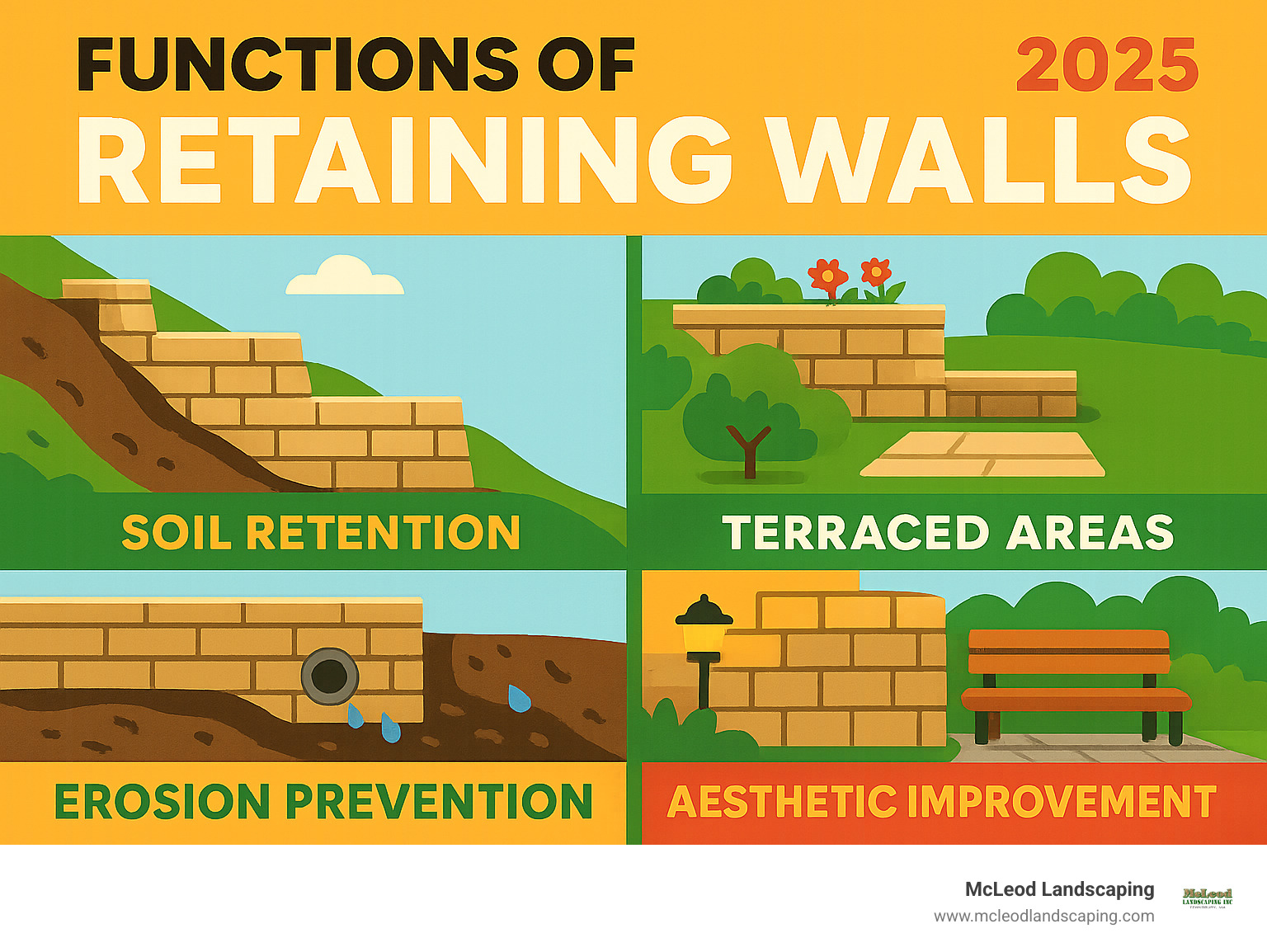
Retaining walls do more than hold back soil; they create level areas for patios, define property boundaries, and serve as striking architectural elements. Modern options range from rustic timber and natural stone to sleek Corten steel and innovative gabion systems. With proper planning, your retaining wall can become a focal point that improves your property value and outdoor living experience.
I’m Scott McLeod, owner of McLeod Landscaping. For over 30 years, I’ve designed and installed countless retaining walls in the Merrimack Valley, helping homeowners turn slopes into beautiful landscapes that blend function with style. Let me guide you through the best concepts for your home.
Related content about backyard retaining wall ideas:
The foundation of any great backyard retaining wall ideas project is choosing the right material. This decision impacts your wall’s appearance, longevity, and overall cost. Your material selection should complement your landscape style, provide structural durability, and fit your budget. Let’s explore the most popular options.
| Material | Average Cost (per sq ft) | Lifespan | Maintenance | Best For (Style) |
|---|---|---|---|---|
| Natural Stone & Boulders | $25 – $125+ | 100+ years | Low, occasional cleaning | Rustic, Traditional, Formal |
| Concrete & Manufactured Blocks | $15 – $50+ | 40 – 100 years | Low, occasional cleaning | Modern, Contemporary, Transitional |
| Timber & Wood | $15 – $60+ | 20 – 25 years | Moderate, needs treatment/replacement | Rustic, Woodland, Budget-friendly |
| Corten Steel | $30 – $100+ | 40 – 100 years | Very Low, develops natural patina | Modern, Industrial, Contemporary |
Please note: The average costs listed above are based on internet data and not actual costs for McLeod Landscaping. Prices can vary significantly based on material quality, project complexity, regional differences, and installation requirements.
Natural stone offers an authenticity that manufactured materials can’t replicate. Stacked fieldstone provides a classic New England look, while massive boulders create dramatic impact. Each stone’s unique color and texture create a piece of functional art that can outlast generations. The primary advantage is durability; a properly built stone wall can last centuries with minimal maintenance. The trade-offs are cost and complexity, as natural stone requires skilled, labor-intensive installation. However, many homeowners find the investment worthwhile for its timeless appeal.
Explore more about these robust options: Boulder Retaining Wall and Retaining Wall Stone.
Modern concrete retaining walls and interlocking block systems offer incredible versatility and are often budget-friendly. Interlocking blocks are a DIY-friendly option, with features like rear-lip locators that simplify installation. Poured concrete offers superior structural strength for tall or challenging walls, and can be finished with textures or stamps to mimic stone or brick. The main benefits are cost-effectiveness and the clean, contemporary lines that suit modern landscapes. While basic blocks can look utilitarian, they are easily upgraded with caps or veneers.
For more detailed information, check out our resources on Concrete Block Retaining Wall and Concrete Retaining Walls.
Timber retaining walls bring an organic warmth perfect for woodland gardens and rustic landscapes. Pressure-treated landscape timbers are affordable and blend seamlessly with planted areas. When properly treated for ground contact, these walls can last 20-25 years. Timber is also a space-saving material that is easier to transport to sites with difficult access. The main trade-offs are a shorter lifespan compared to stone or concrete and limited design flexibility, as wood works best for straight runs. However, for woodland settings, the natural aging process can improve its aesthetic.
Learn more about building with timber: How to Build a Retaining Wall with Landscape Timbers and Landscape Timber Retaining Wall.
For a bold, contemporary statement, materials like Corten steel and gabion walls offer distinctive industrial aesthetics.

Corten steel, or weathered steel, develops a stable, rust-like patina that prevents further corrosion and creates a stunning, evolving finish. Its clean lines and rich color provide a striking contrast to green plantings, and it can last up to 100 years with virtually no maintenance.
Gabion walls are metal wire baskets filled with stone or other materials. They offer excellent natural drainage, quick construction, and the flexibility to use on-site materials, which can reduce costs. Their caged appearance creates interesting textures and patterns, making them a unique choice for modern designs. These materials are perfect for homeowners wanting to create a landscape that feels like an outdoor art installation.
Find modern retaining wall products.
A retaining wall doesn’t have to be a boring structural element. The best backyard retaining wall ideas blend function with design, turning a necessity into a beautiful focal point for your landscape.
Instead of one large, intimidating wall, terracing creates a series of smaller tiers that step gracefully down a slope. This is one of the most effective backyard retaining wall ideas for changing challenging terrain into usable space.
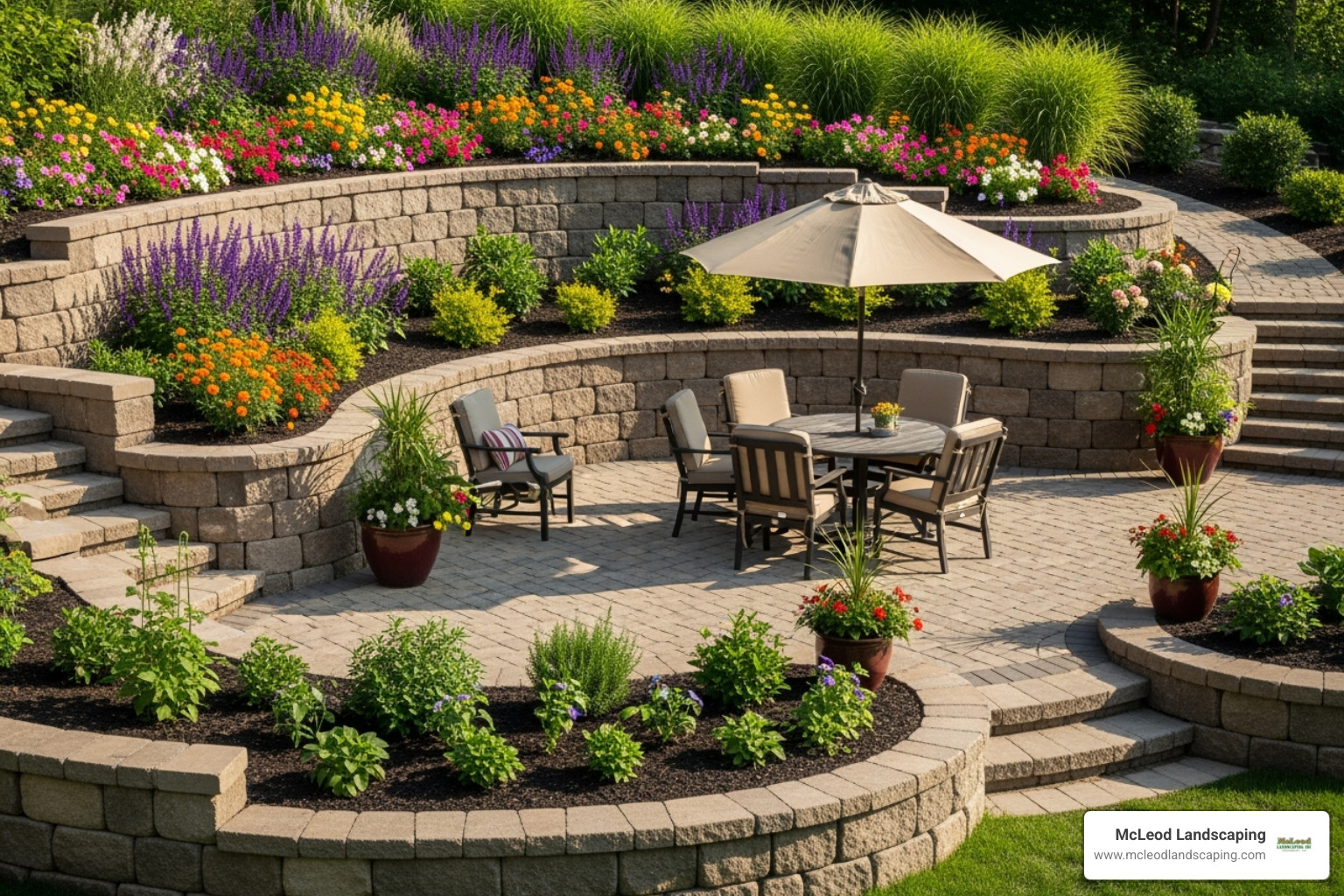
Each level becomes a flat, usable area for a patio, garden beds, or a small lawn. This multi-level approach often reduces engineering complexity and cost compared to a single tall wall. It also allows for better drainage management, preventing water buildup. Terracing can completely change your outdoor lifestyle by creating distinct, functional zones for relaxation, gardening, and play.
For more inspiration, explore our Landscape Retaining Wall Ideas or find alternatives at How to Landscape a Steep Slope Without Retaining Walls.
Why build a simple wall when it can serve multiple purposes? Smart designs incorporate features that improve how you use your outdoor space.
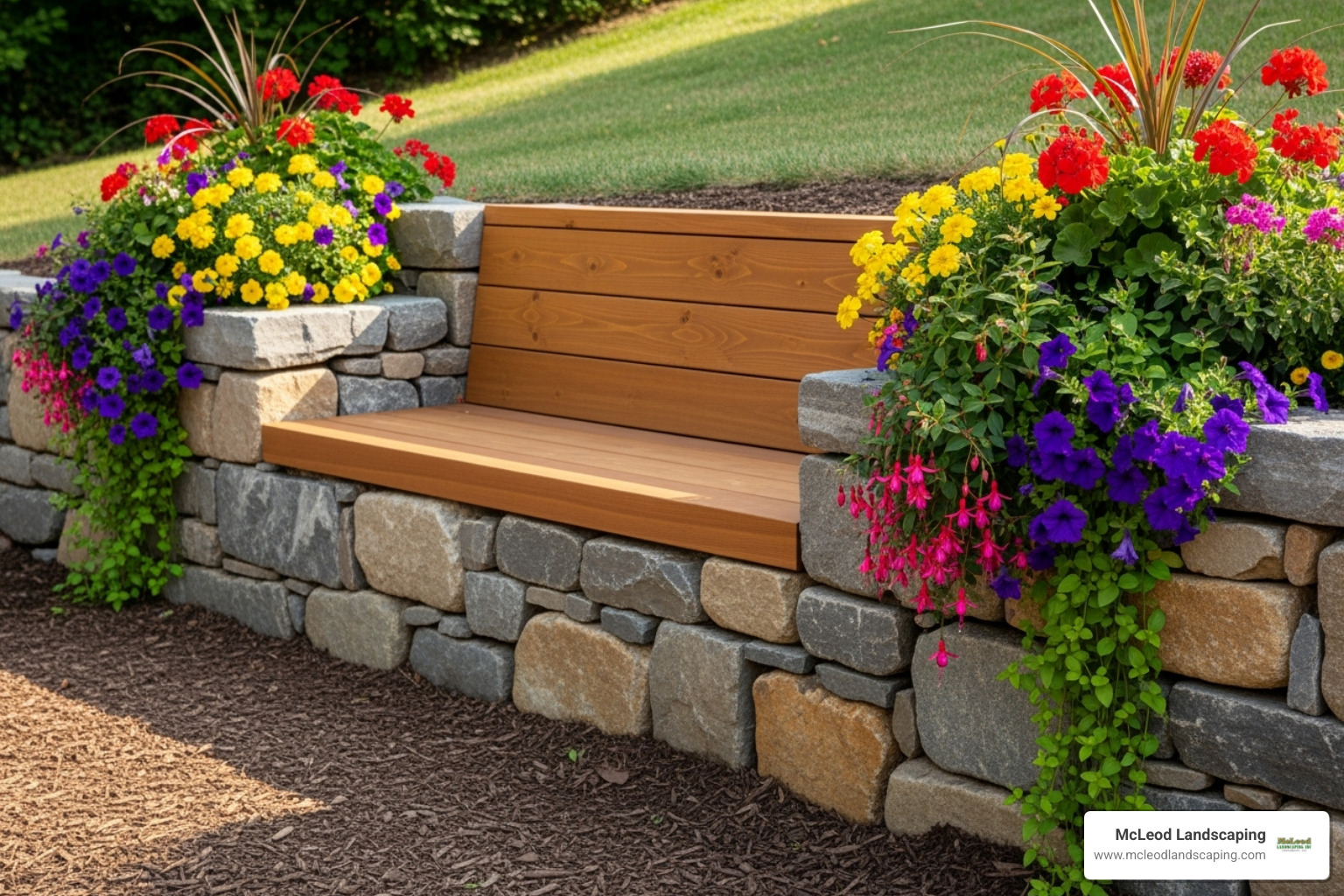
The key is to plan these features from the beginning. Integrating them into the original design is more cost-effective and creates a cohesive look that improves your lifestyle.
Find more ways to improve your outdoor living with our Custom fire pit installation and Patio installation services.
Thoughtful lighting transforms a retaining wall at night, turning it into a stunning architectural feature. Under-cap lighting is a popular choice, casting a soft downward glow that highlights the wall’s texture. For a modern feel, LED strip lights can be integrated directly into the wall to emphasize its geometric lines. On walls with stairs, step lighting is crucial for safety and creates a visual rhythm that guides visitors. Modern LED systems are energy-efficient, long-lasting, and can often be controlled from a smartphone, adding both beauty and security to your landscape.
Make sure your pathways are safe and beautiful with our Walkway installation services.
While straight lines are common, some of the most memorable backyard retaining wall ideas feature gentle curves or water elements. Curved or serpentine walls soften transitions and create a more organic feel, working with the natural contours of your land. This approach is ideal for navigating around existing trees or landscape features. Water features, such as an integrated waterfall or a small pond at the wall’s base, add the soothing sound of flowing water, masking noise and creating a peaceful focal point. These elements require careful waterproofing but can lift your retaining wall into a true sensory experience.
For more innovative design possibilities, visit our comprehensive guide to Retaining Wall Design.
Even the best backyard retaining wall ideas can fail without proper planning. A wall that lasts for decades requires careful attention to drainage, budgeting, and local building codes. This planning phase is the invisible foundation of a successful project.
Most retaining wall failures are caused by water. When water gets trapped behind a wall, it creates immense hydrostatic pressure that can cause the wall to bow, crack, or collapse. A complete drainage system is non-negotiable.
Key components include:
Proper drainage is the single most important factor in ensuring your wall’s longevity and protecting your investment.
Learn more about protecting your investment: Retaining Wall Drainage.
Understanding costs and your own capabilities is key. Material costs vary widely, but they often represent only a fraction of the total project expense. Labor is a significant factor.
Trying to DIY a project beyond your skill level can lead to costly failures. Safety should always be the top priority.
Average costs for retaining walls can range from approximately $15 to $120+ per square foot. Please remember, these are average costs based on internet data and not actual costs for McLeod Landscaping, as every project has unique factors that affect pricing.
Get detailed cost information: How Much Does a Retaining Wall Cost? and find qualified professionals: Retaining Wall Contractors.
Before starting, research your local building codes. Most municipalities have rules regarding:
Ignoring these rules can lead to fines, tear-downs, or issues when selling your home. The permit process protects your investment by ensuring your wall is built safely and correctly.
Start your project on solid legal ground: Building a Retaining Wall.
Here are answers to some of the most common questions we receive about backyard retaining wall ideas.
For homeowners focused on budget, several materials offer great value. Pressure-treated pine and interlocking concrete blocks are typically the most affordable options upfront and are well-suited for DIY projects. For a more creative approach, gabion walls can be cost-effective if you can use rocks already on your property as fill. Another option is using recycled materials like “urbanite” (broken concrete), which can sometimes be sourced for free. While poured concrete has a low raw material cost, it requires more labor for forming. Always balance upfront cost with long-term durability; a cheaper material that needs replacing sooner may not be the best value.
For DIY projects, the general rule of thumb is to stay at or below 4 feet in height. Once a wall exceeds 4 feet, the soil pressure behind it increases exponentially. Taller walls require professional engineering to ensure proper footing, reinforcement, and drainage to prevent failure. Most municipalities require building permits and stamped engineering plans for walls over this height. For safety and structural integrity, any wall taller than 4 feet, or any wall on a difficult site, should be handled by experienced professionals.
A basic concrete block wall is a blank canvas. You can dramatically improve its appearance with several finishing touches:
These upgrades can be done over time, allowing you to improve your wall as your budget allows.
For more creative integration ideas, check out our Garden Wall Retaining solutions.
As we’ve explored, backyard retaining wall ideas are an incredible opportunity to turn a landscape challenge into a stunning, functional feature. A well-designed wall is more than a structural solution—it’s a way to completely reimagine how you enjoy your backyard.
From the timeless elegance of natural stone to the sleek appeal of Corten steel, there is a material and design to match any home. By integrating creative features like terraced gardens, built-in seating, or ambient lighting, your wall can become the centerpiece of your outdoor living space.
However, great design must be built on a solid foundation. Proper drainage, careful material selection, and adherence to local codes are what ensure your beautiful vision will stand strong for decades to come.
At McLeod Landscaping, we have over 30 years of experience turning backyard retaining wall ideas into reality for clients throughout the Merrimack Valley. Our expertise in residential hardscaping means we understand how to create a wall that not only solves slope and erosion issues but also integrates seamlessly with your patios, walkways, and overall landscape design.
Ready to transform your challenging slope into the backyard oasis you’ve been dreaming of? We can help you explore which ideas will work best for your property and budget.
Contact us today to discuss your retaining wall installation project and let’s bring your vision to life.
Contact McLeod Landscaping today at (978) 640-0957 or click here to schedule a consultation for retaining wall installation. Let our experienced team design and install a functional and visually appealing retaining wall that enhances your landscape.


1881 Main St Unit 1, Tewksbury, MA 01876