

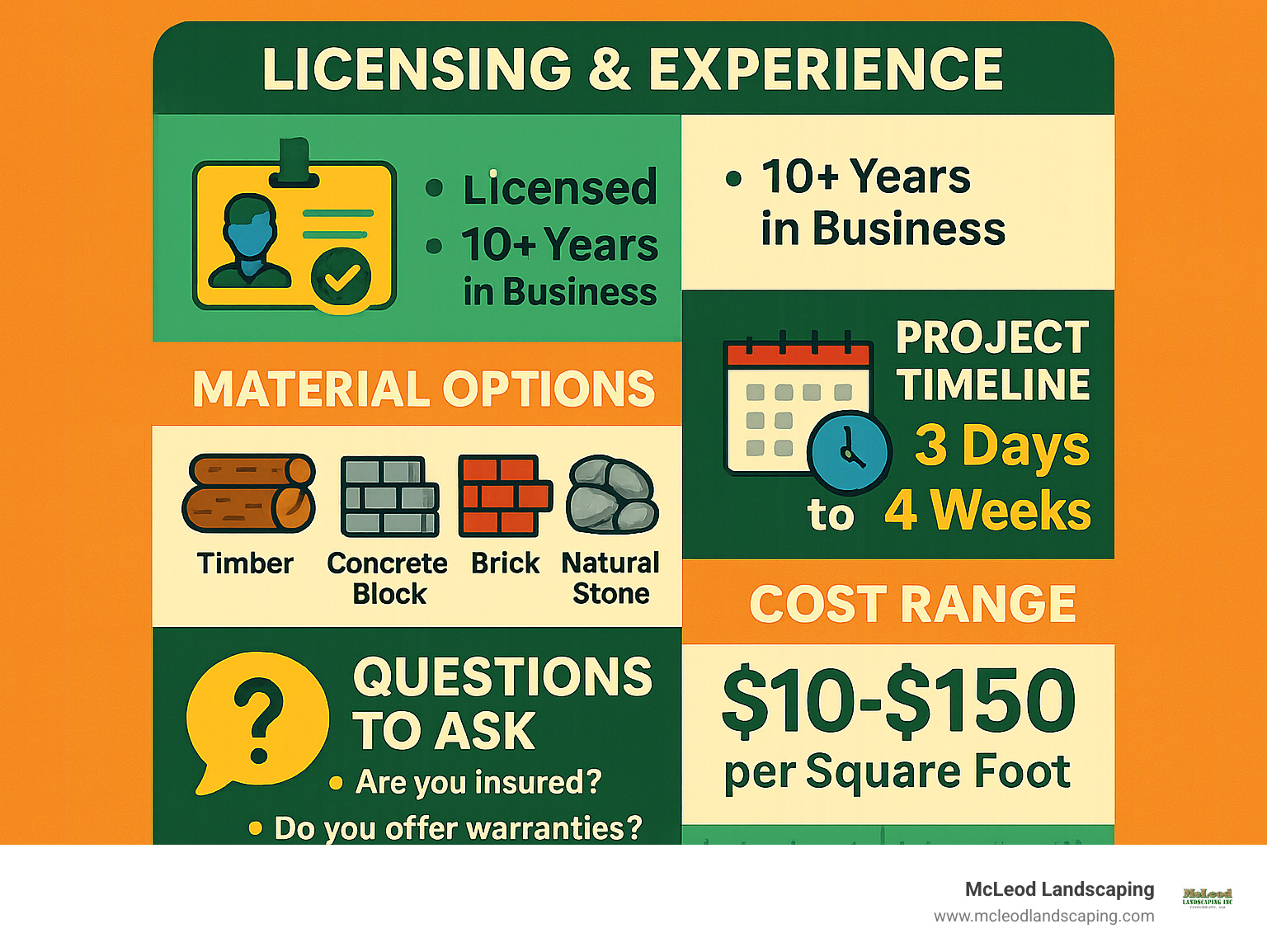
Best retaining wall contractors near me can transform sloped yards into usable space while preventing costly soil erosion and foundation damage. Here’s what to look for when hiring:
Key Contractor Qualities:
– Licensed and insured with proper certifications
– 10+ years experience with local soil conditions
– Written warranties on materials and workmanship
– Free on-site evaluations with detailed proposals
– Permit handling and engineering coordination for walls over 3-4 feet
– Drainage expertise to prevent water buildup behind walls
The average retaining wall project costs between $20-$50 per square foot based on internet data, but can range from $10-$150 depending on materials and complexity. Wood walls offer budget-friendly options starting around $10-$40 per square foot, while premium materials like natural stone can reach $150 per square foot.
Most contractors require no upfront payment and offer free consultations to assess your specific needs. The installation process typically takes 3 days to 4 weeks depending on wall height, materials, and site conditions.
As someone who’s spent over three decades in the landscaping industry, I’m Scott McLeod, owner of McLeod Landscaping Inc. I’ve helped hundreds of property owners find the best retaining wall contractors near me and understand what separates quality builders from the rest.
Simple guide to best retaining wall contractors near me:
– landscape wall stone
– how much does a landscape retaining wall cost
– landscaping bricks
Retaining walls resist “lateral earth pressure” – basically, all that dirt pushing sideways against the wall. A typical 3-foot high, 15-foot long residential retaining wall can handle up to 20 tons of soil pressure. Add water to the mix, and that pressure can double or triple. This is why proper drainage isn’t optional.
When we install retaining walls for homeowners in Tewksbury and the surrounding Merrimack Valley, we’re creating usable yard space where there was once just a steep slope. Many clients gain up to 30% more functional outdoor space on their property.
A well-designed retaining wall can reduce soil erosion and water runoff by up to 80%, protect your foundation from water damage, and create perfect spots for terrace gardens or outdoor entertaining areas. Plus, they boost your property value.
For technical details, see Scientific research on retaining walls and our guide on More info about Retaining Wall Design.
After three decades in the landscaping business, I’ve learned that Mother Nature gives you plenty of warnings before things get expensive.
Soil erosion is usually the first red flag. Walk around your property after heavy rain – are you seeing exposed tree roots on slopes? Bare patches where grass won’t grow? Sediment washing into storm drains? These are clear signals that your soil is on the move.
Water problems are the next concern. If your basement floods during heavy rains, or you have areas that stay soggy long after everyone else’s has dried out, your property’s drainage needs help. Foundation cracks that appear and disappear with seasons indicate water management problems.
The most serious warning signs involve structural issues. When existing walls show cracks or bulging, or when slopes appear to be shifting, that’s when you need to act fast. Don’t ignore these signs and end up facing thousands in foundation repairs.
Gravity walls use their own weight to resist soil pressure. These work great for walls up to 10 feet tall and include most concrete block walls, natural stone walls, and gabion walls.
Cantilever walls are shaped like an L or T underground, with part of the foundation extending back under the soil they’re holding up. These can reach 16 feet tall and include most poured concrete walls.
Anchored walls use cables or rods that extend way back into stable soil for extra support on really tall walls or tricky situations.
Geogrid reinforcement involves laying synthetic fabric layers within the backfill soil, which spreads the load over a much wider area. This lets us build taller walls with smaller foundations and get better performance even when soil conditions aren’t ideal.
Choosing the right material for your retaining wall is like picking the perfect pair of shoes – you want something that looks great, fits your budget, and will go the distance.
The cost spectrum ranges from basic timber walls starting around $10 per square foot to premium natural stone installations reaching $150 per square foot or more. These figures are based on internet data and industry averages, not McLeod Landscaping’s specific pricing.

Segmental block walls typically run $20-$60 per square foot and represent the sweet spot for most homeowners. These interlocking concrete blocks create walls that can last 50-100 years. They come in dozens of colors and textures. The best retaining wall contractors near me often recommend these for their reliability and design flexibility.
Poured concrete walls range from $25-$75 per square foot and offer maximum strength for challenging situations. For technical insights, check out this Scientific research on poured concrete walls.
Natural stone walls command premium pricing at $40-$150 per square foot, but they’re investments that pay dividends for generations. Fieldstone creates classic New England charm, cut granite delivers formal elegance, and limestone brings warm, timeless appeal.
Timber walls offer the most budget-friendly entry point at $10-$40 per square foot. While they typically last 5-20 years, they’re perfect for garden terraces where natural wood complements your existing landscape.
Gabion walls fall in the middle range at $15-$45 per square foot. These wire cages filled with stone have gained popularity for their excellent drainage and distinctive industrial look.
Timber retaining walls work beautifully for walls under 4 feet tall. The secret to longevity lies in proper drainage design and using substantial timbers – we typically recommend 6×6 or 8×8 pressure-treated lumber with proper deadman anchors.
Gabion cages provide natural drainage while creating striking visual effects. They’re particularly smart choices for erosion control along slopes or in areas where water management is critical.
Natural stone remains the gold standard. I’ve maintained stone walls built in the 1800s that still function perfectly. The initial investment pays dividends through exceptional durability, timeless beauty, and significant property value increases.
Architectural block systems combine concrete’s strength with attractive finishes that rival natural stone’s appearance. These engineered systems feature consistent sizing for precise installation and manufacturer warranties.
Steel retaining walls excel in challenging situations requiring maximum strength in minimal space. While less common in residential settings, they’re invaluable for very tall walls or modern architectural styles.
Searching for best retaining wall contractors near me online is just the starting point. The real work begins when you start evaluating who can actually deliver quality results.
After three decades in the landscaping business, I’ve seen too many homeowners choose contractors based on price alone, only to face costly repairs within a few years.
Valid licensing and insurance should be non-negotiable. In Massachusetts, contractors need state and local licensing, plus general liability insurance of at least $1 million and workers’ compensation coverage.
Professional certifications from ICPI (Interlocking Concrete Pavement Institute) or NCMA (National Concrete Masonry Association) indicate contractors who’ve invested in proper training and understand engineering principles that prevent wall failures.
Local soil knowledge makes a huge difference in Massachusetts. Our freeze-thaw cycles, clay soil expansion, and seasonal construction limitations require specific expertise that out-of-state companies simply can’t match.
Written warranties separate professional contractors from fly-by-night operators. Quality contractors offer material warranties of 1-5 years and workmanship guarantees of at least 1-2 years.
The on-site evaluation process reveals contractor quality. Professional contractors spend time analyzing your specific drainage needs, soil conditions, and engineering requirements. They don’t give estimates over the phone.
For detailed information about professional installation standards, visit our guide on More info about Retaining Wall Installation.
Experience matters more than you might think. Ask how many years they’ve specifically been building retaining walls. Request references from recent projects similar to yours in size and complexity.
The drainage plan question separates knowledgeable contractors from those who cut corners. Every retaining wall needs proper drainage. If a contractor can’t explain their drainage strategy in detail, keep looking.
Permit handling reveals professionalism and local knowledge. Walls over 3-4 feet typically require permits and sometimes engineering approval. Contractors suggesting skipping permits put you at legal and financial risk.
Payment schedules should never require large upfront payments. Professional contractors typically ask for minimal down payments and tie payments to project milestones.
No written estimate tops the red flag list – professional contractors always provide detailed written proposals. Door-to-door solicitation rarely leads to quality work. Significantly lower bids than other contractors often indicate corner-cutting. No local references suggests contractors who don’t stand behind their work.
Insurance and licensing issues are absolute deal-breakers. Contractors who can’t provide current certificates put you at serious liability risk.
After three decades in the landscaping business, I’ve seen how different types of contractors excel at different kinds of projects. The key to finding the best retaining wall contractors near me isn’t just about price—it’s about matching your specific needs with the right contractor’s strengths.
The vetting process should always start with checking licensing and insurance, reading homeowner reviews, and asking to see project photos from similar work.
These contractors have been around long enough to see their work stand the test of time—and they’re still in business to fix anything that doesn’t.
Industry longevity tells you a lot about a contractor. When someone’s been building retaining walls for over a decade, they’ve dealt with every soil condition, weather challenge, and engineering problem imaginable. They’ve learned from their mistakes and refined their processes.
What sets experienced specialists apart is their 5-star ratings come from solving problems, not just building walls. They invest in proper drainage systems, adequate foundations, and quality materials because their reputation depends on long-term performance.
At McLeod Landscaping, our 30+ years in the Merrimack Valley has taught us that every site is unique. We’ve handled simple garden terraces and complex commercial installations. That experience means we can spot potential problems during the initial site visit.
These contractors are your best choice for walls over 4 feet tall, premium materials like natural stone, or challenging sites with drainage issues. Yes, you’ll pay more upfront, but you’ll get comprehensive warranties and contractors who’ll still be around to honor them.
Some projects need more than just a retaining wall—they need a complete landscape change. Design-build firms bring in-house engineering capabilities and can handle complete landscape integration.
The real advantage is coordination. When the same company designs your retaining wall and plans your drainage system, lighting, and plantings, everything works together seamlessly.
Design-build firms excel at multi-level terracing projects where retaining walls are just one piece of a larger outdoor living space. They can create 3D renderings and handle all permits and engineering requirements.
Sometimes you just need a straightforward retaining wall without all the bells and whistles. Owner-operated small crews can provide excellent value with lower overhead costs and flexible scheduling.
Small crews are perfect for simple timber walls, garden terraces, or repair work. They’re often willing to tackle smaller projects that larger firms might not find profitable.
The key is doing your homework on licensing, insurance, and references. Just remember that small crews may have limitations on complex engineering projects or very tall walls.
Building a retaining wall is a carefully orchestrated process that transforms your sloped yard into usable space. When you hire the best retaining wall contractors near me, here’s what happens from start to finish.
The entire journey typically takes 3 days to 4 weeks, depending on your wall’s complexity and height. Simple garden walls under 4 feet might wrap up in less than a week, while engineered walls over 8 feet can take a full month.
The first phase focuses on site survey and preparation, usually taking 1-2 days. Your contractor will call 811 to mark all utilities, lay out the wall location, assess soil conditions, and plan excavation strategy.
Excavation and foundation work takes 1-3 days and involves digging 6-12 inches below ground level. The secret to a lasting retaining wall lies in this invisible foundation work. Your contractor will install a compacted gravel base, place drainage pipes, and test everything for proper compaction.
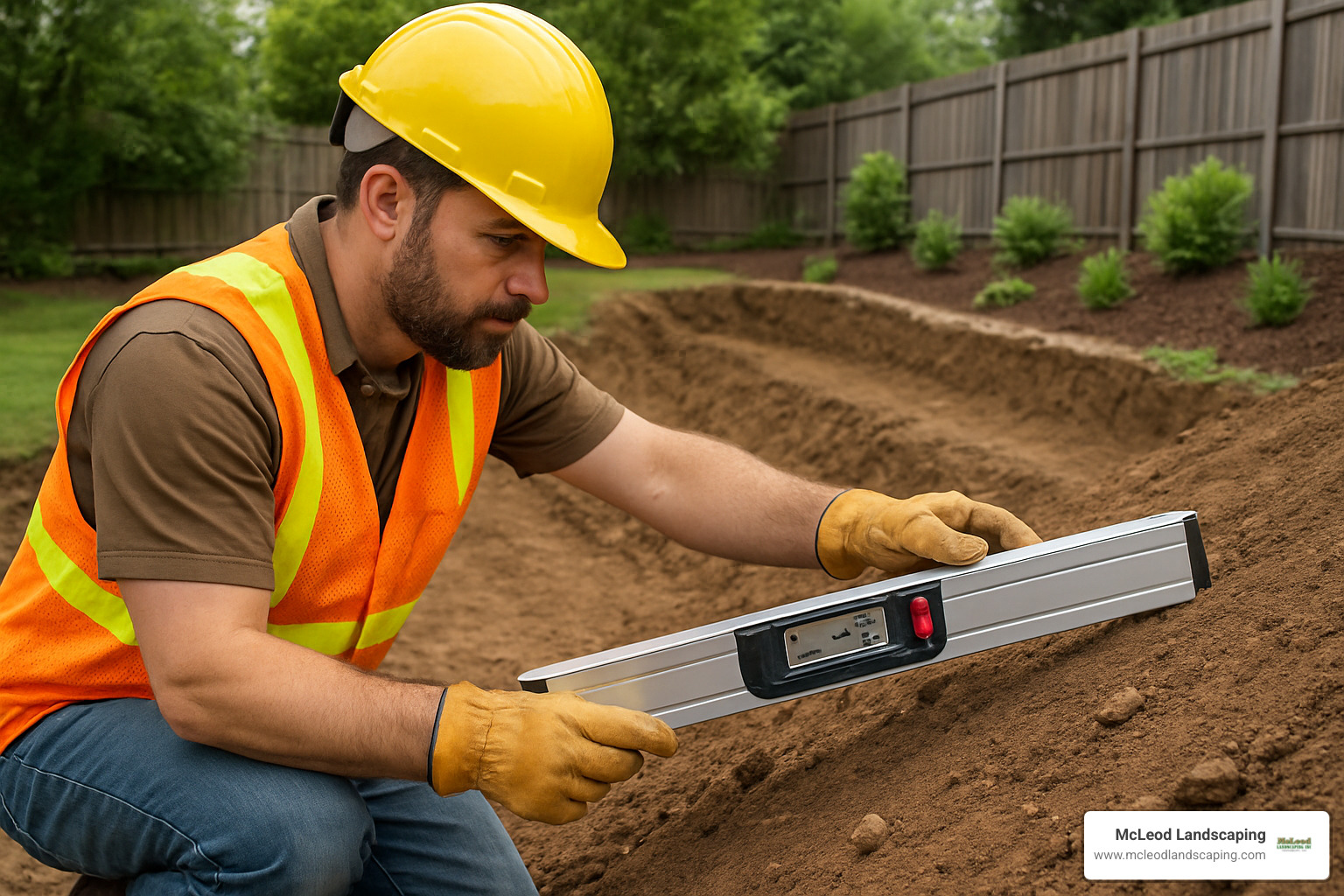
Wall construction itself takes 2-10 days depending on materials and height. The first course must be perfectly level—experienced contractors spend extra time here because every subsequent row builds on this foundation. If you’re getting geogrid reinforcement, you’ll see workers carefully placing these layers as they build upward.

The backfill process happens gradually as the wall rises. Quality contractors never just dump soil behind the wall—they place and compact it in controlled lifts to prevent settling later.
Finishing and cleanup rounds out the project in 1-2 days. Your contractor will complete final backfill and grading, install drainage outlets, and test the entire system.
For comprehensive drainage details that protect your investment long-term, check out More info about Retaining Wall Drainage.
At McLeod Landscaping, we’ve refined this process over 30 years of building walls throughout the Merrimack Valley. The fundamentals never change: thorough preparation, quality materials, and attention to drainage details create walls that protect and beautify your property for generations.
Think of your retaining wall like your car – regular maintenance keeps it running smoothly for decades, while neglect leads to expensive repairs. I’ve seen walls last over 50 years with proper care, and others fail within 5 years due to neglect.
Annual inspection should be your first line of defense. Walk along your wall each spring, looking for cracks, bulging, or any signs of leaning. Pay special attention to drainage outlets – they should be clear and flowing freely after rain.
Pressure-washing once a year keeps your wall looking great and helps you spot problems early. Vegetation control is equally important – weeds growing in joints can actually push blocks apart over time.
Freeze-thaw cycles are particularly brutal here in Massachusetts. Water gets into small cracks, freezes, expands, and makes those cracks bigger. This is why crack monitoring is so critical.
For detailed cost planning information, see More info about How Much Does a Retaining Wall Cost?.
Clear weep holes monthly – these small openings at the base of your wall are like pressure relief valves. Stick a screwdriver or wire into them to make sure they’re not clogged with leaves or debris.
Reseal timber walls every 2-3 years if you have a wood retaining wall. Choose a penetrating stain rather than a surface coating for better protection.
Keep vegetation away from the wall itself. Those pretty vines might look charming, but their roots can work into joints and cause real damage over time.
Re-grading behind a wall showing signs of movement requires understanding soil mechanics and proper drainage slopes. Drainage retrofits become necessary when original drainage systems get overwhelmed or fail.
If your wall is showing structural distress – significant cracking, bulging, or leaning – don’t wait. These problems typically get worse quickly, especially during spring thaw or heavy rain periods.
The best retaining wall contractors near me offer maintenance programs that catch problems early, when they’re still manageable and affordable to fix.
When you’re searching for the best retaining wall contractors near me, you probably have dozens of questions. Let me tackle the big three that come up in almost every conversation.
Based on internet data (not McLeod Landscaping’s actual pricing), you’re looking at anywhere from $10 to $150 per square foot in Massachusetts, with most homeowners spending between $20-$50 per square foot for standard installations.
The wide range comes down to material choices and site conditions. Timber walls start around $10-$40 per square foot. Concrete block systems typically run $20-$50 per square foot. Natural stone ranges $40-$150 per square foot.
But here’s what really affects your bottom line: wall height, site access, and drainage complexity. Poor drainage or challenging soil conditions can add 20-50% to your project cost, which is why experienced contractors always do thorough site evaluations before providing quotes.
Most towns require building permits for retaining walls over 3-4 feet tall, but the rules vary by municipality. Engineering requirements typically kick in around 4 feet, and they’re always required for walls over 6 feet.
Quality contractors handle permit applications and coordinate with engineers as part of their service. They know the local building officials and understand the submission process.
Be very wary of contractors who claim permits aren’t necessary for tall walls or try to talk you out of getting proper approvals.
Simple walls under 4 feet typically take 3-7 days with minimal disruption. Standard walls between 4-6 feet usually require 1-2 weeks with moderate yard impact. Complex engineered walls over 6 feet can take 3-4 weeks with significant construction activity.
Weather plays a huge role in timelines. Smart contractors build weather contingencies into their schedules rather than making unrealistic promises.
You should expect some lawn damage from equipment access. Professional contractors include site restoration as part of their service and will discuss protecting your existing landscaping during the planning phase.
After reading this comprehensive guide, you’re now equipped to find the best retaining wall contractors near me for your specific project. The key isn’t just finding someone who can stack blocks—it’s finding a partner who understands your property’s unique challenges and can deliver lasting results.
The cheapest bid often becomes the most expensive mistake. Quality contractors invest in proper planning, use appropriate materials, and stand behind their work with meaningful warranties. They’ll walk your property, ask detailed questions about your goals, and explain exactly how they’ll solve your drainage and erosion challenges.
Your contractor search checklist should prioritize experience over price, local knowledge over flashy marketing, and comprehensive service over quick fixes. Look for professionals who handle permits, coordinate with engineers when needed, and treat your property with care.
At McLeod Landscaping, we’ve learned that every retaining wall project tells a story—whether it’s creating a safe play area for kids, protecting a home’s foundation, or changing a steep slope into beautiful garden terraces. Our three decades of experience throughout the Merrimack Valley has taught us that success comes from listening carefully to homeowners’ needs and delivering solutions that last.
We’re proud to serve Andover, Billerica, Burlington, Carlisle, Chelmsford, Concord, Lowell, Tewksbury, Westford, and Wilmington with the same attention to detail that built our reputation. From simple timber garden walls to complex engineered installations, we approach every project with the understanding that your retaining wall isn’t just about holding back soil—it’s about creating the outdoor space you’ve always envisioned.
Take your time choosing the right contractor. Your property deserves the expertise and care that only comes from working with true professionals who’ll be there long after the last stone is set.
For more information about our comprehensive wall construction services, visit More info about Landscape Wall Construction.
Contact McLeod Landscaping today at (978) 640-0957 or click here to schedule a consultation for retaining wall installation. Let our experienced team design and install a functional and visually appealing retaining wall that enhances your landscape.

1881 Main St Unit 1, Tewksbury, MA 01876