
Brick for retaining wall projects offer a perfect blend of timeless beauty and structural strength for sloped properties. Whether for erosion control, creating usable outdoor space, or adding classic appeal, brick is a versatile and durable material.
Top brick options for retaining walls:
Success depends on proper planning, drainage, and professional installation. Most residential brick walls under 4 feet don’t require an engineer, but always check local codes. Inadequate drainage is the primary cause of retaining wall failure, making subsurface drainage with perforated pipes and gravel essential.
Cost typically ranges from $30-$110 per square foot based on internet averages (not actual McLeod Landscaping quotes), depending on wall height, soil conditions, and design complexity.
I’m Scott McLeod. With over three decades of experience in the Merrimack Valley, my team at McLeod Landscaping has seen how the right materials and proper installation transform challenging slopes. We’ve completed hundreds of retaining wall projects and know that success starts with choosing the right materials for your site.
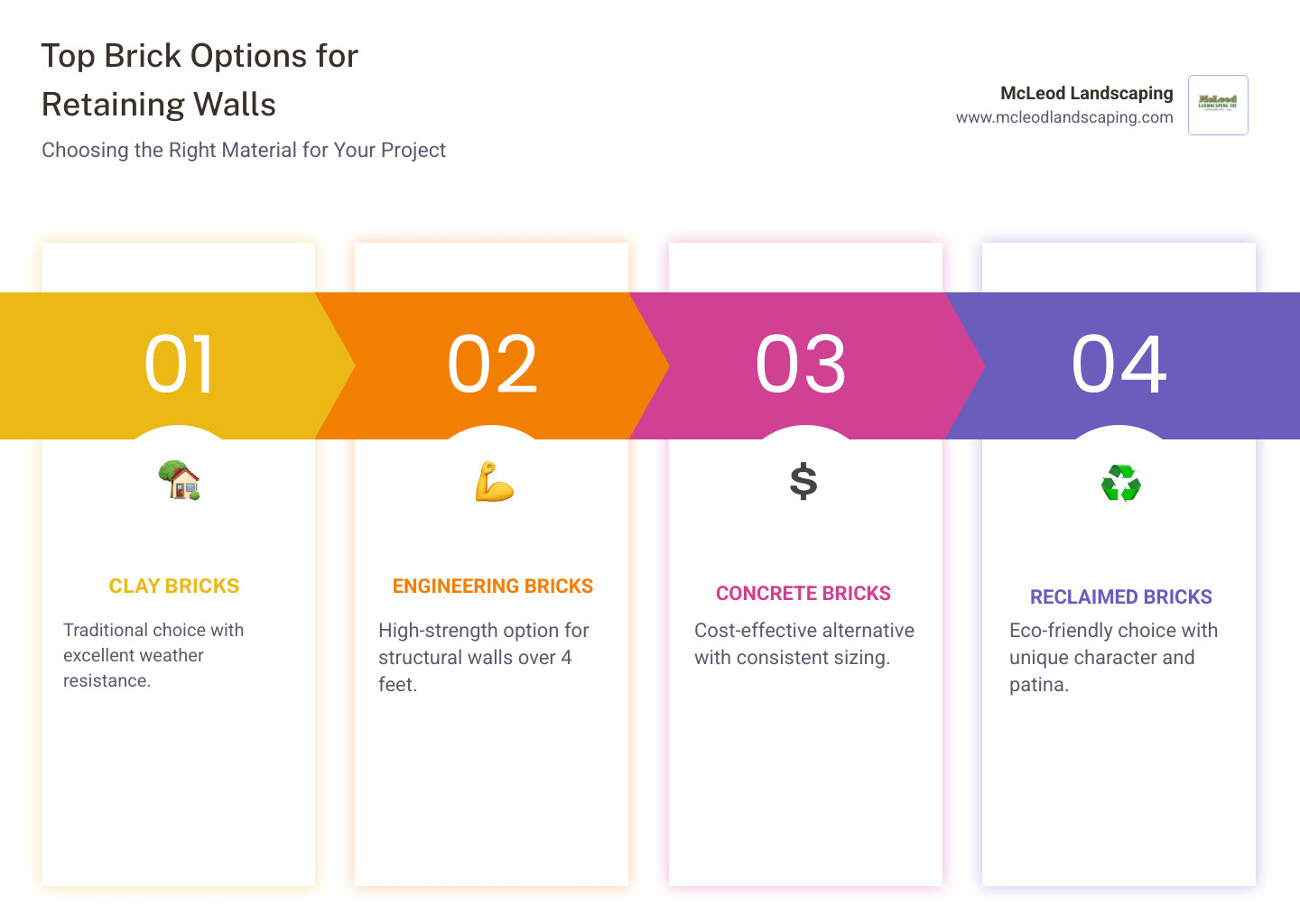
Simple guide to brick for retaining wall terms:
Choosing the right material for a retaining wall can feel overwhelming. With three decades of experience building walls throughout the Merrimack Valley, I can attest that brick for retaining wall projects consistently deliver long-term benefits.
First, consider aesthetics. Brick has a timeless appeal that complements any home style, from a colonial in Concord to a modern house in Burlington. Its warm tones and natural textures turn a functional structure into a genuine landscape feature.
Brick’s design flexibility is remarkable. Unlike rigid materials, it allows for gentle curves, decorative columns, or integrated steps. We can create intricate patterns and mix colors to achieve your desired look.
Let’s talk durability. Properly built brick walls can last 50 to 100+ years. They withstand New England’s harsh weather, from freezing winters to humid summers, and I’ve seen brick walls from the 1920s still standing strong.
This longevity increases property value. A well-built brick retaining wall is a permanent asset with timeless appeal, making it a sound investment that pays dividends for years.
Here’s how brick for retaining wall construction compares to other materials we work with:
| Material | Average Lifespan (Years) | Cost (Per Sq. Ft.) | Maintenance | Design Versatility |
|---|---|---|---|---|
| Brick | 50-100+ | $30 – $110 | Low to Moderate | High (curves, patterns, integrated features) |
| Natural Stone | 100+ | $40 – $150 | Low | High (organic shapes, rustic feel) |
| Segmental Block | 50-75+ | $20 – $75 | Low | Moderate to High (pre-engineered systems, consistent look) |
Please note: The cost ranges provided are average costs based on internet data for materials and installation and are not actual quotes from McLeod Landscaping. Actual project costs can vary significantly based on design complexity, site conditions, material selection, and local labor rates.
What truly sets brick apart is how it ages gracefully. While other materials can look dated, brick develops a natural patina that only adds to its charm over time.
Ready to explore how brick can transform your landscape challenges into beautiful, functional outdoor spaces? Our comprehensive Hardscaping Services cover everything from initial design to final installation, ensuring your retaining wall project exceeds expectations.
Planning a successful brick for retaining wall project requires careful preparation. The difference between a wall that lasts for decades and one that fails often comes down to what happens before the first brick is laid.
When designing a brick for retaining wall, we start by defining the space’s purpose. This shapes all subsequent decisions.

If you’re dreaming of a beautiful garden wall, our Garden Wall Retaining page has plenty of inspiration.
Addressing permits and engineering upfront saves future headaches and money.
Building permits and local codes vary by town. Generally, walls over 3-4 feet require permits and engineering, but local regulations are always final. We always check with the local building department and call 811 to locate underground utilities before starting.
For brick for retaining wall projects over 3-4 feet tall, or those supporting extra loads (surcharges) like driveways, an engineer is usually required by law. Their expertise prevents costly failures by assessing soil conditions, calculating soil pressure, and designing the necessary footings and reinforcement to ensure long-term structural integrity.
Even for shorter walls, professional experience is key. Our 30+ years in the Merrimack Valley helps us identify potential issues early. For additional guidance, you might find these 7 Tips For Building The Perfect Retaining Wall With Bricks helpful, though always verify requirements with your local codes.
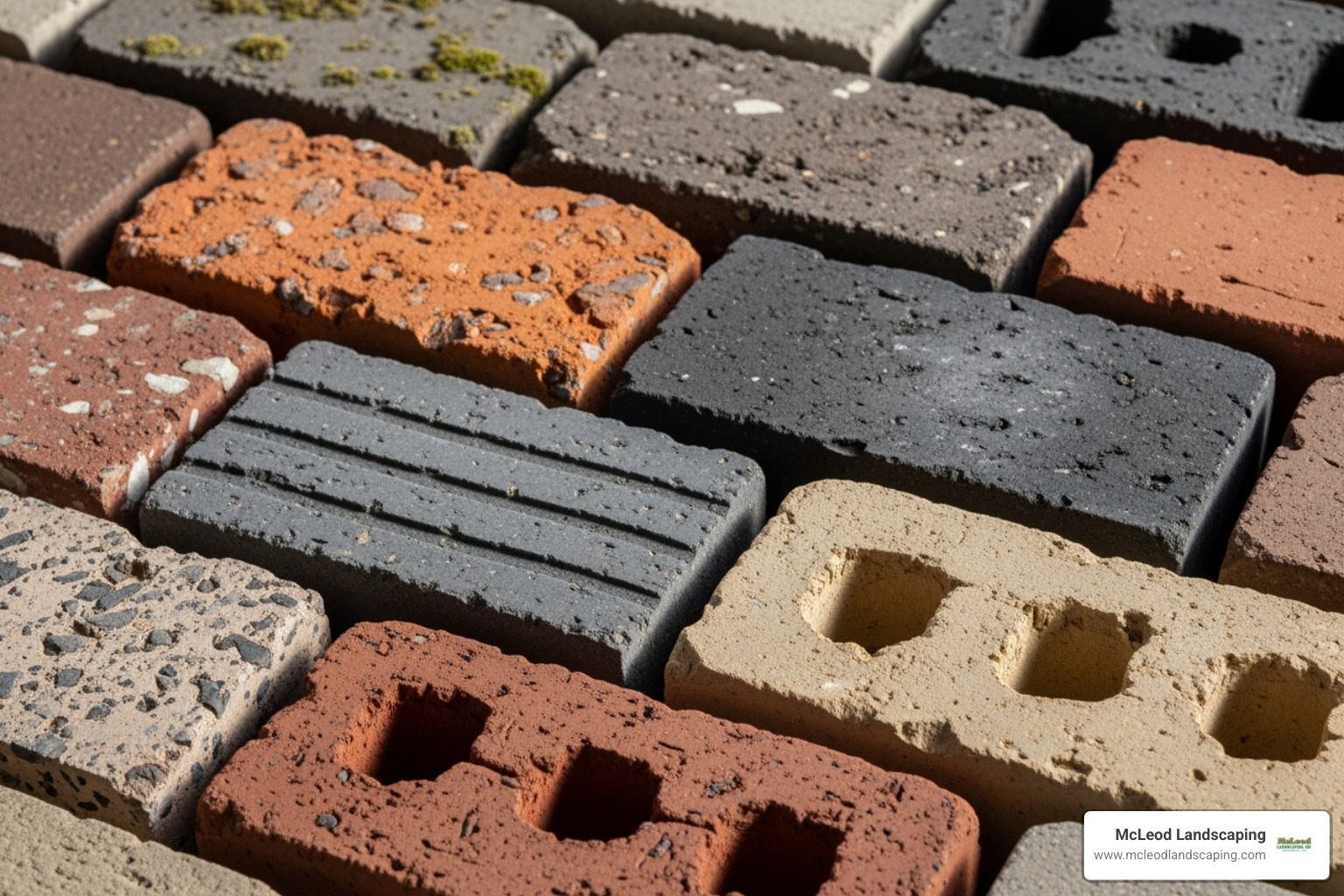
Each type of brick has its own strengths and ideal uses.
Color and texture selection brings your vision to life. Smooth finishes create modern lines, while textured surfaces add depth. The key is matching the brick to your project’s needs, considering wall height, weather, and style. A well-chosen brick makes your wall a lasting investment.
If you’re considering natural stone as an alternative or complement to brick, explore our Retaining Wall Stone options for additional possibilities.
The difference between a wall that lasts five years and one that lasts fifty often comes down to construction essentials. The real magic is in the foundation, structural choices, and behind-the-scenes details.
The right mortar is crucial for a brick for retaining wall. It provides strength, acts as a water barrier, and helps the wall withstand soil pressure. We typically use high-strength Type S mortar for structural applications and Type N mortar for lighter-duty walls. The joint finish affects both appearance and water-shedding ability.
The core construction method is key to a wall’s structural integrity and cost-effectiveness.
For projects where structural integrity is paramount, you might want to explore our Concrete Block Retaining Wall options as well.
If I had to pick the single most important factor for brick for retaining wall longevity, it would be drainage. Poor drainage is the number one cause of retaining wall failure. Saturated soil creates immense hydrostatic pressure behind a wall, and without proper drainage, this pressure can cause it to fail.
A proper drainage system includes:

When we implement these drainage essentials properly, your brick for retaining wall will have the best possible chance of serving your property beautifully for decades to come.
Over the years, I’ve had countless conversations with homeowners throughout the Merrimack Valley about brick for retaining wall projects. Here are the answers to the most common questions.
While avoiding extra expense is understandable, safety is paramount. The general rule is that residential walls under 3 to 4 feet (1 to 1.2 meters) often don’t require an engineer, assuming good soil and no heavy loads (surcharges) above.
However, local codes are king. Requirements vary by town, so what’s allowed in Tewksbury may differ from Wilmington. We always check with your local building department first. For any brick for retaining wall over 4 feet, or for walls with challenging conditions like steep slopes or poor soil, an engineer is typically required by law. Their expertise in structural integrity is essential for analyzing soil pressure, determining foundation depth, specifying reinforcement, and designing effective drainage.
Based on internet data for materials and installation, a brick for retaining wall project typically costs between $30 to $110 per square foot.
Important note: These are average industry costs based on internet research and definitely not actual quotes from McLeod Landscaping. Every project is unique, and we always provide detailed, custom estimates after seeing your specific site and understanding your vision.
Many factors influence the final cost:
The best approach is a detailed on-site consultation to get a realistic estimate for your specific project.
A little ongoing maintenance will keep your wall in great condition for decades.
For any maintenance concerns or if you notice something that doesn’t look right, we’re here to help. Our team provides comprehensive Masonry Services to keep all your hardscaping investments in excellent condition.
With three decades of experience building brick for retaining wall projects in the Merrimack Valley, I know that longevity depends on three things: proper planning, quality drainage, and skilled installation.
A successful project starts with understanding your site’s unique conditions, from the clay soils in Lowell, MA, to the rocky terrain in Andover, MA. Our process begins with a thorough site assessment to evaluate soil, water flow, and other factors.
Expert installation is crucial. A poorly built wall is a safety hazard and a financial liability that can fail within years, requiring costly reconstruction. Professional installation is an investment in safety and durability.
At McLeod Landscaping, we see a brick for retaining wall as more than just a structure; it’s a way to create functional outdoor living space. We’ve turned unusable slopes in Billerica, MA, into terraced gardens and solved drainage issues in Tewksbury, MA, with beautiful landscape features.
Our team has the technical expertise and creative vision for complex hardscaping projects. We manage everything from drainage design to mortar joint finishing, ensuring every detail meets our high standards. Our comprehensive services mean you work with one team from start to finish, eliminating coordination headaches. We design, build, and stand behind our work.
Ready to transform your property with a durable and beautiful landscape wall? Contact our experts for a professional Retaining Wall Installation. Let’s discuss how we can turn your challenging slope into your favorite outdoor space. For more inspiration and technical details about our approach, explore our Landscape Walls portfolio.
Contact McLeod Landscaping today at (978) 640-0957 or click here to schedule a consultation for retaining wall installation. Let our experienced team design and install a functional and visually appealing retaining wall that enhances your landscape.


1881 Main St Unit 1, Tewksbury, MA 01876