
Brick steps with concrete treads combine the timeless appeal of traditional brick with the durability and safety of modern concrete surfaces. This hybrid design offers property owners the best of both materials – classic aesthetic charm with practical functionality.
Key Benefits of Brick Steps with Concrete Treads:
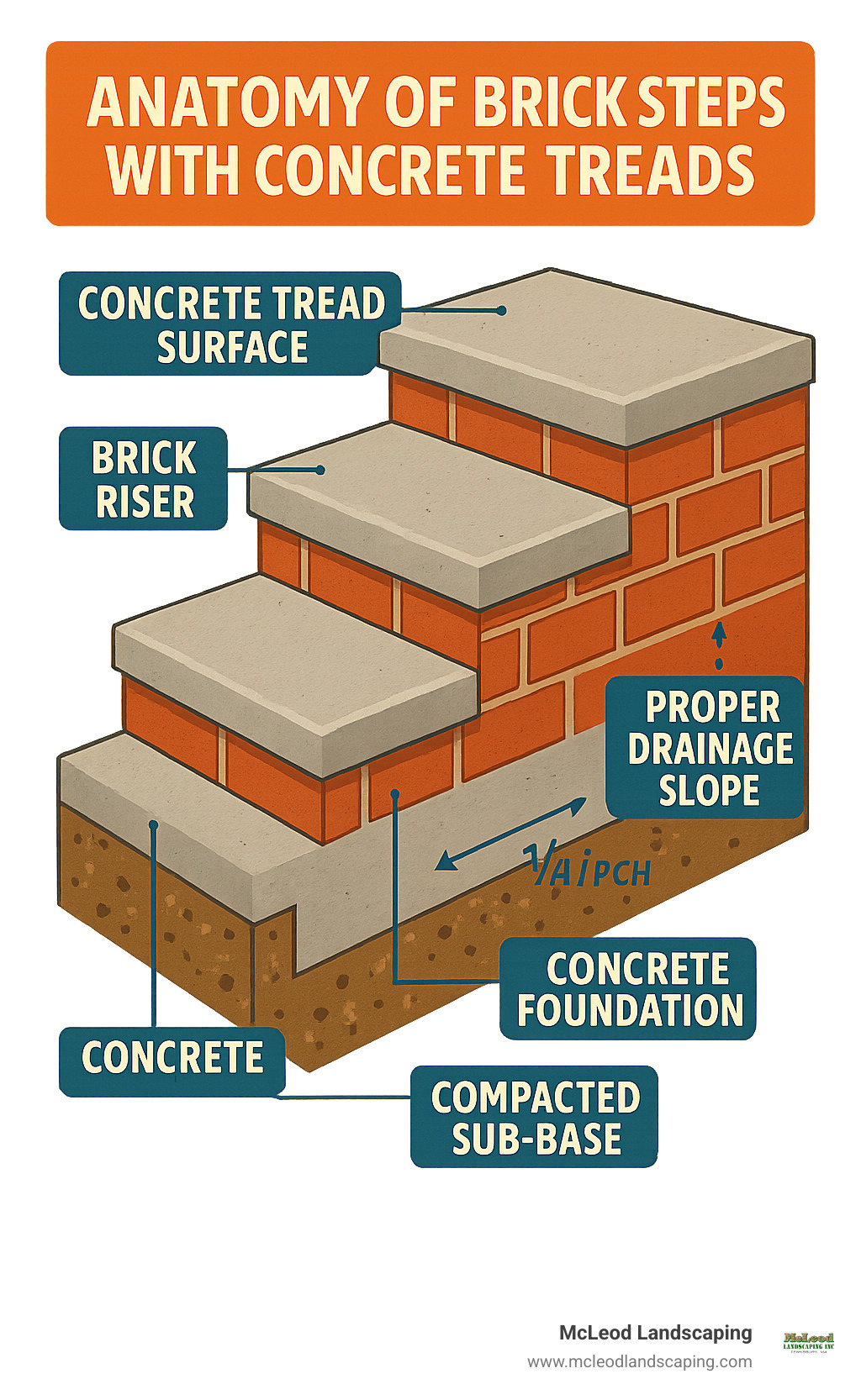
The construction typically involves building brick risers on a solid concrete foundation, then installing concrete treads that overhang slightly for water runoff. According to internet data, material costs can range from $4 to $15 per square foot, with small projects ranging from $200 to $1,500 depending on complexity and size. Please note these are average costs and not an actual quote from McLeod Landscaping.
As Scott McLeod, owner of McLeod Landscaping with over 30 years of experience in the Merrimack Valley, I’ve installed countless brick steps with concrete treads for both residential and commercial properties. This combination consistently delivers the durability and visual appeal that property managers and homeowners demand for creating impressive entrances.
Explore more about brick steps with concrete treads:
The combination of brick steps with concrete treads offers a unique blend of timeless elegance and everyday practicality. It’s a solution I frequently recommend to clients because it solves many common issues while looking fantastic. The magic lies in how the materials work together. Brick provides a warm, welcoming character, while concrete delivers strength that can handle heavy use and harsh weather. After three decades of building steps in the Merrimack Valley, I’ve seen this pairing consistently outperform other options, especially during our New England winters.

Each material brings out the best in the other. Brick aesthetics offer a classic, timeless appeal that makes visitors feel welcome. Whether you choose traditional red, charcoal, or earth tones, brick risers create visual interest that complements nearly any architectural style.
Meanwhile, concrete strength ensures the treads can withstand heavy foot traffic and weather. Unlike all-brick stairs where treads can wear unevenly, concrete remains level and solid year after year. The frost resistance is also a major benefit in Massachusetts. Brick handles freeze-thaw cycles well, and concrete sheds water quickly, creating a staircase that stands up to winter. This hybrid approach avoids the rot of wood steps and the institutional look of all-concrete stairs.
Safety is paramount, and concrete tread stability provides solid footing. We can finish concrete treads with a non-slip surface for excellent grip in wet conditions, which is crucial for New England.
Working with concrete allows us to ensure consistent riser height and create wide treads that meet all safety codes. Every step feels the same, which is critical for preventing trips and falls. When we maintain proper tread depth and riser height ratios, the stairs feel natural and comfortable to use.
The design possibilities are nearly endless. We can work with you to find the perfect color combinations and texture pairing for your home. A classic brick look with a light gray concrete tread creates a welcoming colonial feel, while dark charcoal brick with smooth concrete offers a modern concrete feel.
This combination works with a variety of architectural styles. Colonial homes look stunning with traditional brick, Tudor style houses shine with darker brick, and even modern architecture benefits from the clean lines of this pairing. The variety of designs available for brick stairs is impressive, and adding concrete treads multiplies the possibilities. The key is achieving architectural harmony, ensuring your steps feel like a natural part of your home and create a perfect first impression.
Designing your brick steps with concrete treads means getting every detail right to craft an entrance that reflects your home’s character and ensures safety. These steps are often the first thing visitors notice, so thoughtful planning is key.
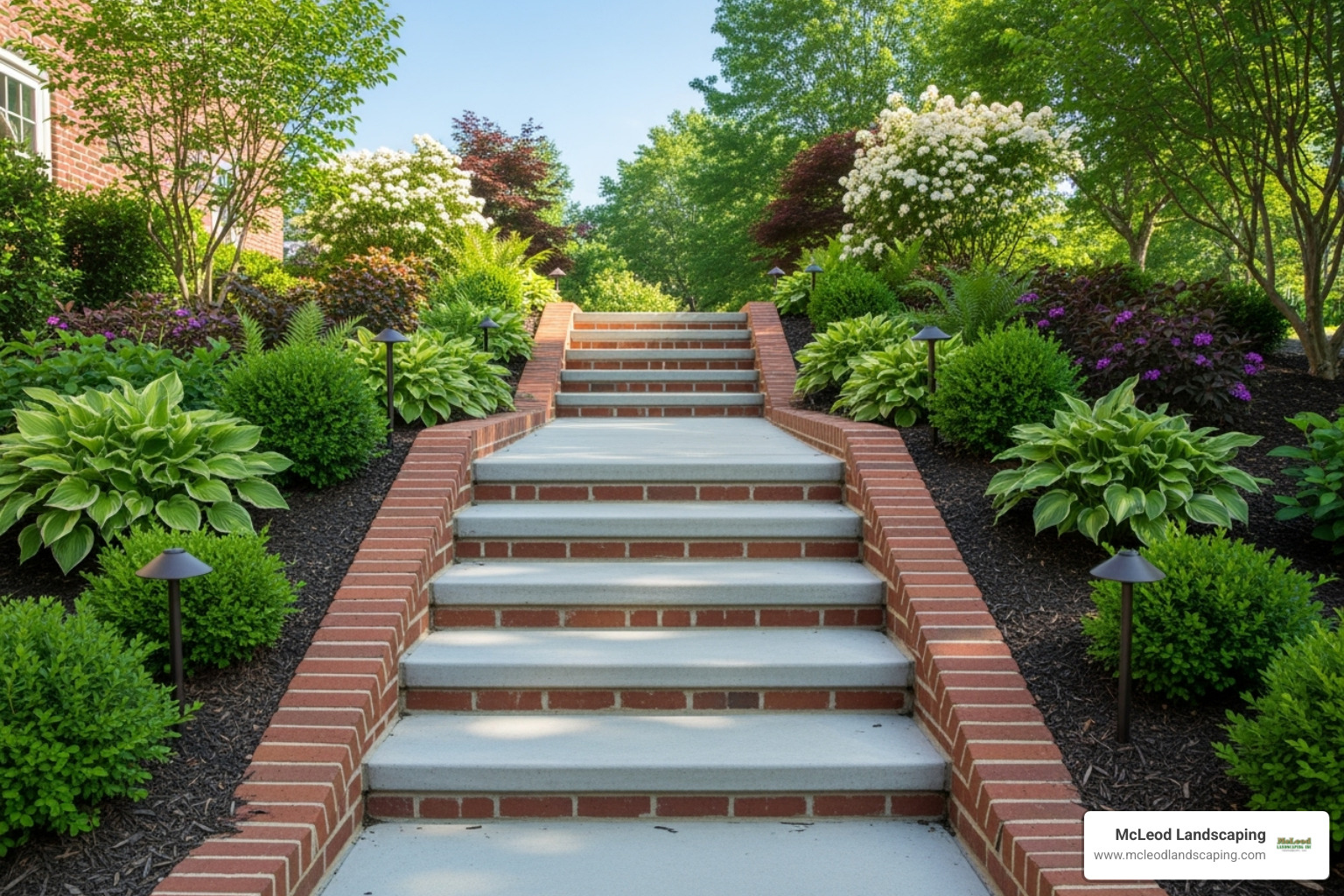
The concrete finish on your treads is crucial for both aesthetics and safety. It’s important to choose one that complements your brick and provides adequate slip resistance.
Proper lighting and landscaping can transform your steps from functional to stunning. Riser lights embedded in the brick create a warm glow for safe nighttime navigation, often paired with path lighting for a complete design.
Landscaping softens the masonry and connects the entrance to your yard. Garden beds with a mix of shrubs and flowers or seasonal planters add color and life. A thoughtful design creates a grand entrance that feels welcoming. For more ideas on connecting pathways, see our walkway installation services.
Brick steps with concrete treads are incredibly versatile and adapt to many architectural styles.
With custom designs, we can tailor every element—from brick color to concrete finish—to perfectly match your home’s unique personality.
When it comes to brick steps with concrete treads, the difference between a beautiful entrance that lasts decades and one that becomes a maintenance headache often comes down to two things: proper installation and smart maintenance practices. After thirty years in the Merrimack Valley, I’ve seen what works and what doesn’t – and trust me, cutting corners during installation always comes back to haunt you.
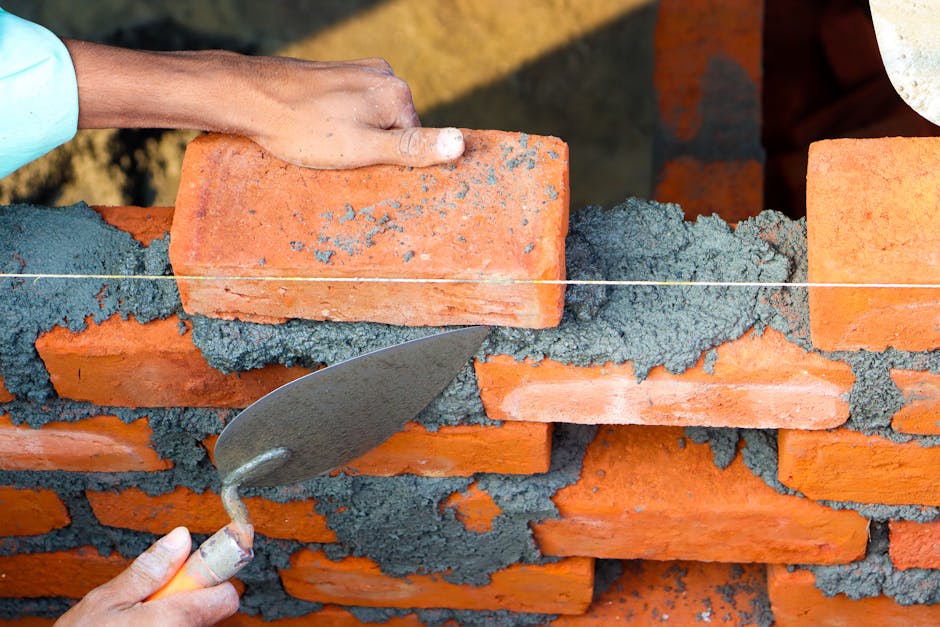
The foundation truly is everything when building exterior stairs. I tell my clients that brick steps with concrete treads built on a proper concrete and cinder block foundation should outlast the youngest member of their family – and I mean it. This isn’t just sales talk; it’s what happens when you do things right from the ground up.
Getting the foundation right is where everything begins. We start by excavating to create a solid foundation that goes deep enough to prevent frost heaving – typically at least 10 inches below the frost line in our Massachusetts climate. This isn’t optional; it’s what separates stairs that last from ones that shift and crack within a few years.
The proper sub-base preparation involves using crushed stone that we compact in layers. Think of it like building a house – you wouldn’t skip the foundation, and we don’t skip this step either. Each layer gets compacted multiple times until it’s rock solid. Without this stable base, even the most beautiful brickwork will eventually become uneven or unsafe.
Water management is absolutely critical for brick steps with concrete treads. We build in a slight water runoff slope – about a quarter inch per foot – so water never pools on the treads. Standing water is the enemy of any masonry work, especially during our freeze-thaw cycles here in New England.
Building code compliance isn’t just about getting permits (though that’s important too). The codes exist because they work. Step height, tread depth, and riser consistency all have specific requirements that ensure safety and usability. We follow these religiously because nobody wants a lawsuit, and more importantly, nobody wants someone getting hurt on their property.
Quality materials make all the difference. We use frost-resistant bricks rated for our climate and high-grade mortar that can handle temperature swings. It costs a bit more upfront, but it’s insurance against costly repairs down the road.
Here’s some good news: brick steps with concrete treads are actually easier to maintain than most people think. The concrete treads handle foot traffic beautifully and don’t need the constant attention that all-brick treads require.
Compared to all-brick stairs, your hybrid design has fewer mortar joints to worry about since the concrete treads eliminate the most vulnerable spots where water typically causes problems. All-concrete stairs might seem low-maintenance, but they can develop surface cracks and spalling if not properly sealed.
The key maintenance tasks are straightforward. Checking mortar joints annually takes about fifteen minutes and can save you hundreds in repairs. Look for any cracks or areas where the mortar is pulling away from the brick. Small problems are easy fixes; big problems are expensive ones.
Cleaning concrete treads is simple – a stiff brush and some soapy water handle most situations. For tougher stains, a pressure washer works wonders, but keep the pressure reasonable to avoid damaging the surface texture.
Sealing requirements depend on your specific materials and exposure, but most installations benefit from a quality masonry sealer every few years. Products like Glaze ‘N Seal’s Multi-Purpose Clear Penetrating Sealer provide excellent protection against water penetration and staining without changing the appearance of your materials.
The bottom line? Proper installation by experienced professionals like our team, combined with basic annual maintenance, will keep your brick steps with concrete treads looking great and functioning safely for decades. We offer comprehensive front stairs and step installation services because we believe in building things right the first time – it’s better for everyone involved.
Planning your brick steps with concrete treads project means understanding both the investment and potential problems you might face. Let’s break down the real costs and challenges so you can plan with confidence.
| Project Type | DIY Costs | Professional Installation |
|---|---|---|
| Small project (2-3 steps) | $200 – $800 (materials only) | $600 – $2,400 (materials + labor) |
| Medium project (4-6 steps) | $400 – $1,200 | $1,200 – $4,800 |
| Pros | Lower upfront cost, personal satisfaction | Professional expertise, warranty, proper permits |
| Cons | Risk of costly mistakes, no warranty, time-intensive | Higher upfront investment |
Disclaimer: The following are estimated costs based on internet data and do not represent actual quotes from McLeod Landscaping. Prices can vary significantly based on location, materials, and project scope.
The investment for brick steps with concrete treads depends on several key factors that can dramatically affect your final bill. Understanding these variables helps you budget realistically for your project.
Material costs typically range from $4 to $15 per square foot, with the wide range reflecting different quality levels and finishes. Basic red brick with standard concrete might hit the lower end, while specialty colored brick with stamped concrete treads pushes toward the higher range. The concrete mix, brick type, mortar quality, and any decorative finishes all influence this cost.
Labor costs often represent the largest portion of your investment, reflecting the skilled craftsmanship required for proper masonry work. In the Merrimack Valley, where we work, labor rates reflect both the skill level needed and local market conditions.
Project complexity can significantly impact costs. A simple two-step entrance might range from $200 to $1,500, but this jumps considerably for wider staircases, curved designs, or challenging site conditions. Factors like excavation requirements, drainage needs, and accessibility for equipment all play a role.
For larger residential projects or commercial applications, costs naturally scale up. These often become part of comprehensive hardscaping projects, which you can explore through our commercial hardscaping services.
While brick steps with concrete treads offer excellent durability and appeal, understanding potential challenges helps you make informed decisions and avoid costly surprises down the road.
Water infiltration represents the biggest long-term concern, especially here in Massachusetts where freeze-thaw cycles are common. When water seeps into mortar joints and freezes, it expands and can crack both brick and concrete. This is why proper drainage design and quality sealing are absolutely critical from day one.
Uneven settling can turn beautiful steps into a safety hazard if the foundation work isn’t done right. Without proper excavation, compaction, and base preparation, your steps might develop cracks or become unstable over time. This is exactly why we emphasize the importance of professional installation with proper foundation work.
Mortar decay is a natural process that happens over many years as weather and temperature changes take their toll. Regular maintenance and occasional repointing keep this manageable, but it’s something to plan for in your long-term maintenance budget.
Staining concerns affect both brick and concrete since they’re porous materials. Everything from dirt and leaves to de-icing salts can leave marks. Quality sealing helps prevent this, but it’s worth considering during your design phase.
The importance of proper installation cannot be overstated. While DIY projects might seem appealing for cost savings, the technical requirements for drainage, foundation work, and code compliance make professional installation a wise investment. Poor installation often leads to expensive repairs that far exceed the initial savings from doing it yourself.
When we work with clients on these projects, we always discuss these potential challenges upfront. This way, you understand not just the initial investment, but what to expect for long-term care and maintenance of your beautiful new entrance.
When homeowners in the Merrimack Valley are considering exterior stairs, we hear the same thoughtful questions time and again about brick steps with concrete treads. Let me share some detailed answers that will help you make the best decision for your property.
Here’s the good news – with proper installation on a solid foundation and routine maintenance, brick steps with concrete treads can last for decades, often outlasting the home itself. I’ve seen stairs we built twenty years ago that still look fantastic and function perfectly.
The secret lies in the combination of materials. Brick has been proving its durability for centuries – there’s a reason why so many historic buildings still have their original brickwork. When we construct brick steps on a concrete and cinder block foundation, we’re creating steps that should outlast the youngest member of your family.
Concrete adds another layer of longevity to this equation. Its incredible strength makes it ideal for handling the constant foot traffic that treads endure. While wooden steps might rot or warp, and natural stone can crack from freeze-thaw cycles, this brick and concrete combination creates a truly long-term investment in your property.
This is one of those “it depends” questions that drives homeowners crazy, but here’s the straight answer: permit requirements vary significantly by municipality and project scope.
Generally speaking, any project involving structural changes to your property – like building new stairs or significantly altering existing ones – may require a permit. The good news is that permits exist to protect you, ensuring your construction meets local safety, zoning, and building codes.
In our service areas like Andover, Billerica, Burlington, Carlisle, Chelmsford, Concord, Lowell, Tewksbury, Westford, and Wilmington, each town has its own requirements. We always recommend checking with your local building department before starting any major home improvement project. Investing in quality materials and checking local regulations is crucial, and it can save you headaches down the road.
As professionals, we’re familiar with local requirements and can often help guide you through the permit process, making it much less intimidating than it might seem.
Absolutely! Refacing existing concrete steps with brick risers is actually a popular and cost-effective option for homeowners who want to improve their curb appeal without the expense of complete demolition and rebuilding.
The process typically involves preparing the existing concrete surface, applying a brick veneer to the risers, and often pouring a new concrete cap or tread on top. It’s like giving your stairs a beautiful makeover while keeping the solid foundation you already have.
However, there’s an important caveat: ensure the underlying concrete structure is sound before we begin. We need to check that it’s free of major cracks and structurally stable. Sometimes existing concrete steps can have uneven surfaces, which poses a challenge that requires careful masonry techniques to ensure consistent riser heights and that professional finish you’re looking for.
The beauty of refacing is that you get the stunning appearance of brick steps with concrete treads at a fraction of the cost of starting from scratch, while still achieving that impressive entrance that makes visitors stop and admire your home.
When you step back and look at everything we’ve covered, it’s clear that brick steps with concrete treads represent something special in exterior design. They’re not just another building material combination – they’re a thoughtful marriage of beauty and brains that creates entrances people actually notice and remember.
Think about it: you get the timeless warmth of brick that makes guests feel welcome before they even knock, paired with concrete treads that laugh in the face of heavy foot traffic and New England weather. It’s like having your cake and eating it too, except this cake lasts for decades and makes your neighbors a little jealous.
The design possibilities we’ve explored really showcase how adaptable this combination is. Whether you’re working with a stately Colonial that demands classic elegance or a sleek modern home that calls for clean lines, brick risers with concrete treads can rise to the occasion. The lighting integration, landscaping options, and various concrete finishes mean you’re not just getting functional stairs – you’re getting a custom entrance that reflects your personal style.
There’s an upfront investment to consider. But when you factor in the longevity, the minimal maintenance requirements, and the boost to your property value, it starts looking pretty smart. These aren’t the kind of steps you’ll be replacing in five years or constantly worrying about in harsh weather.
At McLeod Landscaping, we’ve been perfecting this craft for over 30 years throughout the Merrimack Valley. We’ve seen trends come and go, but the appeal of well-built brick steps with concrete treads never fades. From our work in Tewksbury to projects in Andover and Concord, we understand what it takes to create stairs that don’t just look great on day one – they look great year after year.
The secret isn’t just in choosing quality materials or following proper installation techniques (though those matter enormously). It’s in understanding that your entrance sets the tone for your entire property. When we build your stairs, we’re not just mixing mortar and laying brick – we’re creating that crucial first impression that welcomes family and friends home.
Ready to improve your property with stairs that combine beauty, durability, and smart design? We’d love to help you create an entrance that makes coming home feel special every single day. After all, in a world full of shortcuts and quick fixes, there’s something deeply satisfying about building something that’s meant to last. Ready to improve your property with stunning brick and concrete stairs?
Contact McLeod Landscaping today at (978) 640-0957 or click here to schedule a consultation for retaining wall installation. Let our experienced team design and install a functional and visually appealing retaining wall that enhances your landscape.


1881 Main St Unit 1, Tewksbury, MA 01876