
A commercial automatic drip irrigation system is a water-efficient method that delivers water directly to plant roots through a network of tubes, emitters, and automated controls. These systems can reduce water usage by up to 70% compared to traditional sprinklers, improving plant health and reducing maintenance costs.
Key benefits of commercial automatic drip irrigation systems:
With rising water costs, commercial properties face pressure to reduce consumption. Traditional sprinklers waste water through evaporation and runoff, but smart property managers know drip irrigation benefits both the environment and their bottom line. As University Research Park demonstrated, investing in smart irrigation can pay for itself in the first season, saving 25 million gallons of water and $120,000 on water bills across just 55 acres.
I’m Scott McLeod, owner of McLeod Landscaping. With over three decades of experience, I’ve helped hundreds of commercial properties switch to efficient commercial automatic drip irrigation systems, reducing water use and maintenance. This guide will help you make the right choice for your property.
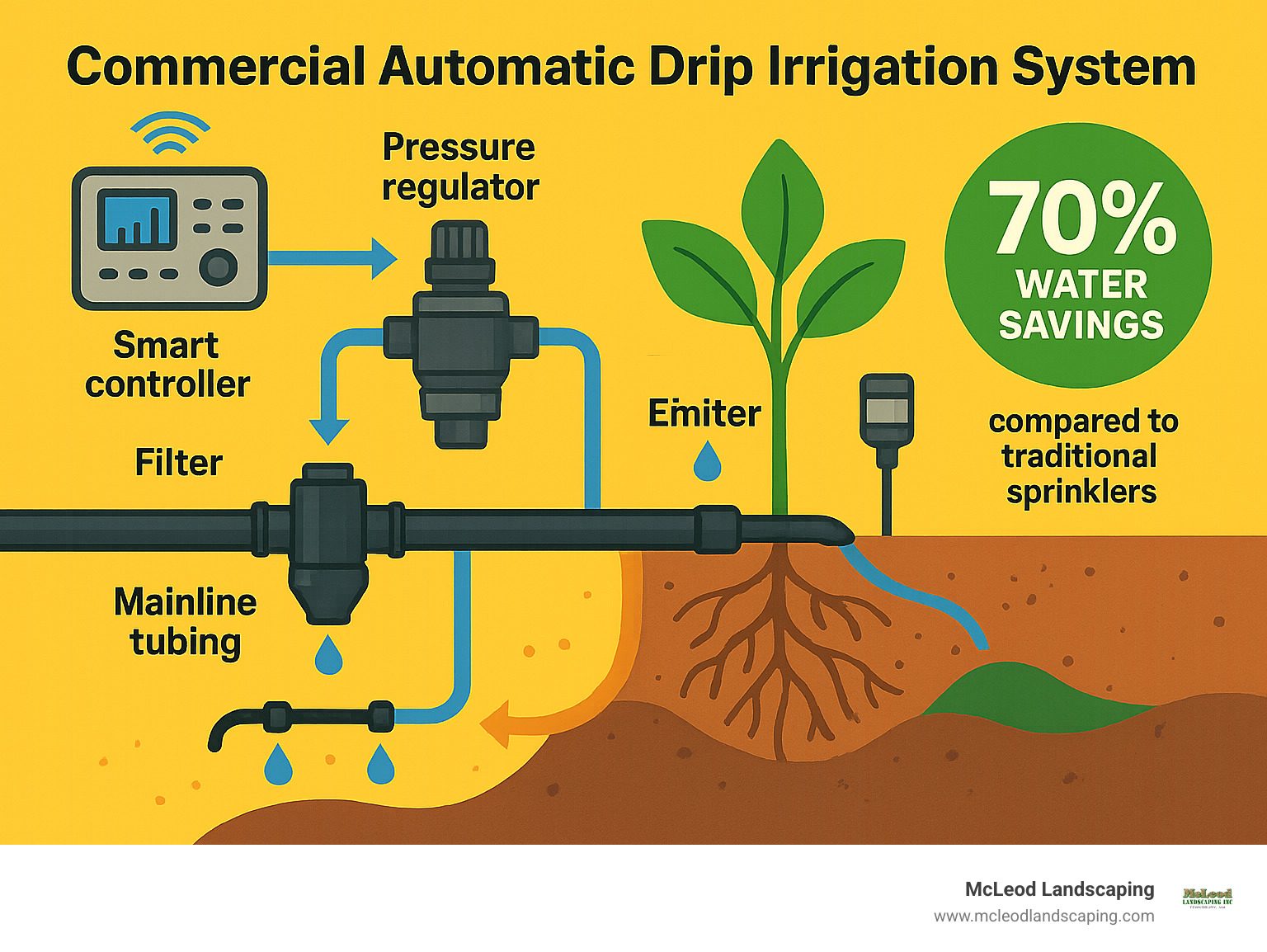
Commercial automatic drip irrigation system word roundup:
Property managers quickly see the financial impact of commercial automatic drip irrigation systems. It’s a smart business decision that pays dividends. The headline benefit is water conservation, with systems reducing usage by up to 70% compared to sprinklers. This directly translates to reduced water bills. The University Research Park, for example, saved $120,000 on water bills across 55 acres in one season.
Other key benefits include improved plant health from consistent, targeted root moisture, leading to more resilient landscapes. A surprising advantage is minimized weed growth, as drip systems only water desired plants. The slow application also means reduced soil erosion. Finally, automation provides significant labor savings, freeing up your team for other tasks. These systems help adhere to sustainability initiatives while simplifying property management.
Drip irrigation outperforms traditional sprinklers in most commercial scenarios. Traditional sprinklers spray water into the air, losing a significant amount to evaporation and wind. Their high runoff potential means water often ends up in storm drains instead of feeding plants.
A commercial automatic drip irrigation system avoids this by delivering water through tubes directly to each plant’s root zone. This targeted root zone watering ensures every drop counts. A major health benefit is foliar disease reduction, as leaves stay dry, preventing fungal growth.
Drip systems also offer superior suitability for different landscapes. While sprinklers work for large lawns, drip irrigation excels with mixed plantings, beds, shrubs, and trees, allowing customized water delivery. For more insights, explore our Commercial Irrigation Systems services.
| Feature | Drip Irrigation | Traditional Sprinkler Systems |
|---|---|---|
| Water Efficiency | High (up to 70% reduction in water usage) | Low to Moderate (high evaporation and runoff) |
| Cost | Higher initial investment, lower long-term operating costs | Lower initial investment, higher long-term operating costs |
| Maintenance | Lower overall maintenance, periodic system checks | Higher maintenance, frequent head adjustments |
| Plant Health | Improved (consistent moisture, reduced disease) | Variable (can lead to overwatering or dry spots) |
The initial investment costs for a commercial automatic drip irrigation system are higher than for traditional sprinklers, but the long-term savings are substantial. Please note, the following figures are based on average costs from internet data, not actual prices from McLeod Landscaping. These sources indicate a wide price range, from $0.50 to $15.00 per square foot, with the high end often being more than three times the cost of a simpler project, depending on complexity. We provide custom quotes for each unique property.
Long-term savings appear quickly. A water usage reduction of up to 70% dramatically lowers utility bills. Lower labor costs also add up, as your team spends less time on watering tasks. Adding fertigation leads to reduced fertilizer waste, and increased plant longevity means fewer replacements, improving property value.
An independent study on ROI found rain sensors provided an 87% ROI in the first year, while soil moisture sensors delivered a 200% ROI. These numbers represent real money back in your pocket. For a detailed breakdown, see our insights on Commercial Irrigation System Cost.
Think of a commercial automatic drip irrigation system like a landscape’s circulatory system, delivering water precisely where it’s needed. Water from the source is cleaned, regulated for pressure, and sent through a network of tubes to each plant. This methodical approach eliminates waste.
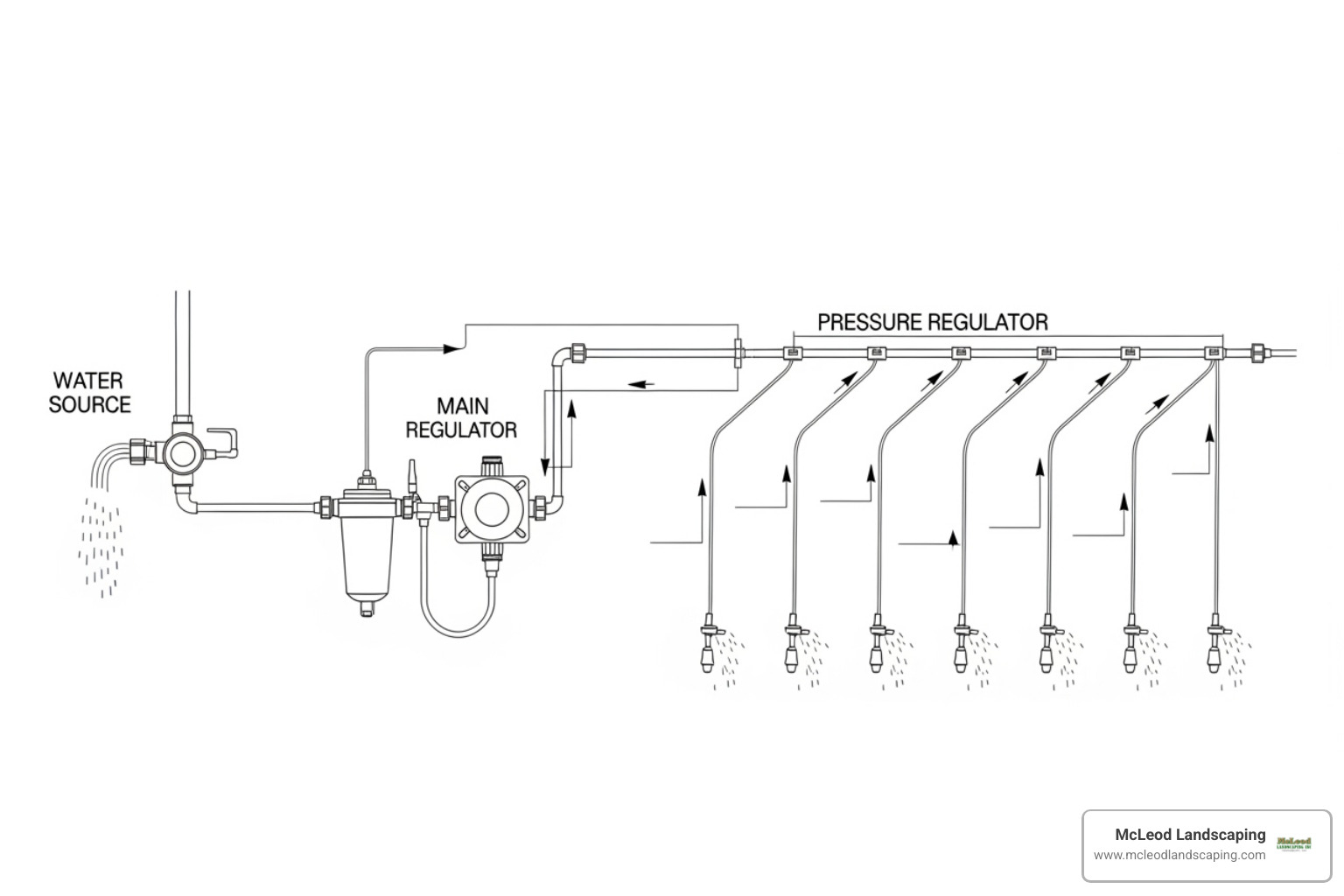
Proper installation, from zone mapping to pressure calculations, is crucial for long-term success. You can learn more about what goes into this process in our guide on How are Irrigation Systems Installed?.
A commercial automatic drip irrigation system has several key components:
Automation transforms a watering setup into a smart landscape management tool.
This level of automation creates a set-and-forget system that gets smarter over time. Learn more about the technology in our guide to Commercial Irrigation Controllers.
A commercial automatic drip irrigation system must be custom-custom to your property to perform at its best. A well-designed system nurtures plants by delivering exactly what they need, accounting for everything from thirsty flower beds to drought-tolerant shrubs.
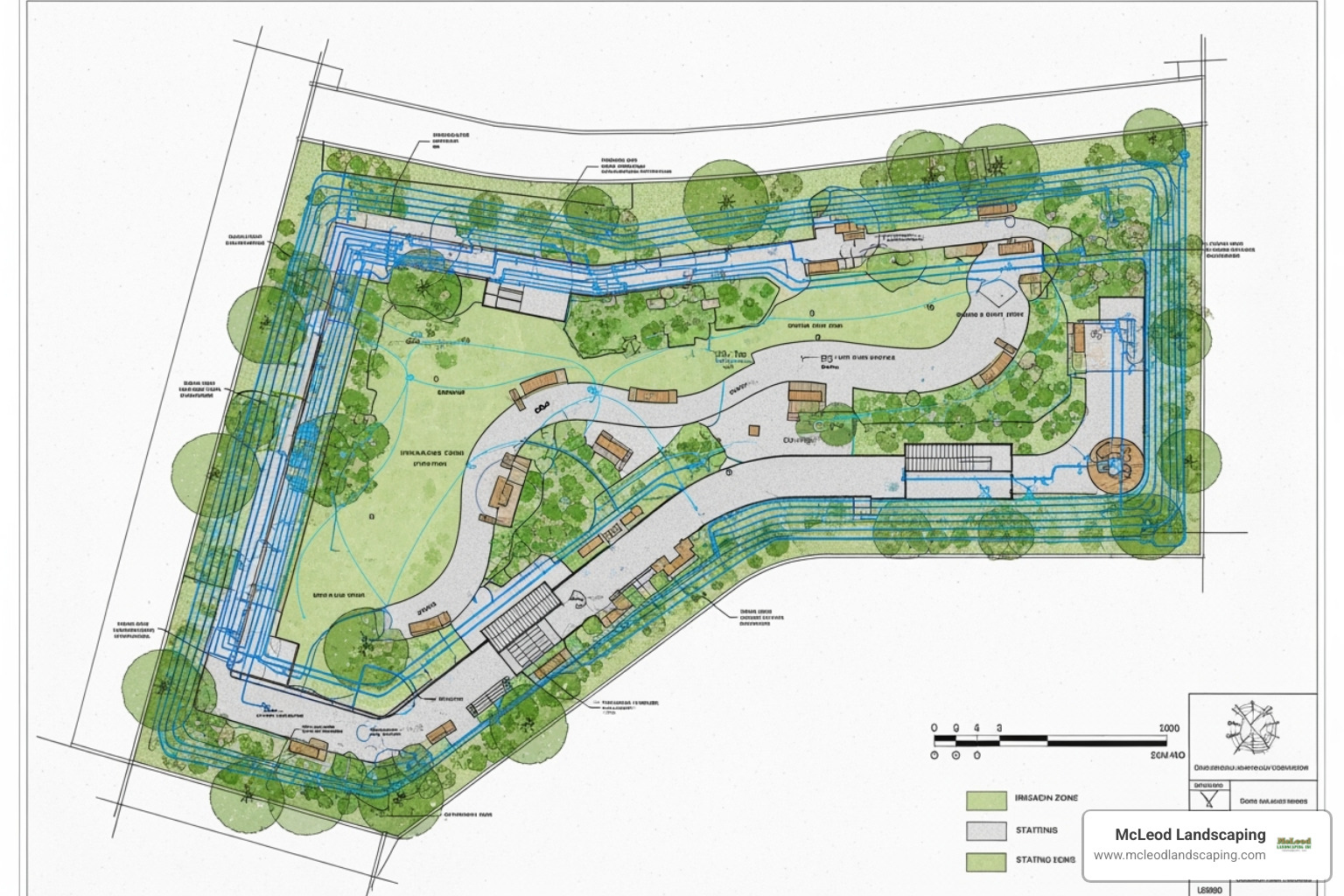
The process begins with a comprehensive site assessment to maximize efficiency and plan for future growth. Our expertise in Commercial Irrigation System Design ensures every detail is considered, saving you headaches and money long-term.
Selecting the right commercial automatic drip irrigation system depends on several factors:
Proper installation and ongoing care are essential for a commercial automatic drip irrigation system to deliver on its promises.
When problems arise, our Commercial Irrigation Repair services keep your system running smoothly.
A commercial automatic drip irrigation system is a sophisticated landscape management tool. Integrating advanced technology and diligent maintenance is key to maximizing efficiency and protecting your investment.

Modern drip systems can do more than deliver water—they can feed plants, monitor themselves, and alert you to issues. Understanding which advanced features benefit your property and maintaining them properly is crucial.
Fertigation, the process of delivering nutrients through irrigation water, is a game-changing addition to a commercial automatic drip irrigation system.
Setup requires an injector pump, a mixing tank, and proper backflow prevention. The investment pays for itself through material and labor savings, enhancing your Commercial Landscape Management strategy.
Regular maintenance is an insurance policy for your commercial automatic drip irrigation system. Key tasks include:
While your team can handle visual checks, complex tasks require professional expertise. Our Irrigation System Services ensure reliable performance and protect your investment.
As a landscaping professional with over three decades of experience, I’ve answered many questions about a commercial automatic drip irrigation system. Here are the most common ones from property managers considering this smart investment.
A commercial automatic drip irrigation system can reduce water usage by up to 70% compared to traditional sprinklers. The system delivers water directly to the plant’s root zone, eliminating waste from evaporation and wind. This efficiency leads to significant savings on water bills, often within the first season, while helping your business meet sustainability goals.
Yes, these systems are incredibly versatile. A commercial automatic drip irrigation system can be customized for turf areas, flower beds, trees, and shrubs. The key is a professional Commercial Irrigation System Design that accounts for your property’s unique soil, terrain, and plant water needs. They are especially effective for mixed plantings, sloped areas prone to runoff, and properties with water restrictions.
With professional installation and regular maintenance, a high-quality commercial automatic drip irrigation system can last 15-20 years or more. The core infrastructure of pipes and tubing is built for longevity, while components like smart controllers can be upgraded as technology evolves. Consistent maintenance, including leak detection, filter cleaning, and proper winterization, is key to maximizing this lifespan. The long-term savings in water and maintenance often far exceed the initial investment.
The benefits of a commercial automatic drip irrigation system—water savings, healthier landscapes, and lower costs—depend on expert design, installation, and maintenance. Partnering with an experienced professional is crucial to avoid the pitfalls of a poorly planned system. A commercial automatic drip irrigation system is an investment that requires understanding your property’s unique soil, plants, and future needs.
For properties in the Merrimack Valley, including Andover, Billerica, Burlington, Carlisle, Chelmsford, Concord, Lowell, Tewksbury, Westford, or Wilmington, MA, we provide local expertise. We understand our region’s climate and soil challenges.
Our process begins with a thorough site assessment to design a cost-effective, efficient, and sustainable system custom to your needs. Don’t wait another season. Transform your property’s water management with our professional Commercial Irrigation Systems services. Let’s create a system that saves money, conserves water, and keeps your landscape thriving.
Contact McLeod Landscaping today at (978) 640-0957 or click here to schedule a consultation for retaining wall installation. Let our experienced team design and install a functional and visually appealing retaining wall that enhances your landscape.


1881 Main St Unit 1, Tewksbury, MA 01876