

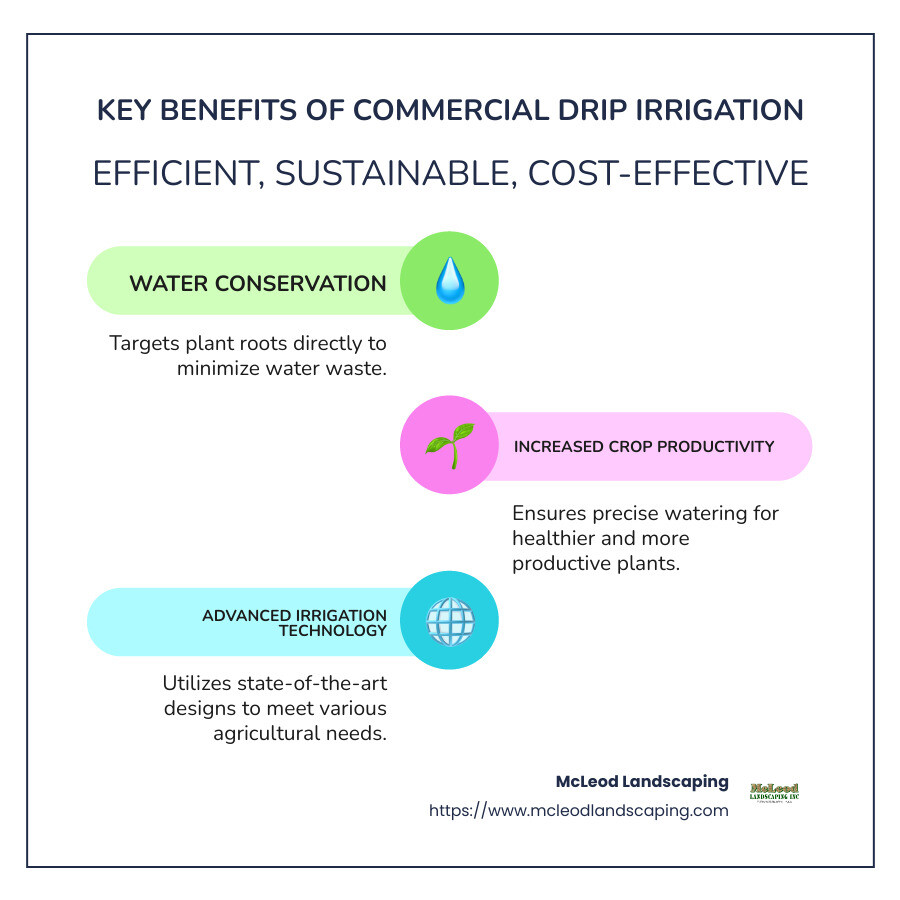
Commercial drip irrigation systems are changing the landscape of modern agriculture and property management. These systems are critical for enhancing water conservation, boosting crop productivity, and advancing irrigation technology. Here’s a quick overview of why they matter:
As Scott McLeod, with over 30 years of experience in the landscaping industry, particularly in the implementation of commercial drip irrigation systems, I am committed to helping businesses in the Merrimack Valley optimize their irrigation strategies. Having improved numerous properties’ water efficiency and aesthetics, I look forward to sharing insights further in this article.
Commercial drip irrigation systems terms to know:
– commercial irrigation systems
– commercial lawn sprinkler
– irrigation systems
Drip irrigation systems are all about maximizing efficiency. They deliver water directly to the roots of plants, ensuring every drop counts. This precision irrigation minimizes water usage, making it a top choice for conserving resources.
In traditional irrigation methods, a lot of water is lost to evaporation and runoff. Drip irrigation, however, is a game-changer. By delivering water directly to the soil, it significantly reduces waste. This method can save up to 70% more water compared to conventional watering systems. For areas experiencing water scarcity, like many parts of the U.S., this is a crucial benefit.
Precision is key in commercial drip irrigation systems. They allow for exact control over the amount and timing of water delivery. This means each plant gets the right amount of water it needs to thrive. It’s like having a tailor-made watering schedule for your crops. This targeted approach not only conserves water but also promotes healthier plant growth.
Efficiency isn’t just about saving water. It’s also about using fewer resources overall. Drip systems require less energy because they operate at lower pressures than other irrigation systems. Plus, they can be integrated with smart technologies. These technologies use weather data and soil moisture sensors to adjust watering schedules automatically. This means less manual labor and fewer resources spent on maintenance.

Scott McLeod emphasizes, “Efficient irrigation is not just a choice; it’s a necessity for sustainable agriculture.” By understanding and implementing these systems, businesses can improve their operations while protecting vital resources.
Next, we’ll dive into some of the top commercial drip irrigation systems available and how they can benefit your landscape or agricultural project.
When it comes to commercial drip irrigation systems, McLeod Landscaping offers a range of solutions designed to meet the needs of modern agriculture. Our systems are not only efficient but also incorporate smart technology to help farmers grow high-value crops with precision and care.
At McLeod Landscaping, we are committed to advancing drip irrigation technology. Our systems are designed to address global challenges like water scarcity and food security. By delivering water directly to the plant’s roots, our systems ensure that every drop is used effectively, resulting in higher yields and better crop quality.
One of the standout features of our systems is their adaptability. Whether you’re working with a small plot or a large agricultural field, our systems can be customized to meet your needs. This flexibility makes them a top choice for commercial operations.
Smart irrigation is revolutionizing the way we think about watering our crops. Our systems use advanced technologies like weather sensors and soil moisture detectors. By gathering real-time data, they adjust watering schedules automatically, ensuring optimal water usage.
For example, in Egypt, some farmers have started using mobile irrigation systems to save water and boost crop productivity. While some experts are skeptical about the technology’s cost and complexity, those who accept it see significant benefits. As one farmer noted, “Embracing new irrigation trends will help us adapt to future changes.”

With the right irrigation system, farmers can focus on growing high-value crops. These crops often require precise watering to ensure quality and yield. Drip irrigation systems provide this precision, allowing farmers to maximize their profits. By minimizing waste and optimizing resource use, these systems support sustainable agricultural practices.
In summary, commercial drip irrigation systems from McLeod Landscaping offer a powerful combination of efficiency, smart technology, and adaptability. They enable farmers to grow high-value crops while conserving vital resources.
Next, we’ll explore the benefits of these systems in more detail, focusing on how they can lead to water savings, increased yields, and reduced costs.
Water Savings
One of the biggest advantages of commercial drip irrigation systems is their ability to conserve water. These systems deliver water directly to the plant’s roots, reducing evaporation and runoff. According to research, smart irrigation systems, which include drip irrigation, can significantly cut down water usage by incorporating soil moisture sensors and weather data analysis. This ensures water is only used when needed, helping to address global water scarcity concerns.
Increased Yields
By providing precise amounts of water to each plant, drip irrigation systems help increase crop yields. This precision watering method ensures that plants receive the right amount of moisture, leading to healthier growth and better quality crops. Farmers using systems like those from Netafim have reported higher yields and improved crop quality, which can be crucial for maintaining a competitive edge in the agricultural market.
Reduced Costs
While the initial investment in a drip irrigation system can be significant, the long-term cost savings are substantial. By reducing water waste and improving crop yields, these systems help lower operational costs. Additionally, smart irrigation systems automate watering schedules, saving time and reducing labor costs. Over time, the efficiency gains and resource savings can lead to a noticeable reduction in overall expenses.
Incorporating commercial drip irrigation systems into agricultural practices not only supports sustainable water management but also boosts productivity and profitability. These benefits make drip irrigation an attractive option for farmers looking to optimize their operations.
Next, we’ll dig into the challenges faced when using drip irrigation systems and explore potential solutions.
Clogged Tubing
One of the most common issues with commercial drip irrigation systems is clogged tubing. This problem often arises from debris or mineral buildup, especially in areas with hard water. A simple yet effective solution is regular maintenance and cleaning. Using filters can also prevent particles from entering the system. Additionally, punching holes in the tubing when it is cold can make the process easier and more precise, reducing the risk of clogging.
Unsightly Systems
Drip irrigation systems, while effective, can sometimes detract from the visual appeal of a landscape. This is especially true in commercial settings where aesthetics matter. A practical approach to this issue is to place the tubing strategically or use mulch to cover it. This not only hides the tubing but also helps retain soil moisture, enhancing the system’s efficiency.
Monitoring Effectiveness
Monitoring the effectiveness of a drip irrigation system is crucial for optimizing water use and ensuring plant health. Smart irrigation technologies, like those mentioned in the research, offer advanced solutions. These systems use sensors and data analysis to adjust watering schedules based on real-time conditions. This means less manual monitoring and more accurate water delivery, ensuring plants receive the right amount of water at the right time.
By addressing these challenges, farmers and landscapers can reap the full benefits of commercial drip irrigation systems, making them a smart choice for sustainable agriculture and landscaping.
Next, we’ll tackle some frequently asked questions about commercial drip irrigation systems.
The 30/30 rule is a handy guideline for setting up drip irrigation systems. It means you should limit each run of tubing to a maximum length of 30 feet. Additionally, the total flow from all emitters on that run should not exceed 30 gallons per hour (GPH). This rule helps maintain consistent water pressure throughout the system, ensuring each plant receives the right amount of water.
One major issue with commercial drip irrigation systems is clogging. This often happens when mineral deposits or debris block the tiny emitters, especially in areas with hard water. Hard water is rich in minerals like calcium and magnesium, which can accumulate and cause blockages over time. To combat this, many systems use filters, though these can be costly to maintain. Regular cleaning and the use of water softeners can also help keep the system running smoothly.
The cost of a drip irrigation system can vary widely. Factors like the size of the area, the complexity of the system, and the quality of materials all play a role. Generally, a basic DIY system might start at a few hundred dollars, while a professionally installed system could run into the thousands. It’s important to weigh the initial costs against the long-term savings in water and increased crop yields. DIY installations can save money but may require more time and effort to set up correctly. Professional installations, on the other hand, ensure everything is done right from the start, minimizing potential issues down the road.
Next, let’s wrap up by discussing McLeod Landscaping’s comprehensive services in the Merrimack Valley.
At McLeod Landscaping, we pride ourselves on offering comprehensive services custom to meet the unique needs of our clients in the Merrimack Valley. With over 30 years of experience, we understand the importance of effective irrigation systems in maintaining healthy, vibrant landscapes.
Our expertise in commercial drip irrigation systems ensures that we can design and install solutions that maximize water efficiency and boost crop productivity. Whether you’re looking to save on water bills or improve the health of your landscape, our team provides the right system for your needs.
We’re more than just an irrigation service provider. Our full-service approach includes everything from landscape design and installation to maintenance and commercial snow management. This means you get a seamless experience, knowing that all aspects of your landscape are being taken care of by a single, reliable team.
Serving locations such as Andover, Billerica, Burlington, and more, McLeod Landscaping is your go-to partner for all your commercial landscaping needs in the Merrimack Valley. Ready to transform your landscape with an efficient irrigation system? Contact us today to learn more about how we can help you achieve a sustainable and beautiful outdoor space.
Contact McLeod Landscaping today at (978) 640-0957 or click here to schedule a consultation for retaining wall installation. Let our experienced team design and install a functional and visually appealing retaining wall that enhances your landscape.


1881 Main St Unit 1, Tewksbury, MA 01876