
A commercial farm irrigation system is essential for delivering water efficiently to crops, maximizing yield, and minimizing waste. With agriculture consuming about 70% of global freshwater, the right system directly impacts profitability and sustainability.
Key factors when selecting a system:
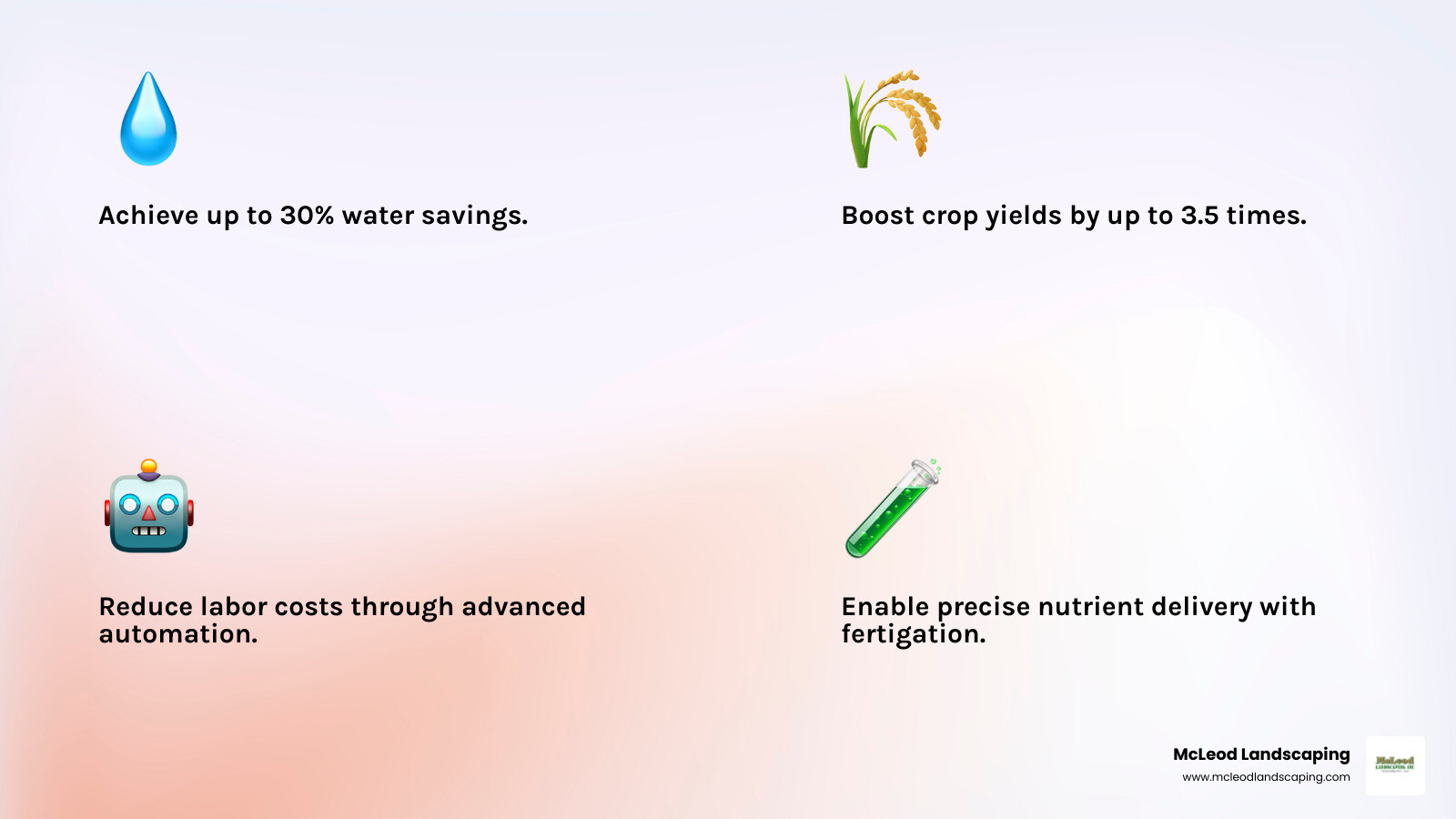
The right irrigation system can increase crop yields while reducing water waste by up to 30%. Modern precision technologies deliver water and nutrients (via fertigation) directly to plant roots, minimizing evaporation.
As Scott McLeod, I’ve helped commercial properties in the Merrimack Valley optimize their water management for over 30 years. A proper commercial farm irrigation system design translates to healthier landscapes and reduced operating costs. My experience shows that investing in quality irrigation pays dividends through improved plant health and lower maintenance.
Commercial farm irrigation system terms explained:
A commercial farm irrigation system is a complex network designed for effective water delivery. Understanding its components is crucial for design, operation, and maintenance. The main components include:
A thoughtful Commercial Irrigation System Design ensures all these components work in harmony, maximizing water efficiency and crop health.
Choosing the right commercial farm irrigation system is critical, as there is no one-size-fits-all solution. The main types include Drip, Sprinkler (Center Pivot, Linear Move, Solid Set, Traveling Guns), and Fixed Grid systems.
Key selection factors include:
Here’s a quick comparison:
| System Type | Water Efficiency | Initial Cost | Suitable Crops | Maintenance Level |
|---|---|---|---|---|
| Drip | High | Medium-High | Row crops, orchards, vegetables | Medium-High (for emitters) |
| Sprinkler | Medium-High | Medium | Field crops, pastures, vegetables | Medium |
| Center Pivot | High | High | Broadacre crops (corn, wheat, alfalfa) | Low-Medium |
We recommend a thorough assessment to help with Choosing the Right Irrigation System for Your Landscape: A Guide by McLeod Landscaping.
Drip irrigation delivers water slowly and directly to the plant’s root zone through a network of tubes and emitters. This precision offers significant benefits:
For optimizing water and nutrient use, Commercial Drip Irrigation Systems are a top choice. Resources like Toro Ag’s digital catalog show various high-performance drip components.
Sprinkler systems simulate rainfall to cover large areas efficiently. Common types include:
Sprinklers are also vital for frost protection, as the continuous application of water can protect crops during freezing temperatures. A Sprinkler Selection Tool can help find the right heads, and our team offers expertise on Commercial Irrigation Sprinkler Heads for optimal performance.
The future of farming is smart irrigation. This technology uses real-time data and automation to deliver the right amount of water at the right time, minimizing waste and maximizing yield.
Smart irrigation leverages several key components:
These technologies prevent overwatering, leading to up to 30% energy savings, lower water bills, and a reduced environmental footprint.
A smart commercial farm irrigation system increases crop yields and reduces resource waste. A key technique is fertigation, which injects dissolved fertilizers into the irrigation water for direct delivery to the root zone. This minimizes runoff and fertilizer consumption. Our Commercial Fertigation Systems are designed for this level of precision.
Smart systems also improve diagnostics. Master valves and flow sensors prevent water waste by shutting off flow if leaks are detected and identifying irregularities in water usage for prompt repairs.
Effective scheduling is critical for crop growth and water efficiency. It’s about timing, duration, and volume. Common methods include:
The goal is to provide the right amount of water at the right time to prevent crop stress and optimize growth, as detailed in comprehensive guides on Irrigation management.
Implementing a commercial farm irrigation system is a significant upfront investment, but one that pays for itself through increased efficiency and productivity. The financial picture includes initial costs for hardware and installation, plus ongoing operational expenses. However, long-term savings from reduced water and energy use often provide a rapid return.
Water regulations are also a key consideration, but modern, efficient systems make compliance easier while boosting yields.
The return on investment (ROI) for a commercial farm irrigation system comes from several sources:
For example, a University Research Park saved 25 million gallons of water and $120,000 in one season. Studies also show impressive ROI for smart sensors: rain sensors can yield an 87% ROI in the first year, while soil moisture sensors can deliver a 200% ROI.
Note: All service prices referenced are average costs based on internet data and not actual costs for McLeod Landscaping.
Installation costs vary widely. A basic commercial farm irrigation system might average $5,000 to $20,000 per acre, while advanced systems could range from $20,000 to $80,000+ per acre, depending on complexity. For a custom estimate, see our Commercial Irrigation System Cost guide.
Understanding the regulatory landscape for commercial farm irrigation systems helps you plan effectively. Key aspects include:
The EPA WaterSense program offers resources for water-efficient products. Working with professionals who understand these regulations can save significant time and money.
Even the most advanced commercial farm irrigation system requires diligent care to maintain efficiency and extend its lifespan. Neglecting maintenance leads to costly repairs, wasted water, and compromised crop health.
Regular maintenance practices include inspecting for clogs and leaks, checking water pressure, caring for pumps and filters, and ensuring sprinkler heads and emitters are functioning correctly. For drip systems, proper filtration and flushing are essential, as shown in guides on Maintaining drip irrigation systems.
A seasonal maintenance checklist is highly recommended:
For comprehensive care, consider professional Commercial Irrigation Repair and Irrigation System Services. Proactive maintenance ensures your system runs smoothly, saves water, and supports healthy crop yields.
Choosing the right commercial farm irrigation system is one of the smartest investments for your farm’s future. Modern systems, from precision drip irrigation systems to versatile sprinkler systems, deliver exactly what your crops need, when they need it.
The return on investment is clear. Smart technology can dramatically reduce water use and utility bills, with some sensors showing a 200% ROI in the first year. A well-designed system is the backbone of sustainable, profitable farming, helping you grow healthier crops while protecting our precious water resources.
At McLeod Landscaping, we have over three decades of experience helping clients across the Merrimack Valley with their water management challenges. We understand that every property is unique and create custom solutions that match your specific crops, soil, and budget.
Ready to take the next step toward more efficient, profitable farming? Contact us to design and install your commercial farm irrigation system and let’s work together to make every drop count.
Contact McLeod Landscaping today at (978) 640-0957 or click here to schedule a consultation for retaining wall installation. Let our experienced team design and install a functional and visually appealing retaining wall that enhances your landscape.


1881 Main St Unit 1, Tewksbury, MA 01876