
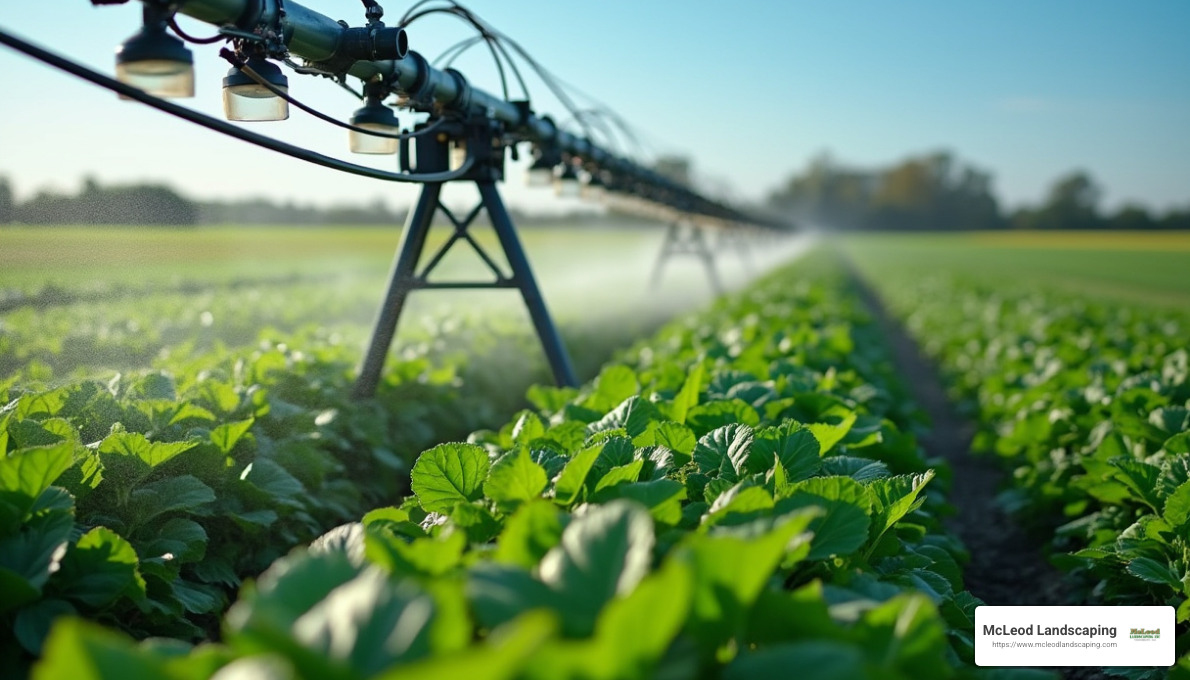
Commercial fertigation systems are revolutionizing the way we nourish plants, providing an efficient and effective way to deliver nutrients directly to the roots. These systems merge irrigation and fertilization processes, optimizing plant growth while conserving resources. Key advantages include:
At McLeod Landscaping, we understand the importance of integrating advanced solutions like commercial fertigation systems to improve irrigation practices. With over 30 years in the landscaping industry, I, Scott McLeod, have dedicated my career to providing sustainable, efficient solutions for commercial and residential properties. Stay tuned to learn more about how these systems can transform your landscape management.
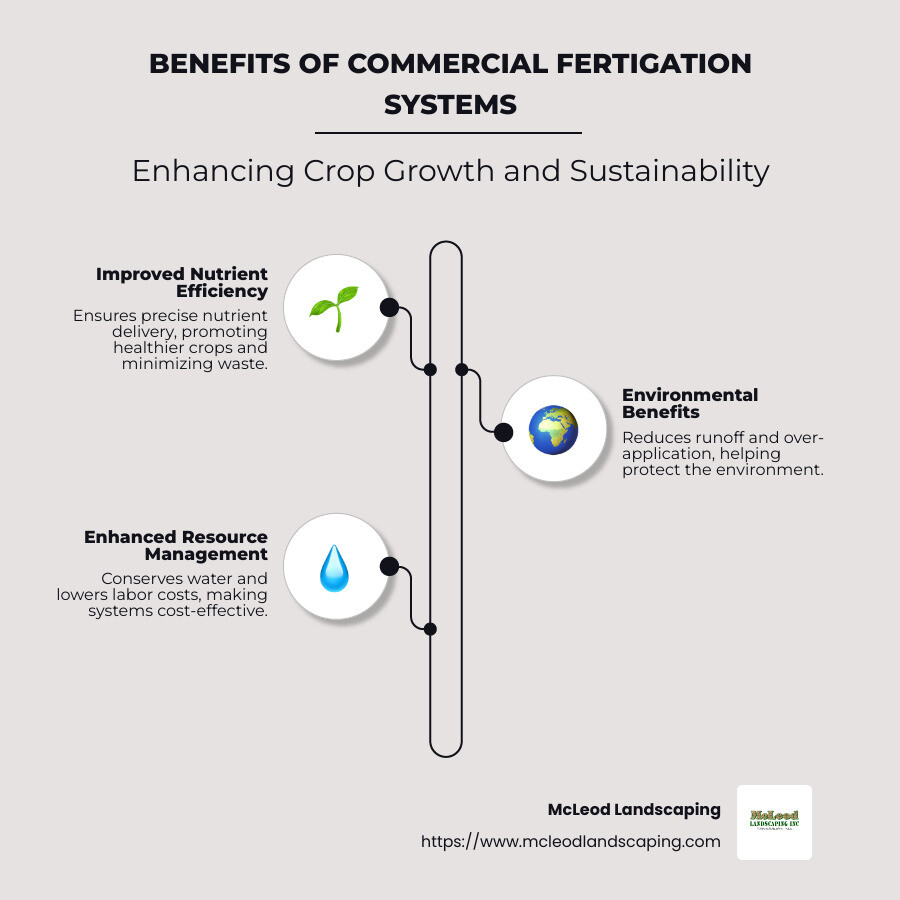
Simple guide to commercial fertigation systems:
Commercial fertigation systems are a game-changer for modern agriculture, combining the power of irrigation with the precision of fertilization. These systems deliver nutrients directly to plants through the irrigation water, ensuring that every drop is put to good use.
The core of fertigation is nutrient delivery. Traditional methods often involve spreading fertilizers on the soil surface, which can lead to uneven distribution and waste. In contrast, fertigation delivers nutrients in liquid form, allowing for precise control over the amount and timing. This means plants get exactly what they need, when they need it, promoting healthier growth and higher yields.
Irrigation integration is where fertigation truly shines. By merging with existing irrigation systems, fertigation ensures that nutrients are evenly distributed across the entire root zone. This not only improves nutrient uptake but also reduces the risk of nutrient runoff, which can harm the environment.
Many systems, like the ones used by McLeod Landscaping, incorporate advanced technologies such as solar integrators and enviro sensors. These tools adjust fertigation schedules based on environmental conditions like light intensity and humidity, ensuring that plants are fertigated only when necessary. This smart approach conserves water and nutrients, making it a sustainable choice for eco-conscious growers.
Incorporating commercial fertigation systems into your landscape management can significantly boost resource efficiency and crop quality. At McLeod Landscaping, we prioritize these innovative solutions to help you achieve a thriving and sustainable landscape.
In commercial fertigation systems, there are several types to consider, each with its unique advantages and applications. Let’s explore the most common systems: drip irrigation, sub-surface drip, and micro-sprinkler.
Drip irrigation is perhaps the most popular type of fertigation system. It delivers water and nutrients directly to the plant’s root zone through a network of tubes and emitters. This method is highly efficient, minimizing water waste and ensuring precise nutrient delivery.
Sub-surface drip irrigation takes the benefits of traditional drip irrigation underground. This system places the drip lines below the soil surface, directly targeting the root zone.
Micro-sprinkler systems use small, low-pressure sprinklers to distribute water and nutrients over a larger area. This system is ideal for crops that require a more extensive coverage area.
Each of these commercial fertigation systems offers unique benefits, making it essential to choose the right one for your specific agricultural needs. Whether you’re looking for precision, water conservation, or extensive coverage, there’s a fertigation system that can help optimize your landscape management.
Next, we’ll dig into the advantages of commercial fertigation systems and how they can transform your agricultural practices.
Commercial fertigation systems are revolutionizing agriculture by offering significant advantages in resource efficiency, waste reduction, and improved crop quality. Here’s how:
Fertigation systems are designed to optimize the use of water and nutrients. By delivering nutrients directly to the plant’s root zone, these systems ensure that plants receive the precise amount needed for growth. This targeted approach minimizes the overuse of resources, which is crucial for sustainable agriculture.

Traditional fertilization methods often lead to nutrient runoff, which can harm the environment. Commercial fertigation systems address this issue by minimizing nutrient leakage and ensuring that fertilizers are absorbed by the plants.
The precise nutrient delivery offered by fertigation systems results in healthier, more robust plants. This leads to better crop yields and higher quality produce.
Incorporating commercial fertigation systems into your agricultural practices can transform the way you manage resources, reduce waste, and improve the quality of your crops. As we explore further, we’ll discuss the challenges and solutions associated with these systems, ensuring you have all the information needed to make informed decisions.
While commercial fertigation systems offer numerous benefits, they also come with their own set of challenges. Let’s explore these challenges and the solutions that can help overcome them.
Uneven distribution of nutrients and water can be a significant issue in fertigation systems. This can lead to some plants receiving too much while others receive too little, affecting overall crop health and yield.
System faults, such as leaks or malfunctions in the irrigation setup, can disrupt the delivery of nutrients and water. This can lead to wasted resources and reduced efficiency.
Nutrient leakage occurs when excess fertilizers are not absorbed by the plants and instead leach into the surrounding environment, potentially causing pollution.
By understanding and addressing these challenges, growers can maximize the benefits of commercial fertigation systems. With proper maintenance and management, these systems can continue to improve agricultural efficiency and sustainability.
Drip Irrigation Systems are a popular choice for many commercial growers. These systems deliver water and nutrients directly to the plant’s roots through a network of tubes and emitters. This method is efficient and reduces water wastage by minimizing evaporation and runoff.
Micro-Sprinkler Systems work similarly but distribute water over a broader area. They are ideal for crops that require more extensive coverage. Micro-sprinklers can also help in maintaining the right humidity levels, which is crucial for certain plant types.
Absolutely! Commercial fertigation systems offer significant benefits, such as resource conservation and ecosystem protection. By delivering nutrients directly to the plants, these systems minimize wastage and optimize water usage. This not only conserves resources but also reduces environmental impact by preventing over-fertilization and nutrient runoff.
Growers using fertigation often see improved crop quality and yield, which can lead to higher profitability. The initial investment may seem high, but the long-term savings and environmental benefits make it a worthwhile choice.
While fertigation systems are highly beneficial, they do have some drawbacks. Nutrient leakage is one concern. If the system is not properly calibrated, excess nutrients can leach into the soil and cause environmental harm.
System faults, such as leaks or clogs, can disrupt the flow of water and nutrients, leading to uneven distribution and potential crop damage. Regular maintenance and monitoring are essential to mitigate these issues.
By understanding these disadvantages and implementing proper management practices, the benefits of commercial fertigation systems can be maximized, leading to healthier crops and a more sustainable agricultural practice.
Now that we’ve covered some common questions, let’s dig deeper into how these systems can improve your landscape.
At McLeod Landscaping, we understand the importance of integrating commercial fertigation systems into modern landscaping practices. With over 30 years of experience in the Merrimack Valley, we offer a comprehensive suite of services custom to meet the unique needs of our commercial, municipal, and residential clients.
Our expertise in landscape design, installation, and maintenance ensures that your outdoor spaces are not only beautiful but also sustainable and efficient. By incorporating advanced fertigation systems, we help you achieve optimal plant health and resource efficiency, reducing waste and boosting the overall quality of your landscape.
Our team is dedicated to providing comprehensive services that include everything from irrigation system installation to regular maintenance checks. This ensures that your fertigation system operates smoothly, minimizing issues like nutrient leakage or system faults. We pride ourselves on our ability to deliver custom solutions that meet your specific needs, backed by our extensive knowledge and commitment to sustainability.
If you’re ready to improve your landscape with the latest in fertigation technology, learn more about our commercial irrigation systems. Let us help you create a thriving, efficient, and environmentally responsible outdoor space that you can be proud of.
At McLeod Landscaping, we’re not just building landscapes; we’re crafting the backdrop for your business’s success and your family’s best memories.
Contact McLeod Landscaping today at (978) 640-0957 or click here to schedule a consultation for retaining wall installation. Let our experienced team design and install a functional and visually appealing retaining wall that enhances your landscape.


1881 Main St Unit 1, Tewksbury, MA 01876