

Commercial greenhouse watering systems are vital to the efficiency and success of modern agriculture. Here’s everything you need to know about optimizing irrigation in your greenhouse:
Greenhouse irrigation isn’t just about watering plants. It’s about doing it efficiently to maximize growth while minimizing water use. Effective systems lead to healthier plants and reduced disease risks, which is essential for any commercial operation.
As Scott McLeod, owner of McLeod Landscaping, I’ve spent decades understanding the nuances and best approaches for commercial greenhouse watering systems, helping clients choose the right systems for their needs. We’re committed to providing reliable, high-quality landscaping and snow management services in the Merrimack Valley area.
Commercial greenhouse watering systems helpful reading:
– commercial drip irrigation systems
– commercial fertigation systems
– irrigation systems
Selecting the best commercial greenhouse watering systems is crucial for thriving crops and efficient water use. Let’s break down the top options and how they can benefit your greenhouse:
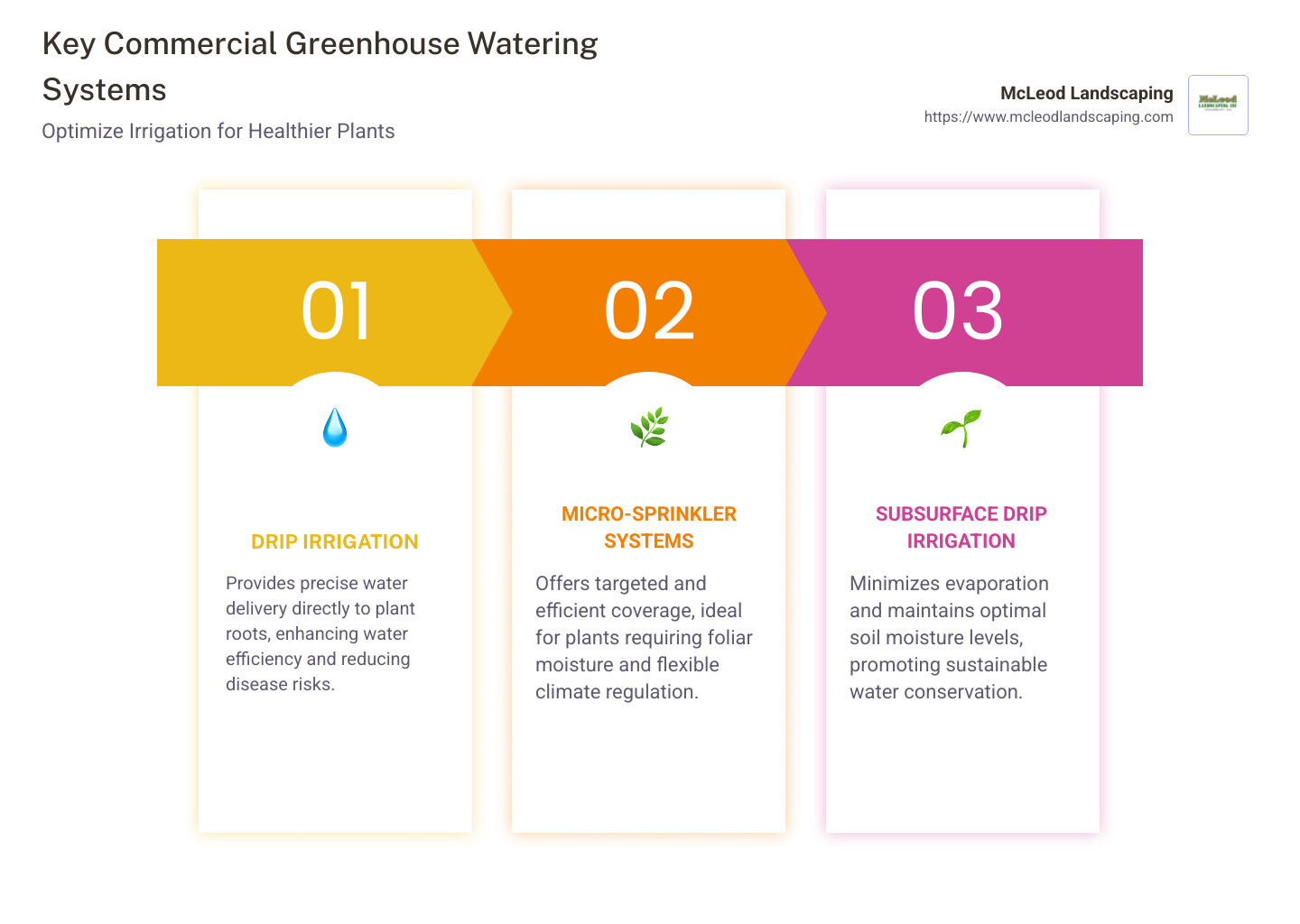
Drip irrigation is a go-to for many greenhouse owners. Why? Because it delivers water directly to the plant roots, reducing evaporation and runoff. This system is especially useful for high-value crops that need precise moisture control.

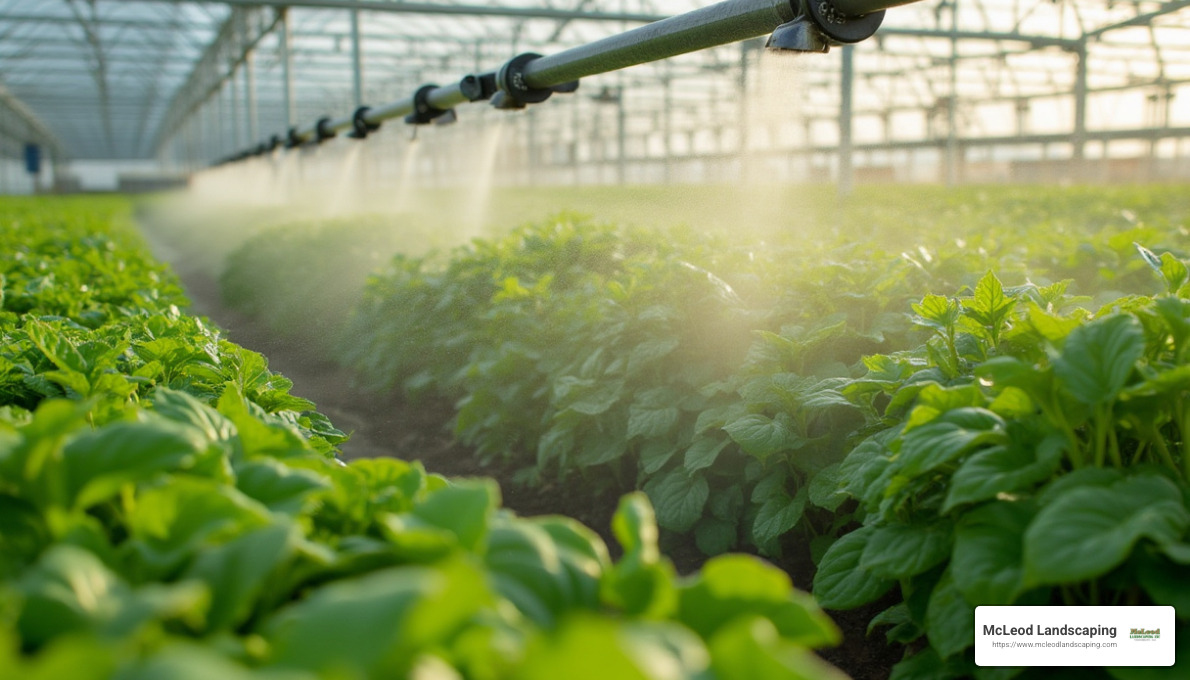
Micro-sprinkler systems are ideal for plants that enjoy a bit of foliar moisture, such as certain ornamental plants and African violets. These systems offer targeted coverage and can be integrated into smart greenhouse management systems for automated control.
For those focused on sustainability, subsurface drip irrigation is a top choice. This system places water directly into the soil, reducing evaporation and ensuring even soil moisture.
Choosing the right system depends on your specific crop needs and environmental conditions. Each system has its unique advantages, so understanding them is key to successful greenhouse management.
Drip irrigation is a game-changer for greenhouse watering. It’s not just about getting water to the plants; it’s about doing it smartly and efficiently.
Drip irrigation systems are incredibly water-efficient. By delivering water directly to the plant roots, they minimize waste due to evaporation and runoff. This method can save up to 50% more water compared to traditional watering methods. This is especially important in areas where water is scarce or expensive.
One of the major perks of drip irrigation is its ability to reduce the risk of plant diseases. By keeping the plant foliage dry and focusing moisture at the roots, it minimizes the conditions that encourage fungal and bacterial diseases. This is crucial for maintaining healthy crops and reducing the need for chemical treatments.
Healthy roots mean healthy plants. Drip irrigation promotes root health by providing consistent moisture levels. This allows roots to absorb nutrients more effectively, leading to stronger, more robust plant growth. It’s like giving your plants a steady diet of exactly what they need, right when they need it.
In summary, drip irrigation is a powerhouse for any greenhouse setup. It boosts water efficiency, cuts down on disease risk, and fosters healthier plants by nurturing their roots. For greenhouse owners, it’s an investment that pays off in both plant quality and resource savings.
When it comes to commercial greenhouse watering systems, micro-sprinkler systems offer a unique blend of benefits that cater to a variety of crop needs. These systems are designed to provide foliar moisture, regulate the greenhouse climate, and offer flexibility in watering patterns.
Some plants thrive when their leaves are moistened, as it can simulate natural rainfall. Micro-sprinkler systems are perfect for these crops. They deliver water evenly over the plant’s foliage, which benefits ornamental plants like African violets and certain greenhouse flowers. This approach improves the growing conditions by maintaining humidity levels and promoting healthy leaf growth.
Micro-sprinklers aren’t just about watering plants; they also play a significant role in climate regulation within the greenhouse. By controlling the humidity and temperature, these systems help create an optimal environment for plant growth. This is particularly useful in large greenhouses where maintaining a consistent climate is crucial for crop success. Automated systems can adjust the watering schedule based on real-time climate data, ensuring the greenhouse remains a stable haven for plants.
Flexibility is another key advantage of micro-sprinkler systems. They can be easily adjusted to accommodate different plant types and growth stages. Whether you’re growing delicate seedlings or mature plants, micro-sprinklers can be fine-tuned to deliver the right amount of water. This adaptability makes them suitable for diverse crop needs, offering a custom approach to greenhouse irrigation.
Micro-sprinkler systems are a versatile component of commercial greenhouse watering systems. They provide essential foliar moisture, assist in climate control, and offer flexible watering solutions. This makes them an invaluable tool for greenhouse owners looking to optimize their plant care strategies.
As we dig deeper into irrigation solutions, let’s explore how subsurface drip irrigation can be a sustainable choice for modern greenhouses.
Subsurface drip irrigation is a game-changer in the field of commercial greenhouse watering systems. This method not only conserves water but also optimizes soil moisture and reduces the need for fertilizers. Let’s break down why this system is becoming a favorite among greenhouse owners.
Water conservation is crucial, especially in regions facing water scarcity. Subsurface drip irrigation addresses this by delivering water directly to the plant roots beneath the soil surface. This approach minimizes evaporation and runoff, ensuring that every drop of water is used efficiently. According to research, this system is particularly beneficial in arid regions like the Middle East and Africa, where water-saving is a top priority.
Maintaining consistent soil moisture is vital for healthy plant growth. Subsurface drip irrigation excels at this by providing uniform moisture distribution directly to the root zone. This consistency promotes balanced root development and improves overall plant health. As a result, plants are less stressed and can focus their energy on growing and producing quality yields.
One of the standout features of subsurface drip irrigation is its ability to deliver fertilizers directly to the root zone. This precision reduces fertilizer waste and ensures that nutrients are absorbed efficiently by the plants. The system’s targeted delivery method not only saves money on fertilizers but also reduces the environmental impact of excess nutrient runoff.

Despite the higher initial installation costs and maintenance requirements to prevent pipe clogging, the long-term benefits of subsurface drip irrigation make it a sustainable and cost-effective choice for large, modern greenhouses. Its ability to conserve water, optimize soil moisture, and reduce fertilizer use aligns perfectly with sustainable agricultural practices.
As we continue to explore irrigation solutions, let’s dive into some frequently asked questions about commercial greenhouse watering systems.
Choosing the right irrigation system for your greenhouse depends on your specific needs and the types of plants you are growing. Drip irrigation systems are highly recommended for their precision and efficiency. They deliver water directly to the plant’s roots, reducing water waste and preventing leaf diseases. This system is particularly beneficial for crops like tomatoes and roses, where leaf wetness can lead to fungal issues.
Subirrigation is another effective method, especially for potted plants. It involves watering from below, allowing plants to absorb moisture through capillary action. This technique is excellent for maintaining consistent soil moisture and is often used in commercial greenhouses with multiple plant varieties.
While automated systems are efficient, hand watering remains one of the most reliable methods for watering greenhouse plants, especially for small-scale operations or delicate plants. It allows gardeners to give personalized attention to each plant, ensuring they receive the right amount of water.
Incorporating compost tea into hand watering can also improve plant health. Compost tea is a nutrient-rich solution made from steeping compost in water. It delivers beneficial microorganisms and nutrients directly to the plants, promoting robust growth.
Despite its many advantages, drip irrigation does have some downsides. One significant issue is clogging. The small emitters used in drip systems can become blocked by sediment or mineral deposits, reducing water flow to the plants. Regular maintenance and filtration systems are necessary to prevent this problem.
Another challenge is plant replacement. When changing crops or replanting, the drip system may need adjustments or reinstallation to match new plant layouts, which can be labor-intensive and costly.
By understanding these potential drawbacks, greenhouse owners can better manage their systems and ensure efficient and effective watering solutions. Now, let’s move on to the conclusion, where we’ll explore how McLeod Landscaping can assist in implementing sustainable and efficient irrigation practices.
Sustainable agriculture is more than just a trend—it’s a necessity. At McLeod Landscaping, we understand the importance of efficient irrigation in achieving this goal. Our commitment to providing top-tier commercial greenhouse watering systems ensures that your plants thrive while conserving precious water resources.
With over 30 years of experience, we specialize in designing and installing systems that meet the unique needs of each greenhouse. Whether you opt for drip irrigation to minimize water waste and reduce leaf diseases, or you prefer micro-sprinkler systems for their flexibility and climate regulation capabilities, we have the expertise to deliver the best solution for your crops.
By choosing McLeod Landscaping, you’re not just investing in your greenhouse’s productivity—you’re also contributing to a more sustainable future. Our systems are designed to optimize water use, reduce runoff, and maintain soil health, aligning with global efforts to combat water scarcity and environmental degradation.
We invite you to explore the benefits of our services and see how our custom solutions can lift your greenhouse operations. For more information on our commercial irrigation systems, visit our Commercial Irrigation Systems page.
Incorporating efficient and sustainable irrigation practices is crucial for modern agriculture. With McLeod Landscaping by your side, you can confidently move from seedling to success, knowing that your greenhouse is equipped with the best systems available. Together, let’s cultivate a greener tomorrow.
Contact McLeod Landscaping today at (978) 640-0957 or click here to schedule a consultation for retaining wall installation. Let our experienced team design and install a functional and visually appealing retaining wall that enhances your landscape.

1881 Main St Unit 1, Tewksbury, MA 01876