
Commercial irrigation installation is a smart investment for your property’s curb appeal, operational efficiency, and bottom line. A well-designed system can reduce water bills—often over 25% of operating costs—by 25-50% while keeping your landscape healthy and attractive.
Key Benefits of Professional Commercial Irrigation Installation:
The process involves planning, component selection, professional installation, and maintenance. Costs can range from $1,800 to over $30,000 per acre depending on complexity, but most properties see a return on investment within 2-3 years through reduced water and labor costs. (These figures are based on industry data and not a quote from McLeod Landscaping.)
I’m Scott McLeod, owner of McLeod Landscaping. For 30 years, I’ve helped property managers across the Merrimack Valley transform their landscapes with commercial irrigation installation projects that cut operational costs. This guide covers everything from planning to long-term maintenance.
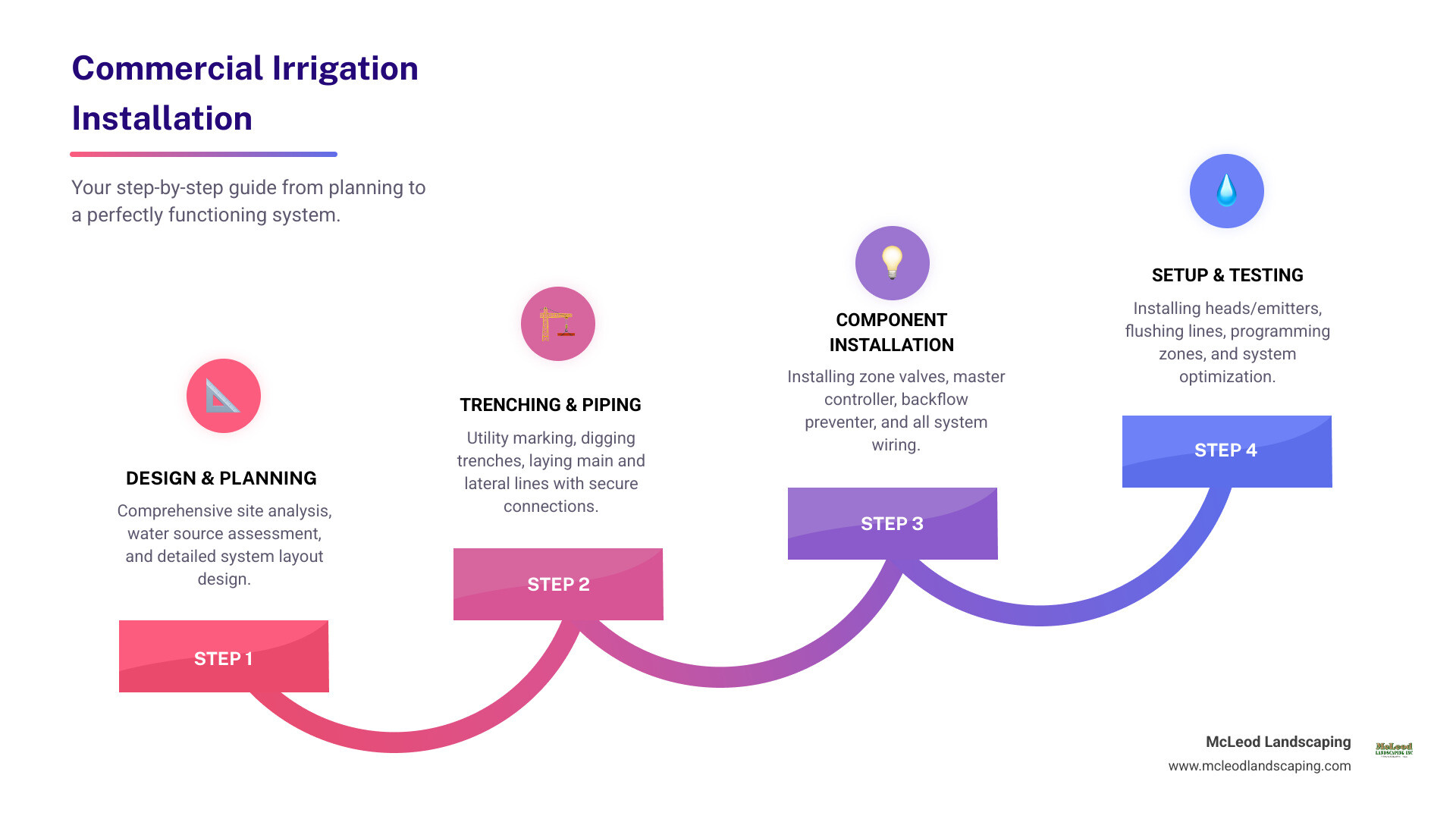
Similar topics to commercial irrigation installation:
Before digging, meticulous planning is the cornerstone of a successful commercial irrigation installation. This phase ensures the system is customized to your property’s unique needs, maximizing efficiency and preventing future problems.
Our planning starts with a comprehensive site analysis. We evaluate your landscape needs, plant materials, soil composition, microclimates, and typical weather conditions. A critical step is assessing your water source. We perform water pressure testing (ideally 40-65 PSI) and calculate the flow rate (GPM) to ensure your supply can support the system. For example, if it takes 15 seconds to fill a one-gallon container, your flow rate is 4 GPM.
Regulatory compliance is non-negotiable. We review municipal regulations and secure all necessary permits, adhering to local water-use guidelines from bodies like the Texas Commission on Environmental Quality (TCEQ). Many regions also mandate testable backflow devices to prevent water supply contamination. Finally, we develop a comprehensive budget that outlines initial installation costs and future maintenance, providing a clear financial roadmap.
More info about our commercial landscaping services.
Commercial systems are larger, more complex, and require more durable materials than residential DIY kits. Commercial properties have varied landscapes with unique watering needs, demanding sophisticated design and robust components to withstand high traffic and extensive use. A professional installation ensures precision in design, proper water pressure management, and the use of commercial-grade parts that guarantee durability and long-term savings. Entrusting your project to professionals helps you avoid common pitfalls like water loss and technical complications.
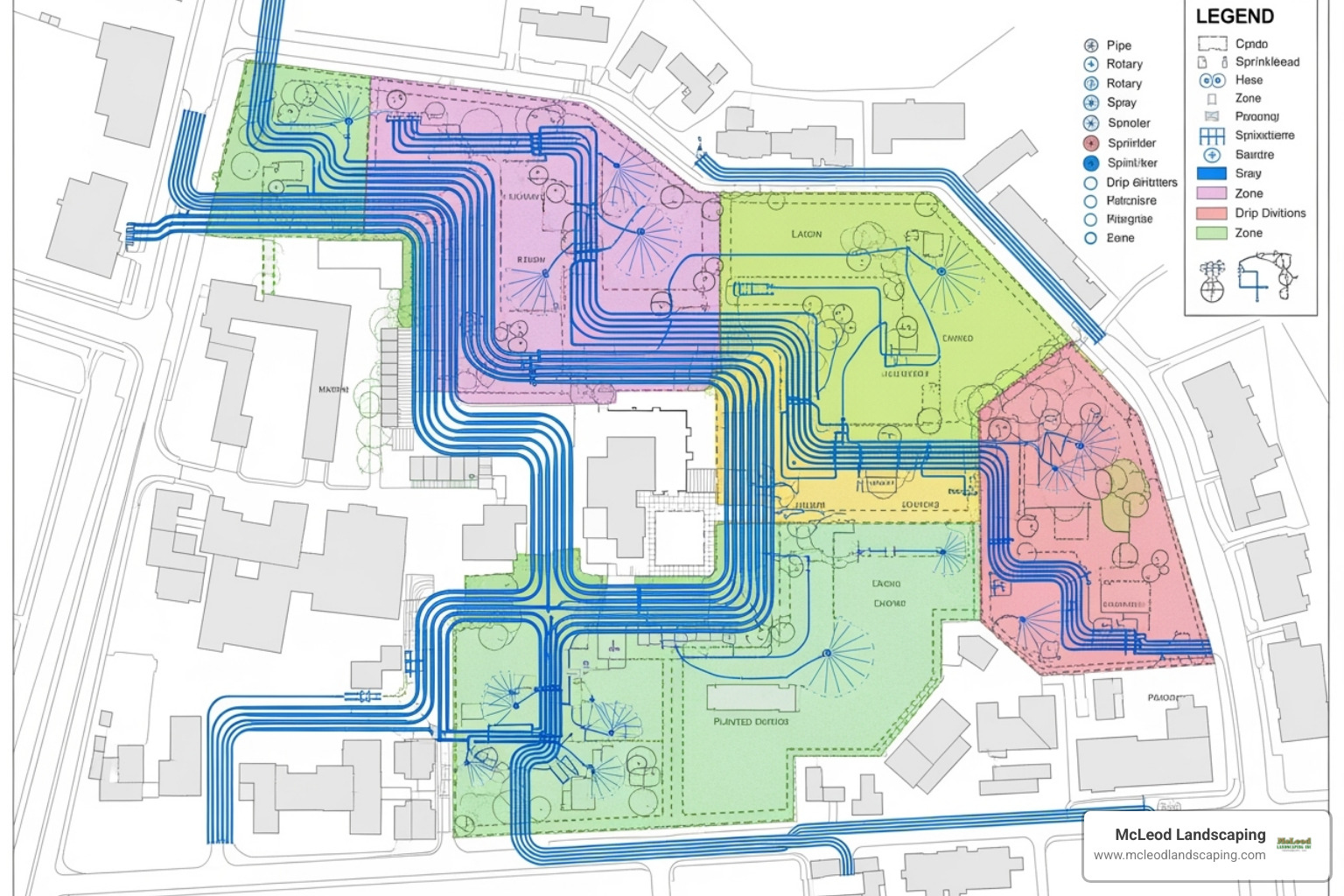
Every commercial landscape is unique, and our commercial irrigation installation planning reflects that. We use a careful zoning strategy to support water conservation, differentiating between turf areas, garden beds, shrubs, and trees. We also factor in sun exposure, microclimates, slopes, and elevation to ensure uniform water delivery. Our designs are flexible, allowing for easy expansion or upgrades, ensuring your irrigation system can grow with your business.
For a successful commercial irrigation installation, choosing the right system type is critical. The decision depends on your water conservation goals, landscape layout, and maintenance preferences. Some properties need broad coverage, while others require targeted water delivery.
Here’s how the two main commercial irrigation approaches stack up:
| Feature | Sprinkler Systems | Drip Irrigation |
|---|---|---|
| Cost | Higher upfront (Avg. $10,280/acre, up to $31,000+) | Lower upfront (Avg. $1,800-$2,500/acre, up to $7,500+) |
| Water Efficiency | Moderate (can be high with smart tech) | High (minimal evaporation, targeted delivery) |
| Best Use Cases | Large, flat turf areas; Sports fields; Open lawns | Garden beds; Shrubs; Trees; Sloped areas; Specific plants |
| Maintenance | Regular checks for head alignment, clogs; Winterization | More frequent checks for clogs (emitters); Winterization |
These are average costs based on internet data and not actual costs for McLeod Landscaping. We provide customized quotes based on your specific site conditions. While industry averages show sprinkler systems around $10,280 per acre and drip systems from $1,800-$2,500 per acre, actual costs vary widely based on complexity, with some high-end projects exceeding $30,000 per acre.
Sprinkler systems mimic natural rainfall across large areas like expansive turf, sports fields, or open lawns. We select spray heads based on the area’s needs. Rotor heads are ideal for large zones, with advanced gear-driven rotors covering distances from 8 to 65 feet. For smaller or irregular-shaped areas, we use fixed spray heads that spray in a 5-18 foot radius. Proper spacing and overlap for even coverage are critical to prevent brown spots and ensure a healthy landscape.
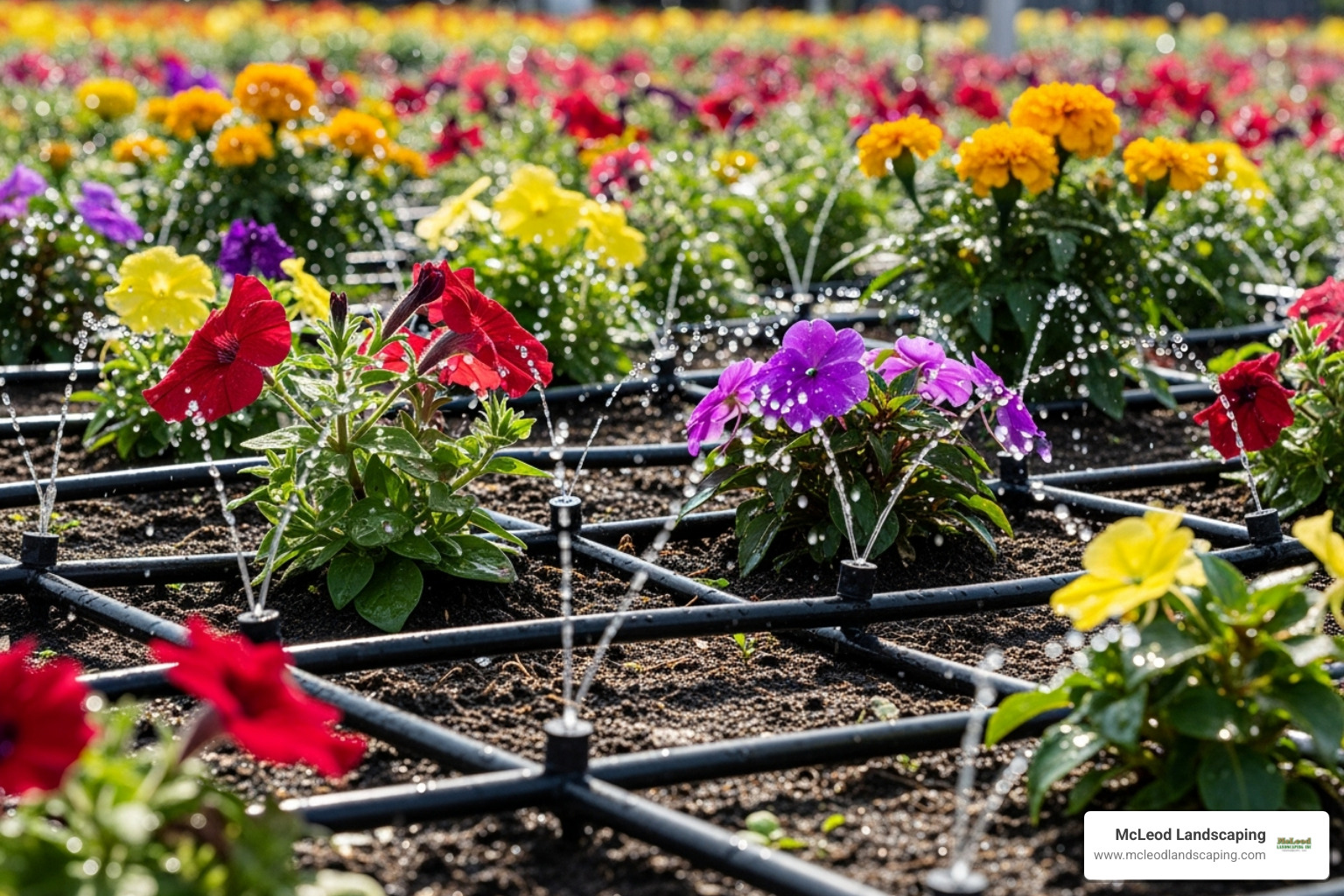
Drip irrigation systems are precision instruments that deliver water slowly and directly to plant roots through drip lines and emitters. This method dramatically reduces waste from evaporation and runoff. It’s ideal for garden beds, shrubs, and trees, cutting water usage by 30-50% compared to traditional sprinklers. When installed under mulch, efficiency increases further. A key benefit is weed growth prevention, as water is delivered only to desirable plants, reducing maintenance costs and keeping landscapes cleaner.
This is where planning transforms into a functioning system. Our project management focuses on efficiency and minimizing disruption to your business operations.
More info about our commercial landscape installation services.
We start by finalizing the irrigation layout—a precise blueprint for every pipe, sprinkler head, and zone. Before any digging, we call 811 to have all underground utilities marked for safety. Hitting a gas or electrical line is a dangerous and expensive mistake. We also create a detailed record drawing of the final installation, which becomes a valuable map for future maintenance and repairs, saving time and money down the road.
The trenching method depends on your property. For established lawns, we use a vibratory plow to create narrow trenches with minimal disruption. For new construction, a traditional trencher may be more efficient. We bury all pipes at a consistent depth of 8-12 inches to protect them from traffic, maintenance equipment, and freezing temperatures. We select durable PVC or Polyethylene pipes based on system needs and climate, ensuring all connections are leak-proof.
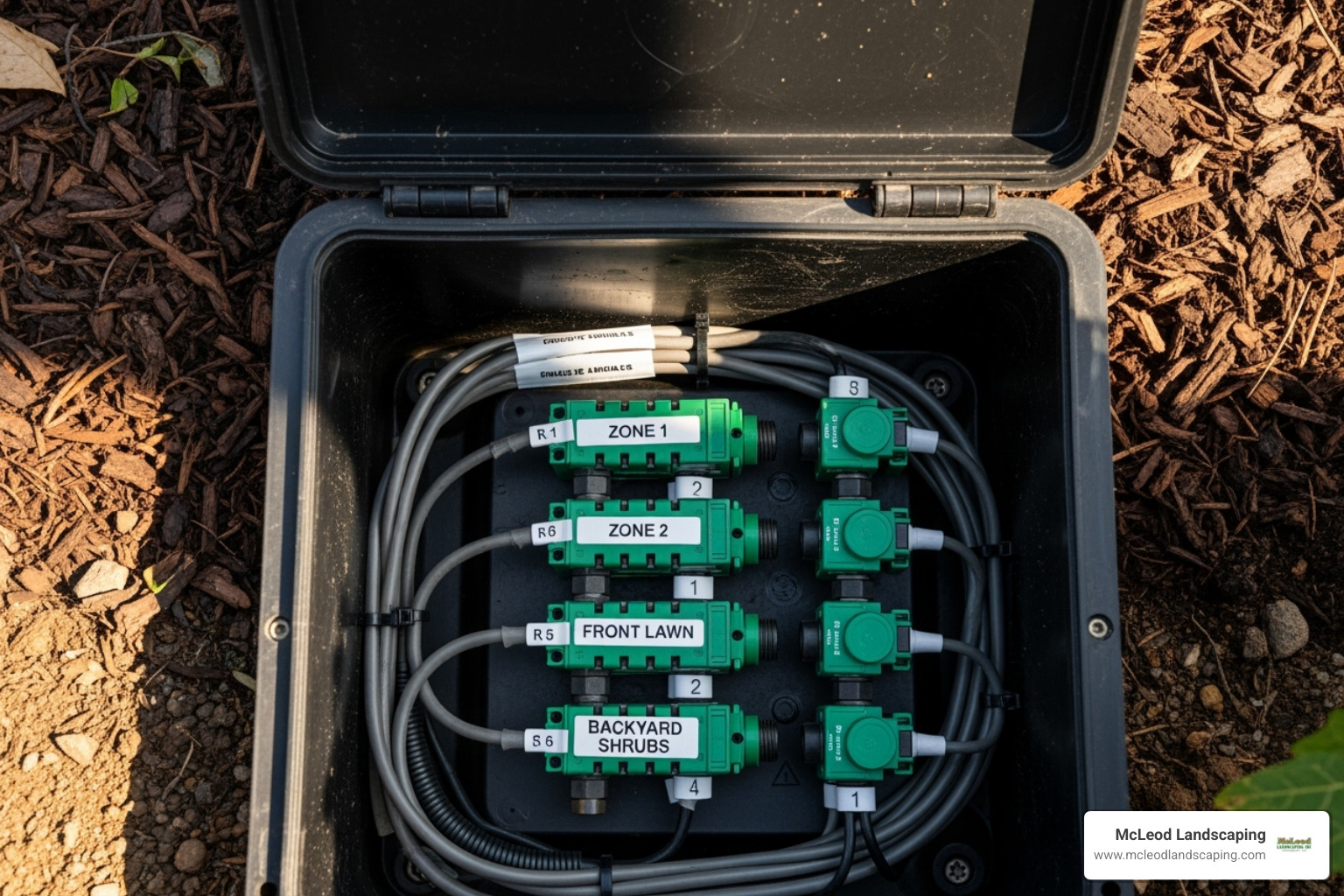
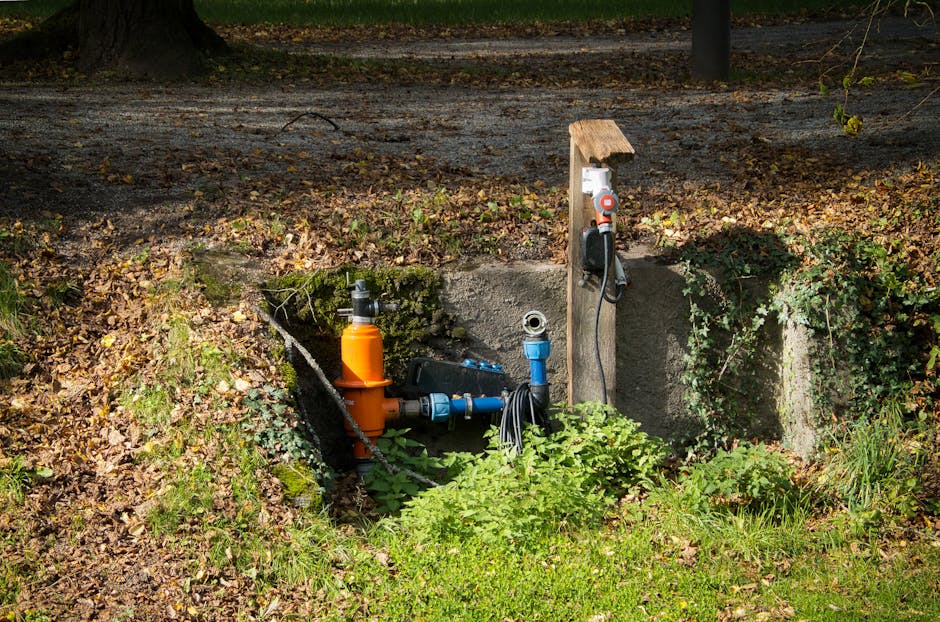
This step gives the system its brains. We install zone valves in protective boxes, connecting them to the main controller with clearly labeled wires for easy future servicing. A master valve is installed at the main water supply connection; it acts as a safety net, automatically shutting off water if a leak is detected. The backflow prevention device is also installed, a critical component required by law in most areas to protect the community’s drinking water from contamination.
In the final phase, we install each sprinkler head and drip emitter for uniform water distribution. Before attaching the heads, we flush the entire system to clear any construction debris from the pipes. We then program the controller, setting up watering schedules and run times for each zone based on plant types, sun exposure, and soil conditions. We can also integrate smart controllers, soil moisture sensors, and wireless monitoring systems to optimize water use, creating a commercial irrigation installation that maximizes efficiency and results.
Your commercial irrigation installation is a strategic investment that delivers returns for years. Protecting that investment through smart maintenance is key to open uping its long-term value and operational efficiency.
Learn about our comprehensive irrigation system services.
Proper maintenance ensures your system works reliably for decades. Key seasonal tasks include:
Find help with irrigation system repair.
Your commercial irrigation installation needs to make financial sense. While there is an upfront investment, the ongoing savings start immediately. Most commercial properties see a return on investment within 2-3 years.
Regarding average installation costs, these are based on industry data, not quotes from McLeod Landscaping. Sprinkler systems can average $10,280 per acre but may reach $31,000+ for complex projects. Drip irrigation is typically $1,800 to $2,500 per acre but can cost up to $7,500+ for sophisticated designs. We provide custom pricing for every project.
Over 30 years, I’ve answered many questions about commercial irrigation installation. Here are some of the most common ones from property managers and business owners.
The difference is like a delivery truck versus a family car. Commercial systems are built for larger scale, higher traffic, and increased durability. They cover larger, more diverse landscapes and use robust, commercial-grade components designed for heavy use. The design is also more complex, requiring sophisticated controllers to manage numerous zones, higher water pressure, and varied landscaping needs.
The timeline depends on property size and complexity. A small, straightforward property might take a few days, while a large corporate campus could take a week or more. Our professional crews work to minimize disruption to your business operations by coordinating with property managers to schedule work during off-peak hours or in phases. We provide a realistic timeline during our initial site assessment.
Today’s technology makes irrigation systems incredibly efficient. Smart, weather-based controllers adjust schedules based on real-time weather data, saving water by skipping cycles before it rains. Soil moisture sensors prevent watering when the ground is already wet. For leak detection, flow meters monitor water usage and can shut the system down and send an alert if a break occurs. Finally, remote management via smartphone apps gives you complete control to monitor and adjust your system from anywhere, maximizing efficiency.
Investing in a professional commercial irrigation installation is a strategic decision for your property’s value and operational efficiency. By following a detailed plan, choosing the right components, and committing to regular maintenance, you ensure a lush, healthy landscape while conserving water and reducing costs.
Most commercial properties see a return on their investment within 2-3 years through significant water and labor savings. The boost to curb appeal and property value makes the decision even clearer.
At McLeod Landscaping, we have over 30 years of experience helping Merrimack Valley businesses transform their properties. Our team understands the unique challenges of commercial sites and designs custom systems that last.
Ready to see what a professional irrigation system can do for your property? We’d love to walk your site and discuss a custom solution that fits your landscape and budget.
Learn more about our commercial irrigation systems and schedule a consultation today.
Contact McLeod Landscaping today at (978) 640-0957 or click here to schedule a consultation for retaining wall installation. Let our experienced team design and install a functional and visually appealing retaining wall that enhances your landscape.

1881 Main St Unit 1, Tewksbury, MA 01876