
A useful commercial snow-plowing follow-up request tells the provider where the concern is, when it was observed, what is visible and how it affects property use. Include known service details, safely obtained photos and an available contact, then ask the provider to clarify the next step.
For Merrimack Valley property managers, this is a focused handoff about a specific condition after a visit. It is not a replacement for the property’s winter plan, a determination of fault or an assumption that additional work is included in the agreement.
Note Follow the property’s established safety procedures for an immediate hazard. Do not wait to complete a message or collect photographs before initiating that response, and do not enter a hazardous area to gather details.
Start with the property name and street address, then identify the building, entrance, parking section, walkway or loading area involved. Use names that match on-site signs or existing property records. Add a fixed landmark if the area has no established label.
Do not rely on a close-up photo alone. The written location should let someone who did not make the observation find the affected area. If you attach a marked image, use the same area label in the message and image.
Record when the condition was observed, not just when you sent the request. If a tenant or staff member supplied the information, identify it as a relayed report and preserve the original observation time when known.
Distinguish a confirmed time from an estimate. If the timing is unknown, say so rather than presenting a guess as a service record.
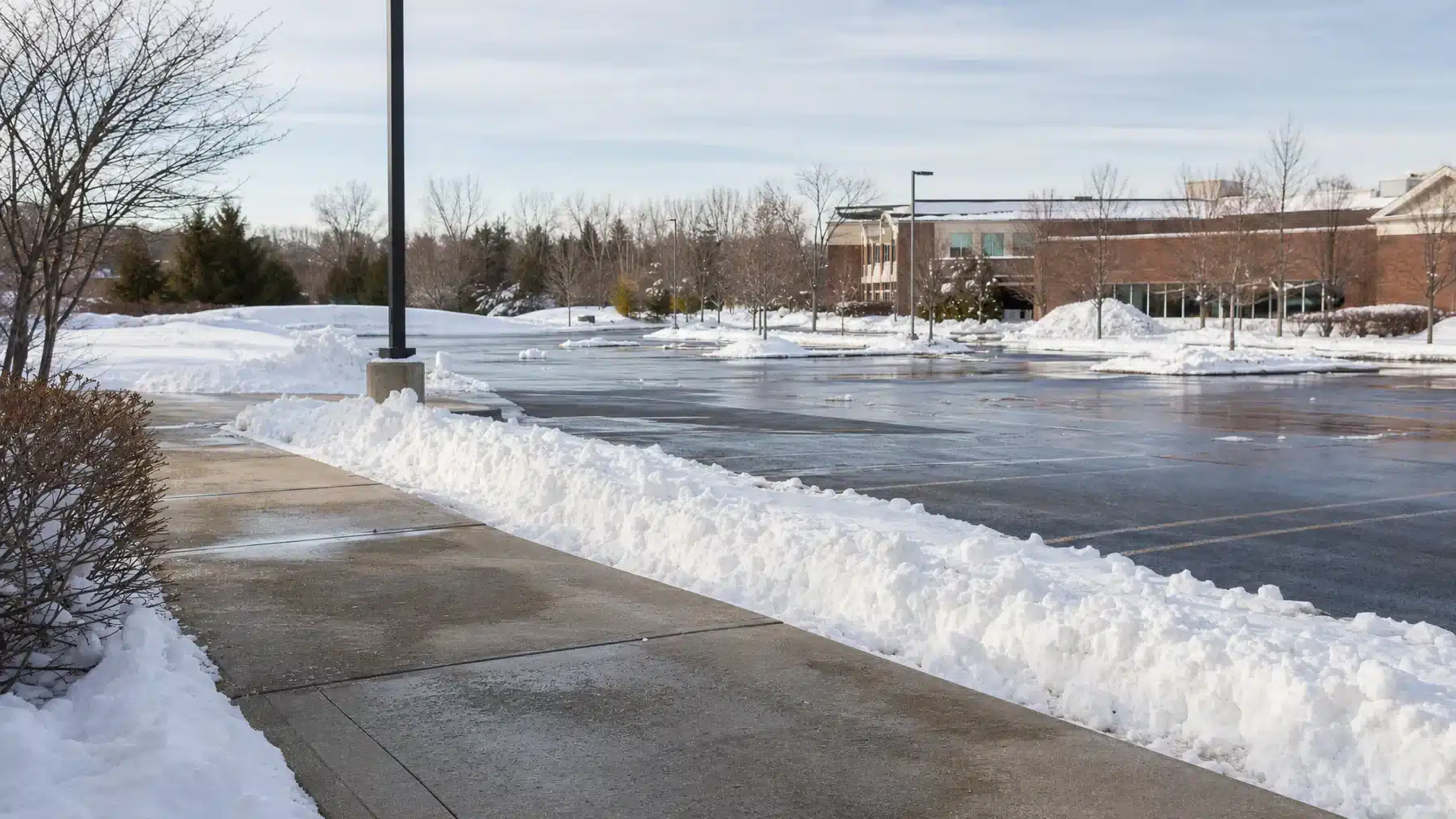
Describe visible snow, slush, water or apparent ice in plain language. Explain whether it is beside a route, extends across it or obstructs an entrance or activity. If you cannot distinguish a wet surface from a frozen surface from your viewing position, record that uncertainty without stepping onto it to check.
Keep suspected causes and contract questions separate. A condition observed after a visit does not by itself establish missed work, ineffective treatment or responsibility for the condition. Ask for clarification instead of making those conclusions in the report.
McLeod Landscaping offers commercial snow-plowing services and ice management, including sanding, salting and ice-control products. Those service offerings do not establish what is included in a particular property’s agreement, so leave scope questions explicit in your request.
Include recognizable surroundings when possible, label the affected area and note the capture time if known. If a photo cannot be obtained safely, a written description is appropriate. Do not delay the report solely to obtain an image.
Name an on-site or property-management contact who can answer questions, with their actual availability and contact method. Note relevant access constraints, such as an occupied loading area or a locked gate.
Adapt these fields to the reporting channel already established for your property. This is an editorial aid, not McLeod Landscaping’s official form or a contractual reporting requirement. Mark unknown details as unknown and remove fields that do not apply.
This message is intended to communicate a specific concern. If ice repeatedly appears in the same location, link the current request to the earlier report and use the separate guide to documenting recurring icy areas. That record supports discussion of the repeated condition without turning this follow-up into a diagnosis or a broader winter-management plan.
Contact McLeod Landscaping today at (978) 640-0957 or click here to schedule a consultation for retaining wall installation. Let our experienced team design and install a functional and visually appealing retaining wall that enhances your landscape.

1881 Main St Unit 1, Tewksbury, MA 01876