
Commercial sprinkler valves are the critical control points in any professional irrigation system. If you’re looking for the right commercial valve for your property, here’s what you need to know:
Commercial sprinkler valves serve as the heart of any irrigation system, allowing precise control over water distribution across different landscape zones. Unlike their residential counterparts, commercial valves are built for higher pressure tolerance, greater durability, and more demanding applications such as golf courses, athletic fields, and large commercial properties.
The right valve can make the difference between a thriving landscape and constant maintenance headaches. Most professional-grade valves feature robust construction with either composite plastic (most common) or brass materials (for industrial applications), along with features like pressure regulation, flow control, and specialized filtration to handle challenging water conditions.
I’m Scott McLeod, owner of McLeod Landscaping, and over my 30+ years in the landscaping industry, I’ve installed and maintained countless commercial sprinkler valve systems across the Merrimack Valley, giving me experience with which commercial sprinkler valve designs perform best in our New England conditions.
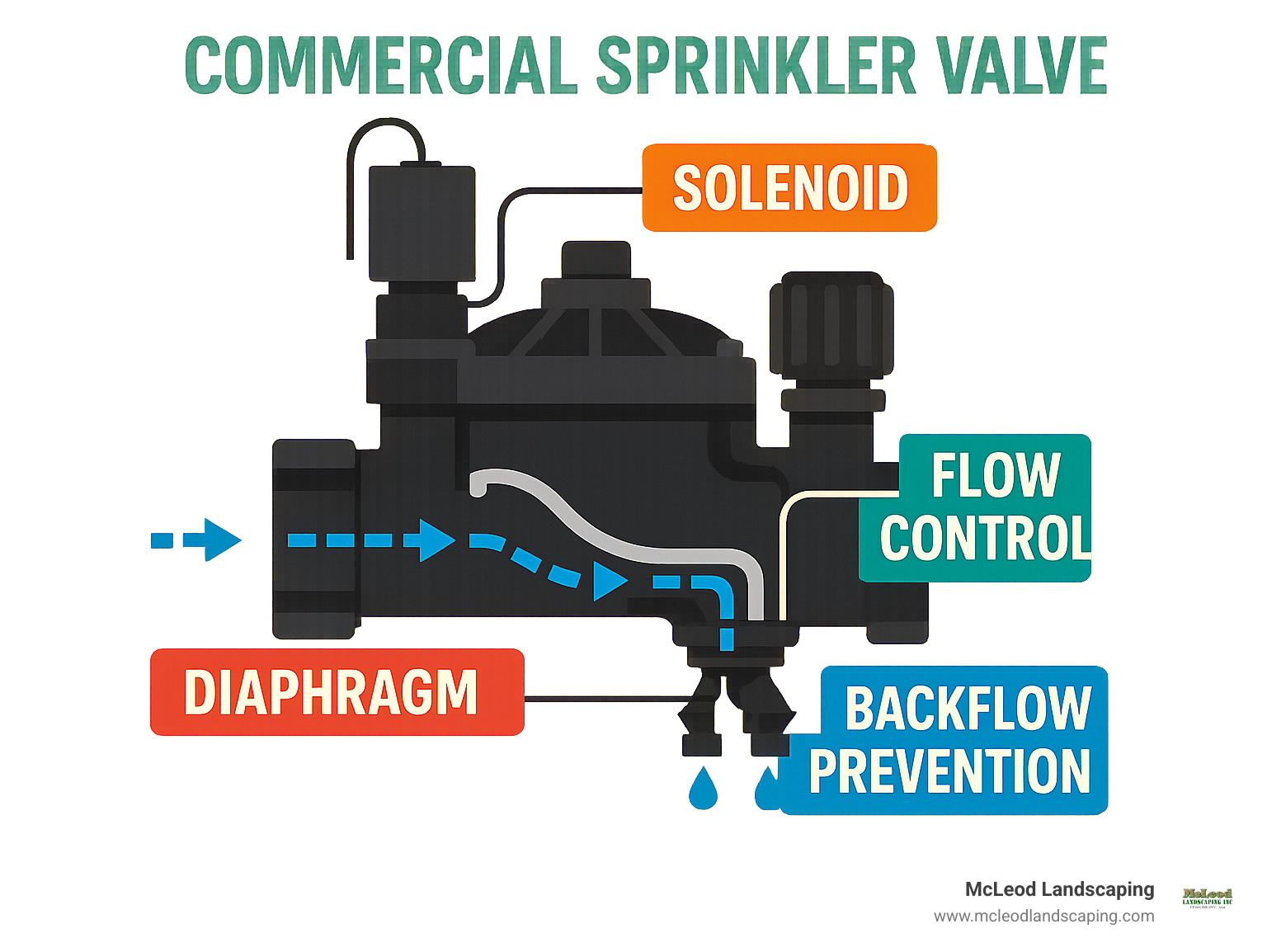
Learn more about commercial sprinkler valve:
– commercial irrigation controllers
– commercial irrigation sprinkler heads
– commercial irrigation system design
When it comes to commercial irrigation, not all valves are created equal. The commercial sprinkler valve serves as the command center for your irrigation zones, determining when, where, and how much water flows through your system. Understanding the core components and differences between valve types is essential for making an informed decision.
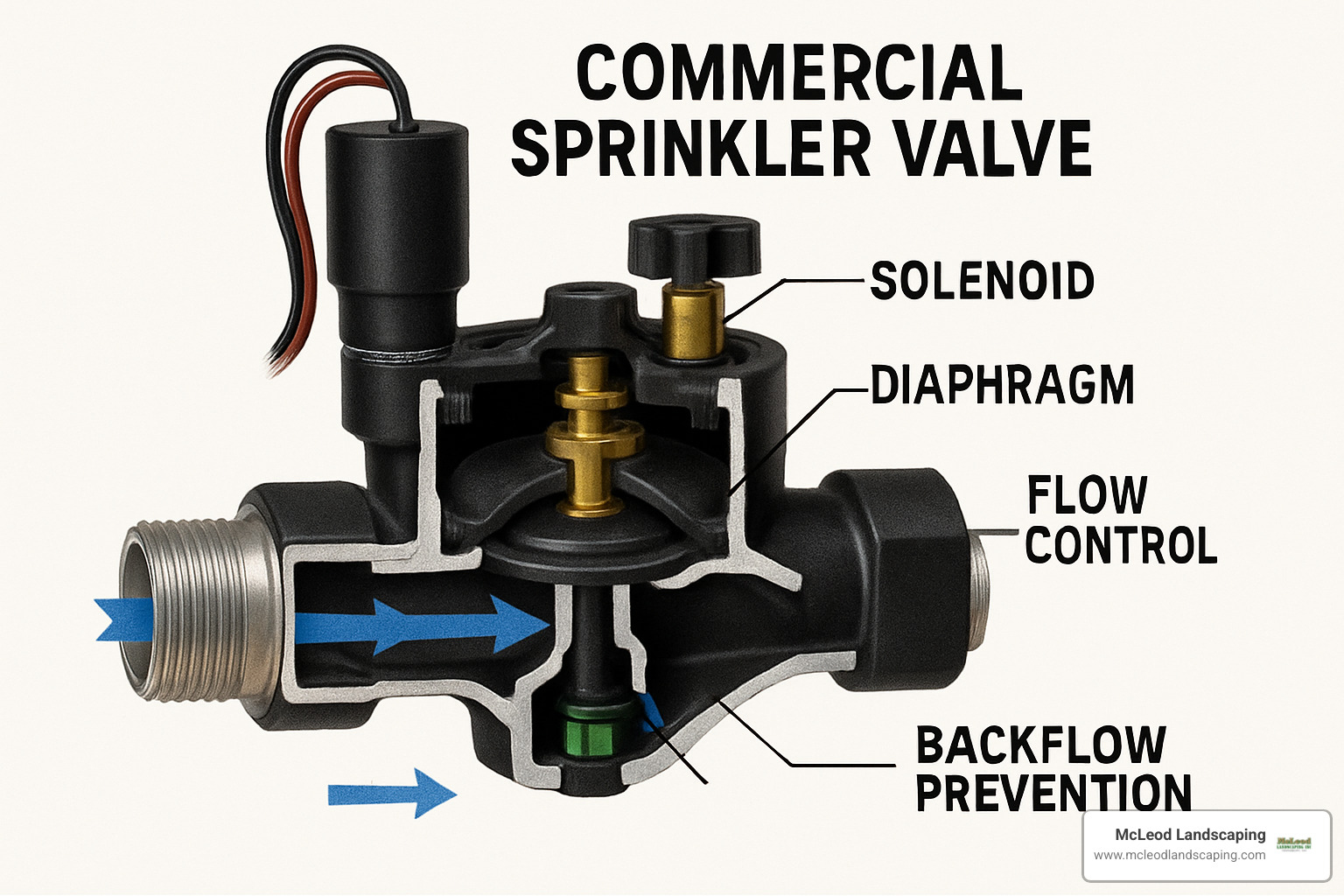
I’ve installed hundreds of globe valves over the years, and there’s a good reason they’re the most common configuration in commercial irrigation. With their straightforward in-line design, water flows in and out at a 180-degree angle, making them perfect for standard installations where space isn’t tight.
But sometimes, you’re working with limited real estate in a valve box. That’s where angle valves shine. They redirect water at a 90-degree angle, which is incredibly handy when you’re installing near walls or obstacles. I remember one project where we had to fit six valves in a cramped mechanical room – angle valves saved the day!
Water safety is no joke, which is why anti-siphon valves are so valuable. They come with built-in backflow prevention that protects drinking water from potential contamination. Just remember, these valves need to be installed at least 6 inches above the highest sprinkler head to work properly – a requirement I always emphasize to our installation teams.
For below-grade installations, standard globe or angle valves are your go-to, but they’ll need a separate backflow preventer upstream. It adds a bit more complexity to the installation, but gives you more flexibility with placement, especially in those underground valve boxes that keep everything neat and protected.
While most modern systems use composite plastic valves, I still have a soft spot for brass in certain applications. There’s something reassuring about installing a brass valve when you know it’s going to face extreme conditions. Their superior durability, heat resistance, and impressive longevity make them ideal for industrial settings or anywhere facing high pressure or temperature swings.
That said, today’s engineered plastic valves have come a long way. They offer excellent corrosion resistance and performance at a more accessible price point. For most commercial properties in the Merrimack Valley, these composite valves strike the perfect balance between durability and value, handling our New England seasonal changes with ease.
Reliability is the cornerstone of any good commercial sprinkler valve. You need something that works consistently, even under challenging conditions. The best commercial valves can handle pressures up to 220 PSI without breaking a sweat – essential when you’re managing irrigation for large properties with varying elevation changes.
Longevity is where quality really shows. With proper maintenance, a good commercial valve should give you 10-15 years of service, with brass models potentially lasting over 20 years. I’ve seen well-maintained systems continue performing flawlessly long after their expected lifespan.
Scalability matters as your property evolves. The best commercial valves accommodate everything from water-sipping drip irrigation to thirsty turf zones. This flexibility means you can expand your system without replacing existing valves – a significant cost-saver over time.
Serviceability is something you’ll appreciate the first time you need to perform maintenance. Look for jar-top designs that allow access to internal components without removing the entire valve from the line. Trust me, when you’re knee-deep in a valve box on a hot summer day, you’ll be thankful for this feature!
Automation capabilities tie everything together. Quality commercial sprinkler valves work seamlessly with standard 24-volt AC controllers, allowing for precise scheduling and integration with smart systems. This means your irrigation can automatically adjust to weather conditions, saving water and improving landscape health.
After decades of installing and maintaining commercial irrigation systems throughout the Merrimack Valley, I’ve seen which valves truly stand the test of time in our challenging New England conditions. Let me walk you through the standout commercial sprinkler valves that have consistently impressed our team in real-world applications:

When it comes to handling extreme pressure situations, Hunter’s ICV valve has earned our trust time and again. This workhorse commercial sprinkler valve operates flawlessly at pressures up to 220 PSI – a level that would quickly destroy lesser valves.
What truly sets this valve apart is its incredibly durable diaphragm and stainless steel flow control stem. Even under punishing conditions, these components resist wear remarkably well. The thoughtfully designed filter keeps debris from interfering with the diaphragm seal, which means fewer leaks and failures over time.
We’ve installed these valves across numerous municipal properties in Tewksbury where water pressure runs exceptionally high. Years later, they’re still performing beautifully with minimal maintenance – exactly what you want in a commercial application where reliability is everything.
For installations where backflow prevention isn’t just recommended but required by code, Rain Bird’s PESB-ASV has become our go-to solution. This clever commercial sprinkler valve integrates a vacuum breaker right into the valve body, eliminating the need for separate backflow prevention equipment.
Proper installation is crucial – these valves must be positioned at least 6 inches above the highest sprinkler head in the zone to function correctly. When properly installed, the atmospheric vacuum breaker effectively prevents contaminated water from being siphoned back into your drinking water during pressure drops.
We’ve found these valves particularly valuable for commercial properties in Andover and Billerica, where strict local codes about backflow prevention can make installations complicated. The all-in-one design simplifies compliance while reducing both materials and labor costs.
Not all irrigation water is created equal. For systems drawing from reclaimed sources, ponds, or wells with significant sediment, Rain Bird’s PESB valve with scrubber technology has proven itself invaluable. This innovative commercial sprinkler valve features a clever self-cleaning mechanism that actively scrubs the filter screen clean during each operation cycle.
The scrubber continuously dislodges particles from the filter, preventing the buildup that typically leads to clogging and failure. This self-maintenance feature dramatically extends valve life while reducing the frequency of service calls – a win-win for system owners and maintenance teams alike.
These valves have become our standard recommendation for athletic fields and golf courses across Chelmsford and Lowell where water quality often leaves much to be desired. The difference in performance compared to standard valves in these challenging environments is truly remarkable.
Budget constraints are a reality in many commercial projects, but that doesn’t mean you have to compromise on reliability. Hunter’s PGV valve offers an excellent middle ground – a plastic-bodied commercial sprinkler valve that handles pressures up to 150 PSI while incorporating features typically found in pricier models.
I particularly appreciate the jar-top design, which allows quick access to internal components without removing the entire valve from the line. This seemingly simple feature can save hours of maintenance time over the valve’s lifetime. The integrated flow control also enables precise zone-by-zone water adjustment, optimizing both performance and efficiency.
We’ve successfully deployed these valves throughout office parks and retail developments in Burlington and Wilmington where budget considerations were important but performance standards remained high. They’ve proven themselves to be reliable workhorses that deliver exceptional value.
Sometimes, only brass will do. For industrial applications or locations with truly extreme conditions, brass valves remain the gold standard for durability and longevity. Their superior resistance to corrosion, temperature fluctuations, and physical damage makes them ideal for the most demanding environments.
While brass valves command a premium price, their extended lifecycle and minimal maintenance requirements often make them the most cost-effective option over the long term. When you need a valve that will potentially outlast the building it serves, brass is the way to go.
We’ve installed brass valves in several industrial properties throughout Lowell and Chelmsford where harsh conditions would quickly degrade standard plastic valves. Their rock-solid performance year after year confirms that sometimes, the traditional solution remains the best.
| Valve Type | Flow Range (GPM) | Pressure Rating (PSI) | Material | Ideal Application |
|---|---|---|---|---|
| Hunter ICV | 0.2-40 | Up to 220 | Plastic | High-pressure systems, golf courses |
| Rain Bird PESB-ASV | 0.25-200 | 20-150 | Plastic | Code-compliant installations requiring backflow prevention |
| Rain Bird PESB | 0.25-200 | 20-150 | Plastic | Reclaimed water, ponds, wells with sediment |
| Hunter PGV | 0.2-40 | Up to 150 | Plastic | Budget-conscious commercial applications |
| Brass Commercial | 0.5-300+ | Up to 200 | Brass | Industrial sites, extreme conditions |
Selecting the perfect commercial sprinkler valve doesn’t have to be overwhelming. Think of it as finding the right heart for your irrigation system—one that matches your property’s unique needs and conditions. Let me walk you through what really matters when planning your valve upgrade.
Your irrigation system’s pipe diameter and flow requirements are foundational considerations. It’s like choosing the right size engine for your car—too small and it struggles, too large and you’re wasting resources.
Most commercial properties I work with throughout the Merrimack Valley typically use 1″ or 1.5″ valves, but your specific needs might vary. A small office complex in Tewksbury might work perfectly with 1″ valves handling 30 GPM, while a sprawling corporate campus in Andover might need 2″ valves to support higher flow demands.
When we evaluate systems, we match valve size to actual zone requirements—ensuring you’re not creating unnecessary pressure loss or flow restrictions that could compromise performance.
New England water systems can deliver surprisingly high pressure, especially in areas like Westford and Carlisle where elevation changes create pressure fluctuations. I’ve seen properties with pressures exceeding 150 PSI that quickly destroyed standard residential valves.
For these challenging environments, investing in high-pressure rated commercial sprinkler valves like those rated for 220 PSI makes long-term sense. They might cost more initially, but they’ll prevent the headaches and expenses of premature failures.
The plastic versus brass decision comes down to your specific application and budget priorities. Most modern composite plastic valves offer excellent performance for standard commercial applications—they resist corrosion and provide reliable service for years.
However, for industrial settings or areas exposed to extreme conditions, brass valves remain the gold standard. I’ve installed brass valves at manufacturing facilities in Lowell that are still functioning perfectly after 15+ years of continuous service. Their durability in harsh environments is best, though they do come with a higher initial investment.
While most commercial sprinkler valves work seamlessly with standard 24-volt controllers, compatibility becomes crucial when upgrading to smart irrigation systems or two-wire setups.
Before finalizing your valve selection, verify that your chosen valves will integrate properly with your existing or planned control system. This is especially important for properties adopting weather-based controllers or centralized management systems that might require specific valve features.
Our New England winters demand valves that can withstand freezing temperatures and be properly winterized. Properties in Concord and other areas with particularly harsh winters benefit from valves with superior drainage capabilities and accessible manual bleed screws.
During installation, we position valves to facilitate complete drainage during winterization, preventing costly freeze damage that could otherwise lead to spring surprises when systems are reactivated.
Quality commercial sprinkler valves represent a significant investment in your property’s long-term irrigation efficiency. Based on internet data (not McLeod Landscaping rates), budget ranges typically span from $40 for basic plastic models to upwards of $400 for large industrial brass valves.
The valve itself is just one component of your total upgrade cost. Factor in installation labor, wiring, valve boxes, and any required backflow prevention devices when planning your budget. For a comprehensive understanding of commercial irrigation system costs, visit our Commercial Irrigation System Cost page.
Local regulations throughout the Merrimack Valley have specific requirements for protecting public water supplies from potential contamination. Many municipalities require commercial properties to install approved backflow prevention devices, with requirements varying by location and application.
Your options typically include Pressure Vacuum Breakers (PVBs), Double Check Valve Assemblies (DCVAs), or Reduced Pressure Zone (RPZ) devices, with selection depending on your specific application and local codes. While anti-siphon valves incorporate basic backflow prevention, they must be installed above ground and may not satisfy all local requirements.
I always recommend consulting with local water authorities or reaching out to us directly to ensure your system meets current regulations. Having installed systems throughout the region for decades, we’re intimately familiar with the specific requirements for each town we serve.
Consistent pressure is the secret to irrigation efficiency and longevity. Many commercial properties experience pressure fluctuations that can cause sprinkler misting, uneven coverage, and wasted water. Adding pressure regulation to your commercial sprinkler valves solves these issues while conserving water and extending system life.
Several excellent options exist for pressure management, including Hunter’s Accu-Sync, Rain Bird’s PRS-Dial, and Irritrol’s Omnireg. These devices ensure each zone operates at optimal pressure regardless of supply line fluctuations, improving performance while reducing waste. According to scientific research on pressure management, proper pressure regulation can reduce water usage by up to 40% while extending system component life.

I’ve seen properties reduce water consumption by 15-30% simply by adding pressure regulation to their valves—an investment that typically pays for itself within 1-2 irrigation seasons while delivering more consistent landscape results.
Proper installation and maintenance of commercial sprinkler valves are essential for ensuring reliable operation and maximizing system lifespan. Here’s our professional guidance based on decades of experience installing and servicing irrigation systems throughout the Merrimack Valley:
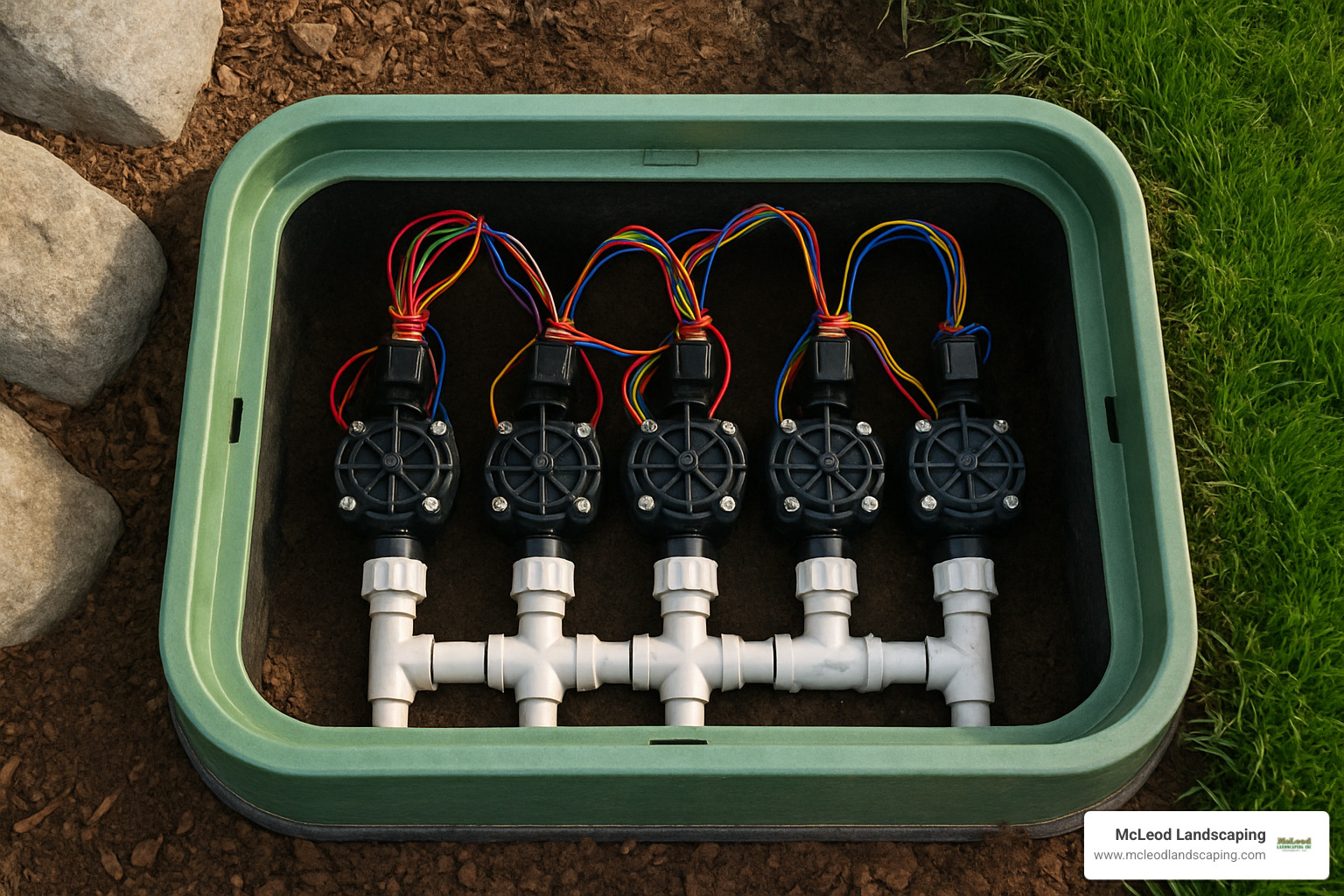
While we recommend professional installation for commercial systems, understanding the process helps you make informed decisions about your irrigation setup.
Starting with system layout is crucial—take time to plan valve locations based on your zone requirements. You’ll want to ensure easy access for future maintenance while keeping valves protected from potential damage from foot traffic or landscaping equipment.
Before diving into installation, prepare your water supply by installing a master shutoff valve upstream of all zone valves. This small step pays dividends later, allowing you to perform maintenance without disrupting your entire water supply.
When assembling plastic valves, don’t skimp on proper PVC primer and cement for connections. For threaded connections, a good quality Teflon tape or pipe thread compound ensures those watertight seals that prevent headaches down the road. I’ve seen too many DIY installations fail simply because someone rushed through this critical step!
Valve box installation deserves special attention—place your valves in appropriately sized boxes with adequate drainage material beneath. We recommend keeping boxes level and slightly above grade to prevent water pooling that can lead to premature component failure.
For wiring, waterproof connectors aren’t optional—they’re essential. Label your wires clearly (your future self will thank you when troubleshooting), and for commercial installations, we recommend using 14-gauge direct burial wire for main runs to ensure signal integrity.
Finally, thorough testing before backfilling saves enormous headaches. Check for leaks at all connections and cycle your valves multiple times to verify proper operation under pressure.
For complex commercial installations in locations like Burlington or Lowell, professional installation ensures compliance with local codes and optimal system performance.
Regular maintenance significantly extends valve life and prevents costly emergencies. Think of it as scheduled oil changes for your car—a small investment that prevents major breakdowns.
Spring Startup (March-April) is your first critical checkpoint after winter. This is when we inspect valves for winter damage, clean or replace clogged filters, and check diaphragms for tears or damage. It’s also the perfect time to verify solenoid operation, test manual bleed functionality, and confirm proper pressure regulation.
By Mid-Season (July), your system has been working hard, making this an ideal time to inspect for leaks around valve bonnets and verify proper closing (checking for any seepage). We also check solenoid wiring for damage from string trimmers or other maintenance equipment, clean external debris from valve boxes, and confirm proper drainage around valves.
As temperatures drop, Fall Winterization (October-November) becomes essential in our New England climate. Properly blowing out all zones with compressed air prevents freeze damage, and we recommend leaving valves in mid-position during winter. Ensure valve boxes are free of standing water and document any issues for spring repairs.
Throughout the year, maintain detailed records of valve types, installation dates, and maintenance history for each zone. This documentation proves invaluable for troubleshooting and planning system upgrades.
For commercial properties throughout Tewksbury, Billerica, and surrounding areas, we offer comprehensive maintenance programs that include these essential services. Learn more about our Irrigation System Services.
Even the best commercial sprinkler valves occasionally encounter issues. Here’s how to diagnose and address common problems without calling in the professionals:
When you have no flow when a zone is activated, start with the basics: verify your controller is sending 24VAC to the valve and check the solenoid for continuity (it should read 20-40 ohms with a multimeter). Next, inspect the diaphragm for debris or damage that might prevent proper operation. Don’t forget to confirm your water supply is on and the mainline has pressure—I’ve seen experienced pros overlook this simple check! Finally, ensure the flow control isn’t fully closed, which is an easy fix.
For the opposite problem—continuous flow where a valve won’t shut off—first look for debris preventing the diaphragm from seating properly. Check for torn or damaged diaphragms, verify the solenoid is fully seated and functional, and inspect the valve seat for damage or mineral buildup. Also confirm your controller isn’t sending continuous voltage to the valve.
When facing low pressure at sprinklers, check that the flow control setting isn’t restricting flow and look for a partially closed main shutoff. Inspect filters for clogging that might restrict water movement, verify the valve size is appropriate for your zone’s flow requirements, and check for broken mainline or lateral lines that might be leaking pressure.
If you’re seeing controller error messages, measure solenoid resistance (an open circuit indicates a broken wire). Check for shorts to ground in valve wiring, verify proper solenoid connection to the valve, and ensure you’re using a compatible solenoid for your controller type.
For persistent issues with commercial systems in Chelmsford, Concord, or other Merrimack Valley locations, our team of irrigation specialists can quickly diagnose and resolve even the most challenging valve problems.
As we work with commercial property managers throughout the Merrimack Valley, certain questions about commercial sprinkler valves come up frequently. Here are expert answers to the most common inquiries:

Valve sizing depends primarily on your system’s flow requirements, not just the pipe diameter. For optimal performance, you’ll want a valve that can handle your zone’s maximum flow rate while keeping water velocity below 7.5 feet per second to prevent that annoying water hammer effect (that banging noise in your pipes that nobody wants to hear).
As a general guideline, zones with 1-20 GPM typically need 3/4″ or 1″ valves, while zones with 20-45 GPM work best with 1″ or 1.5″ valves. For larger systems, zones with 45-100 GPM should use 1.5″ or 2″ valves, and anything exceeding 100 GPM requires 2″ valves or larger.
When we’re planning new commercial installations in Burlington or Westford, we always recommend thinking ahead. Sizing your valves one step larger than your current minimum requirement gives you flexibility for future landscape additions without having to dig everything up again later. Trust me, your future self will thank you for this foresight!
Quality commercial sprinkler valves typically serve you well for 10-15 years, though this timeline can vary significantly based on several factors. Water quality plays a huge role – systems using hard water or reclaimed water often need more frequent replacement due to mineral buildup and accelerated wear on internal components.
Pressure conditions also impact longevity. Valves consistently operating near their maximum pressure rating will wear out faster than those enjoying a more relaxed, moderate pressure environment. It’s like the difference between running a marathon every day versus taking a casual jog – one lifestyle is simply more sustainable.
Proper maintenance is perhaps the biggest factor in extending valve life. Regular cleaning of filters and inspection of diaphragms can add years to your valve’s service life. And in our New England climate, proper winterization is absolutely crucial – nothing kills valves faster than freeze damage from improper blowouts.
Rather than replacing valves on a fixed calendar schedule, we recommend annual inspections to assess their condition and performance. For many of our commercial clients in Tewksbury and surrounding areas, we’ve found that proactively replacing key components like diaphragms and solenoids can extend overall valve life while preventing those inconvenient mid-season failures that always seem to happen during the hottest week of summer.
Yes! This is actually one of the easiest upgrades you can make. Most commercial sprinkler valves manufactured in the last 20+ years use standard 24-volt AC solenoids that play nicely with modern smart controllers. This compatibility makes upgrading to smart irrigation control relatively straightforward without replacing functioning valves.
The retrofit process typically involves installing the new smart controller, connecting your existing valve wires, programming zone-specific settings, and adding any desired sensors for weather, flow, or soil moisture. It’s a bit like upgrading the brain while keeping the same body – your system gets smarter without major surgery.
For commercial properties throughout the Merrimack Valley, upgrading to smart control often pays for itself surprisingly quickly. The ability to adjust irrigation based on real-time weather conditions and actual plant needs typically reduces water consumption by 30-50% while improving landscape health. We’ve seen clients in Lowell and Andover recover their investment within a single season through reduced water bills, especially for larger properties.
Smart controllers also give you peace of mind with remote access capabilities. Imagine being able to shut off your irrigation system from your phone when you see an unexpected rainstorm rolling in while you’re at a meeting across town. That’s the kind of convenience that makes property management just a little less stressful.
Learn more about advanced control options on our Commercial Irrigation Controllers page.
For comprehensive information about commercial irrigation systems, be sure to visit our Commercial Irrigation Systems page, where you’ll find additional resources to help you make informed decisions about your property’s irrigation needs.
Investing in the right commercial sprinkler valve isn’t just about buying a piece of equipment—it’s about securing the long-term health of your landscape, optimizing water usage, and minimizing maintenance headaches down the road. Throughout my years serving commercial properties across the Merrimack Valley, I’ve seen how the right valve choice makes all the difference.
Your property’s specific needs should guide your valve selection. Working with high water pressure? Those Hunter valves rated for 220 PSI will provide the reliability you need when standard valves might fail. Managing a property that uses reclaimed water? You’ll want those specialized scrubber-equipped valves that prevent clogging and reduce your maintenance calls. And let’s not forget about local regulations—proper backflow prevention isn’t just recommended, it’s often legally required to protect our community’s water supply.
For industrial settings where durability is paramount, brass valves continue to prove their worth, even with their higher initial investment. Their resistance to extreme conditions and longer lifespan often make them the most economical choice over time, especially in manufacturing environments or locations with harsh conditions.
The New England climate presents unique challenges for irrigation systems—from freezing winters to fluctuating spring pressures. At McLeod Landscaping, our three decades of experience installing and maintaining commercial irrigation systems throughout Andover, Billerica, Burlington, Carlisle, Chelmsford, Concord, Lowell, Tewksbury, Westford, and Wilmington has taught us which valve solutions truly perform in these conditions.
Whether you’re looking to upgrade an aging system that’s giving you trouble or planning a complete new installation for a commercial property, our team can help you steer the options and select the commercial sprinkler valves that will provide the best performance for your specific landscape needs. We don’t just install and leave—we’re here to help maintain your system for years to come, ensuring you get the most from your investment.
Ready to take the next step? Visit our Commercial Irrigation Systems page to explore our comprehensive irrigation services, or reach out today to schedule a consultation with our experienced team. Let’s make sure your landscape gets exactly what it needs to thrive.
Contact McLeod Landscaping today at (978) 640-0957 or click here to schedule a consultation for retaining wall installation. Let our experienced team design and install a functional and visually appealing retaining wall that enhances your landscape.


1881 Main St Unit 1, Tewksbury, MA 01876