
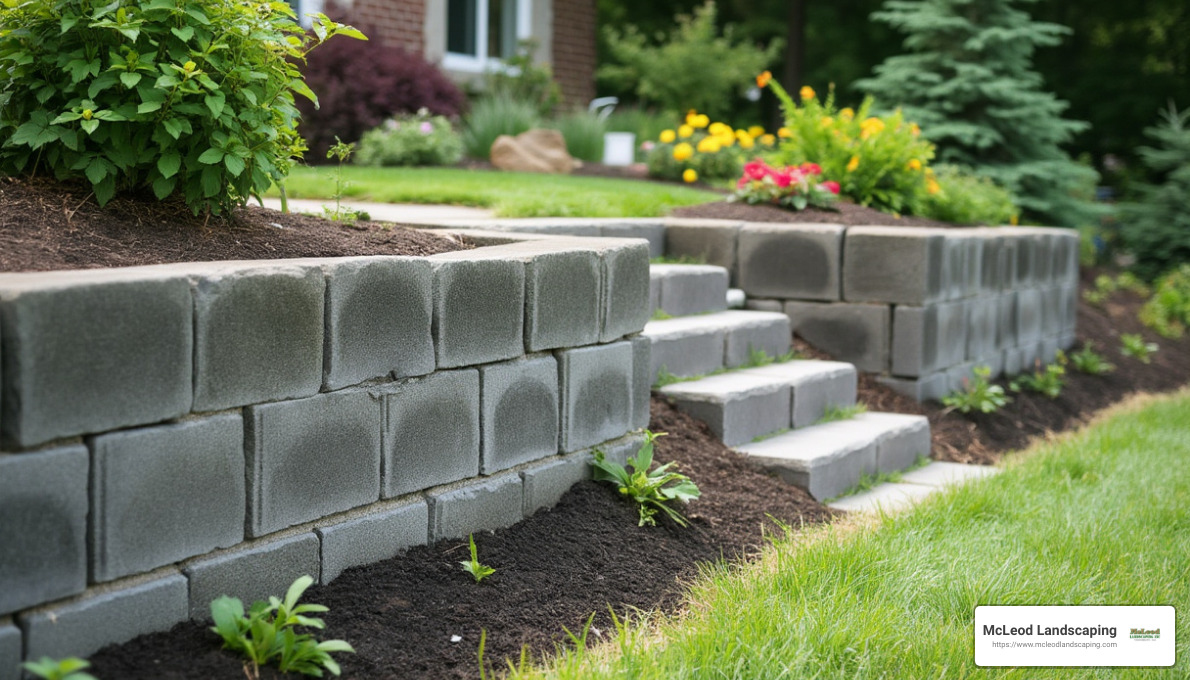
Concrete block retaining walls are a cornerstone of effective landscaping. Whether you aim to prevent soil erosion, redefine sloped areas, or improve the look of your garden, these walls serve multiple purposes. They are built using sturdy concrete blocks, forming an enduring barrier that supports soil and creates usable outdoor spaces.
To understand the basics quickly:
– Purpose: Prevent erosion, create level areas, improve landscape.
– Materials: Concrete blocks, either traditional or decorative.
– Benefits: Durability, cost-effectiveness, low maintenance.
As Scott McLeod, I bring over thirty years of experience in landscape design and construction, particularly in building concrete block retaining walls. This expertise in crafting beautiful and functional outdoor spaces is invaluable for anyone looking to improve their property.
Concrete block retaining wall terms you need:
– retaining wall design
– retaining wall drainage
– retaining wall contractor
Concrete block retaining walls are a popular choice for homeowners and landscapers due to their versatility and strength. Let’s break down the types of blocks used and the advantages they offer.
Segmental Walls: These are made from concrete blocks that interlock without the need for mortar. This design is flexible and allows for natural movement, making it ideal for areas prone to ground shifts.
Interlocking Blocks: Similar to segmental walls, interlocking blocks are designed to fit together snugly. This system provides stability and is often used in large-scale projects where structural integrity is crucial.
Dry-Stacked Blocks: These blocks are stacked without mortar, relying on their weight and design for stability. They are easier to install and adjust, making them a favorite for DIY projects.
Split-Faced Blocks: These blocks have a rough texture that mimics natural stone, offering a rustic look. They are popular for projects where aesthetics are as important as functionality.
Decorative Blocks: Available in various shapes and colors, decorative blocks add a visual appeal to retaining walls. They can be used to create patterns or designs that improve the landscape.
V-Blocks: Shaped like a “V”, these blocks are used to create curved walls. They offer flexibility in design, allowing for creative layouts that can follow the natural contours of the land.
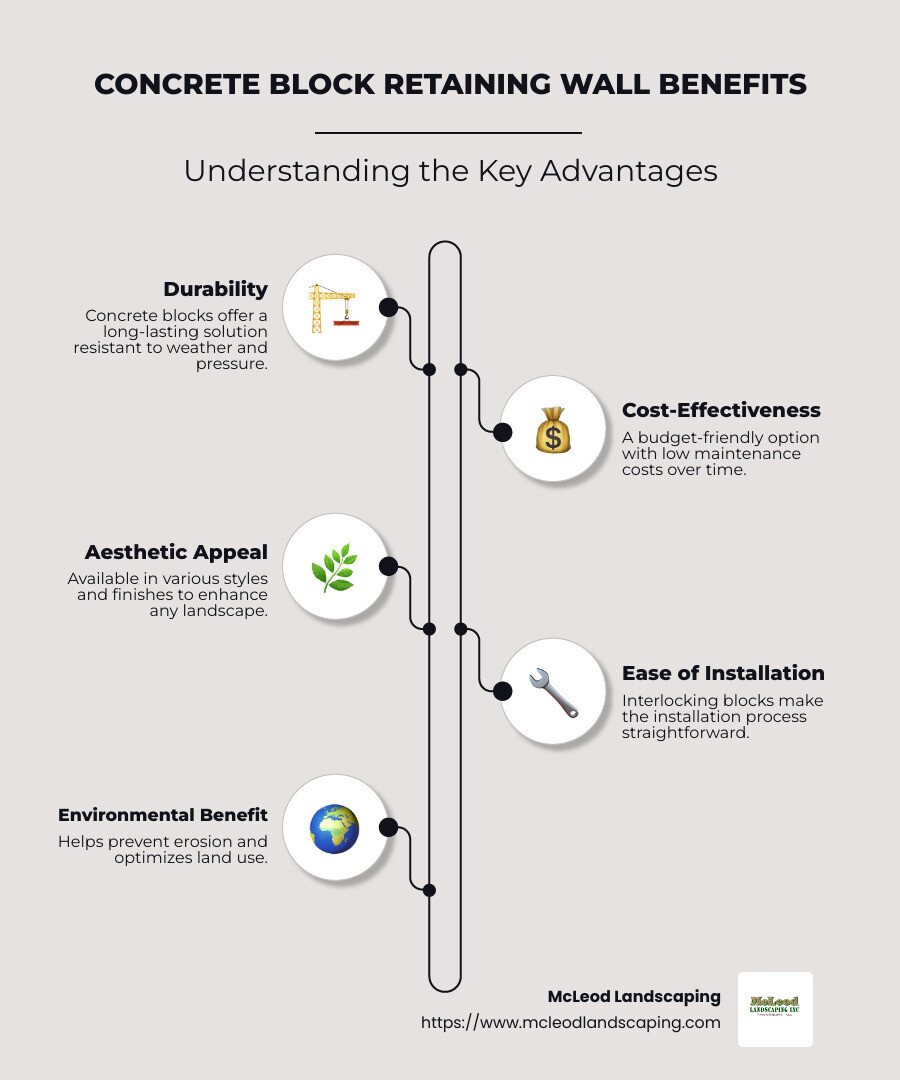
Durability: Concrete blocks are incredibly strong and can withstand harsh weather conditions. They are less likely to crack or warp compared to other materials like wood or stone.
Cost-Effectiveness: Building with concrete blocks is often cheaper than using other materials. Their ease of installation and low maintenance requirements also contribute to long-term savings.
Aesthetic Appeal: With a variety of styles available, concrete block walls can be custom to suit any landscape design. Whether you prefer a modern, sleek look or a more natural, rugged appearance, there’s a block type that fits your vision.
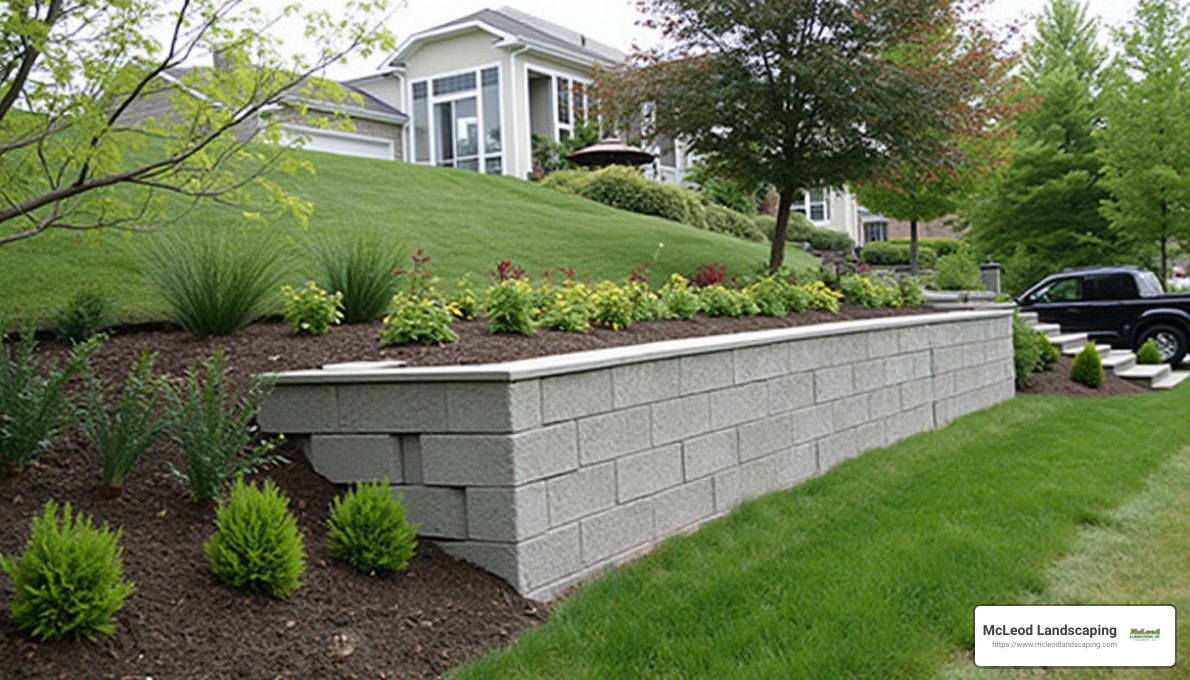
Concrete block retaining walls are not just practical; they are also a beautiful addition to any landscape. By choosing the right type of block, you can create a wall that not only serves its purpose but also improves your outdoor space’s aesthetic appeal.
Up next, we’ll dig into the installation process and how to ensure your retaining wall stands the test of time.
Building a concrete block retaining wall can seem daunting, but with careful planning and execution, you can create a sturdy and attractive structure. Here’s a simple guide to get you started.

By following these steps, you can build a concrete block retaining wall that is both functional and visually appealing. The key is in the preparation and attention to detail, ensuring your wall stands strong for years to come.
Next, we’ll explore how concrete block retaining walls compare with other materials in terms of cost and functionality.
When choosing materials for a retaining wall, it’s important to weigh the benefits and drawbacks of each option. Let’s compare concrete block retaining walls with other popular materials like poured concrete, wood, and granite.
In summary, concrete block retaining walls offer a balance of cost, ease of installation, and flexibility in design. They are a popular choice for many due to their durability and aesthetic options. However, it’s crucial to consider the specific needs of your project, such as height and foundation requirements, before making a decision.
Next, we’ll address some frequently asked questions about using concrete blocks for retaining walls.
Absolutely! Concrete block retaining walls are a popular choice for many homeowners. They are versatile and can be used for various heights and designs. However, there are some limitations to consider:
When it comes to cost, concrete block retaining walls are generally affordable. The cost can vary based on:
For a budget-friendly option, consider using simpler blocks without decorative finishes and manage the installation yourself if feasible.
The cost comparison between poured concrete and block walls depends on several factors:
In summary, concrete block retaining walls are often a cost-effective choice, especially for DIY projects. They offer flexibility and ease of installation, making them suitable for a wide range of applications.
As we wrap up our exploration of concrete block retaining walls, it’s clear that they offer a blend of durability, cost-effectiveness, and aesthetic appeal that makes them a top choice for many landscape projects. At McLeod Landscaping, we pride ourselves on delivering comprehensive services that cater to both residential and commercial clients across the Merrimack Valley.
Our expertise in retaining wall installation ensures that your project is handled with precision and care. Whether you’re looking to manage sloped terrain or create a stunning landscape feature, our team is equipped to bring your vision to life. With over 30 years of experience, we understand the unique demands of the Merrimack Valley’s diverse environments and are committed to providing solutions that stand the test of time.
If you’re considering a concrete block retaining wall for your next project, we invite you to explore our retaining wall installation services. Let us help you transform your outdoor space with a structure that combines function and beauty seamlessly.
In conclusion, whether you’re enhancing your home’s landscape or tackling a commercial project, McLeod Landscaping is your trusted partner in creating lasting and visually appealing retaining walls.
Contact McLeod Landscaping today at (978) 640-0957 or click here to schedule a consultation for retaining wall installation. Let our experienced team design and install a functional and visually appealing retaining wall that enhances your landscape.


1881 Main St Unit 1, Tewksbury, MA 01876