
Concrete brick steps combine the strength of concrete with the timeless look of brick, creating an entrance that is both functional and stunning. This guide covers everything from foundation prep to the final finishing touches for your new or upgraded steps.
Quick Overview: Building Concrete Brick Steps
Brick steps offer superior durability, excellent slip resistance, and incredible versatility to match your home’s style. However, the foundation is the most critical part of the project. A properly prepared base prevents frost heave and ensures long-term stability.
I’m Scott McLeod, owner of McLeod Landscaping. With over 30 years of experience installing concrete brick steps in the Merrimack Valley, I’ll share the professional techniques that ensure your project lasts for decades.
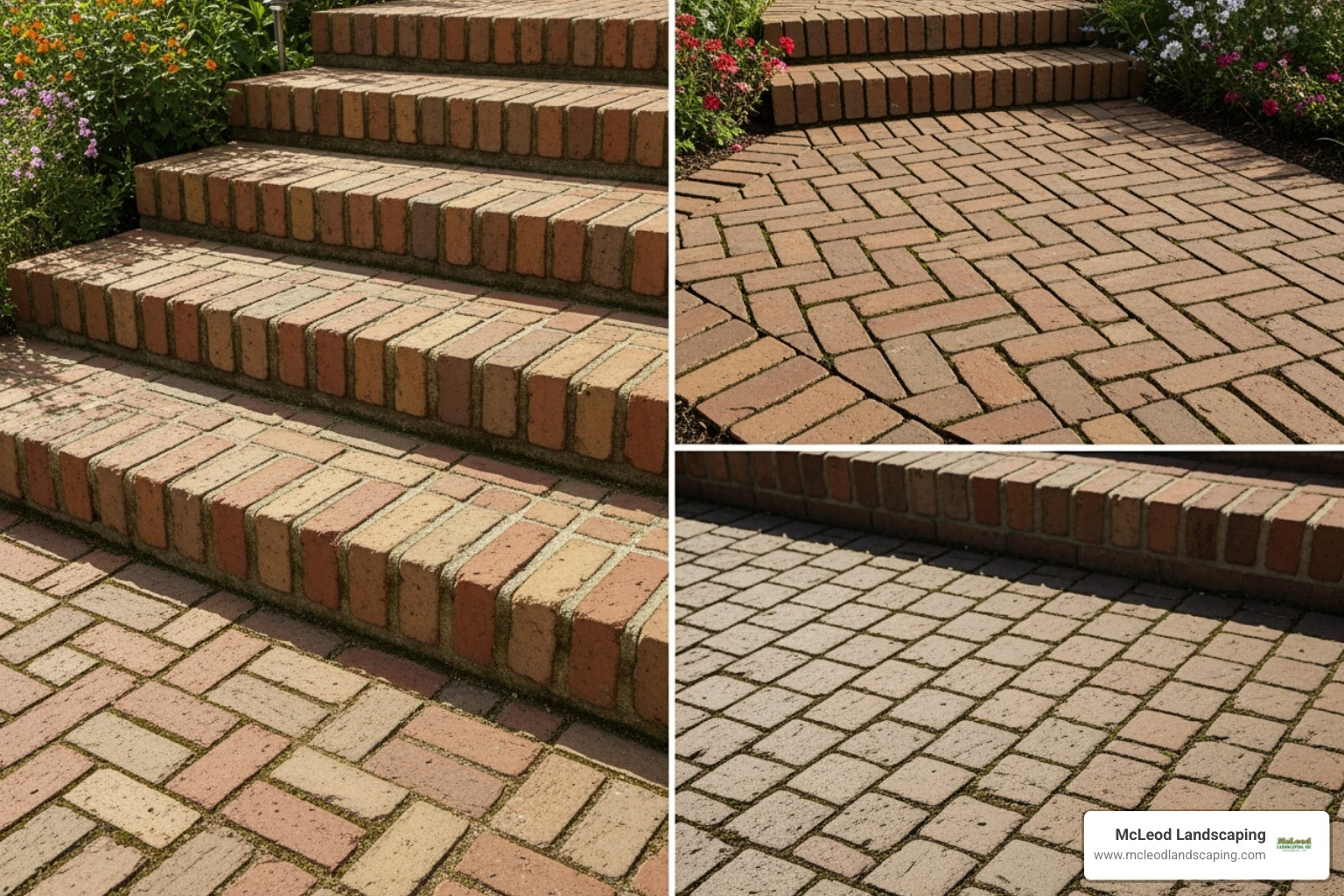
Smart planning is the key to successful concrete brick steps. This phase involves balancing aesthetics with function, setting a realistic budget, and ensuring your project complies with local building codes. Getting these details right upfront will save you headaches and money later. For complex projects, our Masonry Services team can handle everything from design to cleanup.
Why choose brick over a simple concrete pour? The answer goes beyond looks.
Brick gives you endless ways to express your home’s personality. Popular patterns include:
Consider whether straight, curved, or flared stairs best suit your landscape and home. The right pattern can completely transform an entrance, as seen in our Brick Stairs and Walkway portfolio.
Using the right materials is crucial for a long-lasting installation.
| Feature | Mortar (Type M) | Masonry Adhesive |
|---|---|---|
| Strength | Excellent for load-bearing | Good for repairs only |
| Durability | Decades of outdoor exposure | Can degrade over time |
| Application | Requires mixing and skill | Squeeze from tube |
| Cost | Economical for large areas | Expensive per square foot |
| Weather Resistance | Handles freeze-thaw cycles | May fail in extreme cold |
For structural steps, always use mortar. Save adhesive for minor repairs.
Ignoring building codes is a costly mistake. Always check with your local building department before starting. Key requirements often include:
While not always required for residential projects, considering ADA compliance guidelines can make your steps more accessible for everyone.
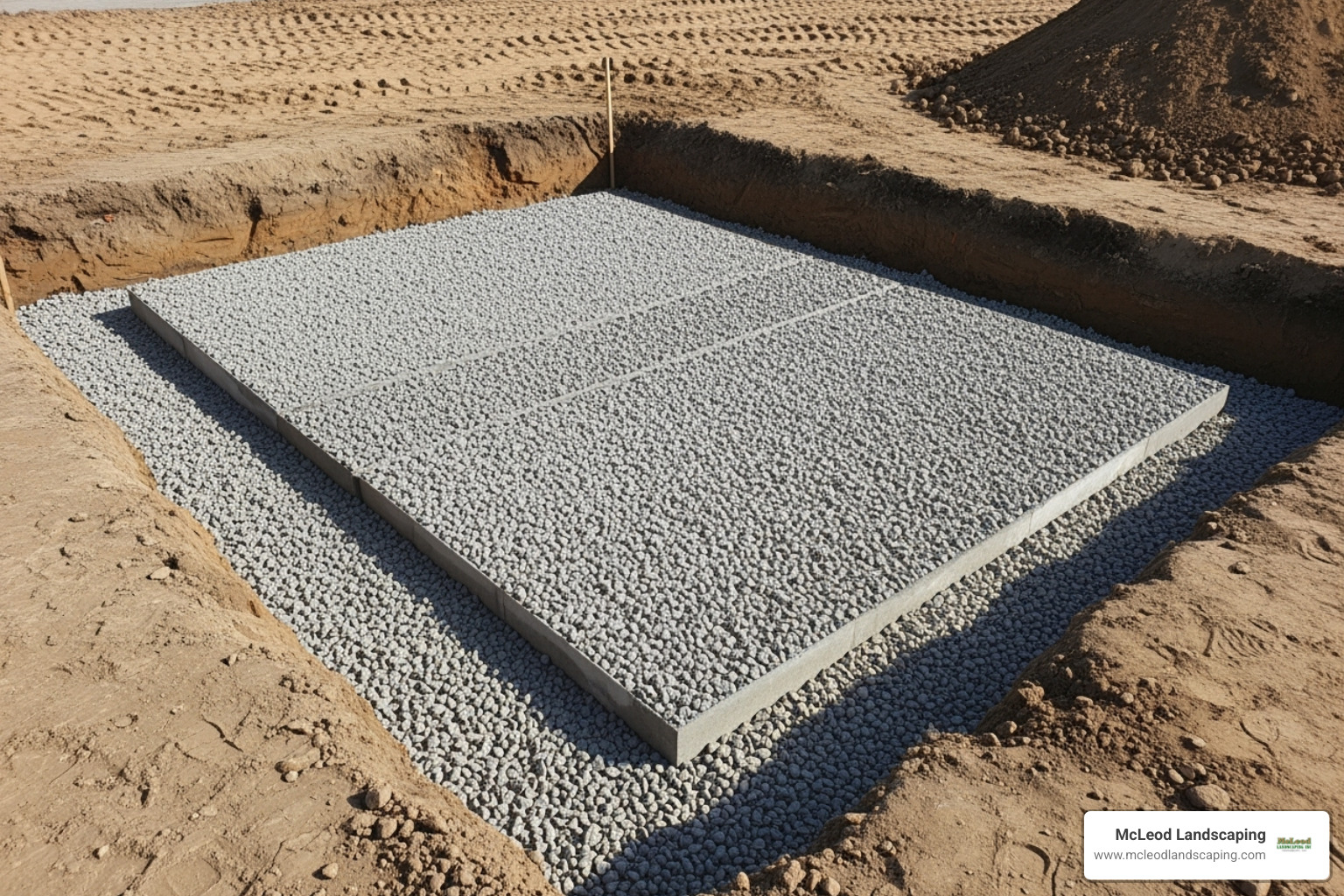
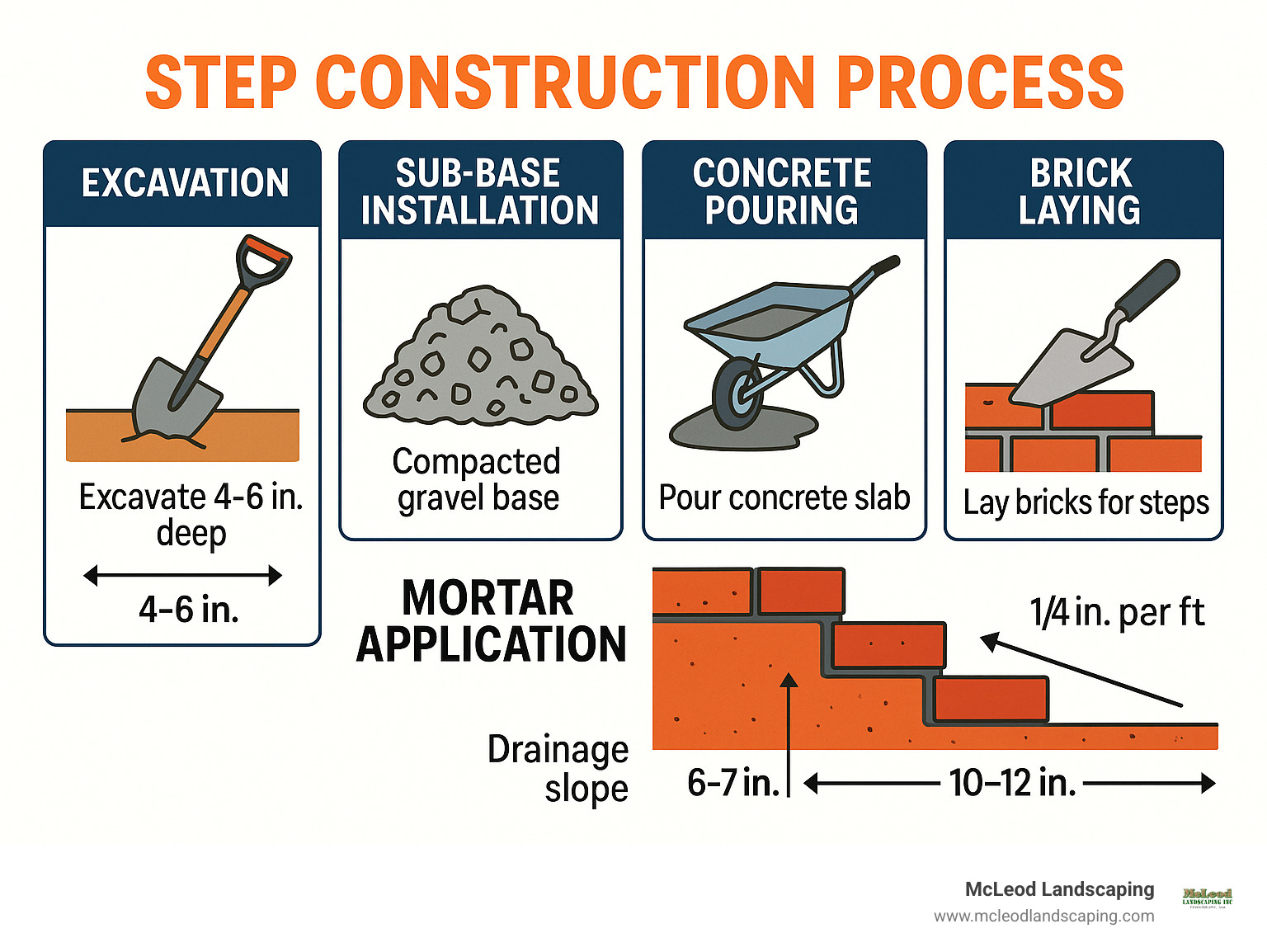
Like a house, concrete brick steps need a solid foundation to last. Cutting corners here is a recipe for failure. A proper foundation prevents frost heave, ensures good drainage, and provides a stable base to keep your steps level for decades. This principle is also key to our Retaining Wall Installation services.
If you’re overlaying existing concrete steps with brick, proper prep is essential. If the concrete is badly cracked or crumbling, it must be replaced, not covered.
Starting from scratch ensures the best possible result. This is more work but guarantees a foundation that will last for 50 years or more.
This video on proper preparation shows the techniques professionals use. Time spent on the foundation is never wasted.
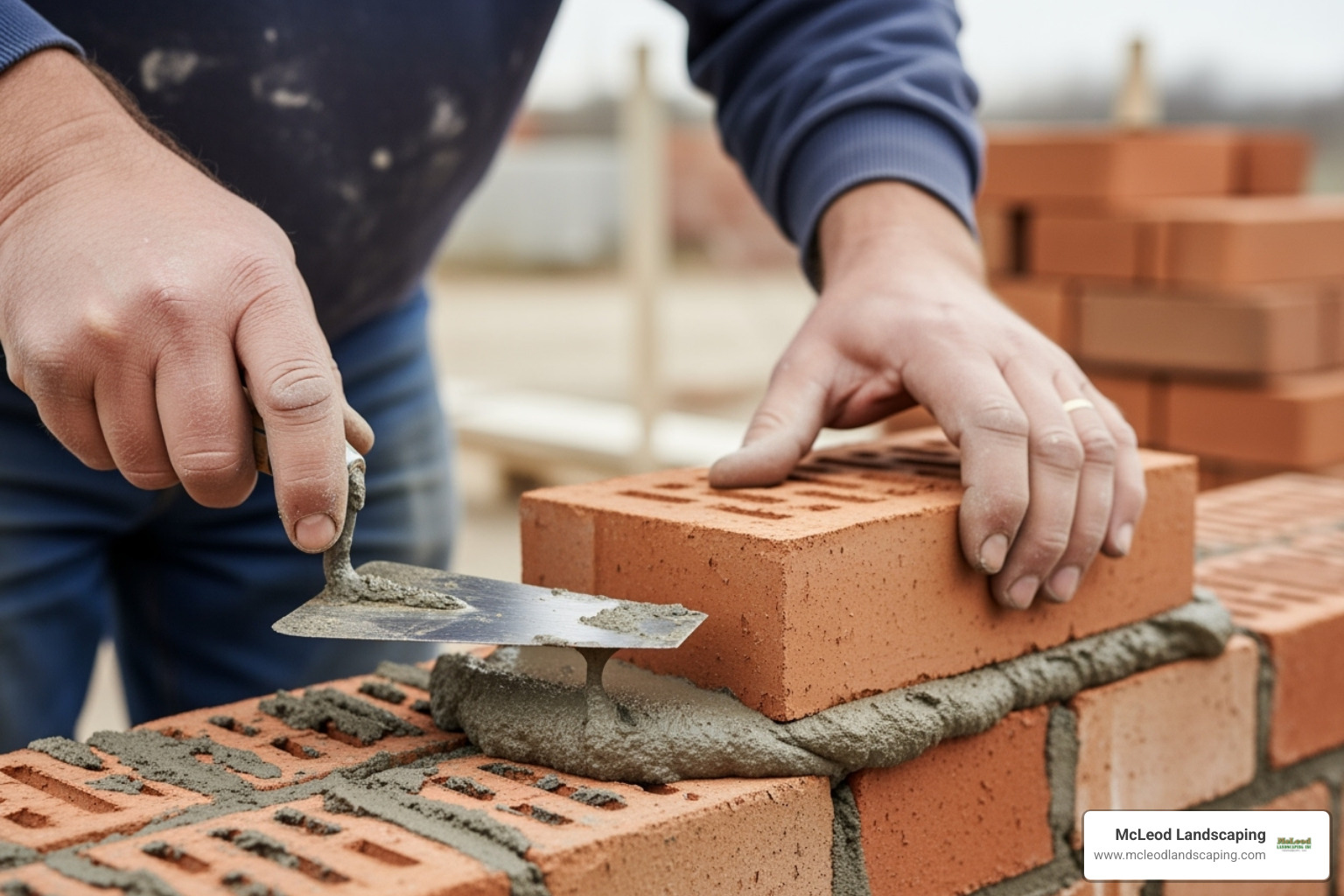
With a solid foundation, you can now bring your concrete brick steps to life. This phase requires precision and patience. For a complete overview, see our guide on How to Build Brick Stairs Outside.
Getting the mortar right is the first step. Use Type M mortar mixed to a thick, peanut-butter-like consistency. Mix in small batches to keep it workable.
Spread a consistent 3/8-inch mortar bed on the concrete base. The first course of bricks is the most critical, as it guides the rest of the installation. Use a level and a tight string line to ensure each brick is perfectly straight. As you lay subsequent bricks, apply mortar to the ends (head joints) and use spacers to maintain uniform joints. A well-planned layout that uses whole bricks saves time and looks more professional, a technique shown here: using whole bricks to save time.
Work from the bottom up, completing one full step (riser and tread) before moving to the next. This ensures proper support and alignment.
The secret to longevity is proper drainage. Each tread must slope forward about 1/4 inch per foot. This slight slope prevents water from pooling and seeping into joints, which is crucial for avoiding damage during freeze-thaw cycles.
Use a brick saw or angle grinder with a diamond blade for clean, precise cuts at edges. Plan transitions to existing walkways carefully to ensure a seamless flow. Our Interlocking Brick Stairs guide offers more tips on managing these connections.
This final step gives your brickwork a polished, professional look. Once the mortar is firm but still workable, it’s time to finish the joints.
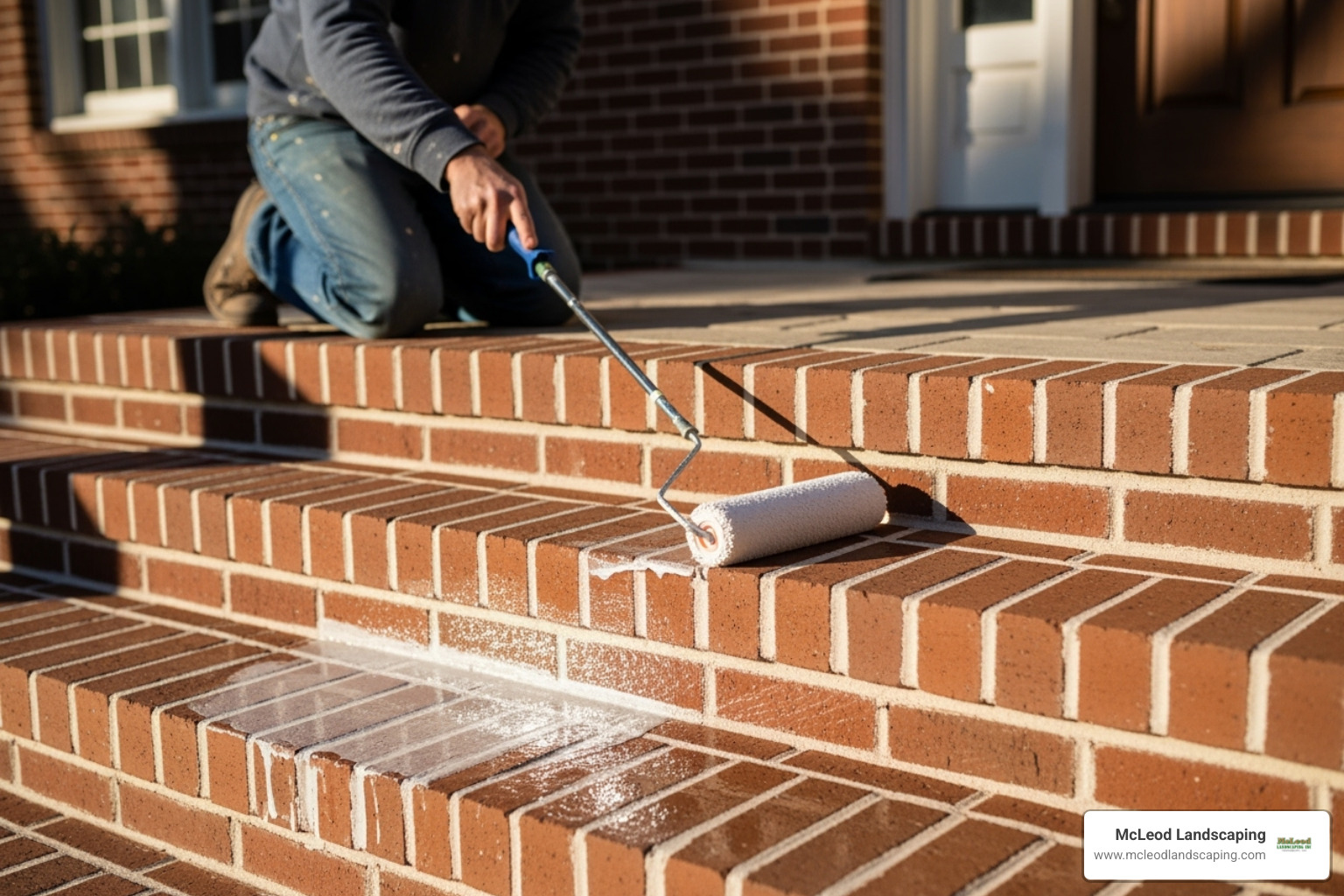
Your concrete brick steps are built, but proper finishing and maintenance are needed to ensure they last. This final stage protects your investment for years to come. Learn more about long-term care on our Hardscaping Services page.
Sealing your steps protects them from weather damage. Penetrating sealants are our top choice as they soak into the brick without creating a slippery surface. Film-forming sealants create a glossy topcoat but can be slick when wet. Always apply sealant to a clean, dry surface, and plan to re-seal every 3-4 years to maintain protection against water damage, stains, and efflorescence.
Well-built brick steps require minimal but consistent care.
Understanding potential issues helps you prevent them.
The cost of concrete brick steps depends on several factors:
DIY vs. Professional: Doing it yourself saves on labor but requires time, tools, and expertise. Mistakes, especially with the foundation, can be more costly to fix than hiring a professional from the start.
Note: Average costs found online for concrete brick steps vary widely. A small project might run $200-$800, while complex installations can be $3,000-$15,000 or more. Materials alone typically cost $4-$15 per square foot, with skilled labor from $50-$150 per hour. These are estimates based on internet data and not actual quotes from McLeod Landscaping. We provide detailed estimates custom to your specific project.
After 30 years of installing concrete brick steps, we’ve heard every question. Here are the most common ones.
No, this is not recommended. Cracks indicate an unstable base, which will cause the new brickwork to fail. The existing concrete must be properly repaired and prepped. If damage is severe, the old concrete should be completely removed and replaced with a new, solid foundation before laying bricks. Covering up a problem will only lead to more expensive repairs later.
Proper drainage for concrete brick steps starts with the foundation. A well-compacted gravel base allows water to drain away from the structure. The most critical element, however, is sloping each tread about 1/4 inch per foot away from the house. This gentle slope prevents water from pooling on the surface, seeping into joints, and causing damage during freeze-thaw cycles.
Frost heave is a major threat in cold climates. It’s prevented by building a foundation that extends below the local frost line. This involves excavating the soil and installing a deep, well-drained sub-base of compacted gravel. This base prevents water from collecting and freezing under the steps, which is what causes the ground to expand and push the structure upward. A proper foundation is the only reliable defense against frost heave.
Creating beautiful concrete brick steps is an investment in your home’s beauty, safety, and value. This guide has covered the critical details, from foundation to finish, that ensure a lasting result. The key takeaways are the importance of proper drainage, the use of quality materials like Type M mortar and frost-resistant bricks, and building on a solid, well-compacted foundation.
When done right, brick steps deliver timeless beauty with patterns like running bond or herringbone, improved safety from their slip-resistant texture, and increased curb appeal that improves home value. The difference between steps that last a few years and those that last for generations is the quality of the foundation and installation.
For homeowners in the Merrimack Valley, McLeod Landscaping has the expertise to build concrete brick steps that withstand our New England climate. We understand how to blend durability and beauty to create an entrance that stands the test of time.
Ready to transform your home’s entrance? Explore our exterior brick stair solutions and let’s create something extraordinary together.
Contact McLeod Landscaping today at (978) 640-0957 or click here to schedule a consultation for retaining wall installation. Let our experienced team design and install a functional and visually appealing retaining wall that enhances your landscape.


1881 Main St Unit 1, Tewksbury, MA 01876