

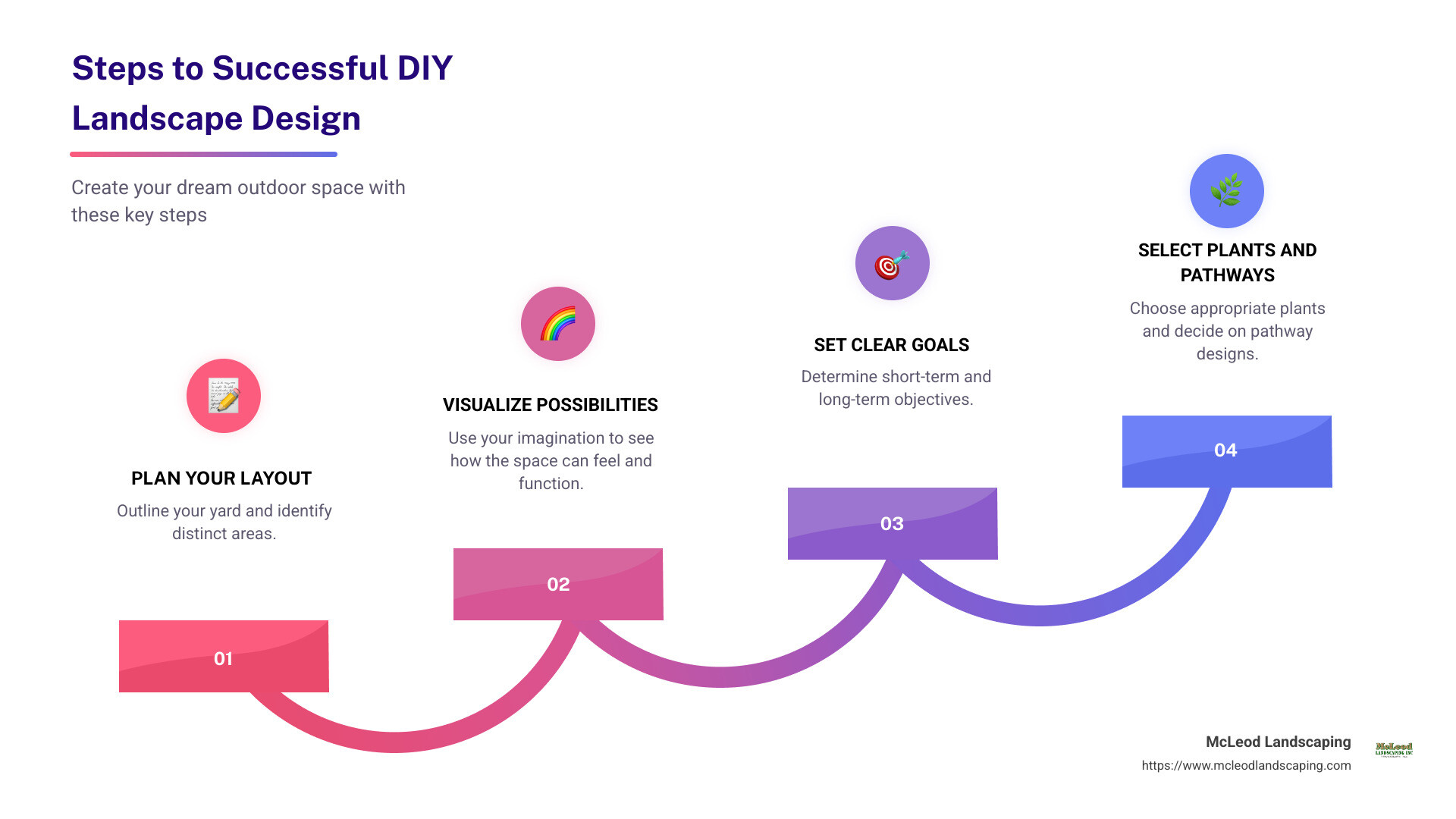
Do it yourself landscape design is a fulfilling way to transform your outdoor space into a reflection of your style and personality. For those searching for a straightforward approach to creating their dream landscape, here’s a quick breakdown:
With planning at the forefront, let your imagination run wild to create a unique, enjoyable space. Establish clear goals for each step, from picking plants to determining pathways. A successful landscaping project starts with a solid foundation.
As Scott McLeod, owner of McLeod Landscaping, I’ve spent over three decades helping both homeowners and businesses achieve stunning landscapes in the Merrimack Valley area. With a passion for do it yourself landscape design, I’m excited to guide you through the process of changing your own outdoor space.
Do it yourself landscape design terms made easy:
– how to design a landscape
– backyard landscaping ideas
– landscape design ideas
Starting on a do it yourself landscape design project can be both exciting and rewarding. The key to success? Starting with a solid foundation. Here’s how to begin:
First, get to know your space. Walk around your yard and observe. What’s already there? Note sunlight patterns, soil type, and existing features like trees or slopes. This step is crucial: it ensures your design works with the natural elements, not against them.
Before diving into the design, define your goals. What do you want to achieve with your landscape? Here are some questions to consider:
Write down your goals and prioritize them. This will guide your design decisions and help you stay focused.
Now for the fun part: collect ideas! Inspiration is everywhere. Here’s how to gather it:
Compile your favorite ideas in a mood board or a digital folder. This will serve as a visual guide as you move forward with your design.

With a thorough site analysis, clear goals, and a collection of inspiring ideas, you’re ready to create a landscape plan that reflects your vision and meets your needs. Next, we’ll dive into the nuts and bolts of crafting a landscape plan.
Crafting a landscape plan is where your do it yourself landscape design really starts to take shape. This is the blueprint for your outdoor oasis, and it’s all about turning ideas into actionable steps.
Begin by grabbing some graph paper. This might seem old school, but it’s incredibly effective. Each square on the paper can represent a specific measurement, like one foot or meter, depending on your yard’s size. This method helps you visualize space and ensures your design is to scale.
Think of your yard like a house with different rooms. Defining areas helps organize the space and makes it more functional.
Borders are the finishing touch that ties your landscape together. They define distinct areas and add a polished look.
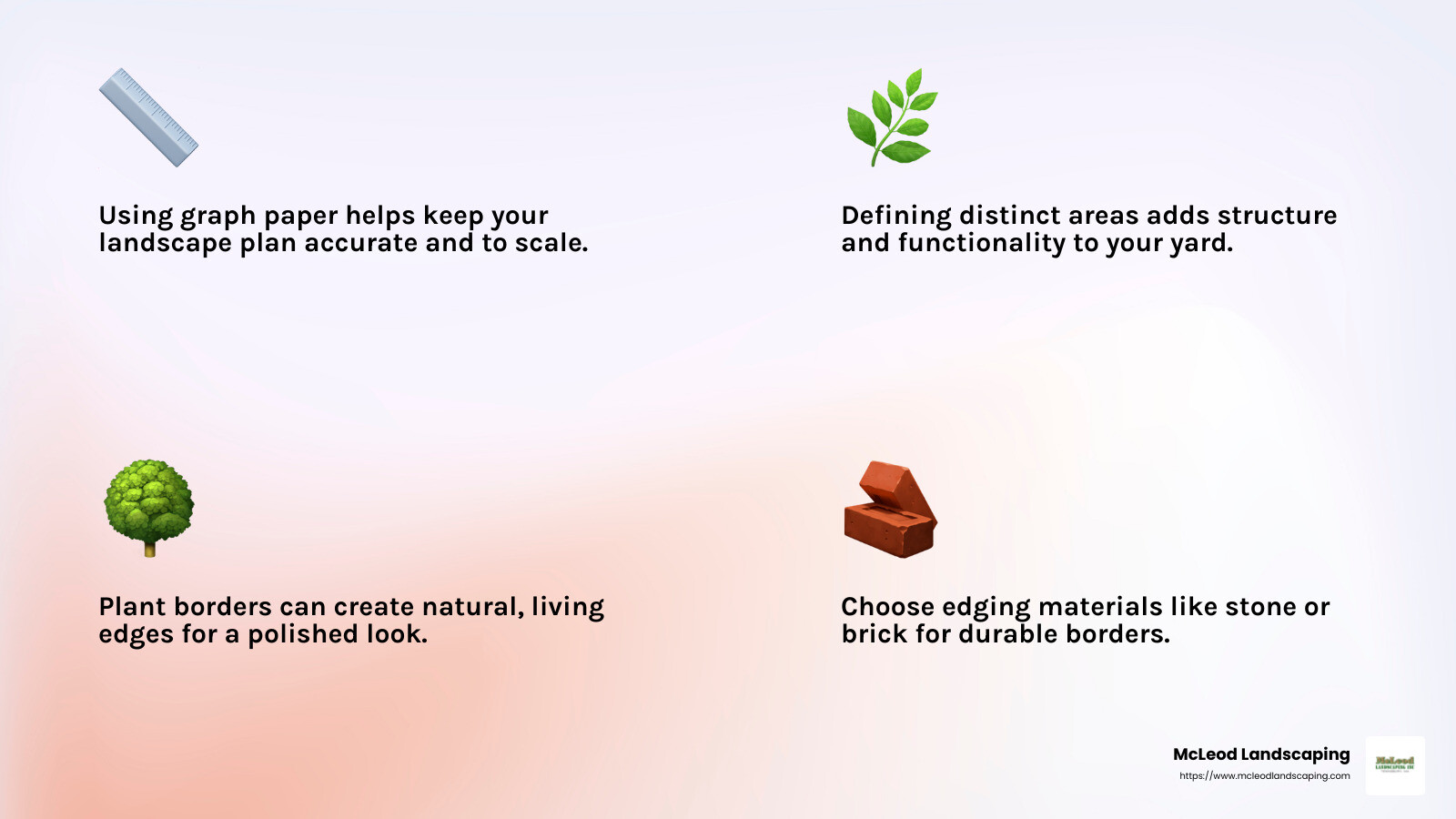
By using graph paper for a scale drawing, defining areas, and creating distinct borders, your landscape plan will be a clear and organized guide. This approach not only helps in visualizing your ideas but also ensures that the execution is smooth and precise.
Next, we’ll explore how to choose the right plants for your landscape, focusing on plant selection, local nurseries, and plant zones.
Selecting the right plants is a critical step in your do it yourself landscape design. It ensures your garden is not only beautiful but also sustainable and suited to your local environment.
When choosing plants, think about more than just what looks pretty. Consider the climate, soil type, and how much time you can dedicate to maintenance. Opt for plants that provide year-round interest, offering a mix of colors and textures throughout the seasons.
Visiting local nurseries is a smart move. They offer a variety of plants that are well-suited to your area’s climate and soil conditions. Plus, you can get valuable advice from knowledgeable staff about plant care and compatibility.
Understanding your plant zone is essential. It helps you select plants that will thrive in your climate, reducing the need for extra care and increasing the likelihood of success.
By focusing on thoughtful plant selection, leveraging local nurseries, and considering plant zones, you can create a thriving landscape that is both beautiful and manageable. Next, we’ll dive into incorporating hardscaping elements into your design, such as pathways and architectural features.
Incorporating hardscaping elements into your do it yourself landscape design can transform your outdoor space from ordinary to extraordinary. Hardscaping involves using non-living materials to improve the beauty and functionality of your yard. Let’s explore how pathways, architectural elements, and creative hardscaping ideas can lift your landscape design.
Pathways are not just practical; they guide visitors through your garden and highlight its best features. Consider using materials like gravel, stone, or brick to create paths that complement your garden’s style.
When designing pathways, think about the direction you want people to take and the views you’d like to showcase.
Adding architectural elements brings structure and interest to your landscape. These can include anything from simple garden arches to elaborate pergolas.
Choose elements that fit the scale of your garden and harmonize with your home’s architecture.
Get creative with your hardscaping by incorporating unique features that reflect your personal style.
Hardscaping is about balance. Too much can overwhelm a space, while too little might leave it feeling incomplete. Aim for a harmonious blend of hardscaping and soft landscaping to create a cohesive and inviting outdoor environment.
By thoughtfully incorporating pathways, architectural elements, and other hardscaping ideas, you can improve both the beauty and functionality of your landscape. Next, we’ll provide you with practical tips for successful DIY landscape design, focusing on planning, plant placement, and maintenance.
Starting on a do it yourself landscape design journey can be both exciting and rewarding. To make the process smoother, let’s dive into some essential tips on planning, plant placement, and maintenance.
Planning is the backbone of any successful landscape project. Start by sketching a rough layout of your yard. Use graph paper to help you visualize the space. Break down your yard into defined areas, such as flower beds, vegetable gardens, or seating areas. This approach keeps things organized and manageable.
Consider the following when planning:
Choosing the right plants and placing them correctly is crucial for a thriving garden. Start by selecting plants suited to your local climate and soil conditions. Native plants are often a great choice as they require less maintenance and water.
Here are some plant placement tips:
Maintaining your landscape is key to keeping it beautiful year-round. Regular care not only improves the appearance but also promotes healthy plant growth.
Focus on these maintenance tips:
By following these tips, your DIY landscape will not only look stunning but also be easy to maintain. Up next, we’ll tackle some frequently asked questions about DIY landscape design, including the best apps to use and whether you can teach yourself this rewarding hobby.
Yes, there are several free apps available for those interested in do it yourself landscape design. One popular option is iScape. This app allows you to upload photos of your yard and experiment with different plants and hardscaping elements. You can visualize how your ideas will look before making any changes.
iScape offers a user-friendly interface with features like:
Using an app like iScape can save time and help avoid costly mistakes, making it a valuable tool for any DIY enthusiast.
Absolutely! Teaching yourself landscape design is a cost-effective way to improve your outdoor space. It does require some time and effort, but it’s a rewarding process. Start by reading books, watching online tutorials, and visiting gardens for inspiration.
Here’s how you can begin:
By dedicating time to learning, you can develop the skills needed to create a beautiful landscape on your own.
DIY landscaping has its pros and cons. On the plus side, it can be a fulfilling and personal experience. You have full control over the design and can tailor it to your tastes and needs. There’s also a sense of pride and satisfaction in creating something with your own hands.
However, it can be time-consuming and physically demanding, especially for larger projects. Without professional expertise, there’s a risk of making design or plant selection mistakes, which could lead to less-than-ideal results.
Pros:
Cons:
Whether DIY landscaping is worth it depends on your goals, resources, and willingness to invest time and effort. If you enjoy hands-on projects and have the time to commit, it can be a highly rewarding endeavor.
In the next section, we’ll explore how McLeod Landscaping can help you achieve your landscaping dreams with comprehensive services available in the Merrimack Valley.
At McLeod Landscaping, we understand that creating a stunning outdoor space can be both a rewarding and challenging endeavor. Whether you’re a DIY enthusiast or looking for professional assistance, our comprehensive services are designed to meet your landscaping needs in the Merrimack Valley.
Why Choose McLeod Landscaping?
With over 30 years of experience, we offer a full range of services that go beyond just planting and maintenance. Our expertise includes landscape design, installation, and residential hardscaping services such as patios, fire pits, and outdoor kitchens. We tailor our solutions to fit your specific needs, ensuring your outdoor space becomes a true extension of your home.
Comprehensive Services:
Our commitment to quality and customer satisfaction has made us a trusted partner for homeowners throughout the Merrimack Valley. If you’re ready to turn your landscape dreams into reality, we invite you to explore our residential landscaping services.
Let us help you create an outdoor space that you and your family will cherish for years to come. Contact McLeod Landscaping today to start your journey towards a beautiful and functional landscape.
Contact McLeod Landscaping today at (978) 640-0957 or click here to schedule a consultation for retaining wall installation. Let our experienced team design and install a functional and visually appealing retaining wall that enhances your landscape.

1881 Main St Unit 1, Tewksbury, MA 01876