
Filling gap between concrete stairs and concrete walkway is a critical maintenance task that protects your property from water damage, prevents tripping hazards, and maintains curb appeal.
Quick Solution Overview:
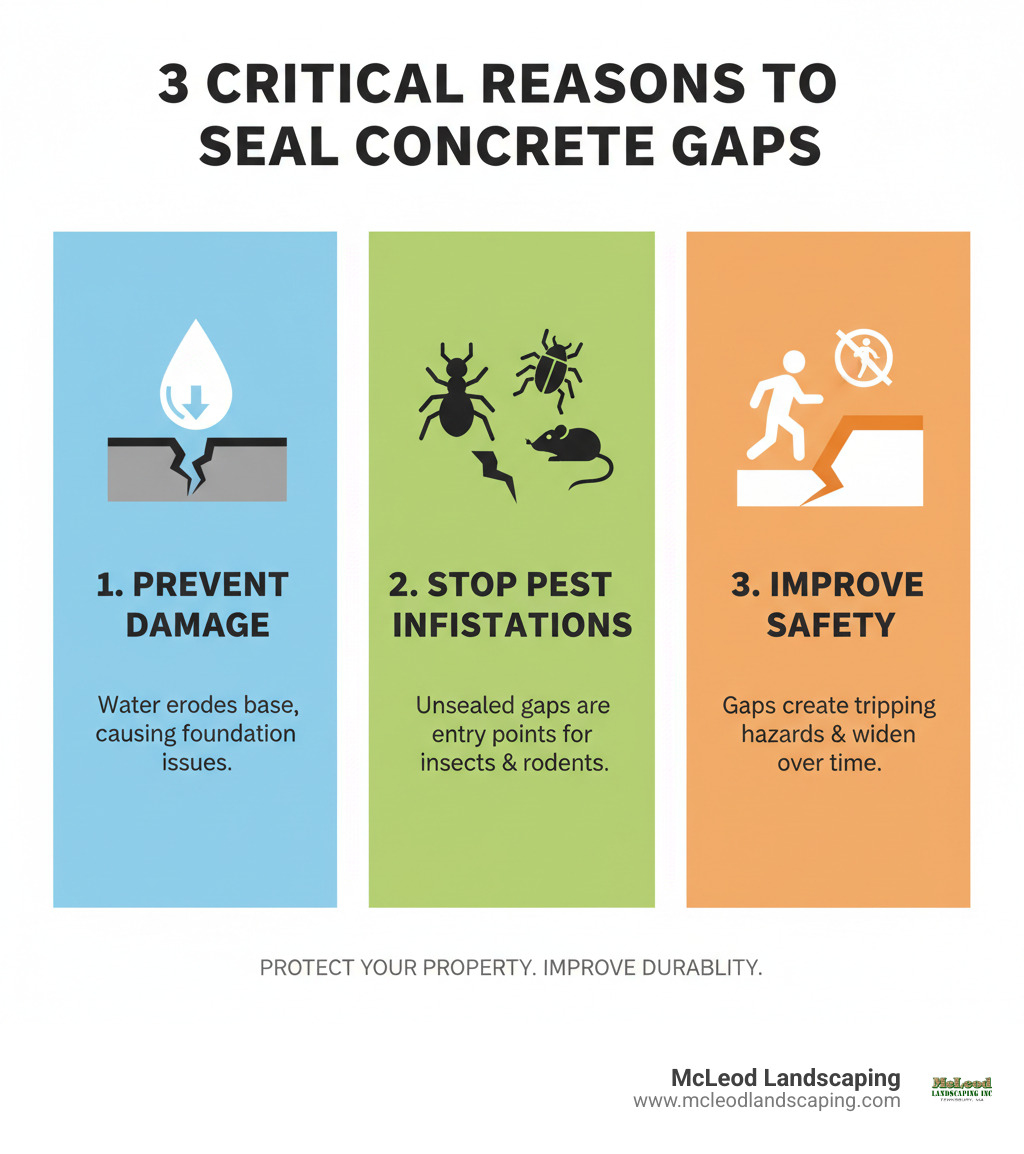
That gap between your concrete surfaces is more than a cosmetic flaw—it’s an open invitation for serious problems. Water seeping in can erode the base material, leading to settling, cracking, and expensive foundation damage. As research shows, water is one of the biggest enemies of concrete. These gaps also create tripping hazards and provide entry points for pests. Fortunately, this is a manageable DIY repair. A properly filled gap prevents water infiltration, blocks pests, and restores your walkway’s professional appearance.
I’m Scott McLeod of McLeod Landscaping. With over three decades of experience in the Merrimack Valley, I’ve seen how small gaps can escalate into major structural problems. This guide will help you tackle the repair correctly the first time.
That gap between your concrete stairs and walkway is a warning sign. It’s usually caused by soil settlement or the natural thermal expansion and contraction of concrete. In the Merrimack Valley, with our hot summers and cold winters, this movement is constant.
The real villain, however, is water. As research confirms, water is one of the biggest enemies of concrete. When it enters a gap, it erodes the base material supporting the slabs. This causes the concrete to settle, widening the gap and letting more water in. Our New England winters accelerate this damage through freeze-thaw cycles, where trapped water freezes and expands, breaking the concrete apart over time.
These gaps threaten your concrete’s structural integrity and create immediate problems:
Understanding the cause helps ensure a proper fix.
Ignoring these gaps allows a small problem to become a major expense. Filling gap between concrete stairs and concrete walkway is a crucial step in protecting your home’s value and structural safety.
When it comes to filling gap between concrete stairs and concrete walkway, the material you choose determines whether your repair lasts for years or fails in months. The key is to use a flexible filler, not a rigid one. Concrete constantly moves with temperature changes, and a rigid filler like mortar will crack and fail. You need a durable, weather-resistant material that can handle UV rays, rain, and our Massachusetts temperature swings.

Our top recommendation is flexible polyurethane sealant. It bonds exceptionally well to concrete and stretches to accommodate movement, making it ideal for New England weather.
For gaps deeper than 1/4 inch, a foam backer rod is essential. This foam cylinder is pushed into the gap before the sealant. It saves material and, more importantly, creates “two-point adhesion.” This allows the sealant to stick only to the sides of the joint, letting it stretch like a rubber band for maximum flexibility and longevity.
What about other materials?
Here’s how these materials compare:
| Material | Gap Size (Approx.) | Flexibility | Cure Time | Best Use Case |
|---|---|---|---|---|
| Polyurethane Sealant | 1/4″ to 1″ | High | 24-72 hours | Expansion joints, areas with movement, general gap filling |
| Concrete Repair Mortar | Small to large | Low (rigid) | 24-48 hours | Structural concrete repairs (chips, spalls), not for moving joints |
| Epoxy Fillers | Hairline to 1/2″ | Low to Moderate | 12-24 hours | Non-moving cracks, bonding concrete pieces, limited flexibility |
Having these tools ready will make the job go smoothly:
If your gaps are unusually wide or you see other issues, consider a professional assessment. We help homeowners throughout the Merrimack Valley with everything from simple repairs to complete front stairs and step installation.
Now it’s time to fix that gap. Following these steps carefully will ensure a professional, long-lasting repair. Always wear safety glasses and gloves to protect yourself from debris and sealant.
Proper cleaning is the most critical step for a durable repair. A sealant applied to a dirty, dusty, or damp surface will fail.
For any gap deeper than 1/4 inch, a backer rod is essential. This foam cylinder saves sealant and creates a more flexible joint.

With the joint prepped, application is straightforward.
A proper seal is vital when filling gap between concrete stairs and concrete walkway to withstand foot traffic. For more on professional installations, see our front stairs and step installation services.
Immediately after applying the sealant, tool the joint for a professional finish. Most sealants begin to skin over within minutes.
Filling gap between concrete stairs and concrete walkway is a manageable DIY project, but avoiding common pitfalls is key to a long-lasting repair. Here’s how to get it right and when to recognize you might need professional help.
Avoid these frequent errors to ensure your repair holds up:
While DIY is great, some issues signal a deeper problem that requires an expert. Call a professional if you see:
At McLeod Landscaping, we provide comprehensive hardscaping services across the Merrimack Valley. We can diagnose the root cause of your concrete issues and recommend a lasting solution, whether it’s a simple repair, drainage correction, or reconstruction.
Here are answers to some of the most common questions we hear from homeowners in the Merrimack Valley.
A well-executed repair using high-quality polyurethane sealant can last 5 to 10 years, sometimes longer. Longevity depends on material quality, proper application (thorough cleaning and using a backer rod), and local climate. Our harsh New England freeze-thaw cycles are tough on sealants. To extend the life of your repair, inspect it annually and touch up any small failures before they worsen.
We strongly advise against using expanding spray foam for filling gap between concrete stairs and concrete walkway. Here’s why:
Stick with a flexible polyurethane sealant for a durable, effective repair.
This situation is urgent. A slope toward your stairs or house foundation funnels water directly into the gap, dramatically accelerating erosion and increasing the risk of basement leaks and foundation damage.
Our team at McLeod Landscaping can evaluate drainage challenges and recommend long-term solutions. Learn more about our walkway installation services.
By following this guide for filling gap between concrete stairs and concrete walkway, you’re doing more than just a simple repair. You are improving your property’s safety, boosting its curb appeal, and protecting your investment from costly water damage. A sealed gap prevents foundation issues, deters pests, and eliminates tripping hazards.
We understand that some projects can be daunting, especially if you uncover wider gaps or signs of structural issues. If you’re concerned the problem is beyond a simple DIY fix, don’t hesitate to reach out. With over 30 years of experience in residential hardscaping, the McLeod Landscaping team is ready to provide professional advice and solutions for your walkways, stairs, and retaining walls.
For a professional assessment of your concrete surfaces, we invite you to get a professional assessment for your walkway installation today. Let us help you ensure your concrete is safe, strong, and beautiful for years to come.
Contact McLeod Landscaping today at (978) 640-0957 or click here to schedule a consultation for retaining wall installation. Let our experienced team design and install a functional and visually appealing retaining wall that enhances your landscape.


1881 Main St Unit 1, Tewksbury, MA 01876