

Front yard landscape design is your home’s calling card—it’s the first impression visitors and passersby get of your property. An inviting and thoughtfully planned front yard not only boosts curb appeal, but also significantly improves your home’s value and character.
If you’re short on time, here’s a quick overview of what front yard landscape design includes:
I’m Scott McLeod, owner of McLeod Landscaping Inc., with over 30 years of experience changing residential and commercial properties through expert front yard landscape design. Throughout my career, I’ve seen how beautifully designed front yards not only capture attention but also add meaningful value to properties.
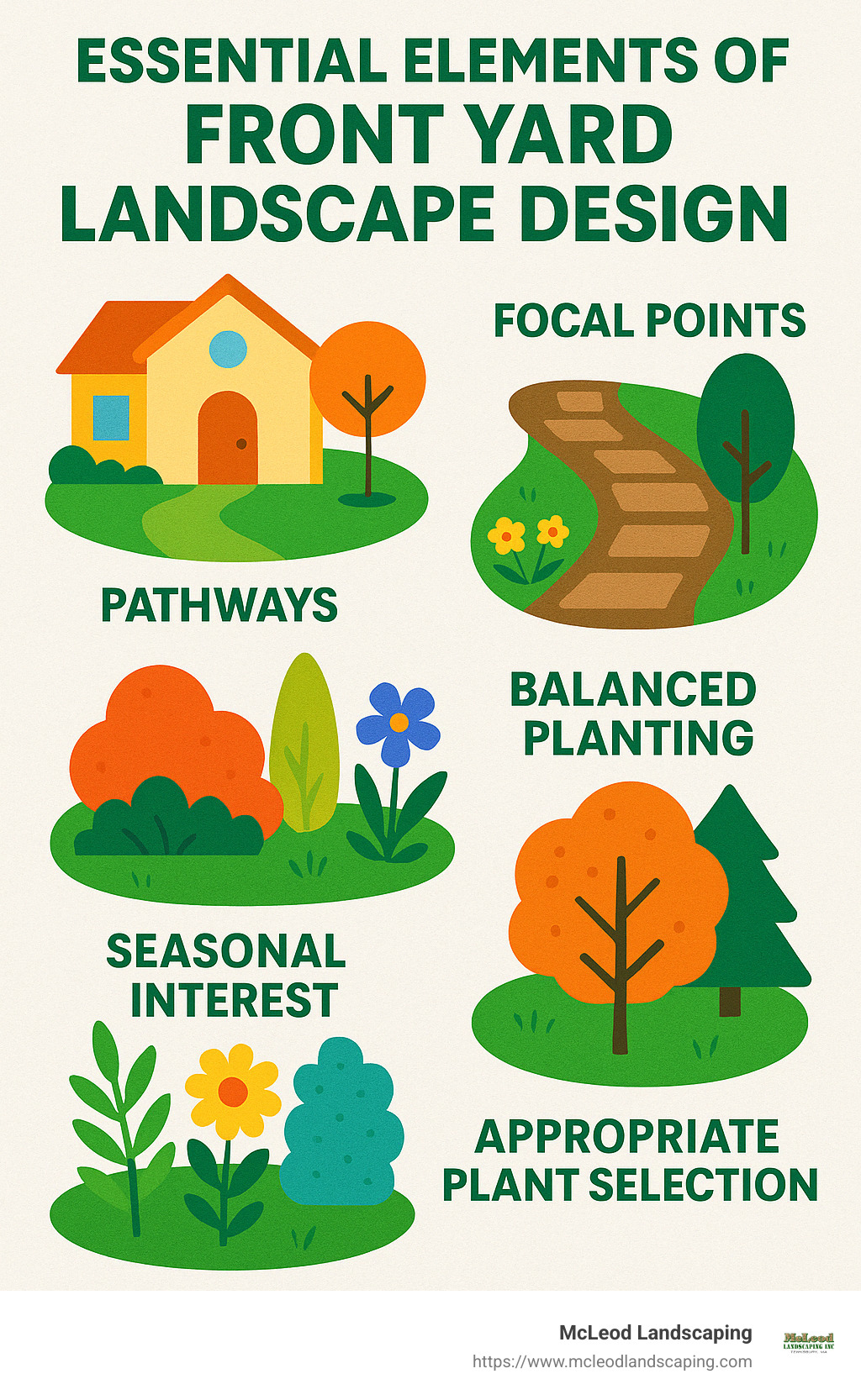
Front yard landscape design terms to know:
– landscape design for small front yard
– how to design a landscape
– modern landscape design
Designing a beautiful front yard is about much more than simply planting pretty flowers. At McLeod Landscaping, we’ve seen how front yard landscape design can dramatically improve curb appeal and home value when it’s built on solid design fundamentals. So, let’s dive into the core principles that guide every project we create.
Balance might sound fancy, but really, it’s just about creating visual harmony. Think of it like arranging furniture in your living room—it just feels right when everything works together. In landscape design, we achieve balance through symmetrical and asymmetrical layouts. A symmetrical design uses mirrored elements, like matching shrubs on either side of your front steps, giving a formal look. An asymmetrical approach balances different elements, like a larger tree on one side balanced by a group of smaller shrubs on the opposite end.
Proportion is closely related—it means keeping everything sized appropriately. You wouldn’t put a tiny shrub next to a massive two-story home or overwhelm a cozy bungalow with towering trees. As landscape designer Naomi Sanders puts it, “The front yard is your home’s calling card. Every element should be in proportion to your home’s architecture and to each other.”
Have you ever seen a yard where random plants seem to be tossed in without a plan? Unity and harmony are exactly what prevent that. At McLeod Landscaping, our secret to achieving a cohesive look is simple: we strategically repeat certain plants, colors, and materials throughout your landscape. This creates a pleasant rhythm and flow that ties your entire front yard together—giving it that professionally designed feel you’re after.
Every memorable front yard has one element that immediately draws your attention—a focal point. Think of it as the “star of the show.” This could be a striking ornamental tree, an neat stone fountain, an artful arrangement of boulders, or even beautifully planted containers framing your front door. A focal point gives your yard personality and makes it stand out from the neighbors’.
Here in the Merrimack Valley, we’re fortunate (or maybe unfortunate, depending on your feelings about winter!) to experience distinct seasons. A properly designed landscape should look great all year round, not just during spring blooms. At McLeod Landscaping, we carefully select plants that provide something special in each season—flowers in the spring and summer, vibrant foliage in the fall, and attractive branches or evergreens for winter structure.
Landscape architect Scott Lewis agrees: “By mixing flowers that bloom during different seasons, you can ensure constant color throughout the year. A good design transitions beautifully through all four seasons.”
A gorgeous design won’t last long if the plants you’ve chosen can’t handle your local climate. That’s why considering your area’s climate is essential. The Merrimack Valley generally falls within USDA Hardiness Zones 5b to 6a, meaning winters can be harsh, and summers can be quite warm.
Knowing your specific USDA Hardiness Zone helps guide your plant selection, ensuring they will flourish year after year. You can quickly find your specific zone by visiting the USDA Hardiness zone information tool.
And if you’re looking for further inspiration on how these fundamentals come together in real designs, check out our dedicated Landscape Design Ideas page. It’s full of creative examples to spark your imagination and help you visualize possibilities for your own home.
Aside from making your home visually appealing, a thoughtfully executed front yard landscape design can significantly boost your property’s market value. In fact, experts often agree that a well-designed landscape can increase your home’s value by as much as 20%.
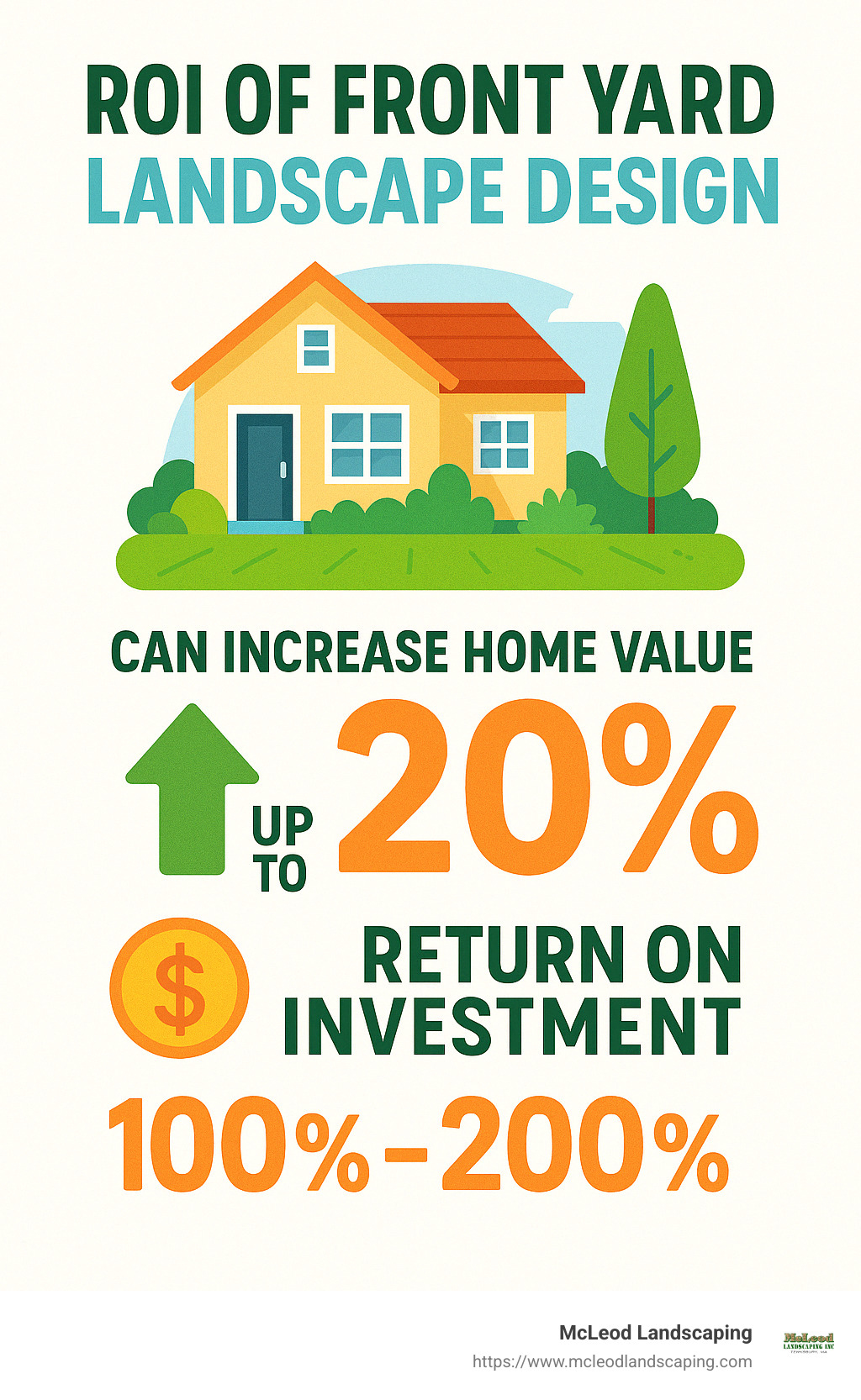
Landscaping consistently ranks among the best home improvement investments, typically offering a return on investment (ROI) between 100% and 200% when selling your property. That’s far higher than many other home projects and improvements.
But numbers aren’t the entire story—there’s a human factor too. When buyers first arrive at a home, they quickly make judgments based on its curb appeal. A beautiful front yard tells them that the property has been lovingly maintained. As we always remind our clients at McLeod Landscaping, “When potential buyers pull up to your home, they’re evaluating the entire package. An inviting, well-designed front yard is key to making a strong first impression.”
At McLeod Landscaping, we never just jump into planting. Instead, we start every front yard landscape design project with a comprehensive plan created specifically for your property and personal preferences.
First, we consider your home’s architectural style. Whether it’s a classic Colonial, a charming Cape Cod, or an ultra-modern build, we make sure your yard complements your home’s unique look, creating a seamless visual connection.
Next, we perform a detailed site analysis. It’s essential to understand aspects like your yard’s soil type, drainage, sun exposure, and topography. These factors directly impact which plants and materials we’ll select to ensure your yard thrives for years to come.
We also talk with you about your functional needs. Do you want a wider walkway for easier access, a small sitting area for morning coffee, or additional parking spaces? Your front yard should reflect how you actually live and use the space.
Scale considerations come next. In small yards, for example, we carefully select appropriately sized plants and features, so your space never feels crowded or overwhelmed.
Finally, we plan traffic flow, designing logical walkways that comfortably guide guests from the street or driveway to your front door and other key areas around your home.
To learn more about our design approach, check out our article, The Art of Landscape Design: Balancing Form, Function, and Beauty. It’s an informative and inspiring look at how we balance practicality with aesthetics in every project we undertake.
There’s no one-size-fits-all approach to front yard landscape design. Your landscape should reflect your personal taste and complement your home’s architecture. Here are ten distinctive styles to inspire your front yard change:
Traditional landscapes celebrate symmetry, formal structure, and timeless materials. This style feels right at home with Colonial, Georgian, and Tudor homes that dot the Merrimack Valley landscape.
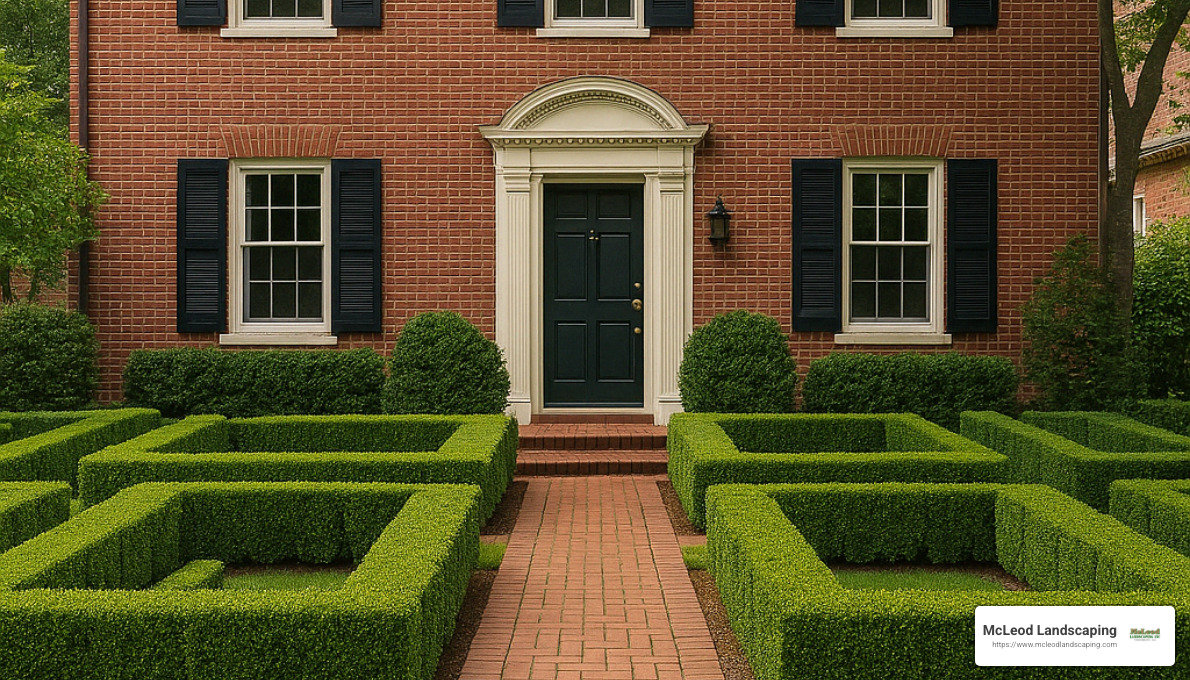
When we create traditional landscapes at McLeod Landscaping, we focus on symmetrical layouts with matching elements flanking the front walkway. Formal hedges of boxwood or yew create defined borders that give structure year-round. We often install straight, clear walkways using classic materials like brick or bluestone, paired with foundation plantings that beautifully frame the home without hiding its architectural details.
I remember a traditional front yard we designed in Andover featuring a brick walkway lined with neatly trimmed boxwood hedges. We added seasonal flowers for pops of color throughout the year. The homeowners loved how the symmetrical design created a sense of formality that perfectly complemented their Colonial home’s classic lines.
For contemporary homes or those seeking a clean, uncluttered aesthetic, the modern minimalist approach offers sophisticated simplicity that feels fresh and intentional.
Modern landscapes thrive on clean, geometric lines in both hardscaping and planting beds. We typically use a limited plant palette focused on form and texture rather than abundant flowers, allowing each plant to serve as a sculptural element. The strategic use of negative space is just as important as what we put in—giving the eye places to rest.
“Modern front yard designs work best with clean lines and minimalistic plant choices to maintain a sleek appearance,” notes landscape designer Kat Aul Cervoni. “With thoughtful planning, you can create a space that looks good without constant work.”
We often incorporate architectural plants with strong shapes like ornamental grasses or yucca that create visual interest even in winter. For materials, we select contemporary options such as concrete pavers, steel edging, or crushed stone that reinforce the modern aesthetic.
Cottage gardens bring a sense of casual abundance and old-world charm to your front yard. This style works wonderfully with Cape Cod, craftsman, and farmhouse-style homes that value character over formality.
The heart of a cottage garden lies in its informal, seemingly random plantings with a focus on perennials and flowering shrubs. We create the impression of abundant flowers in a variety of colors and forms that seem to have naturally evolved over time. Picket fences or low stone walls often define the boundaries, while winding, casual pathways made of stepping stones or gravel invite exploration.
In a recent project in Chelmsford, we transformed a plain front yard into a cottage garden paradise. We installed a broken flagstone walkway bordered by a herringbone-patterned brick path, then surrounded it with borders overflowing with colorful perennials. The homeowners tell us their neighbors frequently stop to admire the garden’s personality and charm.
Drawing inspiration from the landscapes of Italy, Spain, and southern France, Mediterranean designs emphasize drought-tolerance and warm, earthy elements that feel both sophisticated and relaxed.
Mediterranean landscapes feature drought-tolerant plants like lavender, rosemary, and ornamental grasses that thrive with minimal watering. We often use olive trees or similar silvery-leaved plants as focal points, creating that distinctive Mediterranean silhouette. Terracotta pots and warm-colored stonework add authentic character, while gravel or decomposed granite pathways complete the sun-baked European feel.
This style has become increasingly popular in our region as homeowners seek more sustainable, low-water landscapes that still offer rich visual appeal. The warm color palette of terra cotta, golden yellow, and deep blue accents creates a vacation-like atmosphere right in your front yard.
For properties with mature trees or those backing up to conservation land, a woodland-inspired front yard creates a serene, natural transition from the street to your home.
We love working with the existing character of wooded lots, preserving native trees and adding understory plantings like dogwoods, redbuds, and serviceberry. Shade-loving perennials such as ferns, hostas, and astilbe thrive in these conditions and create a lush ground layer. Natural stone pathways or mulched trails wind through the space, feeling as though they’ve always been there.
A woodland-style front yard we designed in Carlisle preserves the natural character of the property while creating a welcoming entrance. The winding stone path bordered by native ferns and flowering understory trees feels like a journey through a forest glade, even though it’s just steps from the street.
Japanese-inspired gardens bring a sense of tranquility and mindfulness to your front yard through careful composition and symbolism that feels both ancient and timeless.
The essence of Japanese garden design lies in Zen elements like carefully placed boulders and raked gravel that represent larger landscapes. We select Japanese maples and other Asian-native plants for their graceful forms and seasonal color. Bamboo accents (always non-invasive varieties) add authentic character, while water features or dry stream beds introduce the essential element of water, even if only symbolically.
In a recent project in Burlington, we created a Japanese-influenced front garden featuring a dry stream bed with carefully placed stones, Japanese forest grass, and dwarf conifers. The homeowners tell us it’s become their favorite place to decompress after work, just sitting and appreciating the calming space that looks beautiful in all seasons.
Inspired by American tallgrass prairies, this style emphasizes native grasses, wildflowers, and a natural, meadow-like aesthetic that changes beautifully with the seasons.
Prairie landscapes use ornamental grasses as the backbone of the design, creating movement and texture throughout the year. We interplant these with native wildflowers providing seasonal color from spring through fall. The result is meadow-like plantings that sway in the breeze, creating a dynamic landscape that feels alive.
“A prairie garden in Illinois features a colorful mix of perennials, ornamental grasses, and shrubs,” notes one landscape expert. At McLeod Landscaping, we’ve adapted this approach for New England conditions, creating prairie-inspired front yards that require minimal maintenance while providing year-round interest and supporting local biodiversity that attracts pollinators and birds.
While not native to New England, xeriscaping principles can be adapted to create water-wise, low-maintenance front yards with distinctive character that stands out from typical suburban landscapes.
Xeriscape designs feature drought-tolerant plants arranged in artistic groupings that thrive with minimal supplemental water. Instead of traditional mulch, we often use decorative gravel or stone mulch that complements the plants and reduces evaporation. Rock gardens and boulder features add structural elements that look good year-round.
In Lowell, we designed a xeriscape-inspired front yard that drastically reduced water usage while creating a unique, eye-catching landscape. The homeowners were thrilled to stand out from the traditional lawns in the neighborhood while saving time and money on maintenance.
Formal English gardens bring classical European elegance to your front yard with structured plantings and geometric patterns that feel sophisticated and timeless.
The hallmark of English formal gardens is parterres or knot gardens with geometric planting beds outlined by low hedges. Clipped topiaries and formal hedges provide structure throughout the seasons, while roses and traditional perennials add color in organized arrangements. We design these gardens with symmetrical layouts featuring a central axis that guides the eye through the space.
For a stately home in Concord, we created a formal English-inspired front garden with boxwood parterres, a central ornamental cherry tree, and seasonal color from tulips in spring and roses in summer. The result is a refined landscape that honors the home’s architecture while providing year-round beauty.
Increasingly popular in our environmentally conscious region, native landscapes focus on indigenous plants that support local ecosystems while creating beautiful, low-maintenance front yards.
Native landscapes feature plants indigenous to New England that have evolved to thrive in our specific conditions without extra water or care. These pollinator-friendly gardens buzz with life as butterflies, bees, and birds find food and habitat among the flowers and shrubs. Beyond beauty, these gardens offer substantial environmental benefits.
“Using native plants in landscaping can reduce water usage by up to 50%,” according to environmental landscape studies. In Westford, we designed an eco-friendly front yard featuring native witch hazel, winterberry holly, and a variety of indigenous perennials. The homeowners love watching the parade of butterflies and birds that visit throughout the seasons, creating a living landscape that connects them to the natural heritage of New England.
Creating a front yard that turns heads and makes guests feel instantly welcome doesn’t happen by accident. At McLeod Landscaping, we’ve learned through over 30 years of experience that great front yard landscape design always includes a few essential elements that work together to create harmony, balance, and year-round beauty.

Your front entryway acts as the centerpiece of your landscape—the spot where visitors form their first impression of your home. A thoughtfully designed entryway gives guests an inviting feeling before they even step onto your porch.
Start by emphasizing your front door. Whether you go bold with color—a classic red or cheerful blue—or add architectural details, your door should pop from the street view. Consider adding decorative containers brimming with seasonal flowers or greenery on both sides for extra charm.
Your pathway design also plays a huge role. Aim for comfort and clear direction with walkways at least 4 feet wide, letting two people easily walk side-by-side. We love using gentle curves or neat straight lines, depending on your home’s architecture, to lead visitors gracefully to your entrance.
Don’t forget good lighting! Subtle landscape lights along the walkway and near the door highlight your home’s best features while making guests feel safe. And here’s a small but charming detail—creative address displays or decorative house numbers inject a bit of personality and make your home easier to find.
Balance is key in front yard design, and it’s all about finding the sweet spot between your home’s plants (the “softscape”) and your hard surfaces like walkways, steps, driveways, and retaining walls (the “hardscape”). Too much of one or the other just won’t feel right.
When selecting hardscape materials, we always consider your home’s architectural style. Traditional homes in the Merrimack Valley often pair beautifully with timeless materials like brick or bluestone. More modern homes might benefit from sleek granite, contemporary concrete pavers, or smooth gravel areas.
Weaving together different textures makes your landscape feel more dynamic. Imagine soft ornamental grasses flowing gently alongside the rougher texture of stone walls. Or maybe smooth stepping stones set against finely mulched flowerbeds. Visual contrast creates interest and depth.
Your design should aim for a pleasing proportion of hardscape to softscape. Too much concrete or stone can feel cold and uninviting, while too many plants without defined borders may appear wild or neglected. Strategic placement of larger elements—like a decorative boulder or specimen tree—anchors the design nicely without overwhelming the space.
For more great tips on finding your perfect balance with landscape elements, check out our page on Designing the Landscape.
New England is famous for its changing seasons, so your front yard landscape design needs to stay attractive year-round. At McLeod Landscaping, we make sure every landscape we design has a beautiful succession of blooms, colors, and textures that transition gracefully through the seasons.
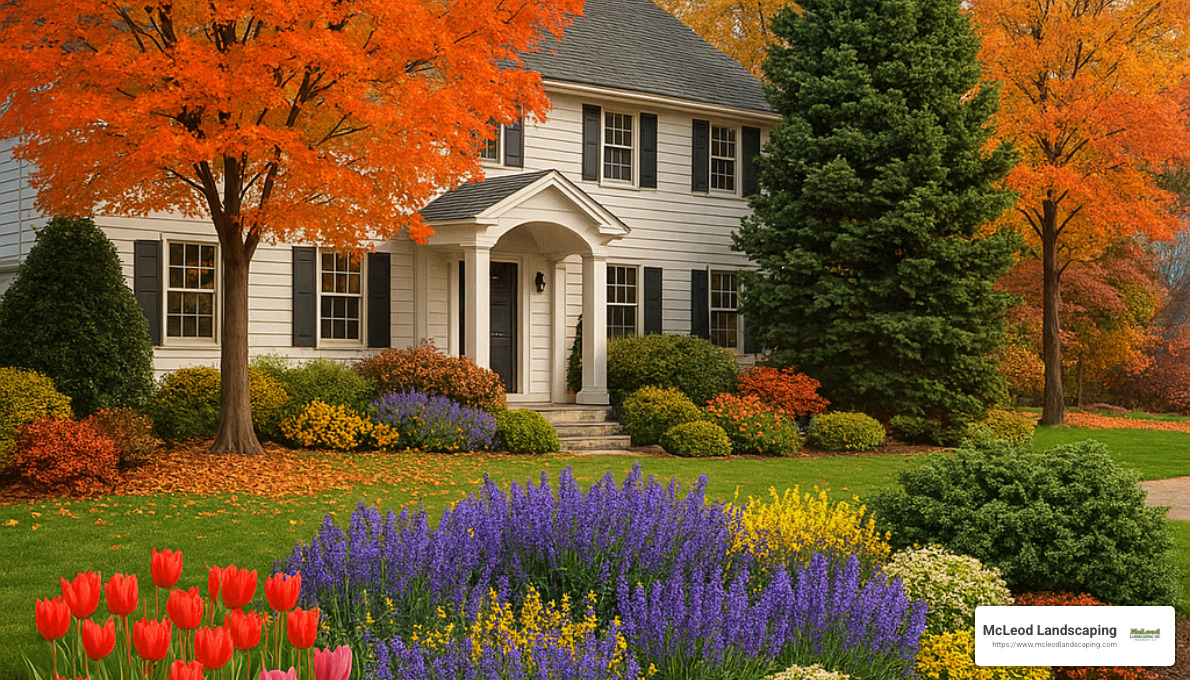
Spring brings the excitement of fresh growth. Bright bulbs like crocus, daffodils, and tulips add splashes of early color after a long winter. Flowering shrubs, like lilacs and rhododendrons, fill the air with fragrance and promise warmer days ahead.
Summer is peak garden season. Incorporate reliable perennial bloomers like daylilies, coneflowers, and hydrangeas to ensure continuous color and attract butterflies. Vibrant annuals in containers near the door can give you instant color boosts anytime you need them.
Autumn’s cooler days usher in fiery foliage and dramatic shapes. Consider planting trees like sugar maples or shrubs like oakleaf hydrangeas to deliver a stunning fall color display. Ornamental grasses also shine in fall, with feathery seed heads waving gracefully in the breeze.
Winter brings a quieter beauty. Evergreens provide structure and greenery when other plants fade away. Plants with textured bark, like river birch or paperbark maple, become striking focal points. Red winterberries or ornamental shrubs with persistent berries offer seasonal interest and nourishment for birds.
To dive deeper into landscape design concepts and more ways to create year-round beauty, check out What is Landscape Design?.
At McLeod Landscaping, our goal is always to help homeowners create front yard designs they love coming home to—perfectly balanced, beautifully inviting, and filled with seasonal interest. After all, your front yard makes an important statement about who you are—make sure it’s one you’re proud of!
For many homeowners in the Merrimack Valley, a beautiful front yard that doesn’t require constant attention is the ideal scenario. At McLeod Landscaping, we specialize in creating low-maintenance front yard landscape designs that look stunning year-round with minimal effort.
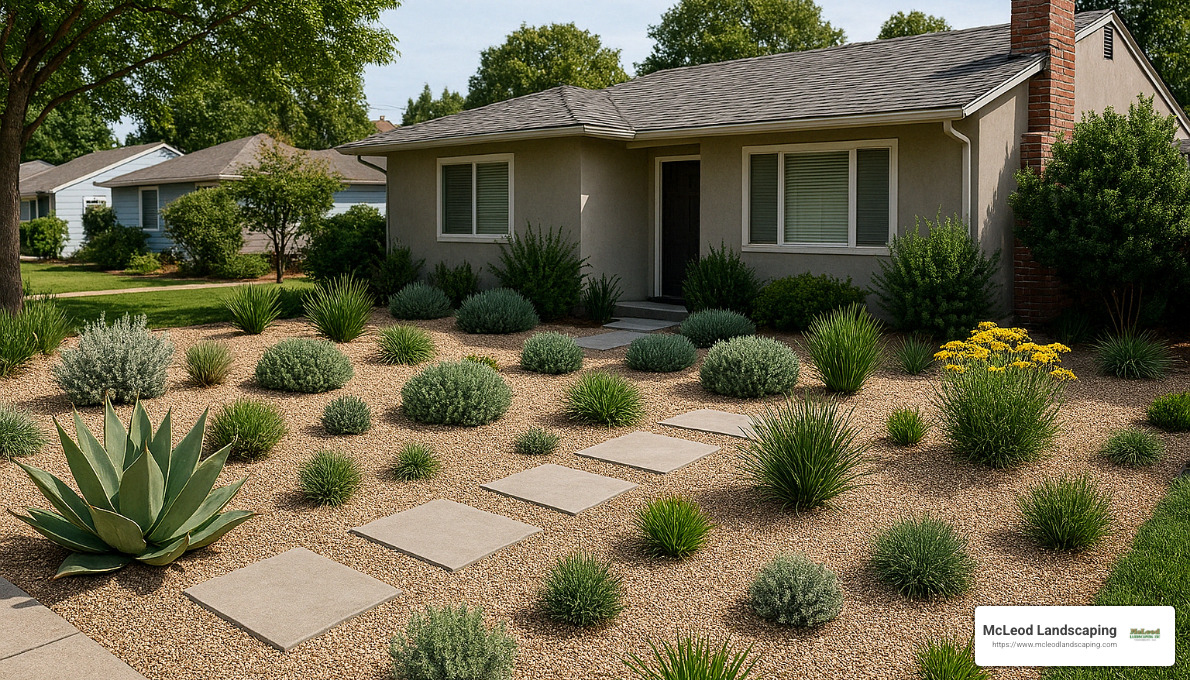
I often share with my clients that “Low-maintenance landscapes can reduce yard work by up to 50%,” according to landscape maintenance studies. This significant time-saving benefit makes these designs increasingly popular, especially among busy professionals and active retirees who want to enjoy their outdoor spaces without being slaves to them.
When we design low-maintenance front yards, we focus on several key strategies. Drought-tolerant plants form the backbone of these designs, requiring minimal watering once established. We also implement strategic mulching with a 2-3 inch layer of quality material that naturally suppresses weeds while slowly improving your soil quality. For even more convenience, we can install automated irrigation systems with smart rain sensors that ensure your plants receive just the right amount of water without waste.
We also lean heavily toward perennial-focused plantings rather than annuals, eliminating the need for yearly replanting. And where appropriate, we use groundcover implementation to replace high-maintenance turf with attractive, low-growing alternatives that require far less attention.
One of our Andover clients recently told me, “I used to spend every weekend mowing and weeding. Now I actually have time to sit on my porch and enjoy looking at my beautiful yard instead of working on it!” That’s exactly the lifestyle change we aim to create with our low-maintenance designs.
The plants you choose have the greatest impact on maintenance requirements. Our designers at McLeod Landscaping carefully select low-maintenance options that thrive in local conditions rather than fighting against them.
Native species are always our first consideration. Plants that evolved in our region naturally resist local pests and diseases while thriving in our soil and climate conditions. We love incorporating coneflowers with their cheerful daisy-like blooms that attract butterflies, or black-eyed Susans that provide golden color from mid-summer through fall. New England aster brings gorgeous purple flowers in late season, while winterberry holly offers striking red berries that persist through winter.
We also recommend certain adapted varieties that, while not native, have proven their resilience in our climate. Russian sage with its airy purple blooms requires almost no care once established. Daylilies offer reliable color and can thrive in a wide range of conditions. Ornamental grasses like feather reed grass provide movement, sound, and winter interest with virtually no maintenance. And certain hydrangea varieties have become staples in our low-maintenance designs for their long-lasting blooms and adaptability.
Modern plant breeding has produced disease-resistant cultivars that significantly reduce maintenance needs. Knockout roses, for example, are self-cleaning (no deadheading needed) and highly resistant to common rose diseases. We also frequently use powdery mildew-resistant phlox and fire blight-resistant crabapples that maintain their beauty without requiring constant attention.
“Choose sun-loving plants that are suited to high-light conditions to avoid stressing them in full exposure,” I often advise my clients. At McLeod, we carefully match plants to their ideal growing conditions, grouping those with similar water and light needs together for efficient care and long-term success.
Strategic hardscaping elements can dramatically reduce maintenance while enhancing your front yard’s appearance. In fact, the right balance of hardscaping can transform a high-maintenance yard into one that practically takes care of itself.
Durable paving materials form the foundation of low-maintenance hardscaping. We recommend quality materials like granite, bluestone, or concrete pavers that require minimal upkeep compared to gravel or wood. These materials might cost more initially, but they pay dividends in reduced maintenance over time.
Professional installation of effective weed barriers under hardscaping prevents the frustration of weeds popping up between pavers or in gravel areas. This simple step during installation saves countless hours of weeding in the future.
We also emphasize the importance of defined edging using metal, stone, or concrete to create clean lines between lawn and garden beds. These borders not only look sharp but also prevent grass from encroaching into your planting beds, eliminating one of the most time-consuming maintenance tasks.
For environmentally-conscious homeowners, we often incorporate permeable surfaces that allow water infiltration. These reduce runoff and erosion while supporting plant health, creating a more self-sustaining landscape system.
In appropriate areas, gravel installations with proper underlayment can replace high-maintenance lawn in low-traffic zones. When correctly installed, these areas remain weed-free and attractive for years with minimal attention.
I remember a project in Billerica where we transformed a high-maintenance front yard into a sophisticated, low-care landscape by replacing most of the lawn with a thoughtful combination of native shrubs, ornamental grasses, and strategically placed stone pathways. The homeowners later told me they spend about 75% less time on yard maintenance while enjoying a more attractive property that stands out in their neighborhood.
The beauty of a well-designed low-maintenance front yard is that it doesn’t look “low maintenance” – it simply looks beautiful, all the time, with far less effort on your part. And that gives you more time to actually enjoy your outdoor space rather than constantly working on it.
Having a smaller front yard doesn’t mean you have to settle for less when it comes to beautiful front yard landscape design. In fact, compact spaces often spark creativity, allowing you to showcase thoughtful design and personalized touches that make your home stand out.
As landscape designers at McLeod Landscaping, we’ve helped countless homeowners across Lowell, Tewksbury, and the Merrimack Valley transform tiny yards into charming, welcoming spaces. And let’s be honest—a smaller yard means less mowing, watering, and maintenance. Sounds pretty good, right?
To get you started, we’ve gathered our favorite small-yard strategies from our years of experience. And if you’re looking for even more inspiration, check out our comprehensive guide on Landscape Design for Small Front Yard.
When working with limited square footage, every inch counts. One key principle we always emphasize is scale-appropriate planting. Instead of overpowering your petite space with large, sprawling plants, we choose compact, tidy selections like dwarf evergreens, smaller hydrangeas, and neatly-sized perennials.
Layering these plants helps create visual depth. By placing taller shrubs or ornamental grasses toward the back of your planting beds, mid-sized perennials in the middle, and low-growing groundcovers up front, your yard instantly gains dimension.
Another trick we love is color coordination. Using a simple, cohesive palette ties all the elements together naturally. For example, in one Wilmington home, we matched the home’s cheerful blue front door with vibrant window boxes and complementary perennials, achieving a beautifully intentional look that seems bigger than its actual size.
Incorporating a strategic focal point is also essential for small yards. Think of planting one lovely specimen tree, like a compact Japanese maple, or arranging a cluster of artistic boulders. This single focal element draws the eye, anchoring your design and making the entire space feel thoughtfully planned.
To avoid overwhelming your small space, we generally recommend a simplified plant palette. Using fewer plant species—but in greater numbers—delivers a calm, organized look rather than a busy, chaotic one.
A great example is a charming yellow home we designed recently. We created depth around the entrance by layering two tidy rows of dwarf evergreens with a bright row of colorful annuals up front. Ivy-filled window boxes added vertical interest and tied the entire look together.

With a little creative thinking, you can easily make your small front yard feel spacious and functional.
One of our favorite techniques at McLeod Landscaping is vertical gardening. By using vertical elements like trellises or wall-mounted planters, you draw the eye upward, making your yard feel bigger. Clematis vines trained up a front wall add striking beauty without taking up precious ground space.
Another trick is choosing multi-functional elements that do double-duty. For example, a low retaining wall can serve as both garden edging and comfortable seating. Decorative rocks or clever plant arrangements can define pathways and direct foot traffic, all while looking great.
You can even play with optical illusions to visually enlarge your space. Diagonal pathways or staggered planting arrangements guide the eye through the yard, making it feel larger. Another clever trick is varying plant sizes—taller upfront features gradually shrinking toward the back—to give the impression of greater depth.
Raised garden beds are another terrific approach. For a recent project in Burlington, we built natural stone raised beds that clearly defined planting spaces while adding attractive vertical dimension.
And if you’re looking for flexibility and minimal upkeep, container gardens are ideal. Portable, decorative planters let you refresh your front yard each season with minimal effort. Window boxes are another popular, affordable option that packs a colorful punch without stealing valuable ground space.
With the right approach, even the smallest front yard can make a big impact. At McLeod Landscaping, we love helping homeowners like you find creative, beautiful ways to make the most of your outdoor spaces.
At McLeod Landscaping, we’ve been designing beautiful, functional front yards for over 30 years—so we’ve naturally heard just about every question out there. Here are some of the most common inquiries homeowners in the Merrimack Valley have about front yard landscape design (along with our straightforward answers):
Great question—and one we hear all the time. The truth is, professional landscape design costs vary widely depending on several factors.
For instance, the complexity of your design can make a big difference. A simple plan with minimal elements costs much less than a detailed design with custom features like outdoor kitchens or elaborate stonework.
The scope and size of your property also matter. Naturally, a sprawling front yard will typically require a larger investment than a cozy urban garden.
Another key factor is how you choose to implement your design. Many homeowners prefer a phased approach. Breaking the project into smaller steps makes it easier to manage costs over time while still achieving a cohesive final look.
Then there’s the choice between DIY vs. professional installation. Doing some of the work yourself can initially save money—but professional landscaping typically offers greater long-term value thanks to expert plant selection, proper installation, and thoughtful planning.
Of course, the big upside is the outstanding return on investment that good front yard landscaping delivers. According to real estate specialists, professional front yard landscape design typically generates a return between 100% and 200% when selling your home. Not too shabby!
As a general guideline (based on average internet data, not McLeod Landscaping’s actual pricing), professional landscape design often ranges from around $500 for basic consultation and sketches to upwards of $5,000 or even $15,000+ for detailed plans and extensive custom installations.
At McLeod Landscaping, we pride ourselves on working closely with our Merrimack Valley clients to create designs that align beautifully with their budgets. Whether you’re looking for a simple refresh or a complete front yard change, we’ll make sure the final result is exactly what you’re looking for—without breaking the bank.
Ah, the age-old question of finding the “best” plants! It’s important to remember there’s no one-size-fits-all answer. The ideal plants for your front yard will depend on your home’s style, your preferences, and your location’s specific conditions.
That said, there are some reliable, tried-and-true plants we often recommend for homeowners here in the Merrimack Valley:
For year-round structure, evergreen shrubs like dwarf Alberta spruce, boxwood, hinoki cypress, and blue star juniper are popular choices. They give your garden a beautiful backbone that keeps it looking attractive even in winter.
If you’re after flowering perennials that provide seasonal color and require little fuss, you can’t go wrong with coneflower (echinacea), black-eyed Susan (rudbeckia), daylilies, catmint, or coral bells (heuchera).
Ornamental grasses are also winners, adding movement and texture to any landscape. Popular varieties like feather reed grass, switchgrass, little bluestem, or Japanese forest grass (for shady spots) thrive in our climate and require minimal care.
Finally, let’s not forget about native species. They’re naturally suited to our Merrimack Valley climate, making them hardy and low-maintenance. Great native options include eastern redbud, winterberry holly, New England aster, and foam flower.
Whatever you choose, always double-check your USDA Hardiness zone to ensure plants will thrive. Merrimack Valley typically falls within zones 5b to 6a, so cold hardiness is key!
Good news—having a gorgeous front yard doesn’t necessarily mean spending hours each weekend tending to it. With some smart, strategic choices, you can create a beautiful landscape that practically takes care of itself (well, almost).
One effective first step is to reduce lawn areas. Lawns are famously high-maintenance, so replacing part of your turf with mulched beds featuring drought-tolerant plants or permeable hardscaping can drastically cut upkeep time.
Next, consider an efficient irrigation system like drip irrigation or smart controllers. These systems deliver water precisely where it’s needed, minimizing waste and ensuring your plants get just the right amount of moisture—no more, no less.
Your plant selection makes a huge difference. Choosing self-sustaining options like native plants or adapted varieties ensures they’ll thrive without much fuss. Look for plants with minimal pruning, deadheading, or special care requirements.
Don’t underestimate the power of quality mulch. A 2-3 inch layer of mulch suppresses weeds, retains moisture, and slowly enriches the soil. It’s your yard’s best friend—trust us.
Finally, focus on durable, low-maintenance hardscaping materials like granite, bluestone, or concrete pavers for walkways and patios. Properly installed, these materials require minimal care and last for years.
If you’re tired of mowing grass, consider swapping traditional turf for low-growing groundcovers. Creeping thyme, sedum, or native fescues can provide lush greenery with far less hassle than conventional lawns.
At McLeod Landscaping, creating low-maintenance spaces that still look spectacular is one of our specialties. We’re firm believers that having a beautiful front yard shouldn’t require hours of gardening—unless, of course, you’re into that kind of thing!
For more advice on smart plant choices, check out our page on Landscape Design Ideas. We’ve got plenty of inspiration to get you started.
Your front yard is so much more than just a stretch of grass between your home and the street. It’s your personal canvas, an opportunity to express your personality, improve your property value, and add charm and warmth to your neighborhood. With thoughtful front yard landscape design, you can transform an ordinary space into an inviting, eye-catching masterpiece that impresses neighbors, welcomes visitors, and makes you smile every time you come home.
Throughout this guide, we’ve explored a wide variety of inspiring styles—from the classic elegance of traditional gardens to the sleek simplicity of modern minimalist landscapes. We’ve shared essential elements and practical strategies, like balancing hardscape and softscape features, creating welcoming entryways, and incorporating year-round visual interest. Whether your style leans toward cozy cottage gardens, eco-friendly native plantings, or the serene Zen of a Japanese-inspired design, the fundamentals we’ve discussed here will help you create a harmonious landscape you’ll love.
At McLeod Landscaping, we understand that great front yard landscape design doesn’t just improve your curb appeal—it significantly boosts your home’s value and daily enjoyment. With over three decades serving homeowners throughout the Merrimack Valley, we’ve seen how thoughtful landscaping improves both quality of life and property investment.
We take pride in our comprehensive approach, carefully considering every detail from plant selection and pathway layout to lighting and seasonal interest. Our goal is always a unified, enduring design that suits your home, your lifestyle, and your personal taste. And since we live and work here too, we understand the unique climate and community characteristics of towns like Andover, Billerica, Burlington, Carlisle, Chelmsford, Concord, Lowell, Tewksbury, Westford, and Wilmington.
Whether you’re dreaming of a low-maintenance landscape that gives you your weekends back, looking for creative ideas to maximize a small front yard, or simply want a gorgeous, welcoming space that makes you proud, McLeod Landscaping has the expertise and experience to turn your vision into reality.
Ready to transform your front yard into something special? Explore our residential landscaping services or get in touch directly—we’d love to chat about how we can help. Your dream front yard starts with a simple conversation.
Let’s create something beautiful together.
Contact McLeod Landscaping today at (978) 640-0957 or click here to schedule a consultation for retaining wall installation. Let our experienced team design and install a functional and visually appealing retaining wall that enhances your landscape.

1881 Main St Unit 1, Tewksbury, MA 01876