
A garden irrigation system is a network of pipes, tubes, or hoses that delivers water directly to your plants’ root zones. These systems save time, conserve water, and promote healthier plant growth compared to manual watering methods.
Types of Garden Irrigation Systems:
1. Drip irrigation – Delivers water directly to roots with 60% water savings
2. Soaker hoses – Porous tubes that seep water along their length
3. Sprinkler systems – Spray water over larger areas
4. Garden grid systems – Combine irrigation with plant spacing guides
5. Self-watering containers – Use reservoirs for consistent moisture
Tired of dragging hoses around your garden every morning and evening? A properly designed garden irrigation system can free up your time while ensuring your plants receive consistent moisture even during hot summer days. These systems aren’t just convenient—they’re smart investments that can reduce your water consumption by up to 60% compared to traditional watering methods.
Whether you’re managing a small vegetable patch or extensive landscaped beds, automated irrigation delivers water precisely where plants need it most—at the root zone. This targeted approach not only conserves water but also minimizes weed growth and reduces the risk of fungal diseases caused by wet foliage.
I’m Scott McLeod, owner of McLeod Landscaping with over 30 years of experience designing and installing custom garden irrigation systems for both residential and commercial properties throughout the Merrimack Valley area, helping clients transform their outdoor spaces with efficient watering solutions that thrive in our local climate.
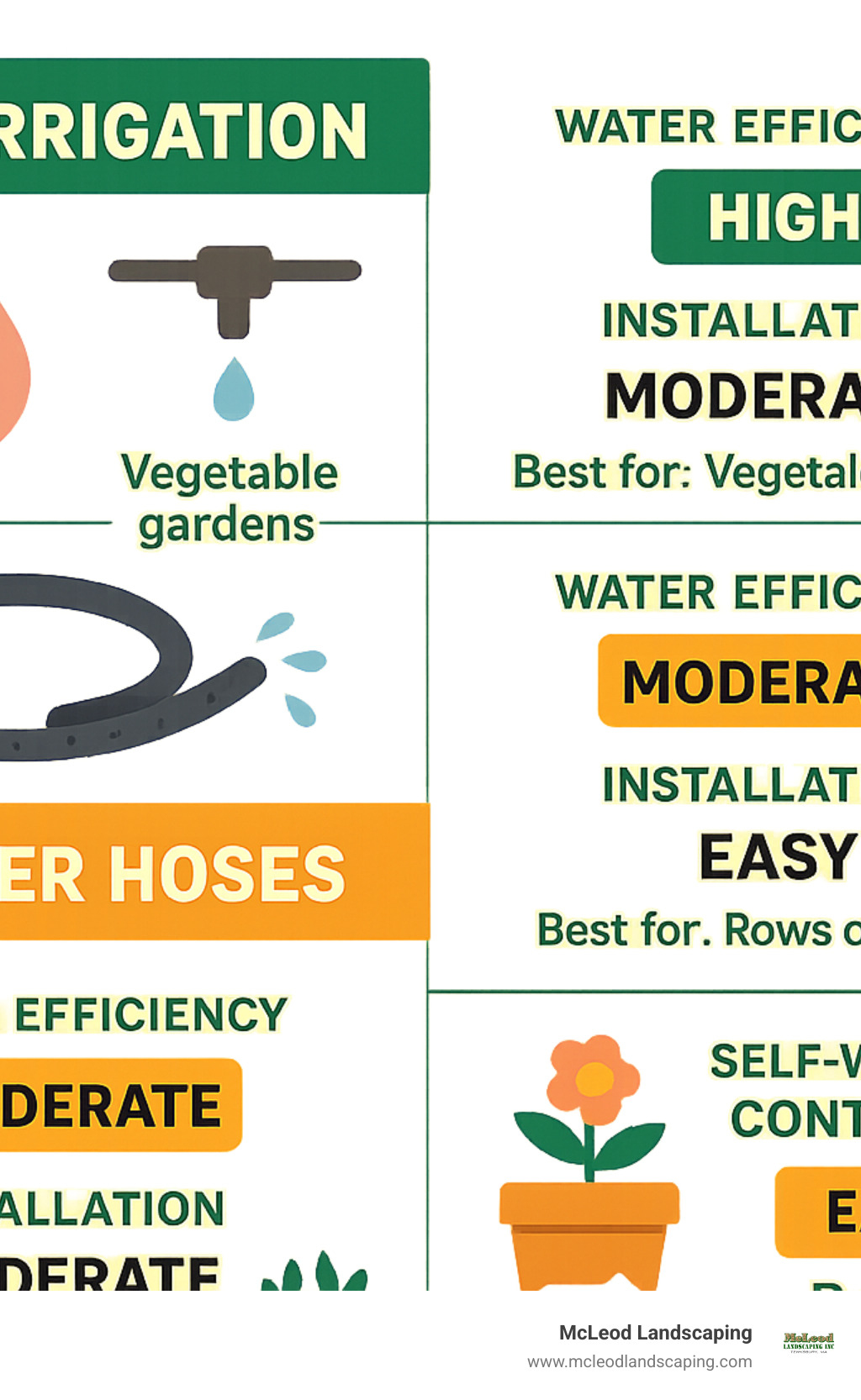
Garden irrigation system word roundup:
– drip irrigation systems
– how does a lawn irrigation system work
– irrigation sprinkler
There’s something magical about Massachusetts summers—lush green lawns, vibrant flower beds, and productive vegetable gardens. But keeping all that greenery thriving takes water—lots of it. According to the EPA, properties with large irrigated landscapes may spend up to 30% of their water bill just on irrigation. With water costs climbing and conservation becoming increasingly important, a smart garden irrigation system isn’t just convenient—it’s a practical investment for both your wallet and the environment.
Water conservation stands as perhaps the most compelling reason to upgrade your watering routine. Think about traditional hand watering or conventional sprinklers—so much water ends up where it’s not needed through evaporation, runoff, and imprecise application. Modern irrigation systems, particularly drip irrigation, can slash water consumption by up to 60% compared to old-school methods.
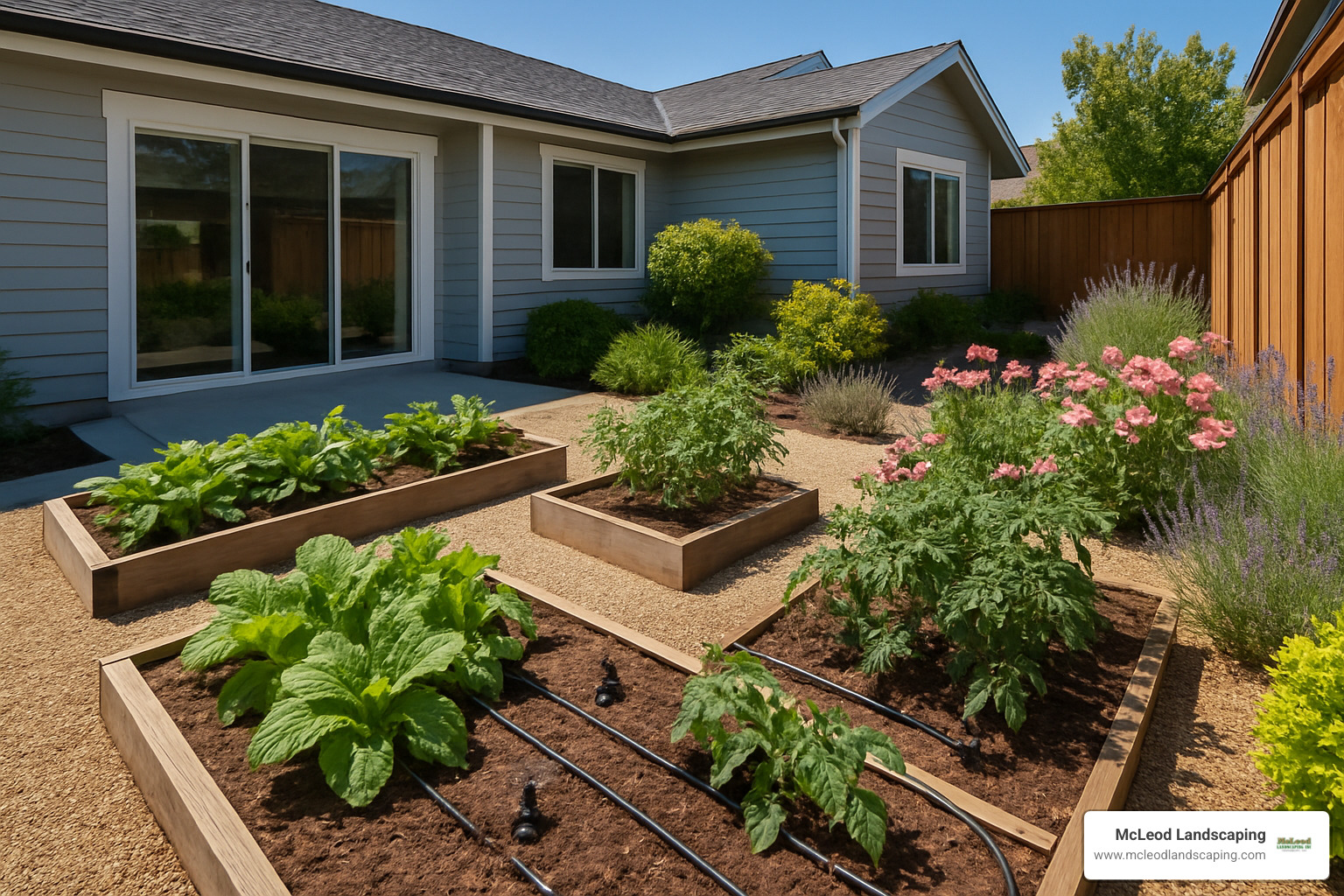
Your plants will thank you too. By delivering consistent moisture directly to the root zone, a proper garden irrigation system helps plants develop stronger, deeper roots that better withstand drought conditions. This targeted approach keeps the soil surface between plants relatively dry—creating an environment where weeds struggle to germinate while your desired plants flourish.
We’ve seen remarkable changes in gardens throughout Tewksbury, Andover, Billerica, and surrounding communities after installing proper irrigation. And the science backs this up—research from MIT has shown that well-designed drip systems not only conserve water but can improve crop yields by up to 90% compared to traditional watering methods.
Automation saves time and labor in ways you might not expect. One of our clients in Chelmsford confessed she was spending over an hour each evening with her watering can before we installed her system. Now she simply programs her timer and spends that time actually enjoying her garden instead of tending to it.
Uniform coverage ensures consistent growth across your entire landscape. Every plant receives precisely the water it needs—no more dry patches or overwatered areas. This is especially important for larger properties in Burlington or Westford where hand-watering often leads to uneven results and stressed plants.
Healthier soil biota thrives with proper moisture levels. Those beneficial microorganisms that support plant health prefer steady moisture rather than the feast-or-famine cycle that comes with manual watering. These tiny helpers break down organic matter and make nutrients more available to your plants, creating a thriving underground ecosystem.
Vacation-proof gardens continue flourishing in your absence—a common concern we hear from our Lowell and Wilmington clients. With a programmable garden irrigation system, you can enjoy your summer getaway without worrying about returning to crispy, dried-out plants.
Beyond these immediate benefits, proper irrigation reduces plant stress, decreases susceptibility to pests and diseases, and can even extend your growing season by providing optimal moisture conditions. For commercial properties throughout the Merrimack Valley, this translates to more attractive, sustainable landscapes with noticeably reduced maintenance demands and costs.
When you consider the long-term benefits—healthier plants, reduced water bills, less time spent on manual watering, and the environmental impact of conservation—a quality garden irrigation system quickly proves itself to be one of the smartest investments you can make in your outdoor space.
Choosing the perfect garden irrigation system feels a bit like finding the right pair of shoes – what works beautifully for one garden might leave another high and dry. After installing hundreds of systems throughout the Merrimack Valley, I’ve seen how each type shines in different situations.
| System Type | Water Efficiency | Installation Difficulty | Best For | Pressure Needs |
|---|---|---|---|---|
| Drip Irrigation | Very High (up to 90% efficient) | Moderate | Vegetables, shrubs, flowers, containers | Low (15-30 psi) |
| Soaker Hoses | High (70-80% efficient) | Easy | Rows of plants, raised beds | Very Low (10-15 psi) |
| Sprinklers | Low-Moderate (50-70% efficient) | Moderate-Complex | Lawns, large areas | High (30-50 psi) |
| Garden Grid | High (80% efficient) | Very Easy | Square foot gardens, raised beds | Moderate (20-40 psi) |
| Self-Watering Containers | Very High (90% efficient) | Easy | Container gardens, patios, decks | None (gravity) |
If water conservation had a superhero, it would be drip irrigation. These systems deliver water right where plants need it most – directly to their roots – through a network of tubes with small emitters. The gentle drip minimizes evaporation while targeting exactly where moisture is needed.
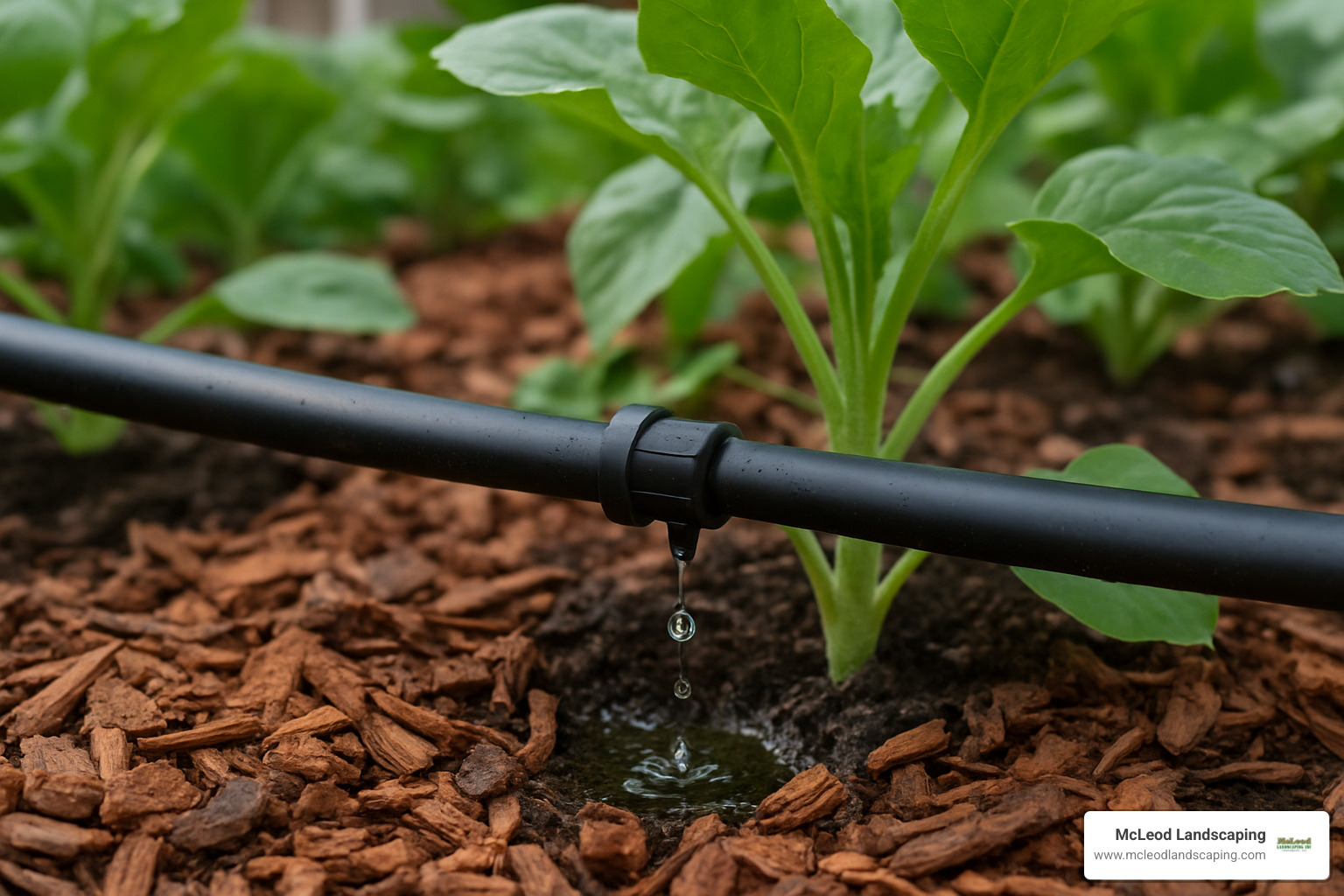
I’ve watched clients’ eyes light up when they realize a drip system can slash their water usage by up to 60% compared to traditional methods. Beyond the water savings, these systems dramatically reduce weed growth since water only goes where you want it. Your plants’ leaves stay dry, which means fewer fungal problems – something our Concord clients with extensive perennial gardens particularly appreciate.
What I love about drip irrigation is how it adapts to virtually any garden shape. Those oddly curved beds in your Carlisle landscape? No problem. The raised vegetable gardens behind your Tewksbury home? Perfect application. Plus, these systems are wonderfully expandable as your garden grows.
For vegetable gardens, we typically install drip lines with emitters spaced to match your planting pattern. Most quality systems feature clog-resistant emitters that keep working even with our sometimes less-than-perfect local water quality. For a deeper dive into vegetable garden installation, check out our guide on how to install a drip irrigation system for vegetable gardens.
Soaker hoses are the friendly, approachable cousins in the irrigation family. These porous tubes quietly seep water along their entire length, creating a perfect band of moisture in the soil. For raised beds in Billerica and row plantings in Tewksbury, they’re often the ideal solution.
What makes soaker hoses special is their simplicity. They operate perfectly well at low pressure, making them ideal companions for rain barrel setups. Their flexible placement works beautifully for curved beds, and they practically disappear when tucked under a layer of mulch.
One creative solution we developed for a busy Chelmsford family combined soaker hoses with standard garden hose sections to create a customizable layout they could easily modify as their garden evolved. By adding simple on/off valves at junction points, they gained precise zone control without complexity.
For raised beds, flat soaker hoses typically outperform round ones. They provide more even distribution and stay put better when water is flowing. For lasting performance, we recommend burying them under about ¾ inch of soil or mulch – this protects them from sun damage and improves water distribution. With proper care, a quality soaker hose system can faithfully serve your garden for 5-7 years.
While drip and soaker systems win the water conservation contest, sprinklers remain the champions for certain applications, particularly lawns and large planted areas. Today’s sprinkler technology has come a long way from the wasteful sprayers of yesteryear.
Modern pop-up sprinklers disappear when not in use, keeping your landscape clean and uncluttered. For delicate plantings, micro-sprayers create a gentle mist that waters without damaging tender leaves or flowers. I’ve seen these work wonders for Westford clients growing leafy greens and herbs that thrive with light, frequent watering.
One important consideration with any sprinkler system is wind loss. In more exposed areas of Lowell or Wilmington, wind can significantly reduce efficiency by blowing water away from your plants. In these situations, we often recommend lower-angle sprinklers or switching to drip irrigation for better results.
As one Andover client with young children pointed out with a laugh, sprinklers offer the added “fun factor” of being incredibly enjoyable to run through on hot summer days – a benefit the other irrigation types simply can’t match!
For gardeners who appreciate organization as much as irrigation, garden grid watering systems offer a unique two-in-one solution. These clever pre-assembled grids divide your garden into square-foot sections while delivering water through integrated channels.
The built-in square-foot planting guide helps ensure optimal spacing, which is particularly helpful for new gardeners or anyone growing vegetables with specific spacing requirements. With 16 gentle streams per square, these systems provide remarkably even water distribution. Their modular design allows for expansion as your garden grows, and the durable materials stand up to our sometimes harsh New England seasons.
Self-watering containers represent another innovative solution, especially for patios, decks, and small spaces. These containers feature a bottom reservoir that stores water away from sun and wind, minimizing evaporation. Capillary action draws moisture up into the soil as needed, providing consistent hydration.
For busy professionals in Carlisle who can’t water daily, these containers are game-changers. The reservoirs typically hold enough water for 5-7 days, depending on weather and plant types. One client joked that her self-watering containers were the only reason her herbs survived her two-week vacation – they were still thriving when other plants would have long since given up the ghost.
Finding your perfect garden irrigation system feels a bit like matchmaking – it’s all about compatibility with your unique space and our unpredictable New England weather. Here in the Merrimack Valley, we experience everything from scorching summer days to bone-chilling winters, so your watering solution needs to roll with these seasonal punches.
Your garden size and layout will naturally guide your system choice. For cozy garden patches in Tewksbury or Billerica, a simple drip kit or soaker hose might be all you need. Meanwhile, sprawling landscapes in Andover or Burlington often benefit from a thoughtfully zoned approach where different irrigation methods serve various garden areas.
The dirt beneath your feet matters more than you might think! Soil type dramatically influences how you should water your garden. Sandy soils are like sieves – water passes through quickly, requiring more frequent but shorter watering sessions. Clay soils, on the other hand, hold moisture like a sponge but need gentler application to prevent water from simply running off. We can analyze your soil’s personality and recommend a system that speaks its language.
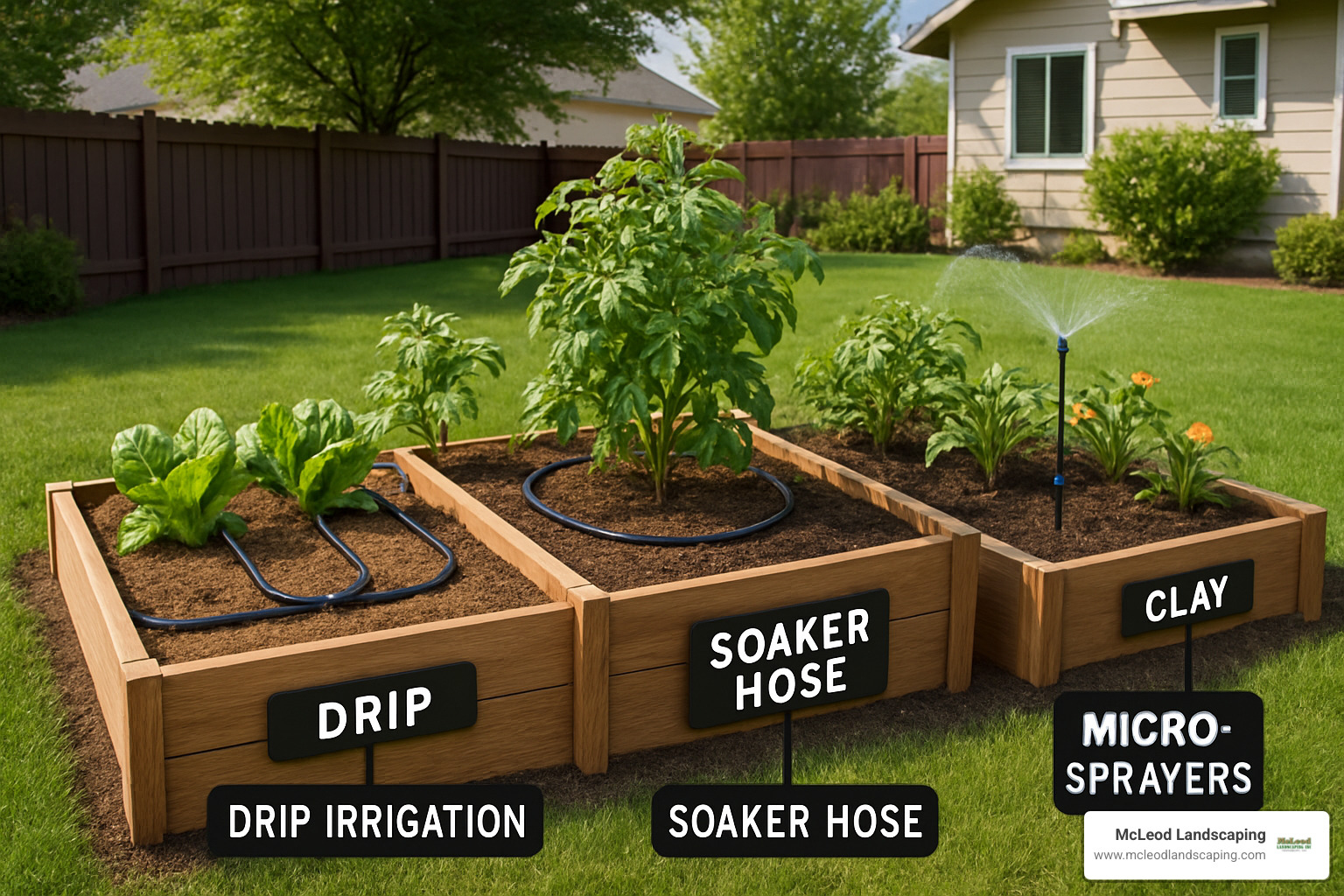
Does your yard have hills and valleys? These property slope and drainage patterns significantly impact irrigation success. For hilly properties in Chelmsford or Westford, drip irrigation or micro-sprayers work beautifully as they deliver water slowly enough to prevent it from racing downhill. In flatter areas with poor drainage, thoughtful scheduling helps prevent your plants from sitting in soggy conditions that can lead to root rot.
Your garden’s residents have different thirsts too. Plant water requirements vary tremendously – thirsty hydrangeas and water-sipping lavender can’t be treated the same way. We often design systems with separate zones and controls for different plant communities, ensuring each green friend receives just what it needs without waste.
Living in the USDA hardiness zone 6a means our irrigation systems need a seasonal strategy. Your system should be designed with winter in mind, including easy winterization features to prevent freeze damage. Proper drainage points and blowout connections aren’t exciting features, but they’re essential for system longevity in our climate.
Many of our clients accept sustainability by incorporating drought-tolerant plant choices alongside efficient irrigation. Native plants that have evolved in our local conditions naturally need less babysitting (and watering) once established. This approach creates a beautiful landscape that’s gentler on both water resources and your time.
For more details about professional installation options, our irrigation system installers page offers comprehensive information.
Before you decide on your garden irrigation system, work through this simple checklist to clarify your needs:
Working through these considerations gives you a clearer picture of which irrigation approach will work best for your unique situation. For homeowners throughout Lowell, Wilmington, and neighboring communities, we offer complimentary consultations to evaluate these factors and recommend the perfect solution for your garden’s needs.
Installing and maintaining your garden irrigation system doesn’t have to be complicated, but doing it right makes all the difference between a lush, thriving garden and a frustrating waste of water and money. Whether you’re rolling up your sleeves for a DIY project or calling in our team at McLeod Landscaping, understanding these basics will help your system perform beautifully for years to come.
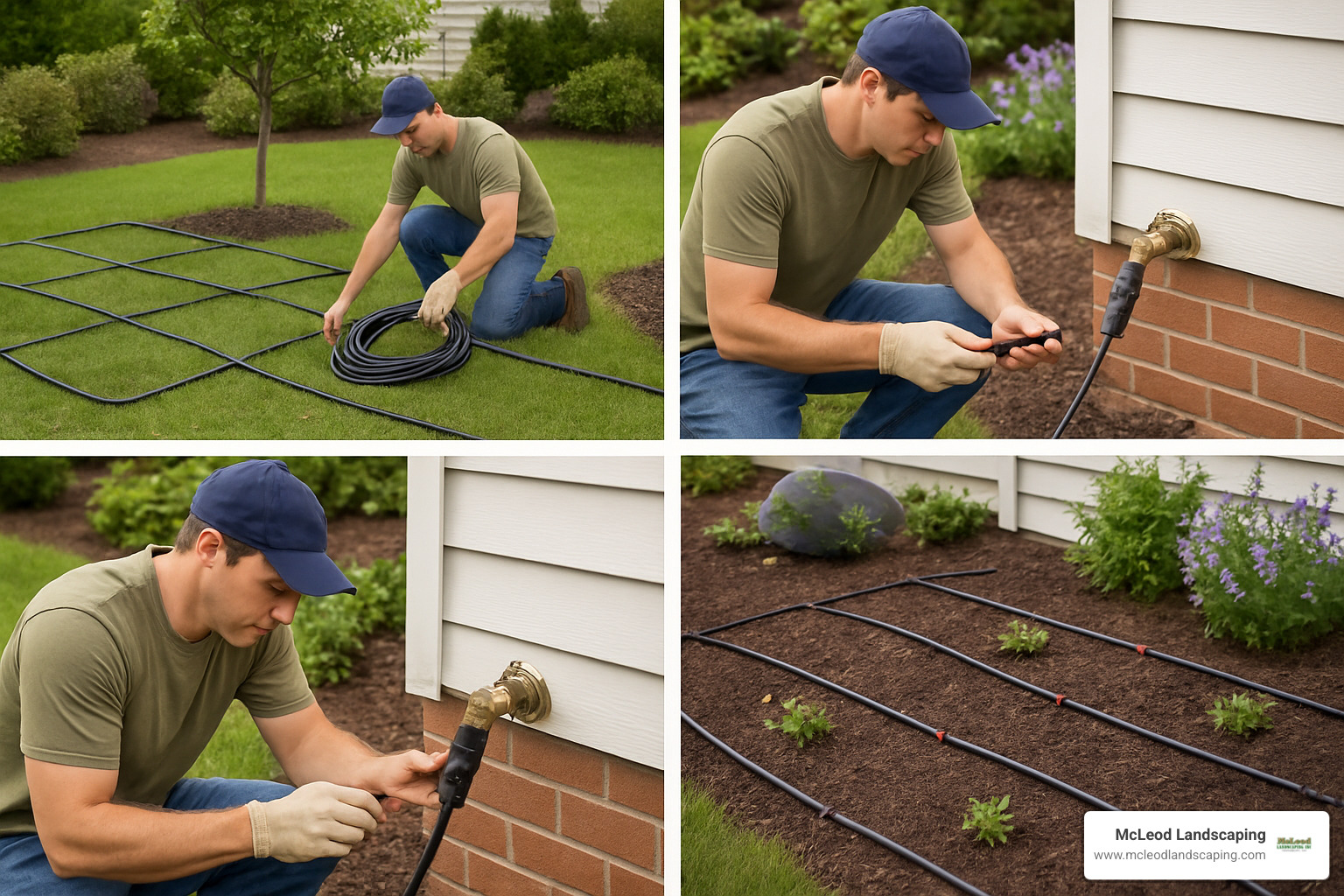
Every effective irrigation system needs a few key components that work together to deliver water efficiently. Filters are your system’s first line of defense, preventing debris from clogging those tiny emitters and sprinklers. Pressure regulators ensure your system operates at the sweet spot—not too forceful to damage components, not too weak to function properly. Backflow preventers are non-negotiable safety features that keep irrigation water from flowing back into your drinking supply (and they’re often required by local codes).
When we install systems for our Merrimack Valley clients, we carefully sequence these components—typically starting with the filter at the water source, followed by the pressure regulator and backflow preventer. This arrangement protects both your irrigation investment and your family’s water supply.
The New England climate presents unique challenges for irrigation systems. Our freezing winters can turn water left in pipes into destructive ice that cracks components and creates headaches in spring. Proper winterization is absolutely essential here and involves more than just turning off the water. You’ll need to:
Come spring, a careful inspection will catch any winter damage before it becomes a bigger problem. Check for cracked pipes, damaged valves, and clogged emitters before turning the system on for the season.
“Should I install it myself or hire a pro?” It’s a question we hear almost daily, and the honest answer is: it depends on your skills, available time, and the complexity of your garden.
DIY irrigation kits have come a long way in recent years. You can find quality soaker hose setups starting around $50, while more comprehensive drip systems for larger gardens typically range from $150 to $400. These kits usually include everything except the tools, and many come with helpful installation guides.
The main advantage is obvious—cost savings. One of our clients in Chelmsford saved several hundred dollars installing her own drip system for her vegetable garden. She spent a weekend setting it up and told us the satisfaction of doing it herself was almost as rewarding as the water bill savings she saw later that summer.
Professional installation brings expertise and efficiency to the table. When our team installs a system, we’re drawing on decades of experience with local soil conditions, plant needs, and weather patterns specific to the Merrimack Valley. We select commercial-grade components that often last longer than DIY kit materials and design systems that maximize coverage while minimizing water use.
Based on industry averages (not McLeod Landscaping’s specific pricing), professional irrigation installation typically ranges from $800 for small gardens to $3,000+ for larger or more complex landscapes. The final cost depends on numerous factors including property size, system type, soil conditions, and accessibility.
Don’t forget to factor in controllers and timers. A basic mechanical timer starts around $25, while smart controllers with weather-based programming typically range from $100 to $250+. Many of our Burlington and Wilmington clients tell us their smart controllers paid for themselves within two seasons through reduced water bills.
A little regular attention goes a long way toward keeping your garden irrigation system running efficiently. Here’s a simple maintenance rhythm that works well for our New England climate:
During the growing season, take a monthly “irrigation walk” while your system is running. Watch for sprinklers that aren’t rotating properly, dry spots that indicate clogged emitters, or wet areas that might signal leaks. This simple 15-minute check can catch small problems before they become big ones.
Seasonal care is especially important in our region. In spring, flush all lines to remove sediment that settled during winter, and test each zone for proper operation. Summer might require adjusting your watering schedule as temperatures climb. Fall is winterization time—a critical step for preventing freeze damage. In winter, store any removable components like timers indoors if possible.
Each year, plan to replace any damaged emitters or sprinkler heads, as these inexpensive parts can dramatically affect system efficiency. Test your backflow preventer annually (or have it professionally tested if required by local codes). If you have a smart controller, check for firmware updates that might improve functionality or add new features.
One client in Andover created a simple reminder system by setting calendar alerts on her phone for these maintenance tasks. “It takes the guesswork out of keeping the system running smoothly,” she told us, “and I’ve probably saved thousands of gallons of water by catching problems early.”
Proper maintenance isn’t just about preventing headaches—it directly impacts water efficiency. A well-maintained drip system can operate at 90% efficiency, while a neglected one might waste nearly half the water you’re paying for due to leaks and poor distribution. That’s not just bad for your wallet—it’s bad for our local water resources too.
For more detailed guidance on maintaining your specific system, or if you’d prefer to have professionals handle the seasonal maintenance, our team at McLeod Landscaping is always happy to help keep your garden irrigation running at peak performance.
Modern garden irrigation systems have come a long way from simple timers and hoses. Today’s technology offers impressive features that not only make gardening more convenient but also help conserve our precious water resources.
Smart controllers represent one of the most game-changing advances in irrigation. These WiFi-enabled devices connect to weather services and automatically adjust your watering schedule based on local conditions. Many of our Chelmsford and Lowell clients love how their systems automatically skip watering when rain is forecast and then resume normal schedules when needed—all without any manual intervention.
For those seeking a simpler solution, rain sensors provide effective weather-responsive irrigation without the higher price tag. These affordable devices can be added to almost any existing system and temporarily pause your watering schedule during and after rainfall. They’re particularly popular among our clients who want basic weather responsiveness without a complete system upgrade.

Soil moisture probes take precision watering to another level by measuring actual root zone moisture. Rather than watering on a fixed schedule, these systems activate only when your plants truly need water. We’ve installed these for several commercial properties in Burlington and Billerica, where they’ve reduced water consumption by 20-40%—a significant savings both environmentally and financially.
“My garden has never looked better, and I’m using less water than ever,” shared one Andover client after we set up zone programming for their property. This feature allows different areas of your landscape to receive appropriate amounts of water based on specific needs. Your sun-baked annual beds might get daily gentle watering while established trees and shrubs receive less frequent but deeper soaking—all automatically.
Don’t overlook potential rebate programs offered by many municipalities for water-efficient irrigation equipment. These incentives can significantly offset upgrade costs, making smart irrigation more affordable than you might expect. We always encourage our clients to check with their local water departments about available programs.
Beyond technology, simple practices make a huge difference in irrigation efficiency. Applying mulch around your plants creates a protective layer that significantly reduces evaporation. We recommend maintaining a 2-3 inch layer of organic mulch throughout your garden beds—it’s like giving your irrigation system a free efficiency boost!
Compost incorporation is another water-saving secret weapon. By improving your soil structure before installing irrigation, you’ll create a garden that naturally holds moisture better. One Billerica client was amazed at how much less frequent watering became necessary after we amended their heavy clay soil with quality compost.
Many environmentally conscious clients in Concord and Carlisle have acceptd rain barrels connected to their downspouts. These can be integrated with drip irrigation systems using simple adapters (though they typically require a pump for adequate pressure). We’ve designed several hybrid systems that prioritize free rainwater and only switch to municipal water when the barrels run dry.
For more information about automatic sprinkler systems that work beautifully with smart controllers, visit our page on automatic sprinkler systems.
Irrigation technology offers options at every price point, from basic manual systems to sophisticated smart solutions. Here’s what to expect at different budget levels:
Entry-level options provide simple automation without breaking the bank. Basic mechanical timers that attach directly to outdoor faucets give you consistent watering without daily attention. Simple soaker hose systems with manual valves deliver water efficiently at minimal cost. Battery-operated hose timers with basic programming help conserve water while keeping your schedule flexible.
For those seeking more convenience, mid-tier solutions offer significant upgrades without premium prices. Bluetooth-enabled controllers let you program watering schedules right from your smartphone—perfect for making quick adjustments without trudging out to the garage. Rain sensors prevent watering during precipitation, avoiding waste and potential plant damage. Multi-zone timers with flexible scheduling options ensure different garden areas receive appropriate care. Flow meters detect leaks and monitor water usage, alerting you to problems before they become costly.
Premium features represent the cutting edge of irrigation technology. Weather-based controllers automatically adjust to local conditions—if there’s a heatwave, your system responds without any input needed. Soil moisture sensors trigger irrigation based on actual plant needs rather than rigid schedules. Flow management systems detect and isolate leaks to prevent water waste and property damage. Remote monitoring and control via smartphone apps let you manage your irrigation from anywhere in the world. Integration with home automation systems allows your irrigation to work seamlessly with other smart home features.
For those who want the absolute best, advanced technology offers remarkable capabilities. Adaptive AI scheduling learns from past performance and adjusts accordingly—actually becoming more efficient over time. Predictive watering based on plant growth stage and weather forecasts ensures optimal conditions throughout the growing season. Detailed water usage analytics provide conservation recommendations custom to your specific landscape. Compatibility with municipal smart water networks positions you for future water management innovations.
One Westford client who upgraded from a basic timer to a weather-based controller was thrilled to see a 35% reduction in water use during the first season—savings that quickly offset the additional cost of the premium controller. As he told us, “It’s like having a personal gardener who knows exactly when to water and when to hold off.”
For most residential clients in Tewksbury, Andover, and surrounding communities, we typically recommend mid-tier solutions that balance cost with meaningful water savings and convenience. However, larger properties or complex landscapes often benefit from premium features that provide strong returns through water conservation and reduced maintenance headaches.
Finding the perfect watering schedule feels a bit like Goldilocks – not too much, not too little, but just right. The ideal frequency for your garden irrigation system depends on several key factors specific to your garden.
For vegetable gardens here in the Merrimack Valley, you’ll typically need water every 1-3 days during our peak growing season. Aim for about an inch of water per session to encourage those deep roots. Your established perennial beds are less demanding, usually thriving with just 1-2 deep waterings per week rather than daily sprinkles.
“The finger test never fails,” as I often tell our clients in Lowell and Wilmington. Simply push aside your mulch, stick your finger about two inches into the soil, and feel the moisture. If it’s still damp below the surface, you can hold off watering even if the top inch looks dry.
Those newly planted areas need extra attention – often daily watering for the first week, then gradually cutting back as they establish. And don’t forget those thirsty container gardens! Even with efficient drip irrigation, they might need daily refreshment during hot summer days.
Early morning watering (between 4-7 AM) gives you the most bang for your buck. There’s less evaporation, and leaves have plenty of time to dry before evening, which helps prevent those pesky fungal diseases we often see in Massachusetts gardens.
Even the best garden irrigation system needs some TLC to keep performing at its peak. Different systems have their own maintenance personalities:
For drip irrigation systems, monthly maintenance is fairly simple – check those filters and clean them if needed, look for any sneaky leaks, and flush the lines to prevent mineral buildup. Seasonally, you’ll want to replace any damaged emitters and verify your pressure regulator is still doing its job. Once a year, give those filters a deep cleaning, carefully inspect all main lines, and update your controller programming.
Soaker hoses require less fussing – monthly checks for kinks or clogs, seasonal repositioning as your plants grow, and annual replacement of sections showing wear. These workhorses are simple but can develop weak spots over time.
If you’ve installed sprinkler systems, plan on monthly adjustments to spray patterns and cleaning of clogged nozzles. Seasonally, check for broken heads or leaks, and annually inspect valve operation and replace worn components. I’ve seen sprinklers happily watering sidewalks for weeks before anyone noticed!
Garden grid systems need monthly checks for debris in distribution channels, seasonal cleaning of connectors, and annual inspection for UV damage or cracks. These systems are quite durable but can collect leaves and debris that interfere with water flow.
For self-watering containers, weekly reservoir checks are essential, with monthly cleaning if algae appears. Annually, you might need to replace wicking materials if performance drops.
All systems require proper winterization in our New England climate – something we take very seriously at McLeod Landscaping. Our comprehensive maintenance programs for clients throughout Chelmsford, Burlington, and surrounding areas include seasonal system checks to keep everything running smoothly year-round.
The vacation watering dilemma – it’s amazing how quickly plants can go from thriving to thirsty when you’re away! This is one of the most common questions we hear from clients in Concord, Carlisle, and throughout the Merrimack Valley.
Programmable timers are your simplest solution. Set up your regular watering schedule before you leave, and your garden irrigation system will faithfully follow instructions while you’re enjoying your getaway. For typical 1-2 week vacations, this approach works beautifully for most gardens.
For longer trips or unpredictable weather, smart controllers offer wonderful peace of mind. These clever devices adjust to weather conditions while you’re away – cutting back during rainstorms or increasing watering during unexpected heat waves. One client in Andover told me it was like having a “garden babysitter with a meteorology degree!”
If you have container plants, self-watering containers with large reservoirs can keep them happy for 1-2 weeks without attention. Just be sure to fill them completely before you head out the door.
For the most reliable coverage, drip irrigation on timers provides precise watering for both containers and in-ground plants. Many of our vacation home clients in the area combine these with rain sensors to prevent overwatering during wet periods.
Even with the best automation, having a trusted neighbor check occasionally provides extra security. They can spot any issues that technology might miss – like a disconnected hose or power outage that resets your timer.
Before any extended absence, conduct a test run of your automated system for several days. This helps identify any quirks or adjustments needed before you’re too far away to fix them. Many of our clients in Tewksbury and Billerica particularly appreciate smartphone-connected controllers that allow them to monitor and adjust their irrigation systems remotely – perfect for those “Did I remember to set the timer?” moments that tend to occur somewhere over the Atlantic!
A well-designed garden irrigation system isn’t just a convenience—it’s a smart investment that pays dividends in multiple ways. When I talk with clients across the Merrimack Valley, they’re often amazed at how quickly their systems transform both their gardens and their gardening experience.
The water conservation benefits alone make these systems worthwhile in today’s environment. As water becomes an increasingly precious resource, the precision watering that modern irrigation provides allows you to maintain gorgeous, productive gardens while being a responsible environmental steward. Whether you’ve chosen the targeted efficiency of drip irrigation, the simplicity of soaker hoses, or the broad coverage of modern sprinklers, you’re making a choice that benefits both your landscape and the planet.
I’ve seen how proper irrigation transforms properties throughout our service area—from Andover to Wilmington, Chelmsford to Concord. Gardens flourish with consistent moisture, water bills decrease, and homeowners reclaim hours previously spent dragging hoses and standing with watering cans. Even better, the initial investment typically pays for itself through reduced water usage, fewer replacement plants, and decreased maintenance time.
Garden irrigation systems also provide peace of mind that’s hard to quantify but immensely valuable. Heading off on vacation? Your garden continues receiving perfect care. Working late? Your plants aren’t wilting while waiting for you. Unexpected heat wave? Your irrigation controller has it covered.
At McLeod Landscaping, we bring over three decades of experience designing and installing custom irrigation solutions custom to New England’s unique climate challenges. Our approach considers your specific soil conditions, plant selections, and water conservation goals to create systems that perform efficiently season after season.
Whether you’re establishing a new landscape or upgrading an existing garden, I encourage you to explore the possibilities that modern irrigation technology offers. From straightforward manual systems to sophisticated smart controllers that adjust to weather forecasts, there’s a solution that aligns perfectly with your needs and budget.
For more information about our irrigation and sprinkler solutions, visit our dedicated page at McLeod Landscaping Irrigation & Sprinkler Solutions.
Water wisely, and watch your garden thrive!
Contact McLeod Landscaping today at (978) 640-0957 or click here to schedule a consultation for retaining wall installation. Let our experienced team design and install a functional and visually appealing retaining wall that enhances your landscape.


1881 Main St Unit 1, Tewksbury, MA 01876