
Garden step ideas can completely transform a sloped yard from a landscaping challenge into a stunning outdoor feature. Whether you’re dealing with a steep hillside, want to create defined levels in your garden, or simply need safe access between different areas of your property, the right steps combine both function and beauty.
Quick Garden Step Ideas:
Garden steps serve multiple purposes beyond just getting from point A to point B. They help prevent erosion on slopes, create visual interest in flat areas, and can even double as seating or display areas for container gardens. The key is choosing materials and designs that complement your existing landscape while meeting your practical needs.
From rustic stone slabs that look like they’ve been there forever to modern concrete steps with clean lines, there’s a solution for every style and budget. Many homeowners are surprised to learn that attractive, functional garden steps can be built for under $200 using recycled materials and basic DIY skills.
As Scott McLeod, owner of McLeod Landscaping with over 30 years of experience in landscape design and hardscaping, I’ve helped hundreds of clients steer garden step ideas that perfectly match their outdoor vision and budget. Whether you’re planning a weekend DIY project or considering professional installation, the right approach can turn any slope into your favorite outdoor feature.
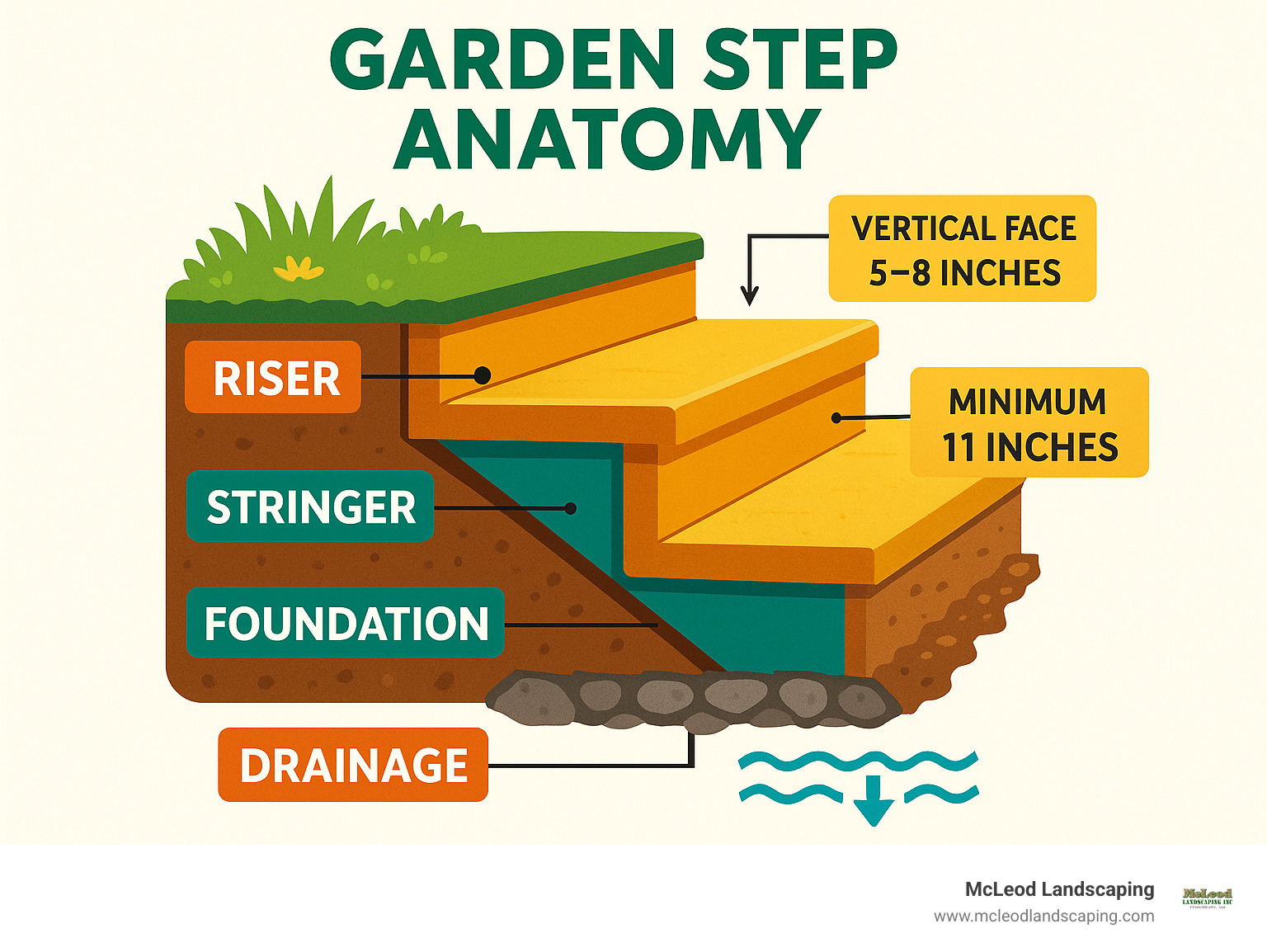
Terms related to garden step ideas:
When you imagine a charming garden path, you’re likely picturing natural stone steps. They are veterans of the garden world, offering top-tier durability and a timeless aesthetic that blends with nature. The popularity of natural stone is clear, with thousands of photos on sites like Pinterest and Houzz showcasing its organic beauty and versatility.
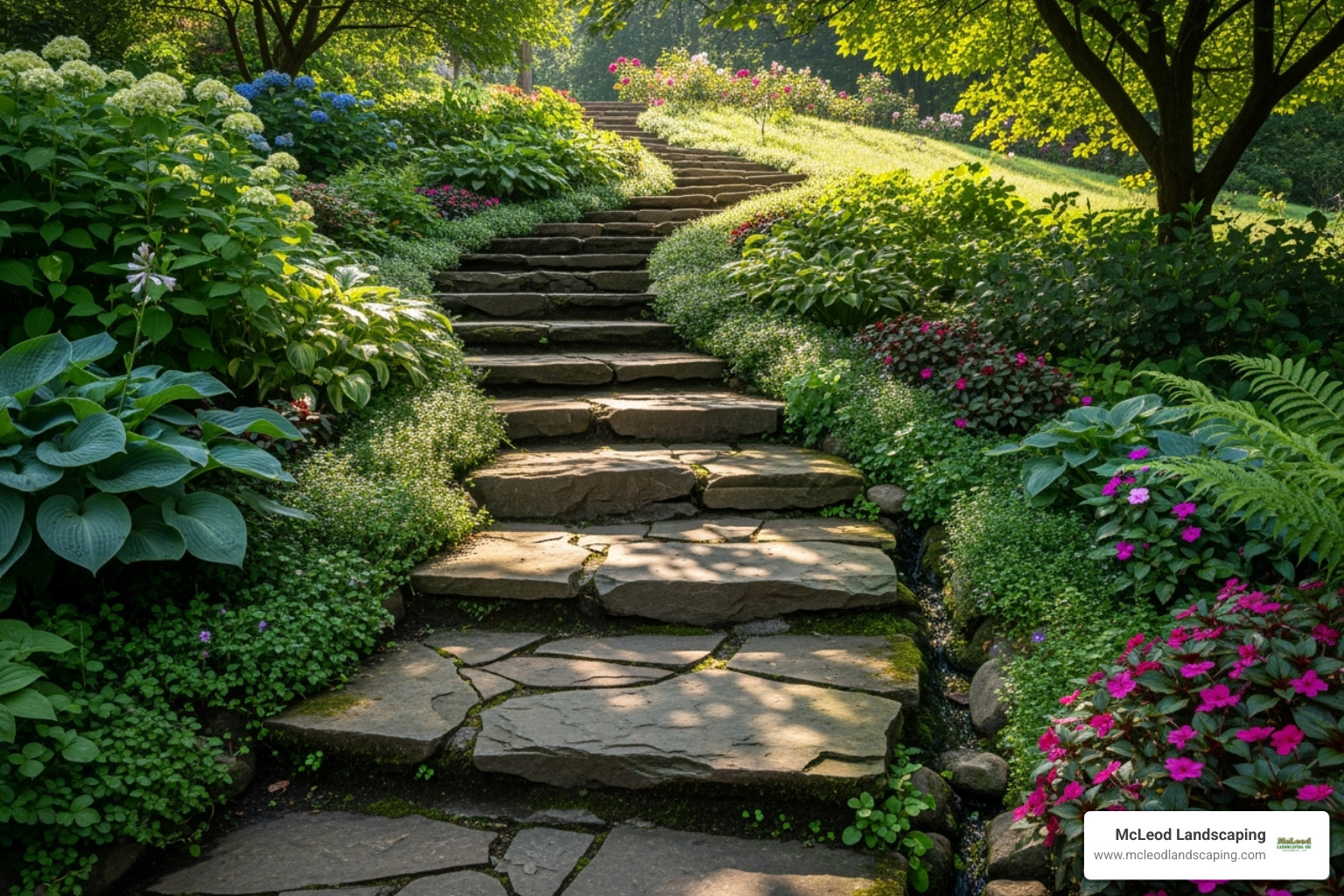
We’re big fans of natural stone for its inherent beauty and resilience. Common materials include:
Natural stone steps have many advantages. They are incredibly durable, lasting for decades with minimal wear, and provide excellent drainage, which helps prevent erosion on slopes. Plus, they add a touch of natural elegance to any yard. As landscape designer Joshua Faas notes, “There is something undeniably gratifying about integrating natural stone steps.” However, stone can be more costly than other materials. Its weight often requires professional installation, increasing both material and labor costs. Despite this, the long-term beauty and durability often make it a worthwhile investment. For more ideas, check out these Shelterness stone steps ideas. You might also find inspiration in our work with Stone Brick Stairs.
The beauty of natural stone is its adaptability. Whether your garden is rustic or modern, there’s a stone that fits.
Integrating stone steps with other hardscaping, like retaining walls, creates a cohesive look. Using the same stone for both steps and a nearby retaining wall provides unity. Our Hardscape Design Services can help you choose the perfect stone to complement your garden’s style.
If natural stone evokes timelessness, then wooden garden steps bring warmth and a natural, inviting feel to your outdoor space. They are incredibly versatile and can be designed to fit a variety of aesthetics, from rustic to quite modern.
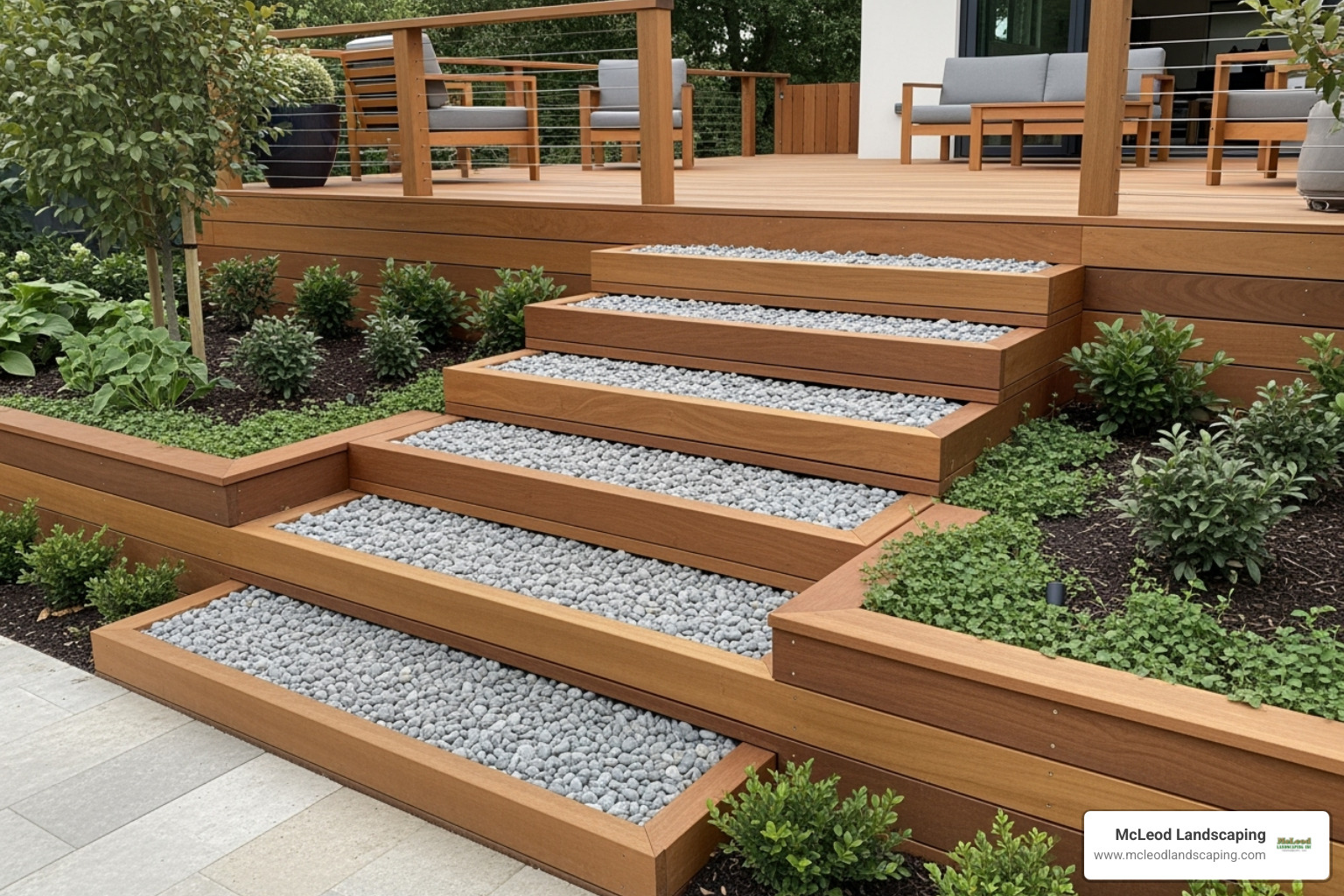
We often recommend wood for its ability to soften a landscape and create a sense of natural integration. Popular materials for wooden steps include:
Durability is a key consideration with wooden steps, as they are exposed to the elements. To ensure longevity, we always advise:
Building a wood and gravel staircase on a slope is a popular DIY project, and HGTV even offers a Full Tutorial at hgtv.com for those eager to tackle it themselves. With proper care and material selection, wooden garden steps can provide years of beautiful and functional access in your garden.
Some of the most charming garden step ideas come from thinking outside the box. We’ve seen homeowners create stunning garden steps using recycled materials, creative repurposing, and a bit of imagination. Many of these projects cost under $100 and can be completed in a weekend.
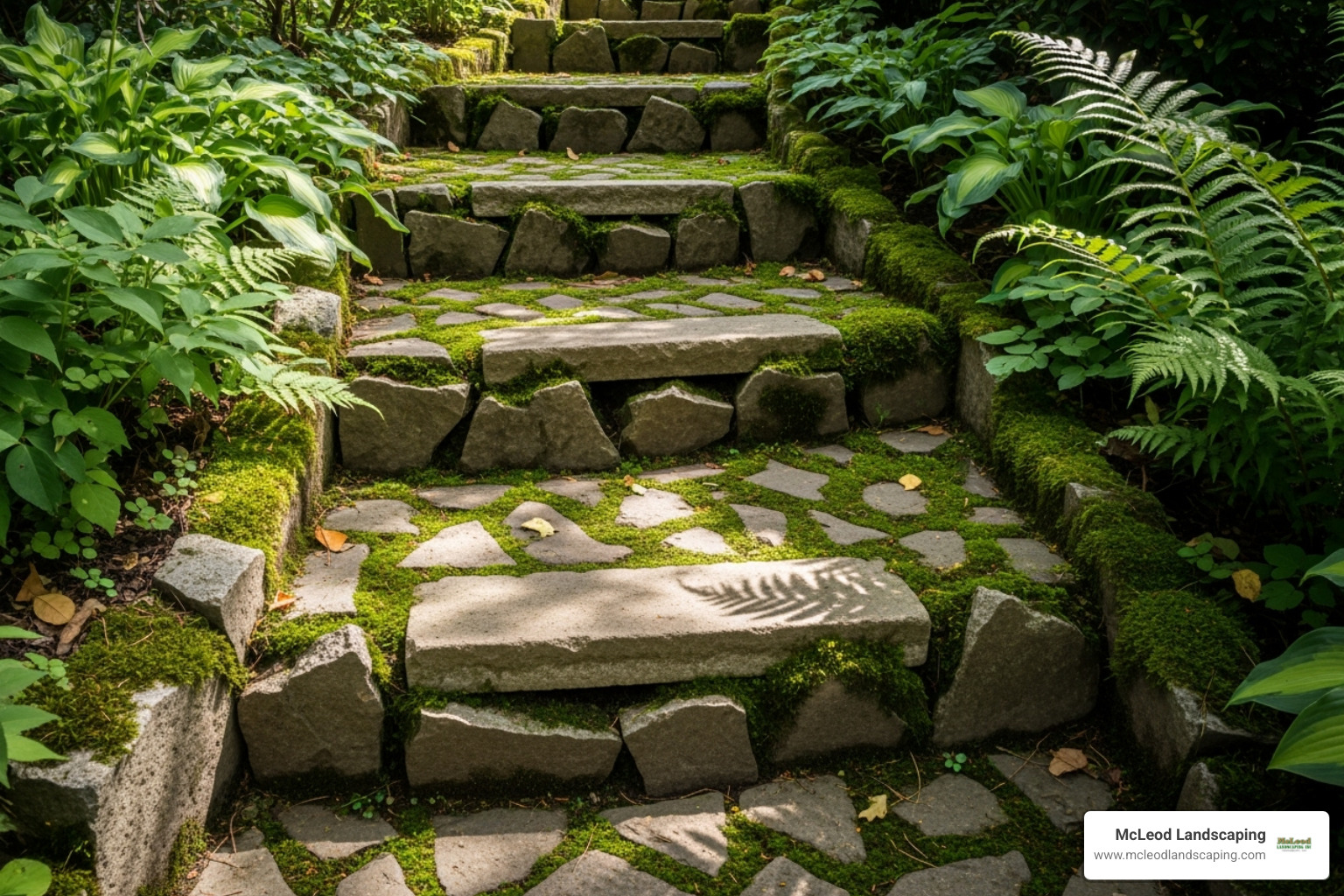
Recycled concrete (or “urbanite”) is a favorite budget-friendly material. Chunks from old sidewalks can become beautiful stepping stones or stacked risers. The weathered edges and moss growth, as seen above, create an organic look that blends into garden settings.
Old timbers paired with pea gravel make for classic, durable steps. The timber frames hold the gravel in place, which prevents slipping and handles water runoff beautifully.
For a modern industrial style, cinder blocks offer incredible versatility. Stack them as simple risers, fill the centers with soil for integrated planters, or cap them with flat stones for a finished look.
Gabion baskets bring contemporary flair. These wire cages filled with rocks or broken concrete create strong, textured steps with excellent drainage, perfect for modern landscapes.
Even old tires can find new life as garden steps on gentle slopes when filled with soil and covered with mulch or gravel, providing an eco-friendly way to repurpose materials.
The recycled concrete steps in our image show how beautiful budget materials can be. The moss-filled joints and weathered surfaces create character that new materials can’t match.
Log and tree trunk stairs bring rustic charm to woodland gardens. Using sections of fallen trees as risers creates a natural trail feel, perfect for winding paths.
The classic wood and gravel staircase remains popular because it works so well. Landscape timbers create the framework, while pea gravel fills the treads for excellent drainage and slip resistance.
For contemporary gardens, steel edge and grass steps offer a sleek, minimalist approach. Metal edging defines each step while grass covers the treads, creating a striking visual statement.
If you’re interested in more permanent masonry options, our guide on How to Build Brick Stairs Outside provides detailed information on working with traditional materials.
Before starting, proper planning is the foundation of a successful project. After 30 years in landscaping, I know that skipping the basics leads to failure. A little planning now saves headaches and money later.
Safety is the top priority. Understanding your slope calculation determines the number and dimensions of your steps. For outdoor use, we aim for risers no higher than 6 inches and treads at least 12 inches deep. A good rule of thumb is that two risers plus one tread should equal about 25 inches, creating a comfortable stride.
Proper drainage is also critical, especially in Massachusetts. Water on steps is slippery and damaging. We build in a slight slope for runoff to prevent puddles and ice.
Finally, a solid foundation is essential. For heavy materials like stone, a reinforced concrete foundation prevents settling and keeps steps level and safe for decades.
| Material | Cost Range | Durability | Maintenance | DIY Difficulty |
|---|---|---|---|---|
| Natural Stone | $15-60+ per sq ft | Excellent (50+ years) | Low (occasional cleaning) | Difficult (heavy, often needs pros) |
| Wood | $8-35 per sq ft | Moderate (5-20 years) | Medium (regular sealing needed) | Medium (requires carpentry skills) |
| Concrete | $6-25 per sq ft | High (20-30 years) | Low (minimal upkeep) | Medium (mixing and pouring skills) |
| DIY Recycled | $2-12 per sq ft | Varies widely | Varies (can need frequent adjustments) | Easy to Medium (creativity required) |
These cost ranges are average estimates based on internet data and don’t reflect actual McLeod Landscaping pricing. Your project costs will depend on material quality, site conditions, and installation complexity.
When we design garden step ideas, we consider everyone who will use them.
Our team at McLeod Landscaping ensures all projects meet applicable codes. For steps leading to your home, our Front Stairs and Step Installation services handle all technical requirements.
Beautiful garden step ideas don’t have to break the bank with wise planning. Material costs vary dramatically, from nearly free recycled concrete to premium granite. Match your material choice to your budget and long-term goals.
Labor costs can significantly increase project expenses but are often worth it for complex jobs. DIY installation is great for simpler projects with lighter materials. However, jobs involving heavy stone, major excavation, or retaining walls usually need professional expertise.
The DIY versus professional decision often comes down to safety and longevity. A poorly done DIY project can cost more to fix later. Consider the total cost of ownership. Cheaper materials might need more frequent maintenance or replacement, while a quality installation can last for decades with minimal care.
These are general cost considerations based on average internet data and do not represent actual McLeod Landscaping pricing. Every project is unique, and we’re happy to discuss specific pricing for your garden step ideas during a consultation.
Once your garden step ideas are built, the rewarding part begins: bringing them to life with plants and lighting. This is how functional steps become breathtaking landscape features.
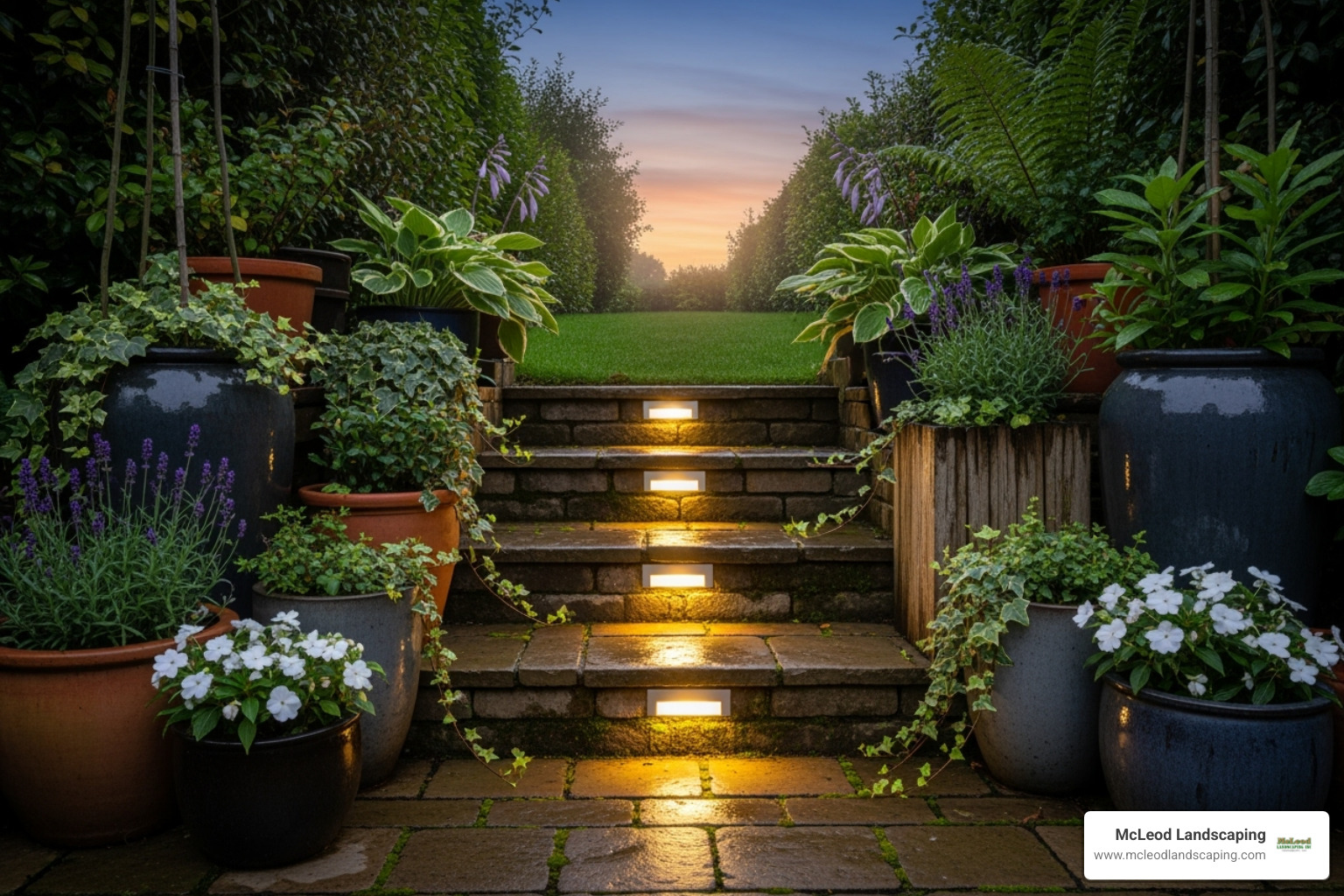
Integrated planters make steps look like they belong in your garden. Building planters into or alongside your steps creates natural pockets of color and texture. We love creating tiered displays where each level showcases different plants.
Softening edges with plants is another game-changer. Trailing groundcovers spilling over stone edges or low-growing shrubs nestled against wooden risers make even the most structured steps feel organic and welcoming.
Groundcovers and ornamental grasses are especially useful. Hardy groundcovers tucked between pavers look beautiful and help suppress weeds. Ornamental grasses like Miscanthus or Pennisetum add movement and texture that changes with every breeze, creating a zen-like atmosphere.
When the sun sets, lighting transforms your steps from practical to magical. Low-voltage LED lighting is our go-to for a subtle glow without harsh glare. Recessed LED strips tucked under each tread create beautiful definition while safely lighting the path.
For an eco-conscious option, solar-powered lights are fantastic. Small solar spotlights or path lights charge during the day and automatically illuminate your pathway at night with no wiring or electrical costs.
Don’t forget path lighting that connects your steps to the rest of your yard. A continuous lighting journey from your door to your garden makes evening strolls feel special. It’s about creating an experience that makes you want to spend more time outdoors.
The combination of thoughtful plantings and well-placed lighting turns ordinary garden step ideas into extraordinary landscape features. For more inspiration on creating beautiful outdoor pathways, explore our Walkways services.
Over the years, we’ve helped countless homeowners steer their garden step ideas, and certain questions come up again and again. Here are the most common concerns we hear, with answers based on our three decades of experience.
The most affordable steps involve DIY installation and creative material use. Recycled materials are your best friend. Broken concrete (“urbanite”) is often free from construction sites. Old timbers, cinder blocks, and even old tires can be transformed into functional steps. A popular affordable approach is using landscape timbers as risers, filled with inexpensive pea gravel or mulch. Since labor is a major project cost, DIY installation offers the biggest savings. Just be realistic about your skills and time to avoid a half-finished project that costs more to fix.
Steep slopes require solid, substantial materials that won’t shift. Large stone slabs like granite or bluestone provide the necessary weight and stability. Poured concrete is another excellent choice, as it can be formed to the slope’s exact contours. For very steep grades, we often suggest integrating steps with a retaining wall. This creates level platforms and provides crucial structural support against erosion, a service we provide with our retaining wall installation. We strongly advise against using loose materials like gravel alone on steep slopes, as they can wash away or become unstable.
Safety means creating steps that feel comfortable and confident to use in any condition.
From timeless natural stone to innovative DIY creations, garden step ideas offer endless possibilities for changing your outdoor space. We’ve explored how materials like rustic flagstone, warm wooden timbers, or creative recycled concrete can define your garden’s character.
The beauty of garden steps lies in their dual nature: they solve practical problems like navigating slopes while creating visual interest. Whether you’re taming a steep hillside or defining a gentle grade, the right approach combines essential function with undeniable beauty.
Throughout this guide, we’ve seen how practical considerations like safety and drainage are non-negotiable, and how thoughtful landscaping and lighting can lift your steps into garden masterpieces. The key is choosing designs and materials that complement your landscape, needs, and budget.
Garden step ideas don’t just connect different areas; they improve the entire experience of your outdoor sanctuary, creating moments of pause and framing beautiful views.
At McLeod Landscaping, with over 30 years of experience serving residential clients in Andover, Billerica, Burlington, Carlisle, Chelmsford, Concord, Lowell, Tewksbury, Westford, and Wilmington, MA, we are passionate about helping homeowners in the Merrimack Valley turn landscaping challenges into stunning features.
Whether you’re ready for a DIY project or dreaming of professionally installed stone steps, the perfect solution is out there. For professional design and installation of your perfect outdoor path, explore our Walkway Installation Services. We’re ready to help you step up your garden game!
Contact McLeod Landscaping today at (978) 640-0957 or click here to schedule a consultation for retaining wall installation. Let our experienced team design and install a functional and visually appealing retaining wall that enhances your landscape.


1881 Main St Unit 1, Tewksbury, MA 01876