
If you’re looking to understand the grass seed installation cost, you’re in the right place. Several key factors shape the final price tag for a beautiful, lush lawn.
Here’s a quick look at what influences the cost:
This guide will walk you through each factor to help you make informed decisions for your lawn and your budget.
I’m Scott McLeod, owner of McLeod Landscaping Inc. With over 30 years of experience, my team and I have perfected the grass seed installation process, becoming a trusted partner for creating vibrant outdoor spaces.
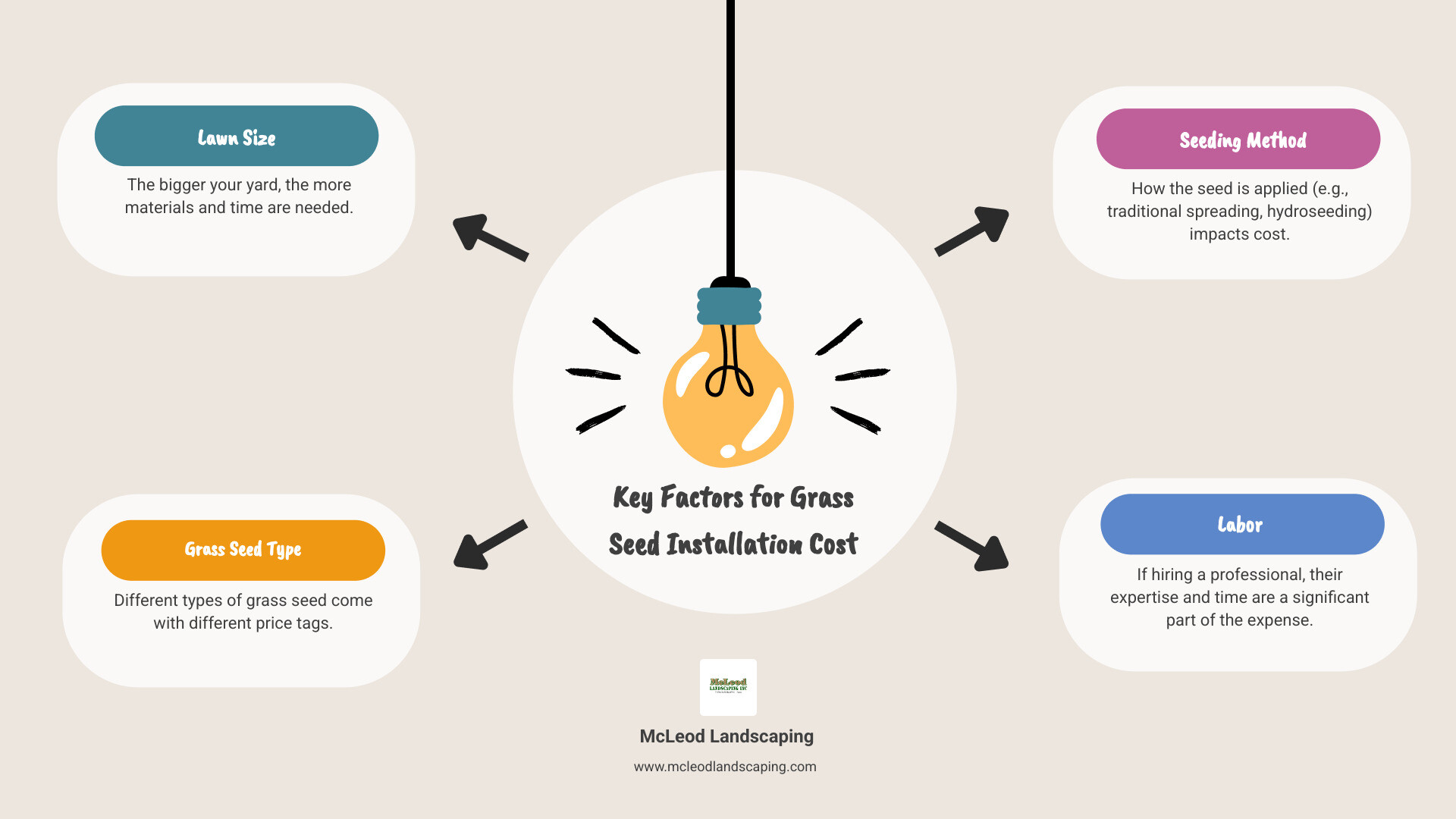
Understanding the key factors that influence the grass seed installation cost is crucial for effective budgeting. With over 30 years of experience, we know every lawn is unique, leading to variations in pricing. The final cost is shaped by lawn size, grass type, soil condition, labor rates, geographic location, and project complexity.
The costs we discuss throughout this guide are average estimates based on internet data. Actual costs for your project may vary, and these averages do not reflect the specific pricing of McLeod Landscaping. For more information on how a beautiful landscape can transform your property, you can visit our page on More info about beautiful landscaping.
Lawn size is a major factor in grass seed installation cost. While larger lawns cost more overall, the price per square foot often decreases due to economies of scale, as professionals work more efficiently on bigger projects.
Based on our research into average costs, here’s a general idea of how lawn size can influence pricing. These are average estimates based on internet data and not specific pricing for McLeod Landscaping:
These are broad averages; the final price depends on your project’s specific conditions. Accurately measuring your lawn is key to getting a precise estimate and avoiding budget surprises.
The type of grass seed you select significantly impacts the grass seed installation cost and your lawn’s long-term success. Different grasses thrive in different climates.

In regions like the Merrimack Valley, we primarily deal with cool-season grasses. These varieties, such as Kentucky Bluegrass, Fescue, and Perennial Ryegrass, are suited for New England’s colder winters and warmer summers, growing best when soil temperatures are between 60°F and 75°F.
Warm-season grasses, like Bermuda, Bahia, or Zoysia grass, are more common in the Southern U.S. where they handle intense heat. Planting them in a cool-season climate is not recommended for optimal growth.
Let’s look at some average cost ranges for different grass seed types, based on internet data (and not specific pricing for McLeod Landscaping):
Price differences reflect seed quality and purity. For the Merrimack Valley, we recommend proven cool-season grass varieties.
Healthy soil is the foundation of a healthy lawn. Without proper soil preparation, even the best grass seed can fail, leading to patchy results and wasted money. These services will influence your overall grass seed installation cost.
Here are common steps and their average cost ranges based on internet data (not specific pricing for McLeod Landscaping):
These prep steps are a long-term investment. Skipping them may save money upfront but often leads to higher costs and frustration later.
After soil prep, the next decision affecting your grass seed installation cost is the seeding method. Each has a different price and application.

It’s important to distinguish between seeding a brand-new lawn, which requires more seed and prep, and reseeding (or overseeding) an existing lawn, which is less intensive and costly. At McLeod Landscaping, our three decades of experience help us determine the right method for a thriving lawn.
Traditional broadcast seeding involves spreading seed evenly over prepared soil with a spreader. It’s the classic, straightforward method. This is often the most budget-friendly option, especially for DIY projects, due to low equipment costs and a simple process.
When professionals handle it, average costs based on internet data typically range from approximately $0.07 to $0.23 per square foot. Success depends on proper soil prep and consistent watering to ensure good seed-to-soil contact. It’s a reliable method that requires patience during establishment.
If your lawn is thin or has bare patches, overseeding can help. This process involves spreading new seed over an existing lawn to boost density, improve appearance, and increase resistance to weeds and pests.
For areas needing extra attention, we recommend slice seeding (or power seeding). A machine cuts grooves into the soil and deposits seeds directly, ensuring excellent seed-to-soil contact for high germination rates.
Based on internet data, overseeding average costs typically range from $0.07 to $0.30 per square foot, or $400 to $1,500 or more for an average lawn. Slice seeding involves more specialized equipment, so average costs generally range from $0.07 to $0.25 per square foot or more. Both methods strengthen an existing lawn, and the choice depends on its current condition.
For large areas, slopes, or when rapid establishment and erosion control are needed, hydroseeding is ideal. This professional method involves spraying a slurry of seed, fertilizer, water, and protective mulch from a specialized tank.
Hydroseeding is appealing for several reasons:
You can learn more about this technique and the benefits of professional spray grass seed on our website. Average costs for hydroseeding, based on internet data, typically range from $0.06 to $0.30 per square foot, or $500 to $5,000 or more for an average lawn.
While the initial investment may be higher, hydroseeding’s efficiency and superior results often make it worthwhile, especially for large or challenging areas. We are proud to offer this solution through our hydro seed services.
When your lawn needs seeding, you must decide: DIY or hire a pro? This choice significantly impacts your overall grass seed installation cost, time, effort, and the final result.
Here’s a quick comparison:
| Feature | DIY Grass Seed Installation | Professional Seeding Service |
|---|---|---|
| Cost | Lower upfront material cost, but potential for hidden costs (rentals, mistakes). | Higher upfront cost, but often all-inclusive and no hidden surprises. |
| Time | Significant time investment for research, prep, application, and follow-up. | Saves you time; professionals handle all aspects efficiently. |
| Equipment | Requires purchasing or renting basic tools (spreader, aerator). | Access to specialized, high-end equipment for optimal results. |
| Results | Risk of patchy, uneven growth; success depends on knowledge and diligence. | Consistent, reliable results; often comes with guarantees due to expertise. |
Making the right choice depends on your budget, available time, and desire for a guaranteed outcome.
The DIY route can save on initial grass seed installation cost, but it’s more than just tossing seed. You must account for equipment, materials, and your time.
Let’s look at some average costs for what you might need, based on internet data:
The biggest hidden cost of DIY is the time investment. Proper soil prep, seeding, and diligent watering for weeks require a significant commitment. Finally, there’s the potential for error. Without proper knowledge of soil prep and watering, results are often patchy. This can lead to a poor lawn and more costs to fix the mistakes.
For very small areas, DIY can be budget-friendly. But for larger lawns or professional-grade results, the effort and potential for costly mistakes can outweigh initial savings.
Hiring a professional offers convenience, expertise, and guaranteed results, making it a worthwhile investment in a thriving lawn and your peace of mind.
Here’s what typically goes into the grass seed installation cost when you hire a professional, based on our research into average rates:
While the upfront cost for professional services is higher, the long-term benefits of saving time, avoiding mistakes, and getting a beautiful, healthy lawn often outweigh the difference. To learn more, explore our full service residential landscaping options.
For a new lawn, you can either plant grass seed or install sod. Both create a green space, but they differ in grass seed installation cost, time, and long-term care.

Seeding is a slower, more patient approach, while sod offers instant results. Let’s compare the costs and benefits to help you decide.
The biggest initial difference is the price tag.
Both methods require careful soil preparation, but laying sod is often more labor-intensive.
Beyond the initial cost, consider the ongoing commitment.
Choosing between seeding and sod means balancing your desire for an instant lawn with your budget and long-term goals.
After more than three decades in the landscaping business, we’ve heard just about every question. Here are some of the most common ones, with our expert answers.
In the Merrimack Valley, the best time to plant cool-season grass is early fall (late August to mid-October). Fall offers warm soil for germination and cool air, which reduces stress on new seedlings. Consistent fall rain and less weed competition also help new grass thrive.
Spring planting (mid-April through May) is also an option, but the new grass will have to compete with rising temperatures and more aggressive weeds, requiring more watering and care.
For best results, plant when soil temperatures are consistently between 60°F and 75°F.
Simply throwing grass seed on the ground rarely works. This method usually results in a patchy, thin, and disappointing lawn.
Seed-to-soil contact is crucial for germination. Seeds need to be in the soil to absorb water and nutrients; otherwise, they may not sprout or will just become food for birds.
Proper soil preparation—clearing debris and loosening the topsoil—is essential for success. Without these steps and consistent watering, germination rates will be low, and any grass that does grow will have a weak root system, making it vulnerable to weeds.
Patience is key when establishing a new lawn. Here is a general timeline:
Consistent watering is critical throughout this entire period.
We’ve covered how grass seed installation cost is influenced by lawn size, seed type, application method, and soil prep. While a DIY approach is an option for small projects, professional seeding offers expertise, efficiency, and guaranteed results for the best long-term value.
A healthy lawn is more than curb appeal; it’s an extension of your home that improves property value and your quality of life. Investing in professional seeding gives your lawn the best start, ensuring a dense, resilient green space that will flourish for years to come.
Here at McLeod Landscaping, we understand the unique challenges of lawn seeding in the Merrimack Valley. With over 30 years of experience, we’ve honed our craft to ensure every project receives meticulous attention. We are proud to offer a comprehensive range of services to help both commercial and residential clients cultivate stunning outdoor spaces.
Ready to transform your yard into the lush, green oasis you deserve? For expert lawn installation and care right here in the Tewksbury, MA area, we invite you to explore our residential landscaping services. Let’s cultivate the lawn of your dreams, together!
Contact McLeod Landscaping today at (978) 640-0957 or click here to schedule a consultation for retaining wall installation. Let our experienced team design and install a functional and visually appealing retaining wall that enhances your landscape.


1881 Main St Unit 1, Tewksbury, MA 01876