

How does a lawn irrigation system work? At its core, a lawn irrigation system efficiently directs water from a source through underground pipes to strategically placed sprinkler heads around your yard. The system is typically automated, operated by a controller or timer that ensures each section of your lawn gets just the right amount of water. This setup not only helps maintain a lush, green lawn but also conserves water by reducing waste.
For commercial property managers in the Merrimack Valley area, maintaining aesthetic and functional outdoor spaces is paramount. In-ground sprinkler systems offer an advantage by delivering precise water application, which promotes vibrant lawn health and maximizes water efficiency. This is achieved through a carefully orchestrated network of components, all working together seamlessly.
My name is Scott McLeod, and with over three decades of experience in the landscaping industry, I understand how does a lawn irrigation system work and its impact on property management. Our team at McLeod Landscaping specializes in creating sustainable and water-efficient solutions custom to meet the unique needs of commercial properties.

How does a lawn irrigation system work definitions:
– Automatic Underground Lawn Sprinklers
– irrigation sprinkler
A lawn irrigation system is a network designed to deliver water efficiently to your lawn and garden. It consists of several key components that work together to keep your landscape lush and green.
At the heart of any lawn irrigation system are the underground pipes. These pipes form the backbone of the system, transporting water from the source to various parts of your lawn. Typically made from durable materials like PVC, they are buried beneath the surface to avoid interference with lawn activities and maintenance tasks, such as mowing.
Fun Fact: Most underground pipes are installed at a depth of about 12 inches, which is deep enough to prevent damage from lawn equipment but shallow enough for easy access during maintenance.
Sprinkler heads are the visible parts of the system that distribute water across your lawn. They are strategically placed based on factors like sun exposure and landscape elevation to ensure even coverage. When the system is activated, water pressure pushes these heads above ground, allowing them to spray water over the designated area.
There are various types of sprinkler heads, each serving different purposes:
The water source for your irrigation system can be either a pump system or a metered water system. The choice between these depends on your specific needs and local resources.
Both systems have their pros and cons, so it’s crucial to assess which option aligns best with your landscape requirements and budget.
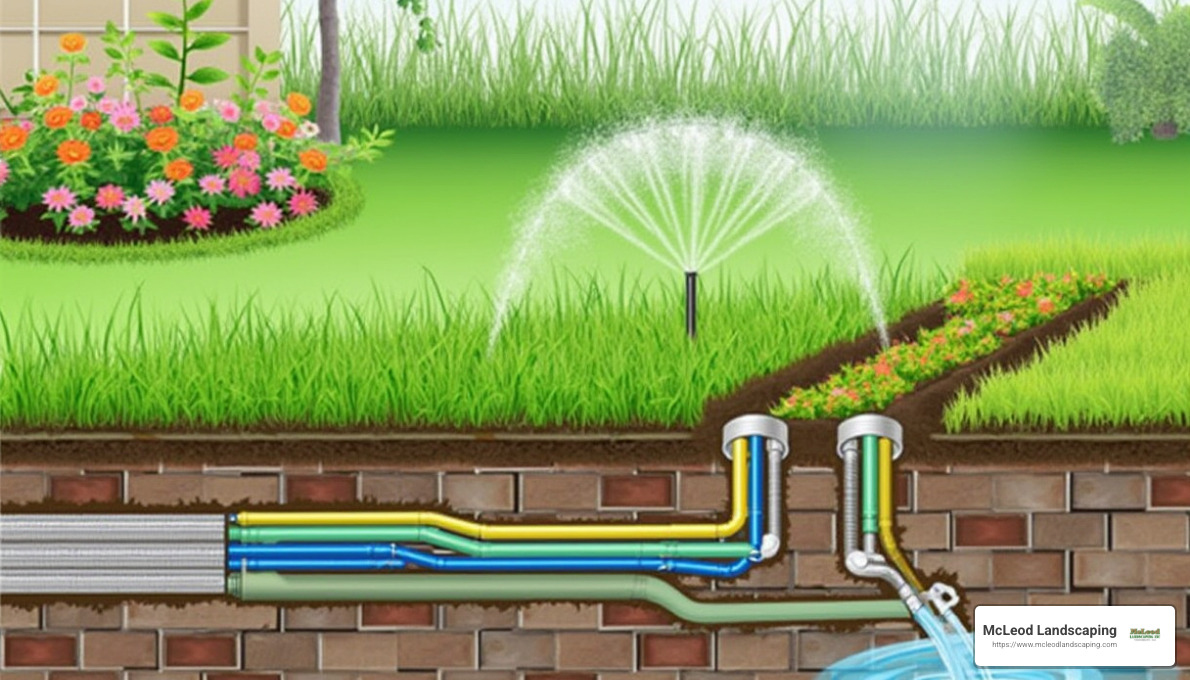
Understanding these components helps you appreciate the sophistication of a lawn irrigation system. It’s not just about getting water to your lawn; it’s about doing so efficiently and effectively to maintain a healthy landscape.
Next, we’ll explore the benefits of lawn irrigation systems and how they can save you time, water, and money.
A lawn irrigation system is more than just a series of pipes and sprinkler heads. It’s a well-orchestrated network that ensures your lawn gets the right amount of water at the right time. Let’s break down how it works and what components make it tick.
1. Controller
The controller is the brain of the system. It tells the system when to start and stop watering. Modern controllers offer advanced features like weather sensors and smartphone integration, allowing you to adjust settings based on real-time weather conditions.
2. Valves
Valves are crucial for controlling water flow. They open to allow water into the pipes and close to stop it. Each valve typically manages a specific zone of your lawn, ensuring precise watering.
3. Backflow Preventer
This component is essential for safety. It stops contaminated water from flowing back into your home’s water supply, protecting your drinking water from potential pollutants.
4. Sprinkler Heads
Sprinkler heads are where the magic happens. They come in various types to match different watering needs:
Your irrigation system can pull water from two primary sources:
1. Pump Systems
These systems draw water from natural bodies like ponds or lakes. They can be a cost-effective option if you have access to a reliable natural source. However, they may require additional maintenance to ensure water quality.
2. Metered Water Systems
These systems connect to your home’s existing water supply, using water from the municipal system. While this means you’ll incur water costs, it provides a steady and reliable water flow, crucial for consistent irrigation.
Water distribution in an irrigation system relies on a pressure system. Here’s how it works:
Understanding how does a lawn irrigation system work highlights its complexity and efficiency. It’s a blend of smart technology and practical components, all working together to keep your lawn healthy and vibrant.
Next, we’ll dig into the benefits of lawn irrigation systems and how they can make your life easier while conserving resources.
Investing in a lawn irrigation system offers several advantages that go beyond just keeping your lawn green. Let’s explore how these systems can help with water conservation, save you time, and improve cost efficiency.
Water shortage is a growing concern worldwide, making efficient water use essential. Lawn irrigation systems, especially smart ones, are designed to conserve water. They use features like soil moisture sensors and weather data to adjust watering schedules.
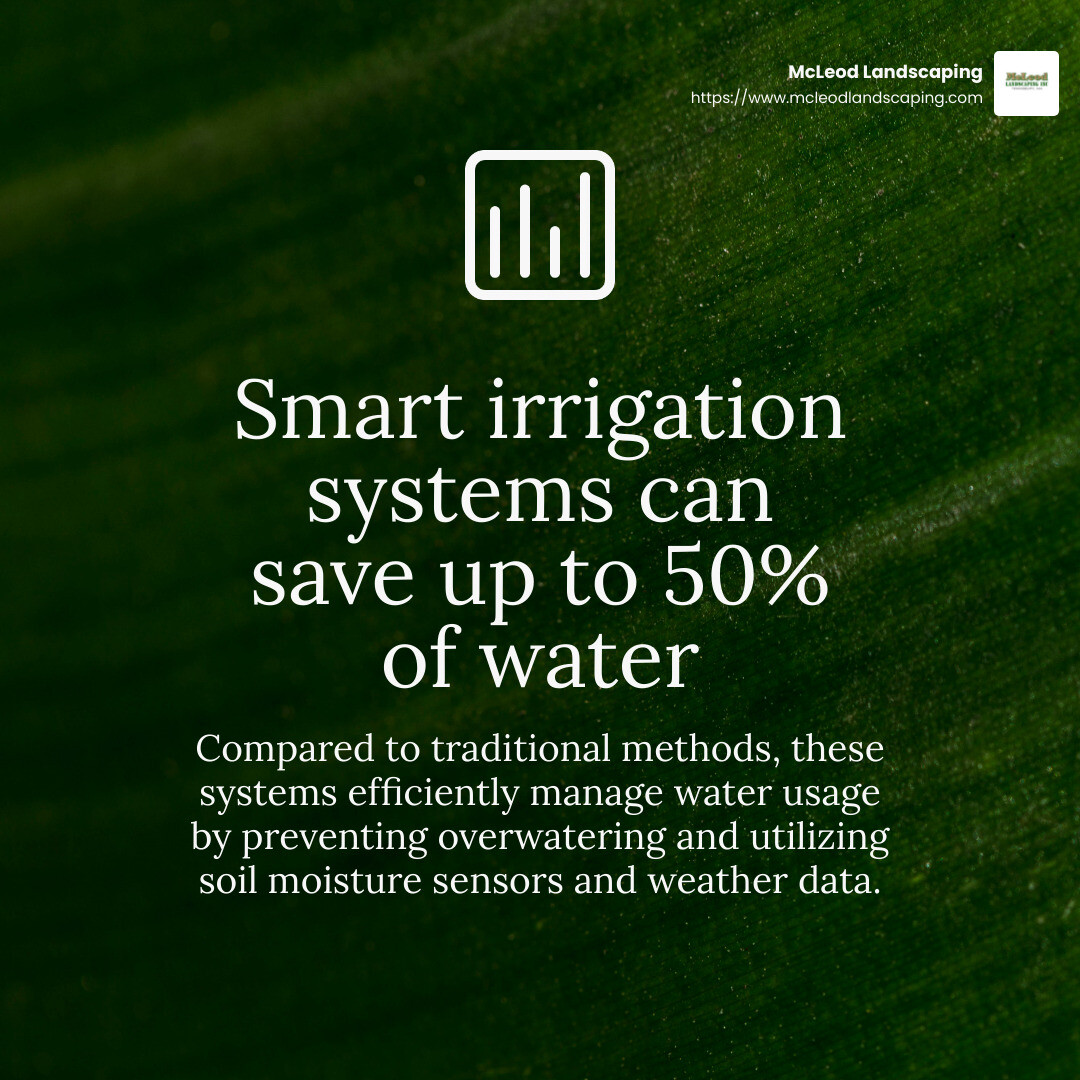
By delivering the right amount of water only when needed, these systems prevent overwatering and reduce water waste. This is not just good for the environment but also for your wallet.
Gone are the days of dragging hoses around the yard. With an automated irrigation system, you can set it and forget it. The system takes care of watering your lawn at optimal times, like early morning or late evening, when evaporation rates are low.
Smart controllers even allow you to adjust settings remotely via smartphone apps. This means you can manage your lawn’s watering schedule from anywhere, freeing up your time for other activities.
While the initial investment in a lawn irrigation system might seem significant, it can lead to long-term savings. By optimizing water usage, you can significantly reduce your monthly water bills. Traditional methods often lead to excessive water use, inflating costs unnecessarily.
Moreover, a well-maintained lawn improves your property’s curb appeal and value. The investment in a lawn irrigation system pays off by keeping your landscape lush and healthy, which can be a selling point if you decide to move.
In summary, a lawn irrigation system is an investment that pays for itself through water savings, time efficiency, and improved property value. Next, let’s look into the maintenance and troubleshooting aspects to ensure your system runs smoothly year-round.
Keeping your lawn irrigation system in top shape requires regular maintenance. This ensures efficient operation and prolongs the system’s life. Let’s explore some essential maintenance tasks and troubleshooting tips.
Sprinkler heads can get clogged with dirt and debris. This can lead to uneven watering or even system failure. To prevent this, clean your sprinkler heads regularly. A simple rinse with water can often do the trick. If they get stuck in the upright position, check for any lodged debris.
Tip: Schedule a monthly check to clean and inspect all components. This routine can help you catch minor issues before they become major problems.
In colder climates, winterization is crucial to avoid damage. Water left in the pipes can freeze, leading to cracks or bursts. Before the first frost, blow out the water from the system using compressed air. This step is essential to prevent costly repairs in the spring.
Don’t skip this: If you’re unsure how to winterize, consult a professional. They can ensure your system is ready for the cold months ahead.
While DIY might be tempting, professional installation offers several benefits. Experts understand the nuances of water pressure, zoning, and local regulations. They can ensure proper trenching and placement of sprinkler heads, which are crucial for even coverage.
Why it matters: A professional setup minimizes risks like system leaks, uneven watering, and early equipment failure. Plus, it ensures compliance with local codes, such as backflow prevention requirements.
In summary, regular cleaning, proper winterization, and professional installation are key to maintaining a healthy and efficient lawn irrigation system. Up next, let’s tackle some frequently asked questions about these systems to clear any lingering doubts.
The ideal watering schedule for your lawn depends on several factors, including the type of grass, soil conditions, and local climate. Generally, most lawns thrive with about 1 to 1.5 inches of water per week, spread over two to three sessions. This allows the water to reach the roots deeply, promoting healthy growth.
Rainfall Considerations: If there’s significant rainfall, your system might not need to run as often. Many modern systems have rain sensors that automatically adjust the schedule based on weather conditions, preventing overwatering and conserving water.
While the terms are often used interchangeably, there is a subtle difference. A lawn irrigation system is a broader term that refers to any system designed to water your lawn efficiently. This includes both sprinkler systems and drip irrigation systems.
Sprinkler Systems: Use spray or rotor heads to cover large areas of grass. They’re great for lawns but can be less efficient in terms of water usage if not properly managed.
Drip Irrigation Systems: Deliver water directly to the roots of plants, making them ideal for gardens or areas with specific plants. They use less water and minimize evaporation.
Automatic sprinkler systems are designed to take the guesswork out of lawn care. Here’s how they work:
By understanding these key aspects, you can ensure your lawn stays lush and healthy without wasting water. Next, let’s explore the numerous benefits of installing a lawn irrigation system.
At McLeod Landscaping, we understand that a healthy, vibrant lawn is more than just a patch of green; it’s an investment in your property’s beauty and value. With over 30 years of experience, we offer comprehensive services that cater to both residential and commercial clients throughout the Merrimack Valley.
Our expertise in lawn irrigation systems ensures that your landscape receives the precise amount of water it needs, promoting lush growth while conserving one of our planet’s most valuable resources. Whether you’re in need of a new installation, routine maintenance, or seasonal adjustments, our team is dedicated to delivering custom solutions that meet your unique needs.
We pride ourselves on using the latest technologies and high-quality materials to ensure long-lasting results. From smart controllers that adapt to weather conditions to efficient sprinkler head placements, our systems are designed to optimize water usage and minimize waste.
Choosing McLeod Landscaping means choosing a partner committed to excellence. Our knowledgeable team is here to guide you every step of the way, ensuring your lawn irrigation system works flawlessly year-round.
Ready to transform your landscape? Visit our irrigation sprinkler services page to learn more about how we can help you achieve a thriving lawn with minimal effort. Let us bring our expertise to your doorstep and make your lawn the envy of the neighborhood.
Contact McLeod Landscaping today at (978) 640-0957 or click here to schedule a consultation for retaining wall installation. Let our experienced team design and install a functional and visually appealing retaining wall that enhances your landscape.


1881 Main St Unit 1, Tewksbury, MA 01876