

How much do lawn irrigation systems cost? This is a common question for anyone considering enhancing their property’s landscape. The cost can vary significantly based on a few key factors:
Irrigation systems offer numerous benefits, helping to maintain vibrant landscapes and reducing water wastage through efficient watering practices. Automated systems take the guesswork out of watering schedules, ensuring each part of your lawn receives adequate moisture. This results in a lush, green landscape that saves you time and improves the curb appeal of your property.
I’m Scott McLeod, owner of McLeod Landscaping, with over 30 years of experience in landscaping solutions, including irrigation systems. Through this article, we’ll look at how much do lawn irrigation systems cost and what you can do to keep these costs manageable.
Know your how much do lawn irrigation systems cost terms:
– Automatic Underground Lawn Sprinklers
– how does a lawn irrigation system work
– irrigation sprinkler
Lawn irrigation systems can be a smart investment for maintaining a beautiful landscape. But how much do lawn irrigation systems cost? Let’s break it down.
The national average for installing a sprinkler system is around $3,270. However, most homeowners find themselves spending between $2,200 and $4,600. These figures can vary based on several factors, such as the size of the lawn and the type of system chosen.
When calculating costs, it’s helpful to consider the price per square foot. Typically, you can expect to pay between $0.20 and $1 per square foot. For smaller projects under 4,000 square feet, costs might be closer to the higher end. On the other hand, larger installations over 10,000 square feet usually benefit from reduced per-square-foot costs.
The cost range for sprinkler systems can be quite broad. At the extreme low end, some simple systems might cost as little as $1,130, while more complex or large-scale installations can reach up to $12,600.

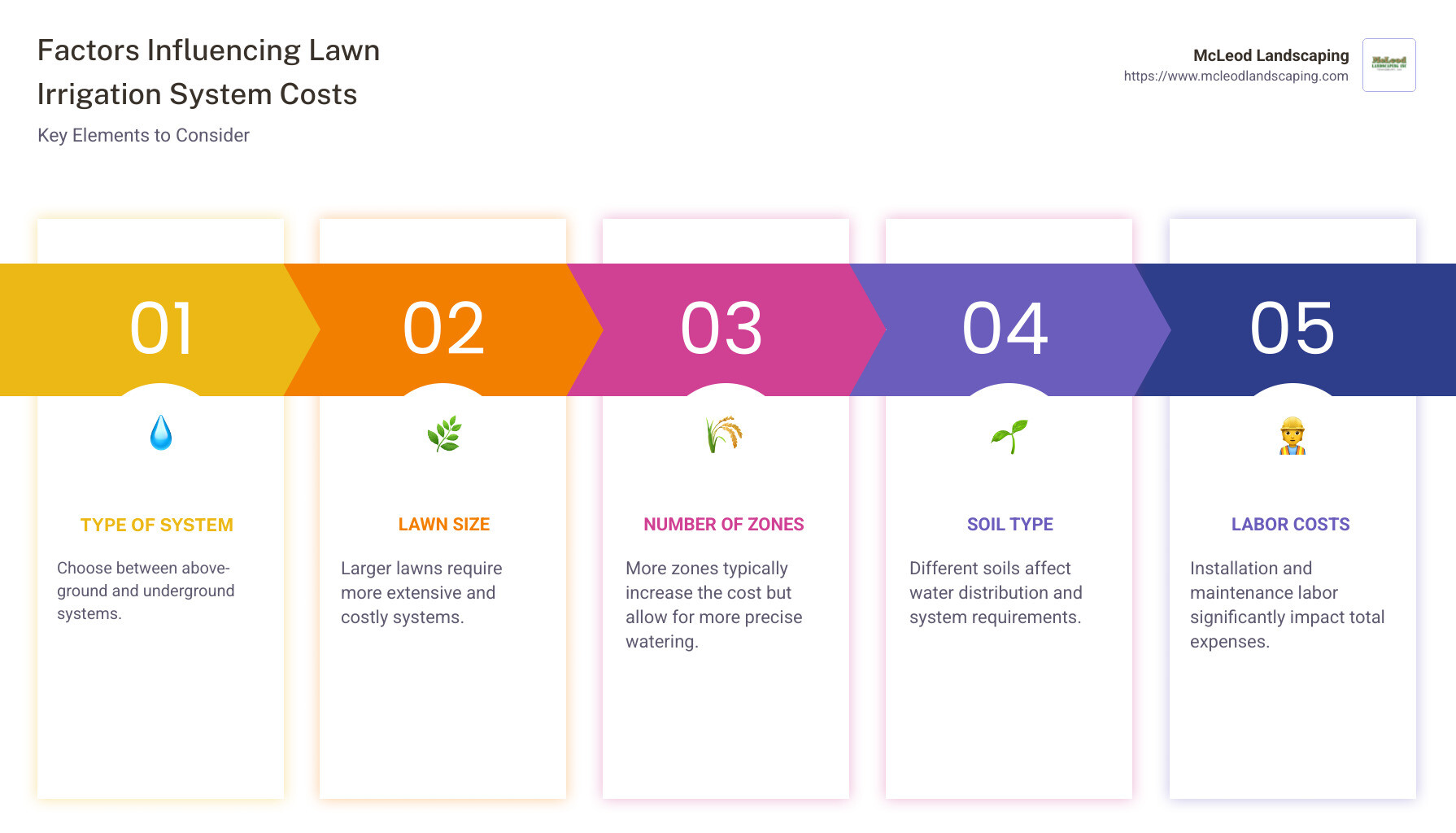
Several factors influence these costs:
Understanding these costs can help you plan and budget effectively for your lawn irrigation needs. With the right system, you can enjoy a lush, green landscape that improves your home’s curb appeal. Next, we’ll explore the factors that influence irrigation system costs in more detail.
When considering how much do lawn irrigation systems cost, several key factors come into play. Let’s break down the main elements that can affect the overall price of your system.
The size of your lawn is a significant factor. Larger lawns require more materials and labor, which naturally increases costs. For example, a lawn covering one-quarter acre might cost significantly less than a one-acre lawn. The average cost ranges from $0.20 to $1 per square foot, but larger projects often benefit from bulk discounts.
The type of sprinkler system you choose will greatly impact the cost. Above-ground systems are typically more economical, ranging from $150 to $500. However, they may not suit larger or more complex lawns. In contrast, underground systems, which offer more customization and ease of use, can range from $3,500 to $6,500. These systems are particularly beneficial for lawns over 1,000 square feet, as they allow for precise watering control.
Dividing your lawn into zones allows for custom watering, ensuring each area receives the right amount of water. Most systems have between 5 and 10 zones. More zones mean increased control but also higher costs. A single-zone system might cost between $650 and $1,000, while a seven-zone system could range from $4,550 to $7,000.
Soil type can affect installation costs, particularly for in-ground systems. Heavier soils may require more labor to dig trenches, while sandy soils might necessitate additional materials to prevent erosion. This can add to both time and expense.
Labor is a crucial part of the installation cost. On average, labor costs range from $50 to $100 per hour. Above-ground systems typically require 2 to 4 hours of labor, whereas underground systems might need 8 to 16 hours. The local cost of living can also influence these rates, with higher costs in more expensive areas.
By understanding these factors, you can better plan and budget for your lawn irrigation system. Next, we’ll dive into the different types of lawn irrigation systems available.
When it comes to keeping your lawn lush, choosing the right irrigation system is crucial. Here’s a look at the most common types of systems available:
Above-ground systems are the most budget-friendly option. They involve placing sprinklers on the surface of your lawn, connected to an outdoor faucet by a hose. These systems are easy to set up and ideal for smaller yards. However, they can be less efficient for larger areas, as they might not provide even coverage.
Pros: Low cost, easy to install and move.
Cons: Less effective for large lawns, potential for uneven watering.
In-ground systems, also known as underground systems, are more sophisticated and ideal for larger properties. These systems are installed below the surface, with sprinkler heads popping up when in use. They offer precise control over watering, dividing the lawn into zones for custom irrigation.
Pros: Efficient and customizable, minimal visual impact.
Cons: Higher installation cost, requires professional setup.
Drip irrigation systems are perfect for gardens and flower beds. They deliver water directly to the roots of plants through a network of tubes and emitters. This method is highly efficient and conserves water by minimizing evaporation and runoff.
Pros: Water-efficient, ideal for gardens and specific plant areas.
Cons: Not suitable for large lawn areas, can be more complex to set up.
Rotary sprinklers are designed for larger lawn areas. They use rotating streams of water to cover a broad radius, making them suitable for hills and slopes. These sprinklers are known for their efficiency and ability to cover large areas with less water.
Pros: Efficient coverage for large areas, reduces water waste.
Cons: May not be ideal for small or irregularly shaped lawns.
By understanding the different types of lawn irrigation systems, you can select the best option for your landscape needs. Each system has its strengths and limitations, so consider your lawn size, layout, and budget when making a decision.
Next, we’ll explore some cost-saving tips for installing irrigation systems.
When considering how much do lawn irrigation systems cost, it’s important to look at ways to save money without compromising on quality. Here are some practical tips:
DIY Installation
For smaller yards or those with a knack for home improvement, a DIY approach can be a cost-effective way to install an irrigation system. Above-ground systems are typically easier to set up on your own. You can buy a basic kit and install it with minimal tools and effort.
However, if you’re considering an in-ground system, it’s crucial to weigh the complexity. While DIY kits are available, they require significant time and effort. Mistakes can lead to water waste or a system that doesn’t work efficiently.
Professional Installation
For larger properties or in-ground systems, hiring professionals is often the best choice. They can ensure the system is installed correctly, optimizing water flow and coverage. Though the initial cost is higher, professionals bring expertise that can prevent costly errors.
Regular maintenance can extend the life of your irrigation system and save money in the long run. Here are some tips:
Conserving water not only helps the environment but also reduces your utility bills. Here are some strategies:
Efficient watering practices are crucial for maintaining a healthy lawn while keeping costs down. By choosing the right installation method, maintaining your system, and conserving water, you can enjoy a lush lawn without overspending.
Next, we’ll address some frequently asked questions about lawn irrigation systems.
Investing in a lawn irrigation system can be a smart financial decision. While the initial cost may seem high, the long-term savings on water bills and the convenience of automated watering can make it worthwhile. Smart irrigation systems use precise programming to optimize water use, reducing waste and saving money over time.
Moreover, an efficient system ensures your lawn and garden stay healthy and vibrant, which improves your property’s curb appeal. This can indirectly increase your home’s value, as potential buyers often appreciate well-maintained landscaping. Trevor Lively, President of Blue Jay Irrigation, notes that “an automatic sprinkler system makes things easy for you,” potentially allowing you to ask for a higher price when selling your home.
Estimating the cost of a lawn irrigation system involves several factors. The primary considerations include lawn size, the type of sprinkler system, and the number of zones needed. Larger areas or complex landscapes with various plant types will require more zones and potentially more expensive systems.
It’s important to also factor in local conditions like soil type and water pressure, as these can influence both installation and operational costs. For a more precise estimate, consider consulting with a professional who can assess your specific needs and provide a custom quote.
A sprinkler system can significantly improve your home’s curb appeal, which is a crucial factor in real estate. While not as flashy as a new kitchen or bathroom, a well-maintained lawn can make your property more attractive to potential buyers. According to experts, a sprinkler system can increase property value by up to 12%, depending on the property size and system type.
Additionally, the National Association of Realtors’ “2023 Remodeling Impact Report” suggests that homeowners can expect to recoup about 83% of the installation costs when selling their home. This makes installing a sprinkler system not only an investment in your home’s appearance but also a financially savvy decision.
In conclusion, a lawn irrigation system is not just about convenience; it’s a valuable addition to your home that offers both immediate and long-term benefits.
Next, we’ll dive deeper into the various types of lawn irrigation systems and their specific advantages.
Choosing the right lawn irrigation system is a crucial step toward maintaining a lush, green landscape, and McLeod Landscaping is here to help you every step of the way. With over 30 years of experience, we specialize in providing comprehensive services that cater to both residential and commercial clients in the Merrimack Valley. From initial design to installation and ongoing maintenance, we ensure your lawn remains vibrant and healthy all year round.
Why Choose McLeod Landscaping?
Investing in a lawn irrigation system with McLeod Landscaping not only improves your property’s curb appeal but also contributes to long-term savings and environmental conservation. Ready to transform your outdoor space? Get in touch with us today to learn more about our services and how we can help you achieve a beautiful, sustainable lawn.
Contact McLeod Landscaping today at (978) 640-0957 or click here to schedule a consultation for retaining wall installation. Let our experienced team design and install a functional and visually appealing retaining wall that enhances your landscape.


1881 Main St Unit 1, Tewksbury, MA 01876