
When considering a landscaping investment, how much does a landscape retaining wall cost is a key question you’ll likely ask. Generally, the cost to build a retaining wall ranges from $3,565 to $9,645 nationwide. This includes factors such as the cost of engineering, materials, labor, and additional costs for making the wall earthquake-resistant or dealing with high-cost living areas.
But why invest in a retaining wall? Simply put, retaining walls offer essential benefits that go beyond aesthetics. They prevent soil erosion, manage water runoff, and can transform unusable sloped areas into functional, flat spaces. In regions like the Merrimack Valley, where soil stability and weather conditions pose significant challenges, retaining walls become a practical necessity, not just a design choice.
I’m Scott McLeod, owner of McLeod Landscaping, with over 30 years of experience in delivering top-quality landscaping solutions. In this guide, we will break down everything you need to know about how much does a landscape retaining wall cost, along with useful tips and considerations to ensure you get the best value for your investment.
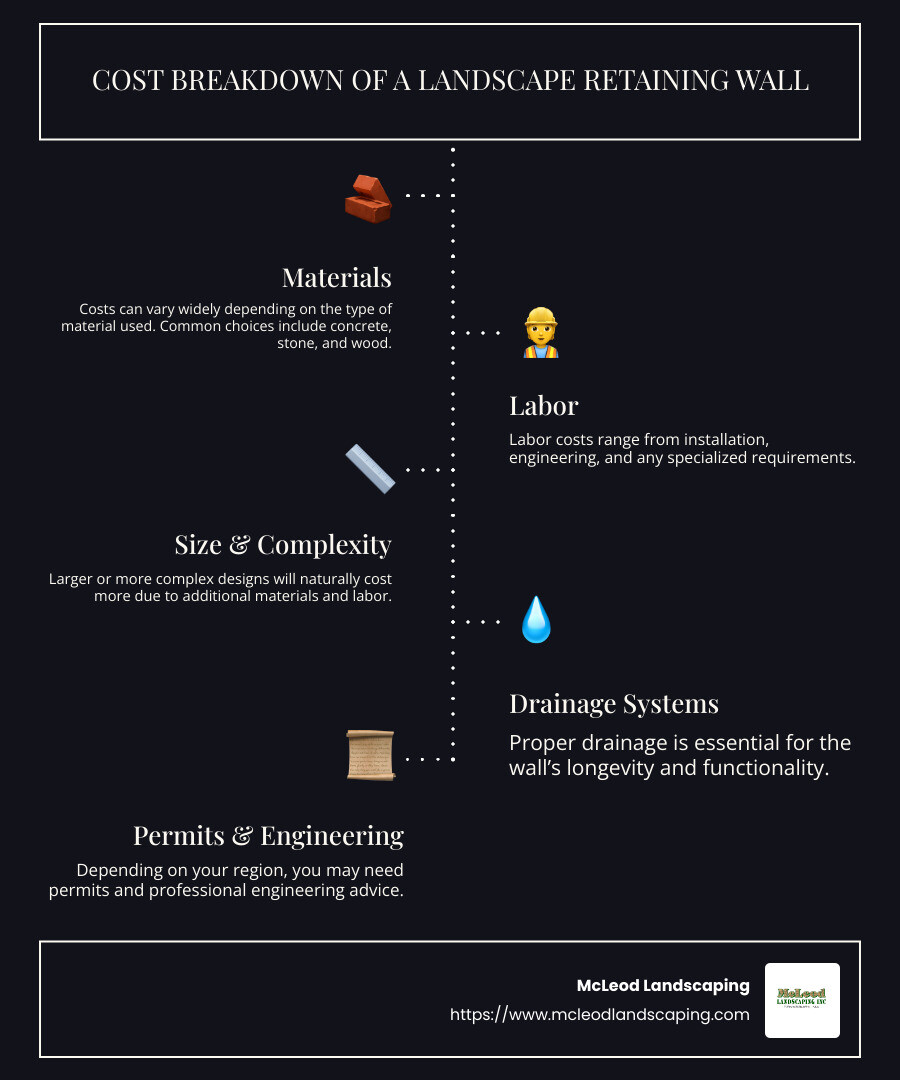
Key terms for how much does a landscape retaining wall cost:
– boulder walls landscaping
– landscape retaining wall ideas
– landscape wall stone
When thinking about how much does a landscape retaining wall cost, it’s important to understand the basics first. Let’s explore the types, functions, and materials of retaining walls.
There are several types of retaining walls, each serving different purposes and aesthetics:
Retaining walls serve several key functions:
The choice of material can significantly impact both the cost and longevity of a retaining wall. Here are some common materials:
| Material | Typical Cost per Square Foot | Lifespan | Description |
|---|---|---|---|
| Wood | $13 – $35 | 20 – 40 years | Rustic look, less durable |
| Concrete | $20 – $40 | 50 – 100 years | Durable and versatile |
| Natural Stone | $20 – $90 | 40 – 100+ years | Aesthetic and strong |
| Interlocking Blocks | $15 – $35 | 50 – 100 years | Easy to install |
| Vinyl | $10 – $15 | Up to 50 years | Affordable and durable |
Wood is one of the cheapest options but requires more maintenance. Concrete and natural stone are more durable but come at a higher cost. Interlocking blocks offer a balance between ease of installation and cost. Vinyl is a budget-friendly option with decent longevity.

The type and material you choose should align with your needs and budget. For example, if you have a steep slope and need a strong, long-lasting wall, concrete or natural stone might be the best choice. If you’re looking for an easy DIY project, interlocking blocks might be ideal.
The cost isn’t just about materials. Labor, permits, and engineering also play significant roles. For a detailed cost breakdown, check out our next section on Factors Influencing the Cost of Your Retaining Wall.
Understanding these basics can help you make an informed decision and ensure that your retaining wall serves both functional and aesthetic purposes for years to come.
When considering how much does a landscape retaining wall cost, several factors come into play. Let’s break it down into average costs, material costs, labor costs, and other influencing factors.
The national average cost to install a retaining wall is $6,300. However, prices can vary widely:
Several factors influence the overall cost of a retaining wall:
Material choice significantly impacts your budget. Here’s a breakdown of common materials and their typical costs per square foot:
| Material | Typical Cost per Square Foot |
|---|---|
| Vinyl | $10 – $15 |
| Gabion | $10 – $40 |
| Wood | $13 – $35 |
| Interlocking Blocks | $15 – $35 |
| Cinder Blocks | $15 – $40 |
| Landscape Blocks | $15 – $60 |
| Brick | $17 – $43 |
| Railroad Tie | $18 – $25 |
| Aggregate | $20 – $25 |
| Rammed-Earth Mix | $20 – $30 |
| Poured Concrete | $20 – $40 |
| Natural Stone | $20 – $90 |
| Steel | $42 – $137 |
| Corten Steel | $75 – $150 |
For example, vinyl and gabion walls are among the cheapest options, while natural stone and corten steel are on the higher end.
Labor costs vary based on location and complexity of the project. In areas with a high cost of living, labor costs can be significantly higher. Professional installation offers benefits such as:
In West Georgia, the cost of constructing a retaining wall ranges from $2,500 to $5,000 on the low end and can go up to $20,000 or more for larger, more complex projects. The choice of materials, such as manufactured block versus boulders, also impacts the cost.
By understanding these cost factors, you can better plan your budget and ensure your retaining wall project meets both your functional and aesthetic needs.

Next, we’ll dive into the Factors Influencing the Cost of Your Retaining Wall to give you a detailed understanding of what to expect.
When considering how much does a landscape retaining wall cost, several key factors come into play. Let’s break down the most important ones:
The size and complexity of your retaining wall are major cost drivers. A taller or longer wall requires more materials and labor. Complex designs with curves or multiple tiers also increase costs. For example, a simple 4-foot high wall will be less expensive than a multi-tiered, curved wall of the same height.
Your choice of material significantly affects the overall cost. Different materials come with different price tags:
Each material has its pros and cons. For instance, steel is durable but not recommended for coastal areas due to rust, while natural stone is aesthetically pleasing but more costly.
Labor costs vary by location and complexity. In high cost-of-living areas, labor can be pricier. Professional installation offers several benefits:
In West Georgia, for example, labor costs alone can range from $2,500 to $20,000 depending on the project scope.
Proper drainage is crucial to prevent water buildup behind the wall, which can cause structural damage. Installing drainage systems typically costs between $2 and $10 per square foot. This is an essential expense to ensure the wall’s longevity and effectiveness.
Permits are usually required for walls taller than 4 feet and can cost between $40 and $450. Some municipalities may even require permits for shorter walls. Additionally, if your wall needs to be engineered for extra support—like in earthquake zones or on steep slopes—expect to pay extra for engineering services, which can add 5% to 10% to the total cost.
By understanding these factors, you can better estimate your budget and ensure that your retaining wall project is both functional and aesthetically pleasing.
Next, we’ll dive into Estimating Your Retaining Wall Project to give you a detailed understanding of what to expect.
When estimating how much does a landscape retaining wall cost, you’ll need to consider several key components. Let’s look at how to calculate square footage, select materials, estimate labor, and account for additional costs.
First, determine the square footage of your wall. This is crucial as most costs are calculated per square foot. Use this simple formula:
Length (in feet) x Height (in feet) = Square Footage
For example, a wall that is 20 feet long and 4 feet high would be:
20 ft x 4 ft = 80 sq. ft.
Choosing the right material is essential for both aesthetics and budget. Here’s a quick look at some common options:
Example: For an 80 sq. ft. wall made of interlocking blocks:
80 sq. ft. x $25 (average cost) = $2,000
Labor costs can be a significant part of your budget. They often vary by region and project complexity. Here’s what to expect:
Example: If a project requires 40 hours of basic labor at $60 per hour:
40 hours x $60 = $2,400
Don’t forget to factor in extra costs such as drainage, waterproofing, and backfill.
Example: For an 80 sq. ft. wall with drainage and waterproofing at an average of $6 per sq. ft. each:
80 sq. ft. x $6 (drainage) = $480
80 sq. ft. x $6 (waterproofing) = $480
Total Additional Costs: $480 + $480 = $960
Let’s sum up the costs for an 80 sq. ft. wall made of interlocking blocks:
Total Estimated Cost: $2,000 + $2,400 + $960 = $5,360
By following these steps, you can get a clear estimate for your retaining wall project. This will help you plan your budget and avoid unexpected costs.
Next, we’ll explore Saving on Your Retaining Wall Without Compromising Quality to help you make smart choices.
Building a retaining wall can be a significant investment, but there are ways to save money without sacrificing quality. Let’s explore some strategies to help you achieve this.
DIY Projects: Some retaining walls can be built as DIY projects, especially those under 3 feet high made from materials like railroad ties or dry stone. This option can save you on labor costs, but it’s crucial to ensure proper installation to avoid future issues.
However, building a retaining wall requires expertise. Improper installation can compromise the wall’s structural integrity, leading to costly repairs. If you’re not confident in your skills, hiring a professional is a safer bet.
Professional Installation: Hiring professionals, like McLeod Landscaping, ensures faster installation, access to superior materials, and a variety of wall designs. Professionals also handle complex tasks like drainage and soil retention, which are critical for the wall’s longevity.
Choosing the right materials can significantly impact your budget. Here’s a quick comparison of some common materials:
Pro Tip: Repurposing materials can save money. Look around your property for stones, bricks, or old timbers that can be reused.
If your budget is tight, consider phasing your project. This approach allows you to spread out the costs over time.
Example: Start by building the most critical section of the wall first. Once that phase is complete and you’ve saved more money, move on to the next section. This method ensures you don’t compromise on quality while managing your budget effectively.
Opting for a reputable company like McLeod Landscaping can be a smart move. They offer:
By following these strategies, you can build a retaining wall that meets your needs and fits your budget. Up next, we’ll wrap up our guide and provide some final thoughts.
Continue to Conclusion
Building a landscape retaining wall is a smart investment for your property. It not only improves your yard’s aesthetics but also prevents soil erosion and improves functionality. However, understanding how much does a landscape retaining wall cost and the factors influencing this cost is crucial for planning your project effectively.
When it comes to building a retaining wall, working with experienced professionals like McLeod Landscaping can make all the difference. With over 30 years of experience in landscape design, installation, and maintenance, we provide comprehensive services custom to your needs.
Our team ensures:
Don’t leave your retaining wall project to chance. Contact McLeod Landscaping today to schedule a consultation and take the first step towards changing your outdoor space. Let us help you create a landscape that you and your family will enjoy for years to come.
By understanding the costs and benefits, and choosing a reputable company like McLeod Landscaping, you can ensure your retaining wall project is a success. Ready to get started? Reach out to us today!
Contact McLeod Landscaping today at (978) 640-0957 or click here to schedule a consultation for retaining wall installation. Let our experienced team design and install a functional and visually appealing retaining wall that enhances your landscape.


1881 Main St Unit 1, Tewksbury, MA 01876