

Wondering how much is lawn irrigation system installation going to set you back? Based on national averages, most homeowners invest between $1,640 and $3,566, with a typical project landing around $2,500. But like any home improvement, the final number depends on your specific property and needs.
| Cost Factor | Typical Range |
|---|---|
| Basic Installation | $1,640 – $3,566 |
| Cost Per Square Foot | $0.20 – $1.00 |
| Cost Per Zone | $500 – $1,000 |
| Above-Ground Systems | $425 – $625 per ¼ acre |
| In-Ground Systems | $1,720 – $3,454 per ¼ acre |
| Professional Labor | $50 – $100 per hour |
A properly designed irrigation system does far more than just water your lawn while you sleep. It’s a thoughtful investment in your property’s health and value. When I sit down with homeowners to discuss their irrigation needs, they’re often surprised by all the factors that influence the bottom line. Your lawn’s size and layout, soil conditions, and the system type you choose all play important roles in determining what you’ll actually pay.
The good news? Today’s irrigation technology has come a long way from the wasteful sprinklers of yesteryear. Modern systems offer smart controllers, efficient heads, and zone-specific watering that can actually save you money on water bills while keeping your landscape lush. Whether you’re leaning toward a simple above-ground setup for a small garden or considering a fully automated in-ground system for your entire property, the choices you make now will impact both your lawn’s appearance and your monthly expenses for years to come.
I’m Scott McLeod, owner of McLeod Landscaping, and after overseeing hundreds of irrigation installations throughout the Merrimack Valley, I’ve seen how how much is lawn irrigation system installation costs can vary based on each property’s unique characteristics and our New England conditions.
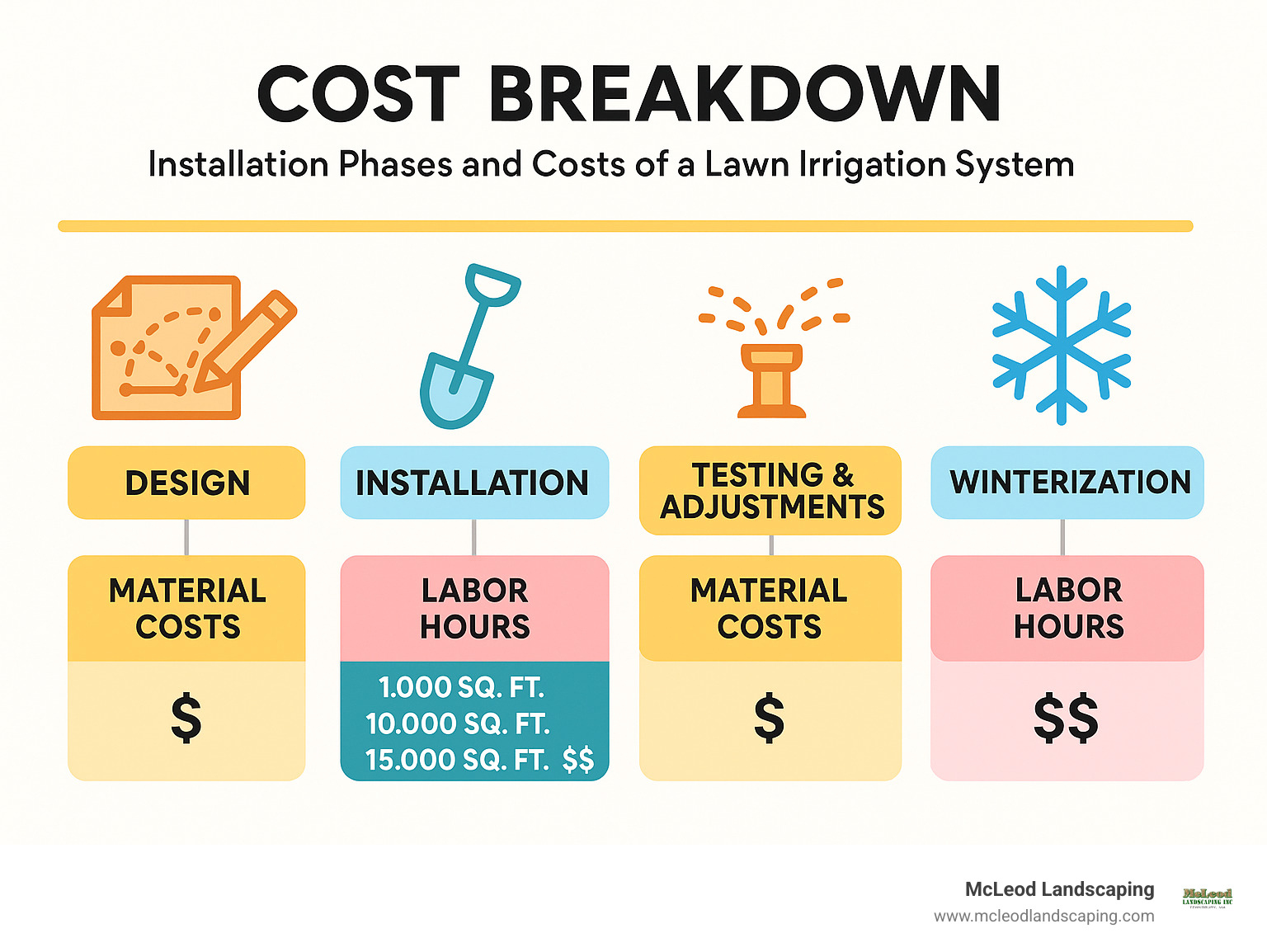
As you consider your irrigation options, you might find it helpful to explore some specific system types. Our most requested services include Automatic Underground Lawn Sprinklers for hassle-free maintenance, various types of lawn irrigation systems to match your specific landscape needs, and water-efficient lawn drip irrigation system options for targeted watering that reduces waste.
Planning to keep your lawn lush and green with an irrigation system in 2025? Let’s talk about what you can expect to invest. Most homeowners find themselves spending between $1,640 and $10,000 for a complete irrigation system installation, with the national average settling around $2,500. Of course, your specific property’s needs will ultimately determine where you land on this spectrum.
Breaking it down by square footage, you’re typically looking at between $0.20 and $1.00 per square foot for standard installations. This range covers basic materials and normal installation conditions, but complex layouts or premium components will push you toward the higher end or beyond.
One of the biggest factors affecting your bottom line will be the number of irrigation zones your property needs. Each zone (an independently operating section of your irrigation system) typically adds $500 to $1,000 to your project total. These zones are crucial for tailoring watering schedules to different areas of your landscape – your sun-baked front lawn might need different treatment than your shaded garden beds!
How much is lawn irrigation system installation really depends on whether you’re going above or below ground. For a typical quarter-acre property (around 10,890 square feet), an above-ground system might cost between $425 and $625 for materials alone. Most homeowners, however, prefer the cleaner look and added functionality of underground systems, which for that same quarter-acre would run between $1,720 and $3,454 for materials, plus the labor to install it all.
As Charlotte Granville, a home remodeling specialist, points out: “An above-ground system costs around $1,800 to $2,000, including labor and materials.” This makes it a budget-friendly option if you’re working with limited funds or just need a temporary solution.
Underground systems might hit your wallet harder initially, but they offer serious advantages in terms of curb appeal, functionality, and property value. “Most underground systems are also automatic,” explains Mallory Micetich, a home expert, “so you don’t have to worry about remembering to water your lawn.” That convenience factor is worth a lot to busy homeowners!
On the smaller end of the spectrum, a basic irrigation system for a tiny 1,000-square-foot yard might cost as little as $1,130. These micro-lawn installations typically need fewer zones and simpler designs, making them much more affordable for townhouse owners or those with limited green space.
For the grand estates of an acre or more, prepare for a more substantial investment—potentially $9,840 to $12,600 or beyond. These extensive systems need numerous zones, longer pipe runs, more sprinkler heads, and often include premium features like smart controllers and moisture sensors that optimize water usage.
The luxury automation options can really lift costs. As one landscaping professional recently shared with us: “We just completed a one-acre installation with full smart home integration, weather-responsive controllers, and individual plant sensors that came in at just over $15,000. The homeowner considered it worth every penny for the convenience and water savings.”
These figures represent average costs based on internet data, not actual pricing from McLeod Landscaping. Your specific property’s needs, local conditions in the Merrimack Valley, and current material costs will all influence your final investment.
Ever wonder why your neighbor’s irrigation quote was so different from yours? Let’s explain what really drives the costs behind keeping your lawn lush and green.
Your property’s dimensions play the starring role in determining costs. Larger lawns naturally require more of everything—more pipes snaking underground, more sprinkler heads popping up at dawn, and more hours of installation labor. The good news? There’s a silver lining to having a bigger lawn—the per-square-foot cost typically decreases as your lawn size increases, thanks to economies of scale.
Professional installers don’t just randomly place sprinklers. They create detailed property maps ensuring what’s called “head-to-head coverage”—where the spray from one sprinkler reaches all the way to the next sprinkler. This careful overlap prevents those frustrating dry patches but requires precise calculation.
If your yard resembles more of an abstract painting than a rectangle, prepare for some additional costs. Irregular shapes, curved borders, and yards with lots of trees, garden beds or stone features need more complex designs and often additional zones, which impacts both materials and labor.
What’s beneath your feet matters more than you might think. Rocky soil—which we encounter frequently here in the Merrimack Valley—can increase trenching expenses by 20-50% compared to properties with looser, sandier soil. When your installer hits granite ledge instead of soft loam, those extra hours add up.
Properties that aren’t perfectly flat present their own challenges:
– Sloped areas often need French drains (averaging $10-$65 per linear foot)
– Special pressure-compensating sprinkler heads to prevent water from just running downhill
– Additional zones to ensure water soaks in rather than creating mini-rivers
Standard trenching for irrigation pipes typically runs about 8 inches below the surface. When deeper trenching becomes necessary—whether to steer around obstacles or provide extra frost protection—expect additional costs of $4-$12 per linear foot.
When your property requires heavy equipment to steer difficult terrain or remove obstacles, many contractors add a surcharge of $0.20-$0.40 per square foot. That Bobcat rental isn’t free, after all!
Before a single hole is dug, professionals will test your property’s water pressure (PSI) and flow rate (gallons per minute). These crucial measurements determine how many sprinkler heads can operate simultaneously and how many zones your system will need. Poor water pressure might require additional equipment or system redesign.
How much is lawn irrigation system installation is also affected by safety requirements. A backflow prevention device—which keeps irrigation water from flowing backward into your drinking water—is both critical for safety and required by most local codes. These devices typically cost between $250 and $550, plus installation.
Local permitting costs vary widely, ranging from $35 to $200 depending on your municipality. Here in Massachusetts, particularly in the Merrimack Valley, permits are strictly enforced and often require specific backflow prevention measures.
As landscape architect Kody Ketterling notes: “From what we are told, a sprinkler will improve the value between $5,000 and $15,000, depending on the size of property and system.” With potential returns like that, navigating the permit process becomes a small but necessary step in your irrigation journey.
When planning your irrigation system, understanding how costs scale with property size helps you budget realistically. Let’s look at what typical homeowners might expect to pay:
For a ¼-acre lot (about 10,890 square feet), you’ll likely need 3-5 irrigation zones, with total costs ranging between $2,460 and $4,500. This represents the most common residential installation we see throughout the Merrimack Valley.
Moving up to a ½-acre property (21,780 square feet), your system will typically require 5-8 zones, pushing costs into the $4,920 to $7,500 range. The larger area doesn’t just mean more materials—it often introduces more complexity in terms of coverage needs.
For 1-acre properties (43,560 square feet), expect to need 8-12 zones with costs between $9,840 and $12,000. At this size, proper zone planning becomes critical for maintaining adequate water pressure throughout the system.
Each additional zone adds approximately $750 to $1,000 to your total investment. These zones aren’t arbitrary—they’re carefully planned based on water pressure capabilities, different plant watering needs, variations in sun exposure, and even soil differences across your property.
When contractors discuss how much is lawn irrigation system installation, they might quote prices per square foot—typically ranging from $0.20 on the low end to $1.00 on the high end. This wide range reflects several variables:
The complexity of your system design, the quality of components selected, local labor rates, and any installation challenges unique to your property all influence where your project falls within this range.
Zone pricing offers a clearer picture of actual costs. Each zone in your system requires several components: a valve (typically $20-$40), a protective valve box ($10-$30), wiring to connect to your controller, and multiple sprinkler heads that can range from $2 to $40 each depending on type and quality.
As one of our contractors often explains to customers: “We price by zone rather than square footage because a small, complex garden area with many obstacles might require the same number of zones as a much larger open lawn area.” This zone-based approach ensures you’re paying for the actual complexity of your system, not just its size.
Different irrigation approaches offer varying benefits depending on your landscape needs and budget:
Drip Irrigation systems cost between $1.70 and $4.80 per square foot and excel at delivering water directly to plant roots. They’re incredibly water-efficient, significantly reduce weed growth, and minimize disease spread by keeping foliage dry. While perfect for garden beds, shrubs, and container plants, they aren’t suitable for traditional lawns and require more regular maintenance checks.
Automatic In-Ground Systems typically run $0.50 to $1.00 per square foot and represent the gold standard for comprehensive lawn irrigation. They remain completely invisible when not in use, offer full automation options, and genuinely increase your property value. The higher upfront investment and need for professional installation are offset by their longevity and performance.
Above-Ground Systems are the budget-friendly option at $0.20 to $0.48 per square foot. They make sense for small yards, temporary solutions, or when you’re working with tight budget constraints. While they’re more DIY-friendly and don’t require trenching, they do create visible components that can become trip hazards and typically have shorter lifespans.
Your sprinkler head selection also impacts both performance and price:
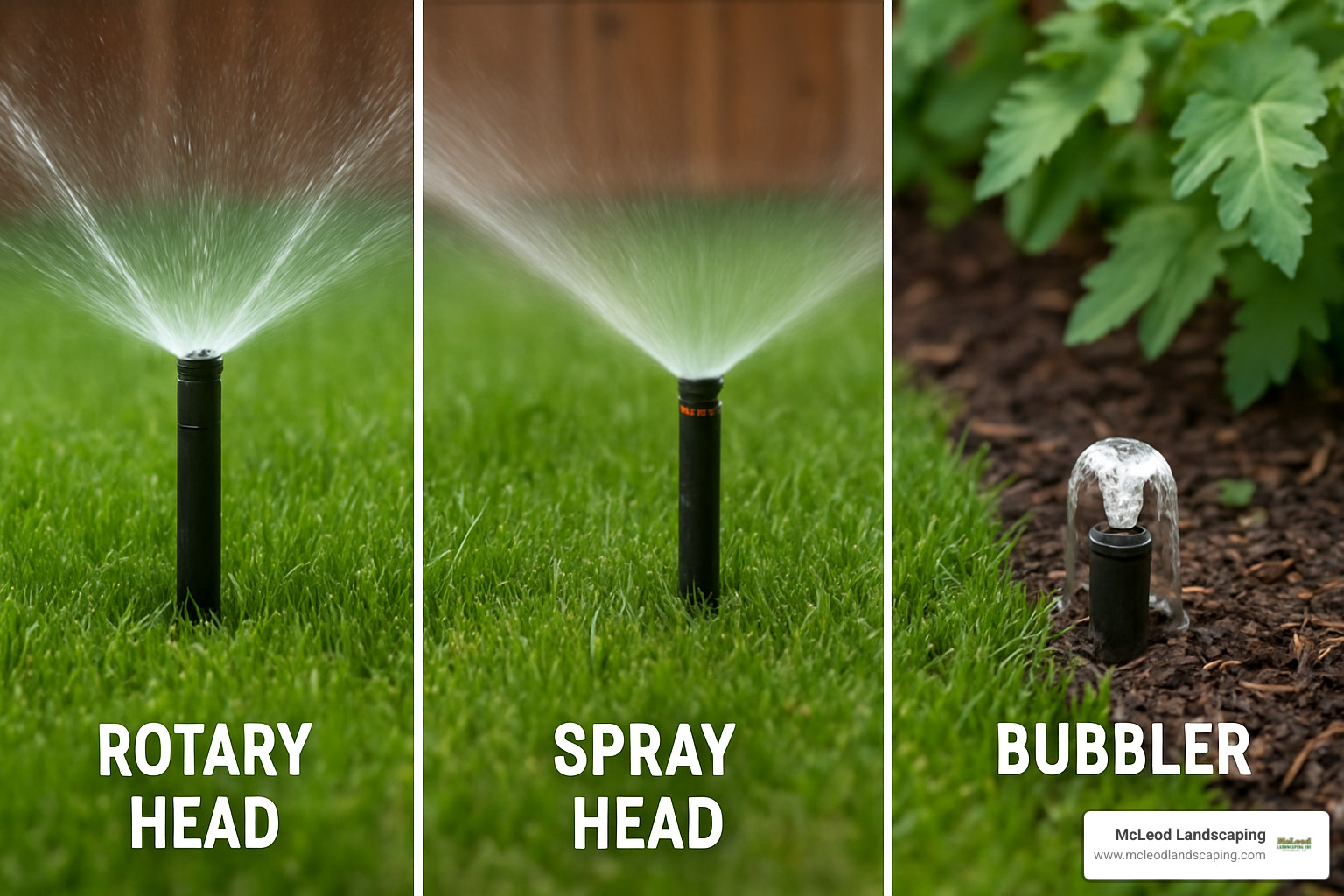
– Rotary heads ($5-$25 each) cover impressive 15-50 foot ranges, making them ideal for larger lawn areas
– Spray heads ($2-$15 each) work best for smaller or irregularly shaped areas with their 4-15 foot coverage
– Bubblers ($3-$10 each) deliver gentle, focused watering perfect for trees and shrubs
The technology you choose matters too. According to scientific research on smart controllers saving water, weather-based irrigation controllers can reduce water usage by 15% or more compared to traditional timers. For many homeowners, these smart systems pay for themselves through water savings while preventing thousands of gallons of waste annually.
When planning your irrigation system budget, don’t forget to account for the extras that can significantly impact both initial costs and long-term value. These additional expenses often surprise homeowners who focus solely on basic installation prices.
Today’s irrigation technology goes well beyond simple timers and sprinklers. Smart add-ons can transform a basic system into a water-saving powerhouse that practically thinks for itself.
Rain sensors ($25-$50) prevent your system from watering during or after rainfall—a simple addition that prevents the neighborhood eye-roll of seeing sprinklers running during a downpour! Soil moisture sensors ($40-$100) take this intelligence a step further by measuring actual ground moisture and preventing watering until your lawn truly needs it.
The real game-changer comes with Wi-Fi controllers ($150-$300) that connect to weather forecasts and adjust watering schedules automatically. As Tom, one of our Merrimack Valley clients, told us: “My smart controller paid for itself in the first summer. My water bill dropped by almost 25% compared to the previous year.”
In Massachusetts, many municipalities offer water-conservation rebates that can offset $100-$500 of your installation costs. These programs reward homeowners for installing water-efficient systems while helping you comply with increasingly strict drought regulations. The paperwork might seem tedious, but the savings are real!
Owning an irrigation system in New England means preparing for all four seasons—including our notorious winters.
Winterization is non-negotiable in the Merrimack Valley, costing between $50-$230 annually depending on system size. This process uses compressed air to blow all water out of your pipes and components, preventing the freeze-thaw damage that could otherwise lead to costly spring surprises. Skip this step at your peril—a single cracked valve or burst pipe can cost far more than years of proper winterization.
Spring start-up ($75-$150) brings your system back to life after winter hibernation. This includes pressure testing, leak checks, head adjustments, and reprogramming your controller for the growing season. Many of our clients tell us this professional once-over gives them peace of mind for the season ahead.
Throughout the year, you might need annual tune-ups ($130-$400) to keep everything running optimally. These maintenance visits catch small issues before they become expensive problems. Common repairs include replacing sprinkler heads ($2-$40 each), fixing leaky valves ($20-$40 plus labor), or addressing broken pipes ($5-$15 per foot plus labor).
“I learned the hard way that skipping maintenance costs more in the long run,” shares Sarah from Andover. “One missed winterization led to three cracked valves and a flooded side yard when we turned the system back on.”
The good news? A quality irrigation system can last 20+ years with proper care, making these ongoing investments well worth protecting your initial expenditure. Many homeowners find that the combination of reduced water bills, increased property value, and the simple joy of a consistently green lawn more than justifies these maintenance costs.
The best time to schedule services like winterization is before the rush—early fall for winterization and late winter for spring start-ups will often get you better pricing and more flexible scheduling options.
The lure of saving money often tempts homeowners toward DIY irrigation installation. Materials for a typical DIY system might run between $1,500 and $2,000, which seems attractive compared to the $2,500-$3,500 professional installation price tag.
But here’s the reality check: labor typically makes up about 60% of professional installation costs, and what looks like savings on paper doesn’t always translate to actual savings in practice. As one of our clients once told me with a laugh, “I thought I was being clever doing it myself until I hit my third unmarked pipe!”
When weighing DIY against professional installation, consider both sides of the equation carefully. DIY irrigation projects can indeed save you $1,000-$1,600 on labor costs while giving you complete control over the installation process and timeline. For handy homeowners with plenty of free time and some plumbing experience, this might be appealing.
However, those potential savings come with significant trade-offs. You’ll have no warranty protection if something goes wrong, and you’re taking on the risk of costly mistakes that could damage your property or waste water. A typical installation requires 16-40 hours of labor—that’s several weekends of backbreaking work digging trenches and connecting pipes.
Don’t forget to factor in equipment rental costs ($75-$200 daily for trenchers and other specialized tools), the headaches of navigating permit applications yourself, and the potential negative impact on your home’s resale value if the system isn’t installed to professional standards.
Professional installation brings peace of mind through warranty protection (typically 1-5 years), expert system design, proper permitting handled for you, and completion in just 1-2 days for most properties. Professionals also typically use higher-quality components and their work can increase your home’s value by up to 12%.
The main drawbacks of going professional are the higher upfront cost, potential scheduling constraints, and slightly less control over component selection—though reputable companies like ours will always consult with you on these choices.
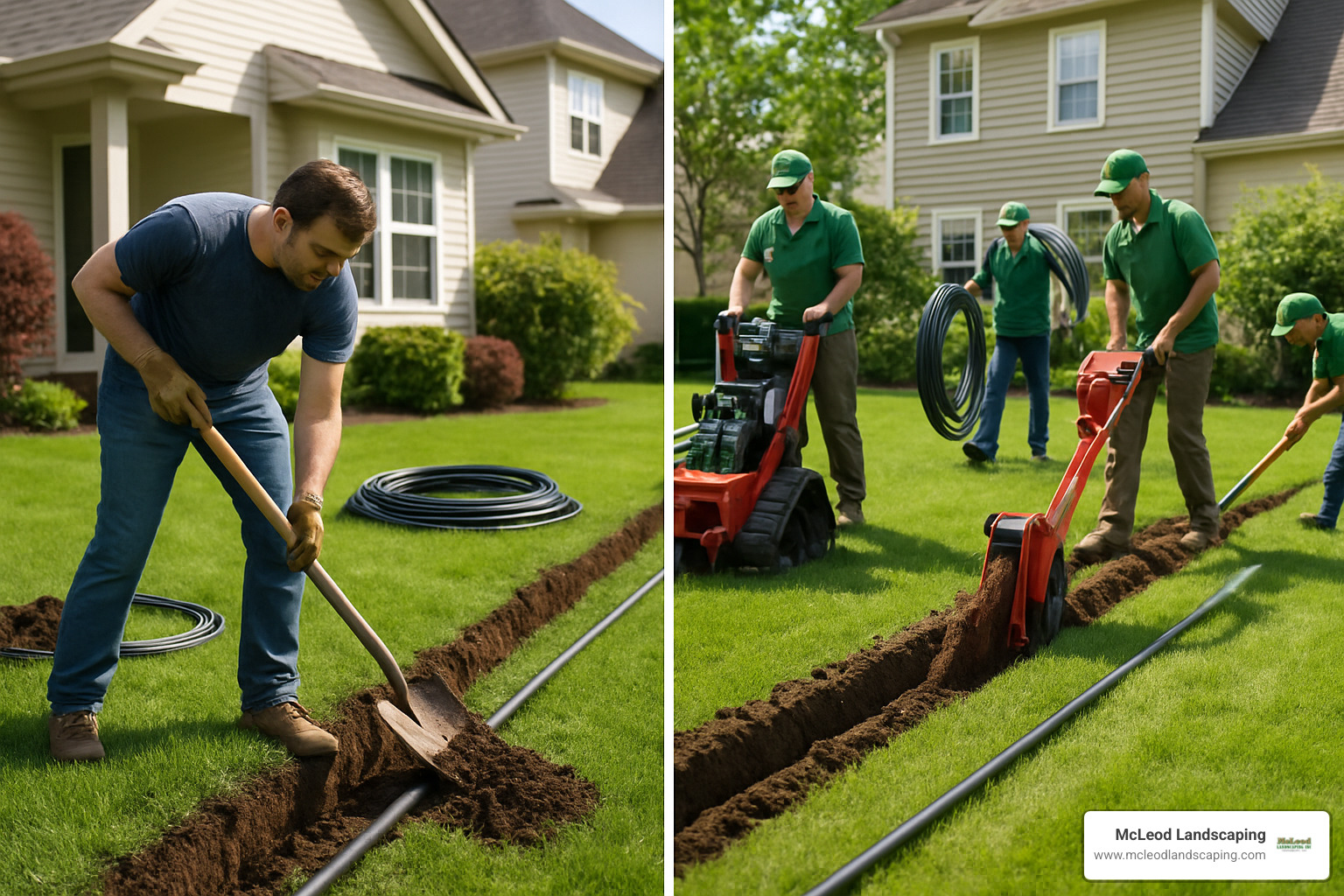
I’ve seen countless DIY irrigation projects that ended up costing more than if the homeowner had hired a professional from the start. One homeowner shared their experience: “I tried the DIY route and spent a weekend digging trenches, only to have issues with water pressure and coverage. I ended up hiring a pro to fix my mistakes, which cost more than if I’d hired them from the start.”
Shallow trenching is perhaps the most common DIY mistake. Without proper equipment, it’s tempting to dig trenches only 4-6 inches deep instead of the recommended 8-12 inches. These shallow pipes are vulnerable to damage from lawn aerators and can freeze during harsh Merrimack Valley winters, leading to costly repairs.
Mismatched sprinkler heads create another headache. Professional designers carefully match precipitation rates within zones to ensure even watering. When DIYers mix different head types, some areas get soaked while others remain parched, leading to patchy lawns and wasted water.
Failed inspections can quickly turn your budget upside down. Local codes in Massachusetts have specific requirements for backflow prevention devices, pipe materials, and installation depths. When inspectors flag these issues, the resulting modifications can cost hundreds or even thousands to correct.
When DIY systems inevitably develop problems, emergency repair calls typically cost $100-$150 per hour, often with minimum service charges. These unexpected expenses can quickly eliminate any initial savings you thought you were getting.
For more detailed information about irrigation system installation costs and considerations, visit our page about the Cost to Install Lawn Sprinkler System.
When homeowners ask me about irrigation systems, one of their biggest questions is always about the return on investment. I’m happy to tell them that installing a quality sprinkler system isn’t just an expense—it’s a smart investment that pays dividends in multiple ways.
Let’s talk real numbers: According to industry data, a professionally installed irrigation system typically yields an ROI of 83%-86% when selling your home. In practical terms, this means that a $3,000 system could add approximately $2,500 to your home’s value right away. The National Association of Realtors Research Department backs this up with their own research showing an 86% return on investment for sprinkler installations.
Property value increases happen because buyers recognize the value of having a maintenance system already in place. As one real estate professional told me, “A sprinkler system is not an obvious home improvement choice to increase curb appeal, but it can do magic.” Buyers appreciate not having to worry about installing a system themselves.
Curb appeal gets an immediate boost with a properly irrigated lawn. Those brown patches and uneven growth disappear, replaced by lush, consistent greenery that creates a powerful first impression. Landscape architect Kody Ketterling explains it well: “From what we are told, a sprinkler system will improve the value between $5,000 and $15,000, depending on the size of property and system.”
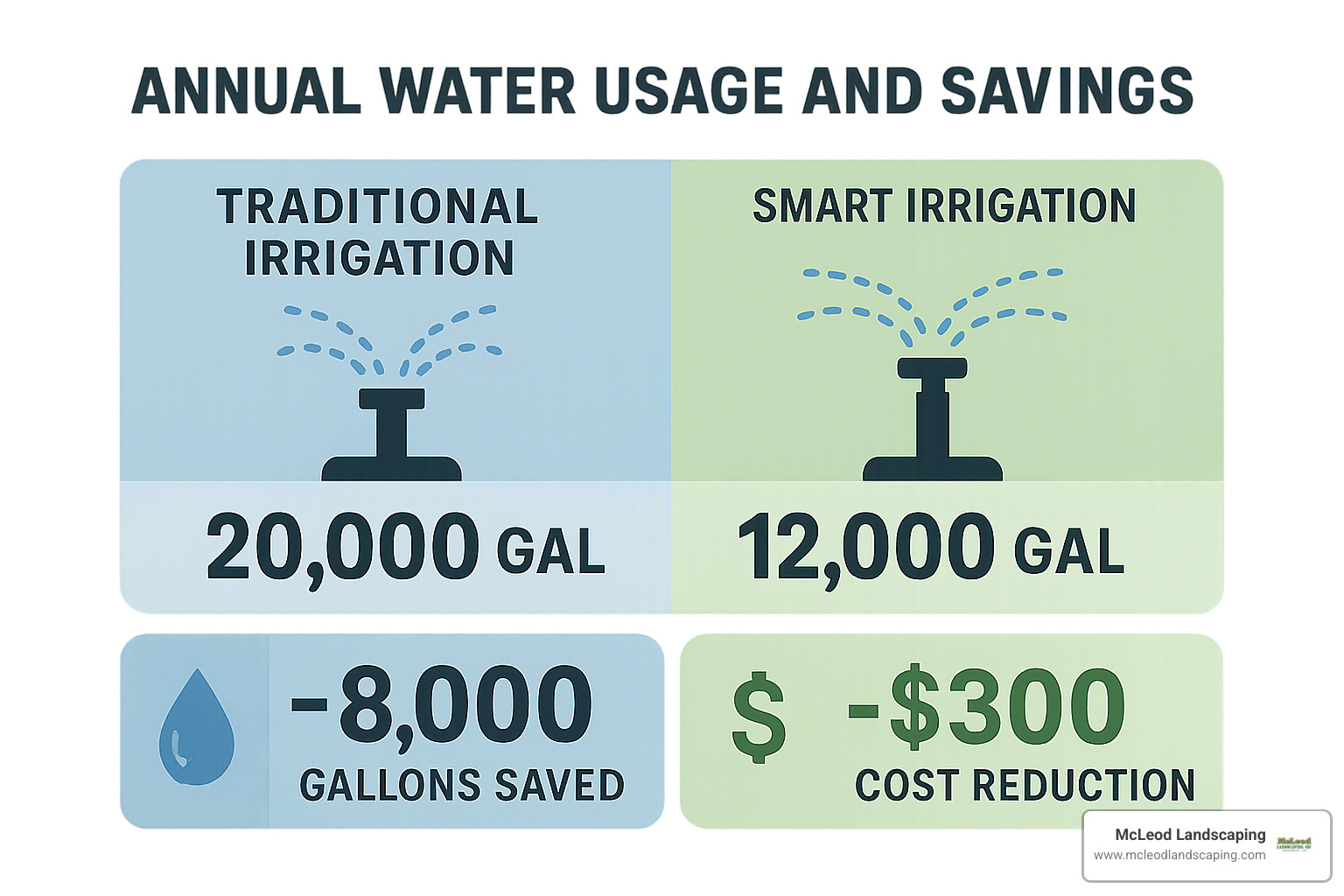
Perhaps most surprising to many homeowners is the significant water conservation benefit. Modern smart irrigation systems can reduce outdoor water use by up to 30%, according to scientific research on ROI data. For the average household, this translates to savings of $200-$300 annually on water bills—money that stays in your pocket year after year.
For those in areas with drought compliance requirements (which are becoming more common), automated systems with rain sensors and smart controllers ensure you stay within regulations while maintaining lawn health. This helps you avoid potential fines while keeping your landscape looking its best.
The beauty of modern irrigation technology is how environmental benefits directly translate into financial savings. It’s truly a win-win situation.
Reduced runoff is a major advantage of properly designed systems. When water stays where it’s needed instead of flowing into storm drains, you can reduce water bills by 15-20%. This is particularly relevant in the Merrimack Valley, where water conservation efforts continue to gain importance.
Smart scheduling through weather-based controllers makes a tremendous difference. These systems adjust watering times based on local conditions, potentially saving over 7,000 gallons and $430+ per year compared to traditional timers. Your system won’t run during rainstorms or when the soil already has adequate moisture.
When calculating the payback period for how much is lawn irrigation system installation, most homeowners find they recoup their investment within 3-7 years. This calculation includes water bill savings, reduced lawn replacement costs, increased property value, and even lower fertilizer needs (since watering is more efficient, fertilizer isn’t washed away as quickly).
One of my clients summed it up perfectly: “Our smart irrigation system paid for itself in just over four years through water savings alone. The improved appearance of our lawn was an immediate bonus.”
Beyond the numbers, there’s also the peace of mind that comes with knowing your landscape is receiving consistent care without your constant attention. That’s a benefit that’s harder to quantify but makes a real difference in quality of life—especially during hot summer months when manual watering becomes a time-consuming chore.
Figuring out how many irrigation zones your yard needs isn’t as complicated as it might seem. Your water pressure plays a huge role here—if you’ve got lower pressure (which is common in parts of the Merrimack Valley), you’ll likely need more zones to make sure every part of your lawn gets adequate water.
Your plants have different thirst levels too. Your lawn typically needs more frequent watering than your mature trees, while those beautiful flower beds might need gentle, daily moisture. Ideally, you’d group similar plants together in their own zones—keeping your lawn separate from your shade-loving hostas or your sun-worshipping perennials.
Property size gives us a good starting point for estimating zones. For cozy yards under 5,000 square feet, you’ll typically need just 2-3 zones. Medium-sized properties between 5,000-10,000 square feet usually require 3-5 zones. Larger yards between 10,000-20,000 square feet often need 5-8 zones, while sprawling properties over 20,000 square feet might need 8 zones or more.
As one of our irrigation specialists often tells clients: “It really depends on your water pressure and how quickly water is applied. Slower application rates actually allow for larger zones. We’ll evaluate your specific situation and recommend the right zoning strategy for your property.”
In our New England climate, timing your how much is lawn irrigation system installation project can make a big difference in both the process and results. Early spring and fall are generally the sweet spots for installation in the Merrimack Valley.
Spring installations give you several advantages. The soil has thawed but isn’t soggy from heavy rains, making trenching work much easier. Your system will be ready to support your lawn through the entire growing season. Plus, spring installation often causes less disruption since your landscape plants aren’t fully filled in yet.
Fall has its own benefits. The cooler temperatures are gentler on newly seeded areas where trenching occurred. Many contractors (ourselves included) sometimes offer more flexible scheduling or even off-season pricing. And let’s be honest—having your yard torn up in fall rather than summer means less disruption to your outdoor enjoyment.
Soil moisture is something we pay close attention to when scheduling installations. Too dry, and trenching becomes a battle against hard-packed earth. Too wet, and we risk soil compaction issues that can affect your lawn’s health for years.
“Schedule installation in early spring or late fall when the ground isn’t frozen,” is the advice we typically share. “This timing gives your grass plenty of time to recover before either peak growing season or winter dormancy sets in.”
The timeline for your irrigation project depends largely on what type of system you’re installing and your property’s size and complexity.
Above-ground systems are the quickest to install, typically requiring only 2-4 hours since there’s no trenching involved. These systems are perfect if you need a quick solution or are working with a temporary space.
For standard in-ground systems on average residential properties, our professional teams can usually complete the job in 1-2 days. The first day typically involves the heavy work: trenching, laying pipes, and installing valves. On day two, we focus on installing sprinkler heads, setting up your controller, testing the system, and making fine-tuned adjustments to ensure perfect coverage.
Larger properties or those with complex landscaping might require 3-5 days for a complete installation. Properties with extensive hardscaping, mature trees with established root systems, or challenging soil conditions naturally take more time to work with properly.
As one of our experienced installers puts it: “Professionals can complete a typical residential installation in about a day, while larger or multi-zone projects may take up to a week to ensure everything is done right.”
If you’re considering the DIY route, be prepared for a much longer timeline—often 2-3 full weekends for an average property. The learning curve, equipment limitations, and troubleshooting can significantly extend the process compared to hiring professionals who do this work every day.
Understanding how much is lawn irrigation system installation costs helps you make informed decisions about this valuable home improvement. While national averages provide a starting point ($1,640 to $3,566), your specific property’s requirements will determine your final investment.
When you consider all the factors we’ve explored, the picture becomes clearer. Your investment typically ranges from $0.20 to $1.00 per square foot depending on system quality and complexity. Each irrigation zone adds approximately $500 to $1,000 to your total cost, but provides the customized watering your diverse landscape needs.
Professional installation might seem like the pricier option initially, but the benefits are substantial. You’ll get expert design that maximizes efficiency, proper installation that prevents costly repairs, and warranties that protect your investment. Most homeowners find this peace of mind well worth the additional cost.
Smart technology represents another dimension of irrigation system value. Weather-based controllers, moisture sensors, and mobile app integration increase your upfront costs but typically pay for themselves through water savings within a few years. In today’s environmentally-conscious world, these water-saving features aren’t just good for your wallet—they’re good for your community.
Don’t forget to budget for annual maintenance. Spring start-ups, fall winterizations, and occasional repairs are essential expenses that keep your system performing optimally year after year. These maintenance costs are a small price to pay to protect a system that improves your property’s value and beauty.
When properly designed and installed, your irrigation system will provide benefits far beyond a green lawn. You’ll enjoy increased property value (typically 83-86% ROI), reduced water usage, healthier plants, and the simple pleasure of never having to drag hoses around your yard again. The convenience alone makes many homeowners wonder why they waited so long to install a system.
At McLeod Landscaping, we’ve been designing and installing irrigation systems throughout the Merrimack Valley for over 30 years. Our experience with local soil conditions, water regulations, and climate considerations allows us to create efficient, durable systems custom-custom to each property’s unique needs.
For more information about our irrigation and sprinkler services, visit McLeod Landscaping’s irrigation & sprinkler services page.
Investing in a quality irrigation system isn’t just about keeping your lawn green—it’s about enhancing your property’s value, conserving water, and enjoying a beautiful landscape with minimal effort for years to come. When you consider all these benefits against the initial investment, most homeowners find their irrigation system to be one of their most satisfying home improvements.
Contact McLeod Landscaping today at (978) 640-0957 or click here to schedule a consultation for retaining wall installation. Let our experienced team design and install a functional and visually appealing retaining wall that enhances your landscape.


1881 Main St Unit 1, Tewksbury, MA 01876