
How much to install an irrigation system? On average, you can expect to spend around $3,600. Here’s a quick breakdown:
Installation Types:
An irrigation system can make yard care a breeze. These systems save time, conserve water, and even boost your home’s value.
My name is Scott McLeod. With over 30 years of experience in landscaping, I can guide you through the ins and outs of how much to install an irrigation system. Let’s explore how these systems can benefit you and what to expect for costs.
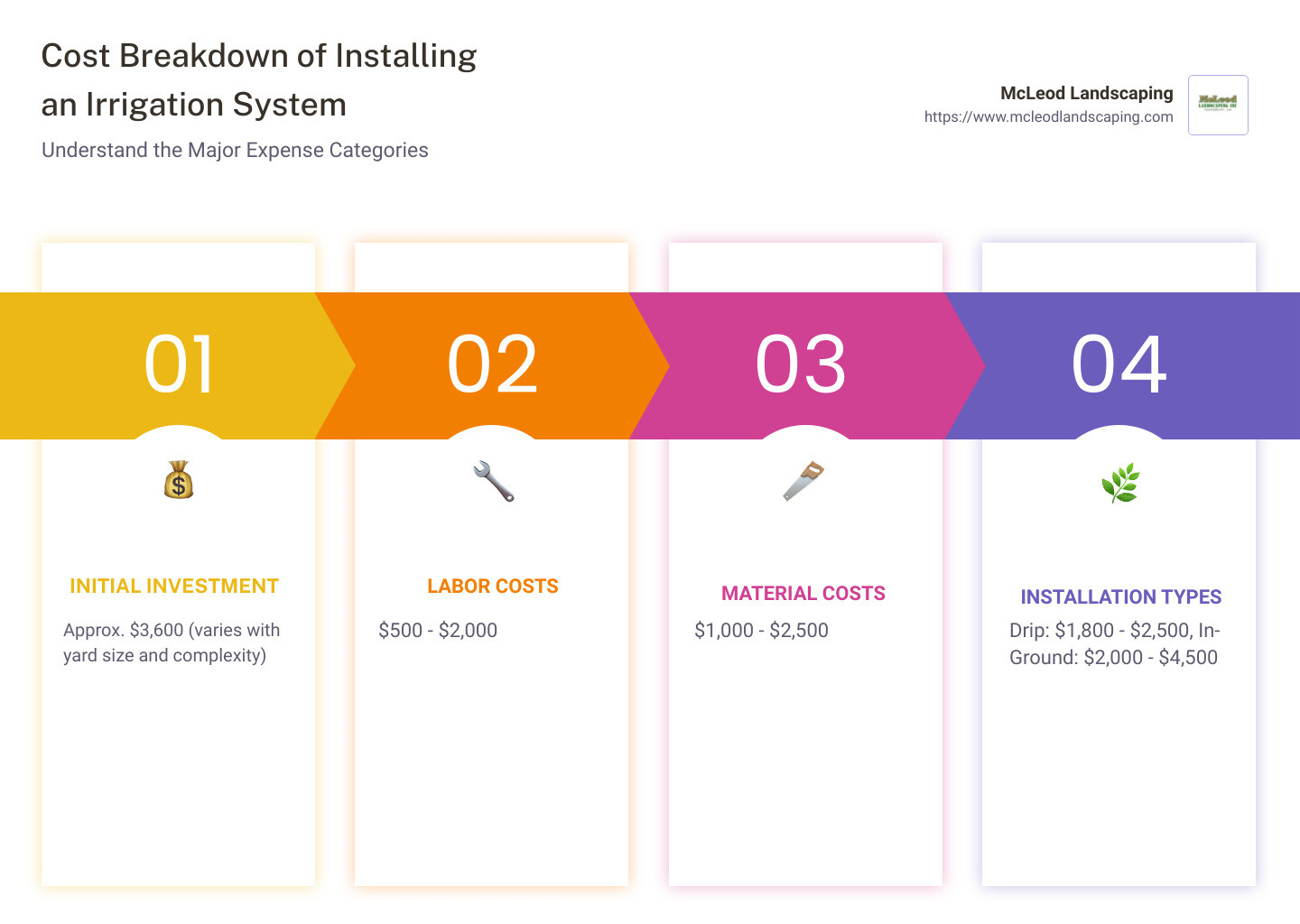
When considering how much to install an irrigation system, break down the costs into three main categories: initial investment, labor costs, and material costs.
The initial investment for an irrigation system can vary greatly. The average cost of installing an in-ground sprinkler system is around $2,540, with most homeowners spending between $1,678 and $3,542.
Several factors influence this price:
Labor is a significant part of the cost. Professionals typically charge between $50 and $100 per hour. Labor costs can vary based on:
Materials are another significant expense. Here’s a breakdown of typical material costs:
For example, for a 10,890 sq. ft. yard, the system costs around $2,500. For larger areas, like 43,560 sq. ft., costs can rise to nearly $10,000.
Understanding these costs helps you plan your budget effectively and ensures you get the most out of your investment.
When figuring out how much to install an irrigation system, several key factors come into play. Let’s break them down:
The size of your yard significantly impacts the overall cost. A larger yard requires more materials and labor. For example, a small lawn (around 10,890 sq. ft.) might cost about $2,500, while a larger area (43,560 sq. ft.) can cost up to $10,000. This is because more zones, sprinkler heads, and piping are needed.
Soil type can also affect costs. Loamy soil is easier to trench, reducing labor time and potentially lowering costs. However, compacted or rocky soil requires more effort and possibly heavier machinery, raising labor costs. If your soil is dense and rocky, expect to pay more.
Each zone in your irrigation system adds to the cost. A single-zone system starts at about $1,000 to $1,500. Adding more zones increases the price by $500 to $1,000 per zone. For instance, a six-zone system can cost between $3,500 and $4,000.
Sprinkler heads vary in price from $2 to $30 each. Stationary heads are cheaper but cover less area. Rotating heads, although more expensive, cover larger areas and offer adjustable water pressure. The type and number of sprinkler heads you choose will significantly affect your budget.
Controllers are the brains of your irrigation system. Basic models are less expensive, but advanced controllers with features like weather sensors and smartphone integration cost more. Investing in a high-quality controller can save water and reduce long-term costs.
Other system parts, such as valves, pipes, and fittings, also add to the total cost. Opting for high-quality materials ensures durability but increases the initial investment. For example, a robust valve system can prevent leaks and reduce maintenance costs over time.
By understanding these factors, you can better estimate the costs and make informed decisions about your irrigation system installation.
Choosing the right irrigation system can make a big difference in cost and efficiency. Let’s break down the main types:
Above-ground systems are less expensive and easier to install. They use hoses and sprinklers that sit on the surface. The cost is lower, but they can be more prone to damage and less attractive.
In-ground systems are more costly and complex but offer better aesthetics and efficiency. They involve burying pipes and installing pop-up sprinklers. An in-ground system can range from $1,678 to $3,542, depending on yard size and complexity.
Stationary sprinklers are simple and cheaper. They spray water in a fixed pattern, making them ideal for small areas. However, they can waste water if not correctly positioned.
Rotary sprinklers are more efficient for larger areas. They rotate and cover more ground, reducing water waste. They cost more upfront but save money in the long run by using water more efficiently.
Drip irrigation delivers water directly to plant roots, minimizing evaporation and runoff. It’s ideal for gardens, flower beds, and container plants. Although more expensive to install, it conserves water and reduces long-term costs. This system uses emitters, drip lines, and micro-sprinklers, which are perfect for precise watering.
Bubblers are small irrigation heads that flood the ground around trees and shrubs. They are excellent for deep root growth and can be used with groundcovers. Bubblers are cost-effective and prevent erosion by delivering water directly to the roots.
By understanding the types of irrigation systems and their costs, you can choose the best option for your landscape needs and budget.
Installing an irrigation system by yourself can save you a lot of money on labor costs. However, this option requires a good deal of specialized knowledge and physical labor. For most homeowners, hiring a professional is the safer route. Professionals ensure the system is installed correctly, which can prevent costly repairs down the line.
In some communities, regulations may even require you to hire a professional due to the plumbing work involved. So, check your local requirements before deciding.
Sprinkler heads can range in cost from $2 to $30 each. Opting for budget-friendly models can significantly reduce your overall costs, especially for large-scale projects.
However, keep in mind that cheaper heads may need to be replaced more frequently. While expensive sprinkler heads can last 10 or more years, budget models typically need replacement every few years. It’s a trade-off between initial savings and long-term durability.
If you have a large property, consider only irrigating the most essential areas. For example, focus on the lawn where you entertain guests or the flower beds that improve your home’s curb appeal.
Letting other areas grow naturally can save you a lot of money on both installation and water usage. Even if you have a smaller yard, you could handle watering the grass yourself and reserve the irrigation system for more delicate plants.
Many landscaping companies, including McLeod Landscaping, offer seasonal promotions. These can help you save a significant amount on installation costs.
Winter and early spring are often the best times to look for deals, as demand for irrigation systems is lower. Keep an eye out for discounts or package deals that include both installation and maintenance services.
By considering these money-saving tips, you can make installing an irrigation system more affordable without sacrificing quality or efficiency.
Absolutely. Homeowners with large yards and diverse landscapes find irrigation systems valuable. Though the initial costs are high, the benefits make it worthwhile.
For instance, a sprinkler system can save you time and lower your water bill due to more efficient watering. Additionally, a well-maintained yard can boost your home’s resale value.
“A better cared-for yard can boost your home’s value when it’s time to sell.” – Forbes
The duration of installation varies based on the project’s scope.
“A contractor can typically install an irrigation system for a typical residential yard in a day, but a larger property… could take up to a week.” – Forbes
While it’s possible to install an irrigation system yourself, it’s often best left to professionals.
DIY Considerations:
– Check if your local building authority permits DIY installations.
– Understand the technical aspects like water pressure, water meter size, and flow rate.
– Be prepared for labor-intensive tasks like digging trenches and installing backflow prevention.
“In some locations, homeowners are not permitted to install sprinkler systems themselves because of the complicated plumbing work involved.” – Forbes
Even if DIY is allowed, hiring a professional ensures the job is done correctly, efficiently, and in compliance with local regulations.
By addressing these FAQs, we hope to provide clarity on the benefits, time commitment, and feasibility of installing an irrigation system. Next, let’s dig into the long-term benefits of investing in a quality irrigation system and how McLeod Landscaping can help you achieve a lush, green yard.
Investing in an irrigation system offers numerous long-term benefits that make it a worthwhile addition to your property.
At McLeod Landscaping, we specialize in designing and installing irrigation systems custom to your specific needs. With our expertise, you can be confident that your system will be:
For more information on how we can help you achieve a lush, green yard with an efficient irrigation system, visit our Irrigation System Services page.
Investing in an irrigation system is a smart move for any homeowner looking to save time, money, and water while boosting their property’s value. Let McLeod Landscaping guide you through the process and ensure you get the best system for your needs.
Contact McLeod Landscaping today at (978) 640-0957 or click here to schedule a consultation for retaining wall installation. Let our experienced team design and install a functional and visually appealing retaining wall that enhances your landscape.


1881 Main St Unit 1, Tewksbury, MA 01876