
Installing real grass creates an instant, vibrant landscape, improving beauty and property value. The process requires careful soil preparation, proper sod installation, and consistent early care for lasting results.
Quick Overview: Installing Real Grass in 3 Main Steps
Installing real grass offers immediate change compared to seeding, which can take weeks to establish. Sod installation can typically be completed in a day, with a lawn ready for light use within 2-4 weeks. The key to success lies in proper soil preparation and consistent watering during the establishment period.
Beyond aesthetics, real grass produces oxygen, reduces soil erosion, moderates temperature, and creates a safe surface for play. A well-maintained lawn can significantly increase property value and offers year-round environmental benefits.
I’m Scott McLeod. With over 30 years in landscaping, I’ve seen that proper preparation and early care are the keys to a thriving lawn, preventing costly do-overs.
Before you start installing real grass, a solid game plan is essential. After three decades in this business, I’ve learned that the most stunning lawns begin with smart planning.
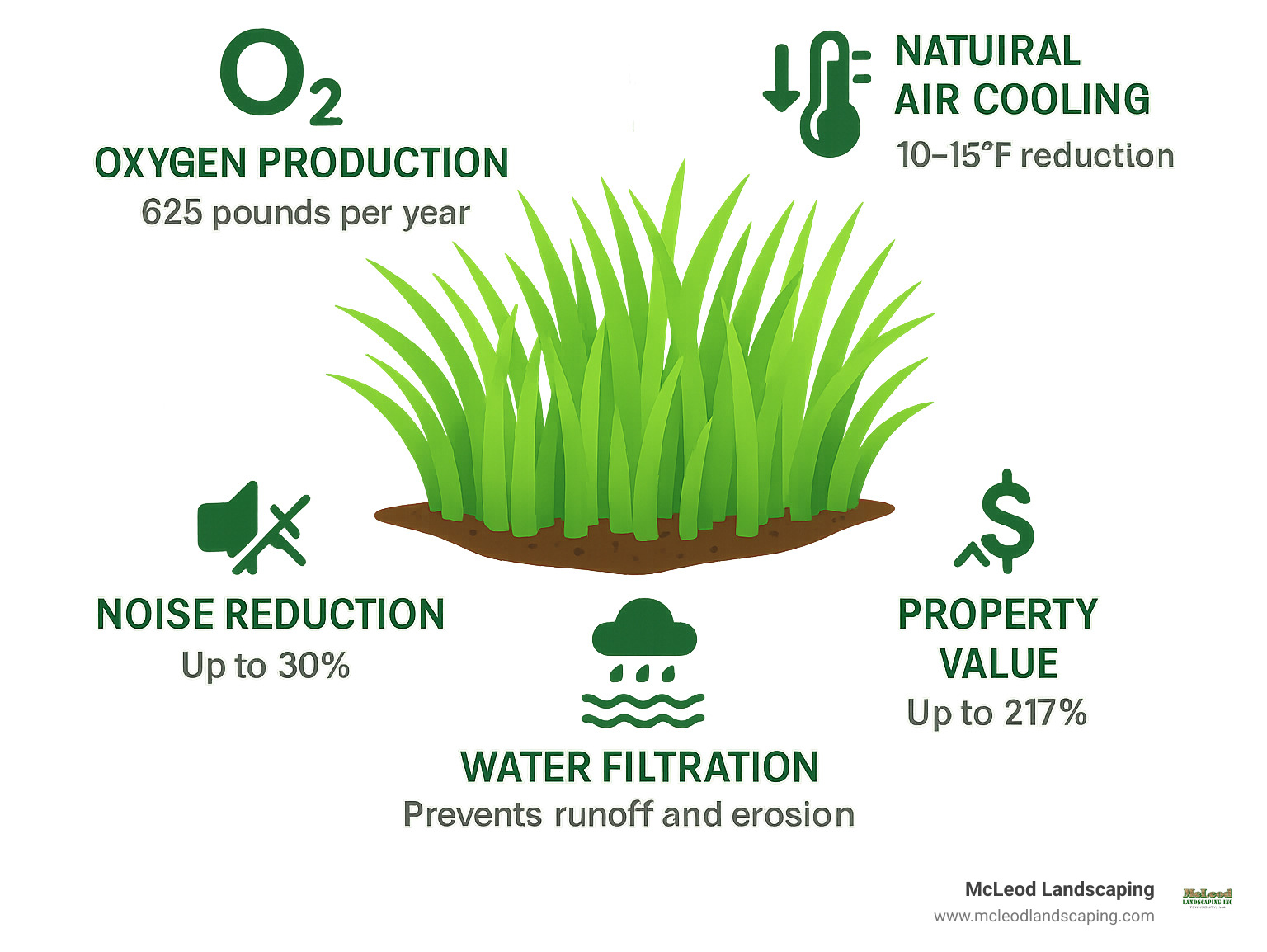
While synthetic options exist, nothing matches the feel of real grass. A natural lawn transforms how families enjoy their outdoor space and delivers benefits beyond aesthetics. It can significantly boost property value, with potential returns up to 217% on your investment. Environmentally, your lawn is a powerhouse: it purifies the air, produces oxygen, and cools surrounding temperatures by 10-15 degrees compared to hard surfaces. It also dampens noise by up to 30% and provides the safest, most comfortable play surface for children and pets. This natural cooling can even lower energy bills, while the root system helps manage water runoff and prevent soil erosion. You can explore more about these comprehensive Benefits of Lawns.
When installing real grass, you have two main paths: laying sod or planting seed. Sod offers instant gratificationa green lawn in a day or twomaking it ideal for quick curb appeal or erosion control. However, it has higher upfront costs. Seed is the budget-friendly choice, but it requires patience, taking weeks to germinate and months to establish, leaving it vulnerable to weeds.
Note: The following figures are average costs based on internet data and do not reflect actual costs from McLeod Landscaping. Professional sod installation typically ranges from $0.80 to over $5.00 per square foot. DIY sod materials cost between $0.30 to $1.50 per square foot. Seed is much cheaper at $0.05 to $0.45 per square foot for materials.
Here’s the key comparison that helps most homeowners decide:
| Factor | Sod | Seed |
|---|---|---|
| Installation Time | 1-2 days for typical lawn | Weeks to germinate, months to establish |
| Cost | Higher initial investment | Lower upfront cost |
| Labor | Heavy lifting, precise placement | Light spreading and raking |
| Best Use Case | Instant results, erosion control, high-traffic areas | Large areas, budget projects, patient gardeners |
| Weed Prevention | Excellent – dense turf blocks weeds | Poor – open soil invites weeds |
For most New England homeowners wanting reliable, immediate results, sod is the logical choice. Seed works well for large, budget-conscious projects where time is not a factor.
Choosing the right grass type is critical for easier maintenance. In the Merrimack Valley, we work primarily with cool-season grasses that thrive in our New England climate.

In warmer climates, warm-season grasses like Bermuda and Zoysia are common. Consider your yard’s sun exposure, traffic levels, and your desired maintenance commitment when choosing.
Proper timing is crucial for success. For cool-season grasses in New England, late summer to early fall (August-October) is the ideal installation window. The cool air and warm soil encourage strong root growth before winter. Early spring (March-April) is another option, but the lawn will face summer heat stress sooner.
Avoid installing real grass during summer heat waves or when the ground is frozen. Sod is a perishable product with a short shelf life. It must be installed within 24 hours of delivery, ideally within minutes of being unrolled. If delayed, store it in the shade and keep it moist, but work quicklyevery hour counts.
With planning complete, it’s time to transform your bare soil into a lush, green oasis. Installing real grass with sod provides instant gratification and is incredibly rewarding when done correctly. Each step builds on the last, so careful work here ensures long-term success.
A well-prepared foundation is critical for success and prevents future problems. Don’t rush this step.

With the foundation ready, it’s time to lay the sod. Lightly moisten the soil first to help the sod adhere.
This step is non-negotiable. Water is the lifeline for new sod.
This initial watering is the first step in the crucial establishment period that follows.
You’ve done the hard work of preparing the soil and laying the sod. Now comes the nurturing phase, where proper care will ensure your new lawn establishes strong roots and flourishes.
The first few weeks are critical for establishing strong roots. This is the most important part of new sod care.
Once established (after 4-6 weeks), shift to a consistent maintenance routine.
For comprehensive lawn care and commercial property maintenance, our team at McLeod Landscaping offers custom solutions to keep your green spaces looking their best.
Even well-planned installing real grass projects can face challenges. Understanding potential issues and costs will help you steer the process with confidence.
Most new sod problems are fixable with quick action.

Installing real grass is an investment with costs that vary based on materials, site conditions, and whether you DIY or hire a professional.
Note: The following figures are average costs based on internet data and do not reflect actual costs from McLeod Landscaping. Prices can vary widely by region and project complexity.
While the long-term costs are higher than for artificial turf, many homeowners find the environmental benefits and natural beauty of real grass to be a worthwhile investment.
After helping hundreds of homeowners with installing real grass, I’ve heard just about every question imaginable. Here are the most common ones.
No, this is not recommended. New sod roots must make direct contact with prepared soil to access water and nutrients. Laying it over an existing lawn creates a barrier of old grass that will prevent proper rooting. This old layer will decompose, creating air pockets and an uneven surface, ultimately leading to a weak or failed lawn. Proper removal of the old turf is a crucial step for long-term success.
You must limit all foot traffic, including from pets, for at least 2 to 4 weeks. This is the hardest rule for families to follow, but it’s critical. The new roots are extremely delicate, and walking on the sod can break them, create air pockets, and lead to uneven growth or dead patches. Patience during this period ensures a healthier, more resilient lawn that can handle future activity.
This is almost always a sign of improper watering and is usually fixable.
Check the soil moisture by lifting a corner. It should feel moist like a wrung-out sponge, not dry or saturated. Adjust your watering schedule based on these findings.
Installing real grass is a satisfying project that transforms your outdoor space, adding beauty, value, and environmental benefits. From proper soil prep to consistent watering, every step is crucial for creating a lush, healthy lawn that your family can enjoy for years. A new lawn produces oxygen, cools the air, and can offer significant returns on your investment.
While the process is rewarding, challenges like poor soil or complex grading can make professional help invaluable. At McLeod Landscaping, we bring over 30 years of experience to homeowners in the Merrimack Valley. We’ve handled every type of installation challenge and can guide you from selecting the right grass for our New England climate to ensuring perfect establishment. Our expertise prevents costly do-overs and guarantees a beautiful result.
We serve communities including Tewksbury, Lowell, Westford, and beyond. Ready to transform your property? Get expert help with your residential sod installation and let our experienced team create the lawn your home deserves.
Contact McLeod Landscaping today at (978) 640-0957 or click here to schedule a consultation for retaining wall installation. Let our experienced team design and install a functional and visually appealing retaining wall that enhances your landscape.


1881 Main St Unit 1, Tewksbury, MA 01876