
A well-designed irrigation system commercial solution is the key to a thriving commercial landscape. For office complexes, retail centers, or industrial parks, the right system reduces water costs while maintaining a professional appearance that attracts tenants and customers.
Quick Overview: Commercial Irrigation Systems
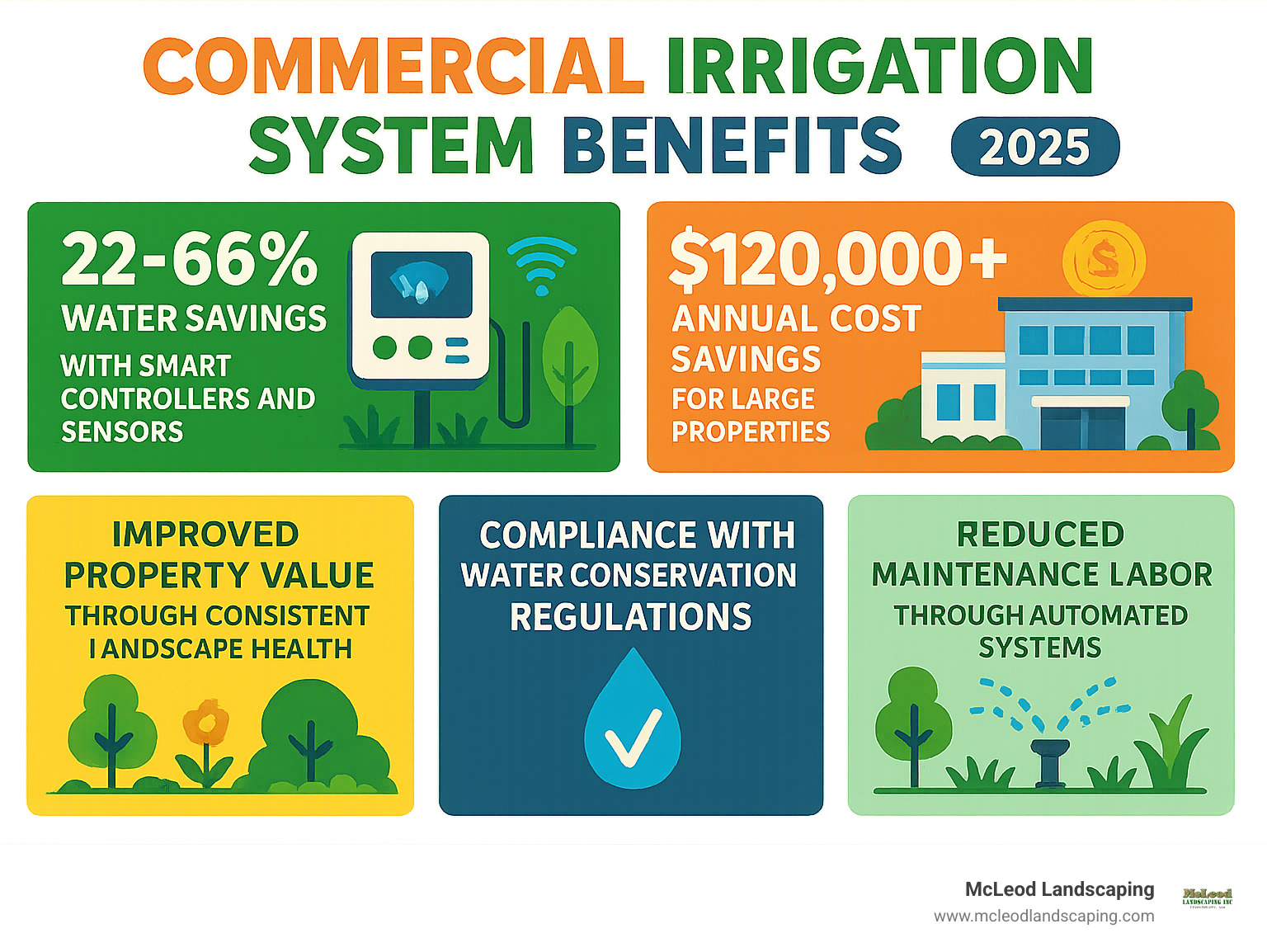
Research shows up to half of all outdoor water use is wasted due to inefficient irrigation. For example, the Utah Research Park saved 25 million gallons of water and $120,000 annually by upgrading to smart irrigation.
Modern systems go beyond simple sprinklers, integrating weather data, soil moisture monitoring, and leak detection to deliver water precisely. This leads to healthier landscapes, lower utility bills, and compliance with water conservation regulations.
I’m Scott McLeod, and with over three decades of experience in the Merrimack Valley, I’ve seen how the right irrigation system commercial design transforms properties. At McLeod Landscaping, we help property managers reduce water waste while maintaining impressive, professional landscapes.
Must-know irrigation system commercial terms:
Choosing the right irrigation system commercial solution is critical for your landscape and budget. Commercial systems must handle diverse needs, from large lawns to delicate flower beds. Understanding the main system types ensures each area of your property receives the correct amount of water, leading to healthier plants and lower water bills. For a deeper dive into residential applications, check out our guide on types of lawn irrigation systems.
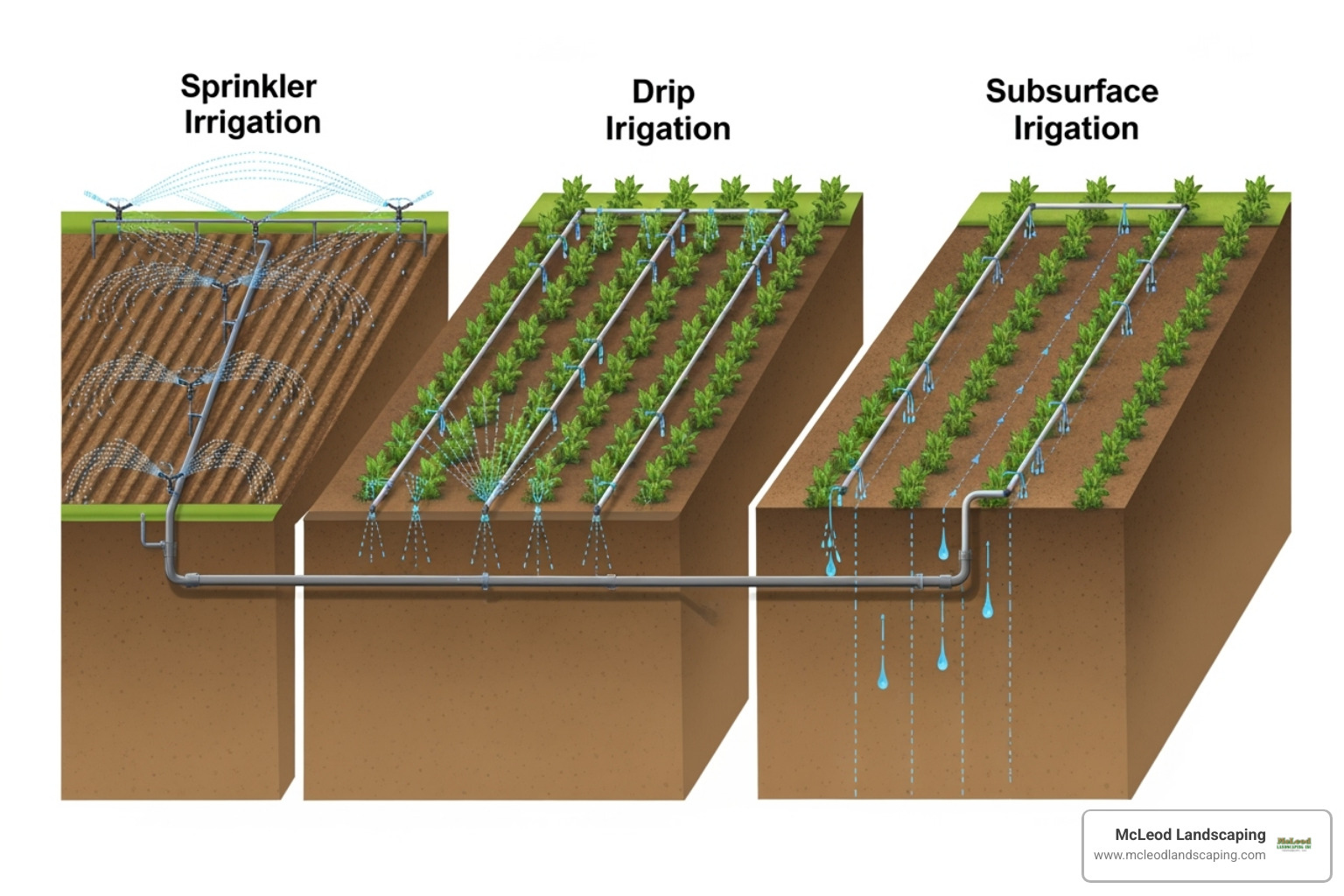
Sprinkler irrigation is the workhorse for large area coverage like lawns and sports fields, mimicking natural rainfall for quick, efficient watering. Rotor heads cover long distances (25-30 feet) with a slow, sweeping arc, ideal for open areas. Spray heads provide a fan-shaped spray for smaller, more precise applications near buildings. The main drawback is potential water loss from evaporation, making early morning or evening watering schedules crucial for efficiency.
For more detailed information about optimizing your sprinkler system, explore our services for Commercial Irrigation Sprinkler Heads.
Drip irrigation systems are precision instruments that deliver water direct-to-root via tubes and emitters. Ideal for garden beds, shrubs, and trees, they achieve up to 85% water efficiency with minimal reduced runoff. This method promotes deeper root growth and reduces fungal diseases by keeping foliage dry. Its versatility makes it perfect for uneven terrain and areas with diverse plant water needs. Learn more about how this system can benefit your property through our Commercial Drip Irrigation Systems services.
Subsurface irrigation is a premium, advanced solution where irrigation lines are buried underground. It delivers water directly to the root zone, achieving the highest efficiency with minimal evaporation and no runoff. This method also leads to reduced weed growth because the soil surface remains dry. The system is completely invisible, preserving the landscape’s aesthetic without sprinkler heads or drip lines to steer.
| Feature | Sprinkler Irrigation | Drip Irrigation | Subsurface Irrigation |
|---|---|---|---|
| Best Use Cases | Large lawns, sports fields, open green spaces | Garden beds, shrubs, trees, uneven terrain | Large turf areas, high-efficiency needs |
| Water Efficiency | Moderate (prone to evaporation if poorly timed) | High (approximately 85% efficiency) | Very High (minimal waste) |
| Installation Cost | Moderate to High | Moderate | High (complex underground installation) |
| Maintenance Needs | Moderate (head cleaning, adjustments) | Moderate (emitter maintenance, line flushing) | Low (less visible issues, harder to access) |
Choosing the right irrigation system commercial solution depends on your property’s unique needs. Understanding these options helps you make an informed decision that benefits your landscape and budget for years.
Designing an effective irrigation system commercial solution is a strategic investment in your property’s value and operating costs. Based on my three decades of experience in the Merrimack Valley, successful installations hinge on thorough planning. A proper design requires a comprehensive property assessment, realistic budgeting, and professional installation. For more on how irrigation fits into the bigger picture, see our guide on commercial landscape design.
Every property is unique, and your irrigation system must be custom to it. We consider several factors:
Understanding the financial side of an irrigation system commercial investment is key.
Disclaimer: The following figures are based on average costs from internet data and do not represent actual pricing for McLeod Landscaping. Costs can range from $1,800 to over $30,000 depending on size and complexity.
For a detailed breakdown, visit our commercial irrigation system cost resource.
Choosing the right contractor is crucial for a reliable irrigation system commercial. Look for a company with:
A reputable company handles everything from design to long-term maintenance. For more guidance, see our resource on irrigation system installers.
Smart technology has revolutionized the irrigation system commercial landscape, shifting the focus from simple watering to precise, intelligent, and sustainable water management. These systems act like a 24/7 groundskeeper, monitoring weather and soil conditions to optimize watering, protect your landscape investment, and align with sustainability goals. By using automation and real-time data, smart systems prevent water waste and major problems before they start. To learn more, explore the benefits of installing a smart irrigation system.

Smart irrigation systems optimize water delivery, leading to healthier landscapes and water savings of 22% to 66%. They achieve this through:
The financial benefits are significant. A case study on water savings showed one property saved 25 million gallons and $120,000 in a single season. The ROI on smart sensors can be as high as 200% in the first year, according to research on smart controller effectiveness.
A smart irrigation system commercial setup integrates several key components:
Together, these components create a responsive system that minimizes waste, cuts costs, and keeps your landscape thriving.
Proactive maintenance is essential for your irrigation system commercial investment, ensuring longevity, water efficiency, and compliance with local regulations. In the Merrimack Valley, a solid maintenance plan protects your system from seasonal extremes and prevents costly surprises. It’s a critical part of protecting your landscape investment. For comprehensive care, consider our commercial property maintenance services.
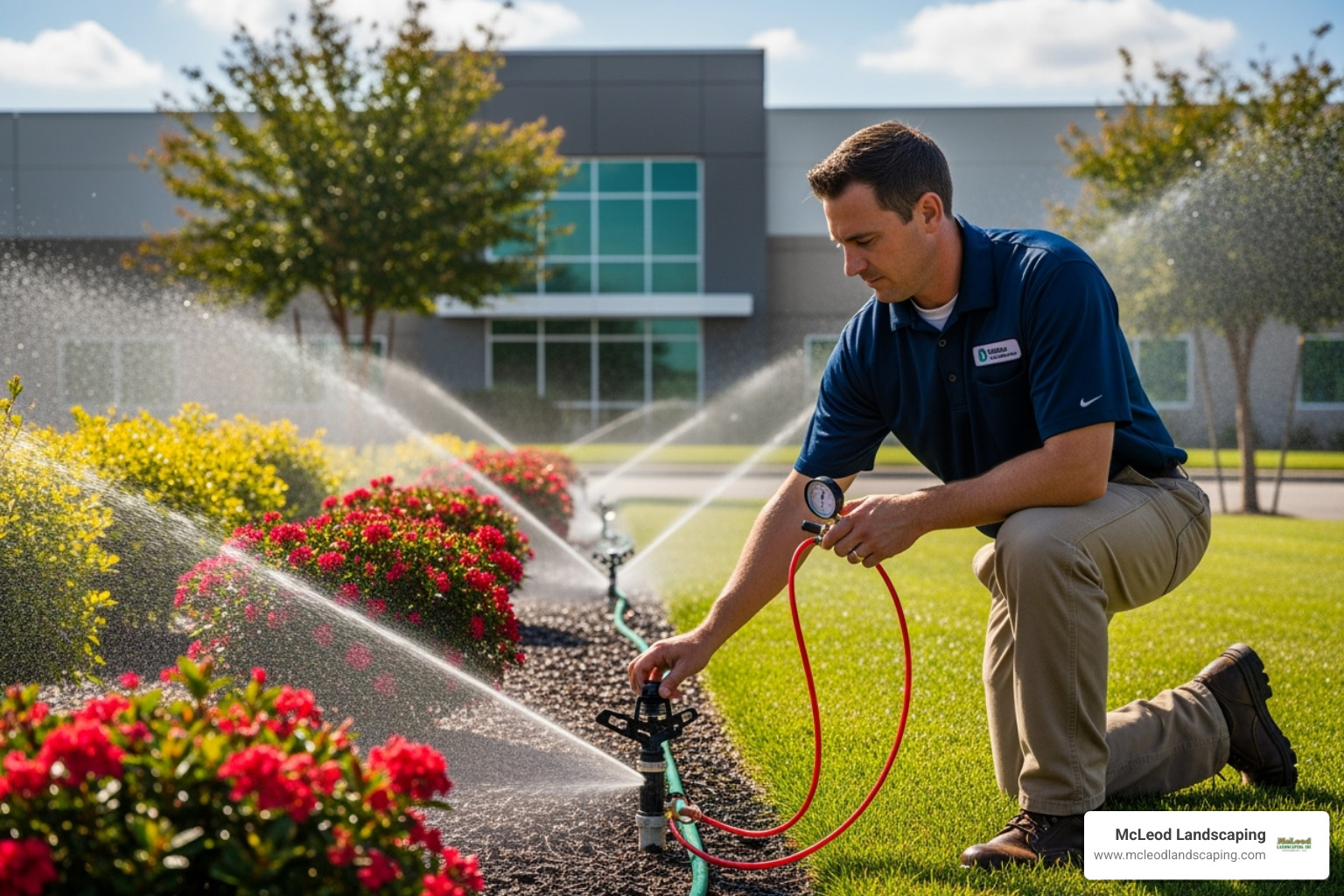
A consistent maintenance schedule is the secret to a long-lasting irrigation system commercial setup. Key services include:
Smart systems with flow sensors can alert you to issues between visits, and our team is ready to provide prompt commercial sprinkler repair when needed.
Even the best irrigation system commercial can face challenges. Early detection is key to preventing costly problems:
Proper maintenance is crucial for defending against major water waste.
Compliance with water conservation regulations is non-negotiable. Municipalities in Massachusetts have specific rules, and violations can lead to fines.
Investing in an efficient, well-maintained irrigation system commercial now future-proofs your property against stricter regulations to come.
Property managers and business owners often have similar concerns when considering or managing an irrigation system commercial. After three decades in the Merrimack Valley, we’ve heard these questions countless times, and I’m happy to share what we’ve learned.
A commercial irrigation system commercial requires professional service at least twice a year, plus regular checks.
Absolutely. A well-designed irrigation system commercial increases property value in several ways:
An irrigation zone is a specific area of your landscape watered by a single, dedicated valve in your irrigation system commercial. Zoning allows for customized watering based on the unique needs of each area. For example, a sunny lawn zone can be watered more frequently than a shaded flower bed zone. We create zones based on factors like:
Proper zoning is the key to an efficient and effective irrigation system. For more technical details, the Irrigation Association is a great resource.
Choosing the right irrigation system commercial solution means working smarter, not harder. As we’ve discussed, modern systems can deliver water savings of 22-66%, reduce operating costs, and ensure your property always looks its best. This commitment to water stewardship is not just good business; it’s essential for compliance and demonstrates environmental responsibility.
At McLeod Landscaping, we have over three decades of experience helping commercial properties in the Merrimack Valley with their irrigation needs. We understand how the right irrigation system commercial design transforms both budgets and aesthetics. We offer a comprehensive approach, from design and installation to maintenance and smart technology upgrades.
Your landscape is a valuable asset. Let us help you protect it with an efficient, reliable irrigation solution.
Ready to improve your property’s water efficiency and curb appeal? Contact us for your commercial irrigation system needs to discuss how we can help.
Contact McLeod Landscaping today at (978) 640-0957 or click here to schedule a consultation for retaining wall installation. Let our experienced team design and install a functional and visually appealing retaining wall that enhances your landscape.


1881 Main St Unit 1, Tewksbury, MA 01876