
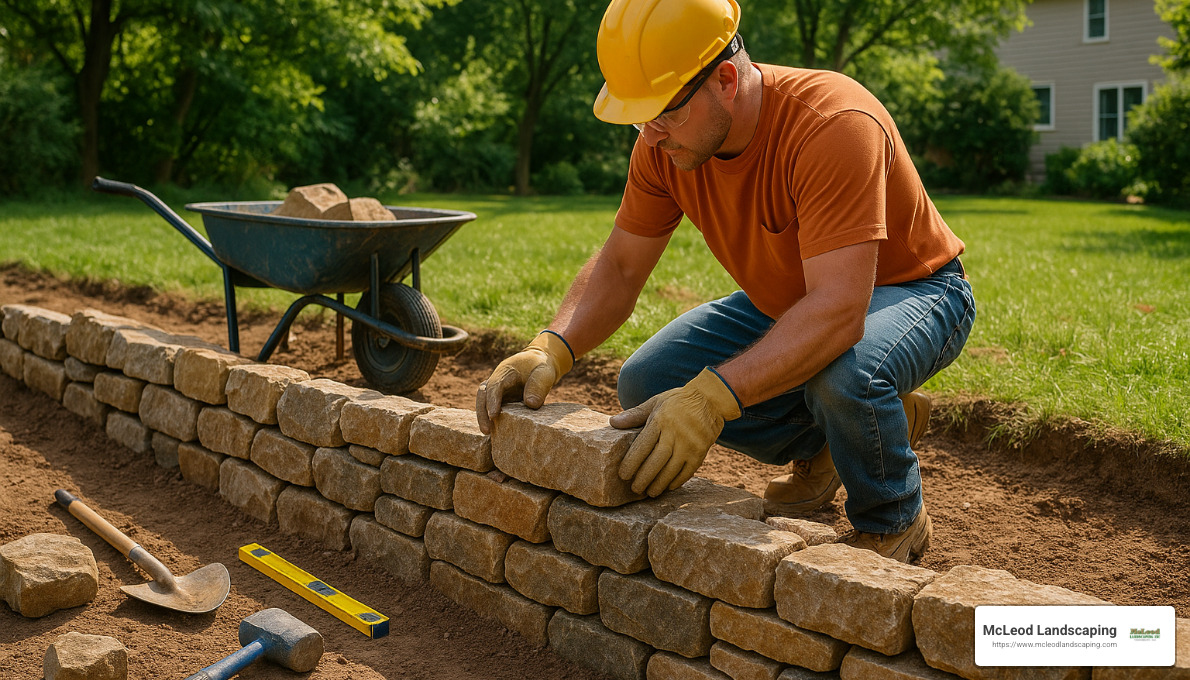
When it comes to changing your property’s challenging terrain into something both beautiful and functional, partnering with the right landscape wall contractor makes all the difference. These specialized professionals bring expertise in designing, constructing, and installing both retaining and decorative landscape walls that not only solve practical problems but improve your property’s overall appeal.
Choosing someone to trust with this significant investment deserves careful consideration. After all, with average costs ranging from $20 to $50 per square foot (and premium installations potentially reaching $150+ per square foot), you want to ensure your money is well-spent on quality workmanship that will stand the test of time.
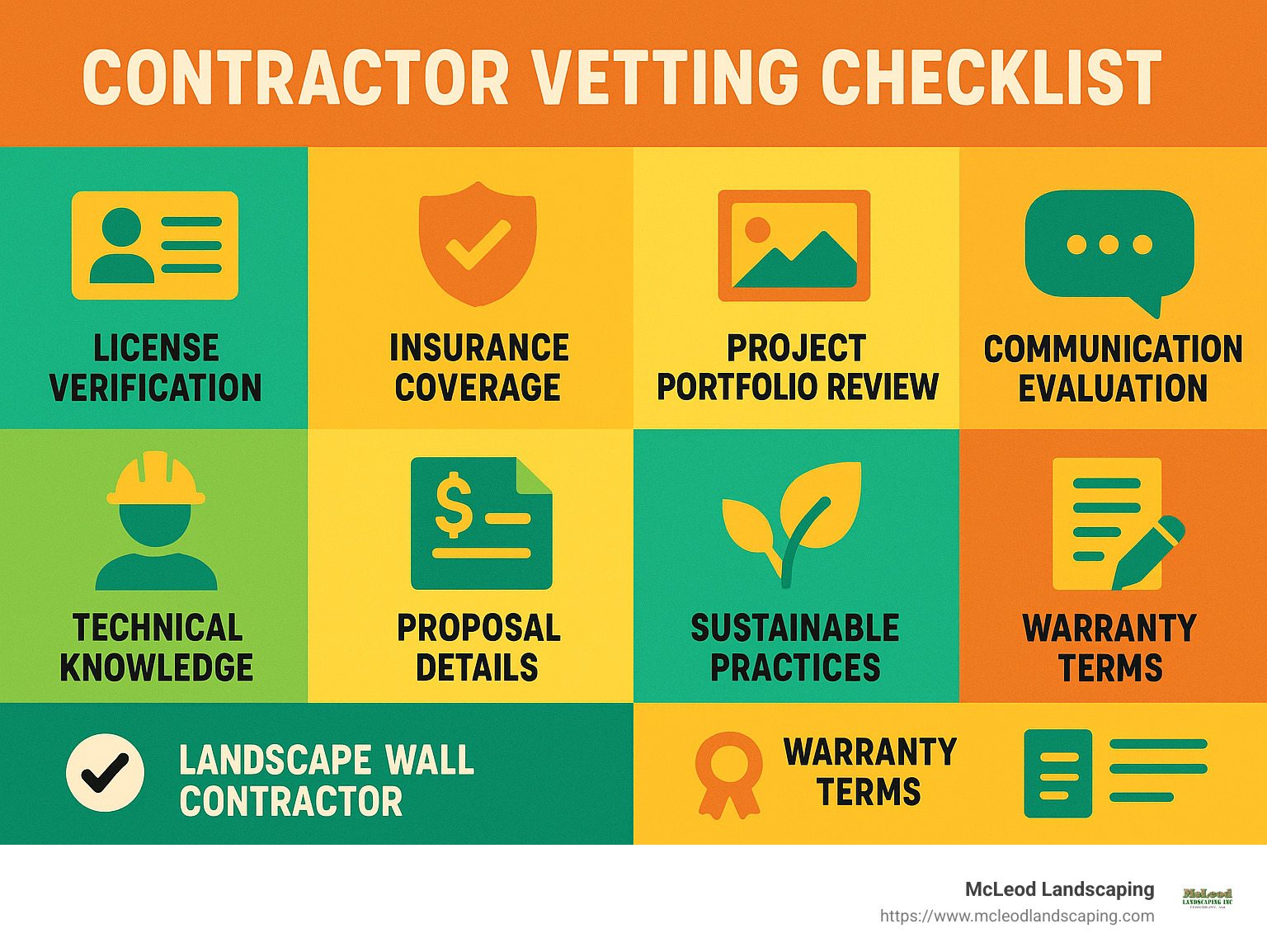
What truly sets exceptional landscape wall contractors apart? Start by verifying proper licensing and insurance – this protects both you and the contractor if anything unexpected happens during your project. Look for professionals with at least 5 years of relevant experience specifically with retaining walls, as this specialized work requires technical knowledge that only comes with time in the field.
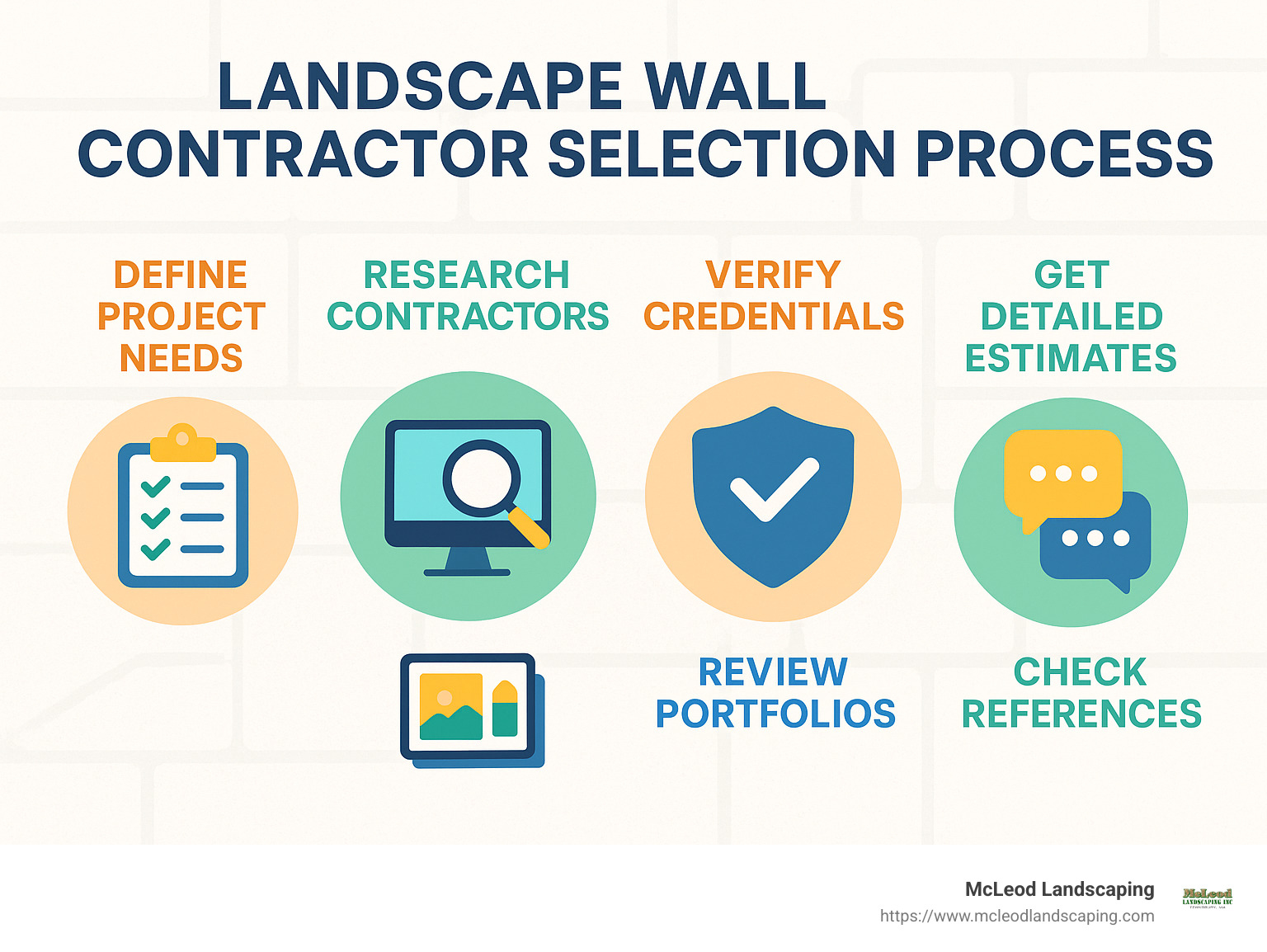
Before making any decisions, take time to review their portfolio of completed projects. The best contractors will proudly share examples similar to what you’re envisioning. Don’t hesitate to request references from previous clients – a quick conversation can reveal volumes about reliability, professionalism, and quality of work.
Technical expertise matters tremendously in wall construction. Your contractor should demonstrate strong knowledge of drainage solutions, soil stability assessment, and engineering principles – these invisible elements ultimately determine whether your wall will last for decades or fail prematurely.
When comparing options, insist on detailed written estimates that clearly outline materials, timeline, and costs. Pay attention to their communication style during initial meetings – a contractor who listens carefully and responds promptly now will likely maintain that responsiveness throughout your project.
I’m Scott McLeod, owner of McLeod Landscaping, and I’ve dedicated over three decades to serving as a landscape wall contractor throughout the Merrimack Valley. My team specializes in designing and building custom retaining walls that not only effectively manage erosion and drainage challenges but also improve property value with their durability and aesthetic appeal.
Looking for inspiration before getting started? Explore these resources to help visualize possibilities for your property:
– landscape retaining wall ideas
– landscape wall stone
– paver stones
A landscape wall contractor is much more than someone who stacks stones or blocks. We’re problem-solvers who transform challenging terrain into beautiful, usable spaces. At McLeod Landscaping, our wall specialists combine technical expertise with creative vision to address specific property challenges while enhancing your outdoor living areas.
Think of us as the professionals who make the impossible possible. That steep, unusable slope in your backyard? We can turn it into a gorgeous terraced garden. The eroding hillside threatening your home’s foundation? We’ll create a sturdy retaining wall system that provides peace of mind for decades to come.
“I couldn’t believe how they transformed our sloped backyard into a flat, usable space for our kids to play,” one Tewksbury homeowner told us after we completed their terraced retaining wall project. “It’s like we gained an extra 500 square feet of property we never knew we had!”
Unlike general landscapers, landscape wall contractors need specialized knowledge in structural engineering, soil mechanics, and water management. We understand how forces like hydrostatic pressure and frost heave affect walls over time, and we design solutions that stand up to New England’s challenging weather conditions.
At McLeod Landscaping, we approach each wall project as a unique opportunity to solve problems and create beauty. Our comprehensive wall services include:
Retaining wall installation is our bread and butter. We build walls that hold back soil on sloped properties, preventing erosion while creating flat, usable space. Whether you need a simple 2-foot garden wall or a complex 12-foot engineered system, we design solutions that are both functional and attractive.
We also excel at decorative walls that define spaces, create privacy, or serve as focal points in your landscape. These freestanding walls can incorporate seating, planters, or even outdoor kitchen elements to improve your outdoor living experience.
Proper drainage solutions are perhaps the most critical yet overlooked aspect of wall construction. We integrate appropriate drainage systems behind and around your walls to prevent water buildup that could lead to failure. As we often tell clients, “The parts of your wall you can’t see are just as important as the parts you can.”
Beyond these core services, we provide thorough site assessments, material selection guidance, permit acquisition, and seamless integration with other landscape features. With over 30 years of experience throughout the Merrimack Valley, we’ve perfected the art and science of landscape wall construction.
Want to explore more about what we can do? Visit our detailed page on More info about Landscape Walls.
Finding the right landscape wall contractor requires asking the right questions. Here’s what you should discuss before signing any contract:
Are you properly licensed and insured? This is non-negotiable. At McLeod Landscaping, we maintain all required state licenses and carry comprehensive liability insurance and workers’ compensation coverage. We’re happy to provide proof upon request.
How long have you been building landscape walls? Experience matters enormously in this field. Our team has over three decades of specialized wall-building experience throughout the Merrimack Valley, facing and solving virtually every challenge possible in New England conditions.
Can I see examples of similar projects? Any reputable contractor should have a portfolio ready to share. We love showing potential clients our previous work, especially projects that match their specific needs and style preferences.
How do you handle drainage? Listen carefully to this answer! A good contractor will provide specific details about drainage stone, perforated pipe, and proper backfill materials. If they gloss over drainage, run the other way – it’s the number one cause of wall failure.
What type of warranty do you offer? Quality contractors stand behind their work. We provide clear written warranties on both materials and workmanship.
You should also ask about their timeline, how they’ll address potential site challenges, and whether they’ll handle permitting. For walls over 4 feet tall, proper permits and often engineering plans are required – make sure your contractor is comfortable navigating this process.
As one of our Andover clients recently told us: “I interviewed three contractors, but McLeod was the only one who took the time to explain the whole process and answered all my questions in detail. That’s when I knew they were the right choice.”
Ready to find the perfect retaining wall professional for your project? Learn more about what makes a great Retaining Wall Contractor.
Understanding the different types of landscape walls and available materials is essential when working with a landscape wall contractor. Each type serves specific purposes and offers unique aesthetic possibilities for your property.
When we talk about landscape walls, we’re really discussing two main categories – retaining walls that solve problems and freestanding walls that improve spaces.
Retaining walls are the workhorses of landscape design. These structural champions hold back soil and prevent erosion on sloped properties, creating level areas where you can enjoy patios, gardens, or other usable spaces. I’ve seen how a well-built retaining wall can transform an unusable hillside into a family’s favorite outdoor spot.
Retaining walls come in several engineering styles. Gravity walls rely simply on their weight and setback to resist soil pressure – perfect for walls under 4 feet tall. For taller applications, cantilever walls incorporate reinforced concrete footers that extend under the retained soil. When dealing with particularly challenging sites, we might recommend reinforced soil walls that use geogrid material extending into the backfill, or sheet pile walls that are driven into the ground for tight spaces or soft soil conditions.
Freestanding walls, on the other hand, are built on level ground and serve different purposes. Garden walls define planting areas with charming low borders. Seat walls double as casual seating around patios or fire features – always a hit for entertaining! Privacy walls create secluded outdoor rooms, while purely decorative walls add architectural interest to your landscape design.

The material you choose for your wall dramatically affects both its performance and character. Here’s how the most popular options compare:
| Material | Durability | Aesthetic | Cost Range | Best For |
|---|---|---|---|---|
| Concrete Block | 50+ years | Modern to traditional | $20-$40/sq ft | Retaining walls of all sizes |
| Natural Stone | 100+ years | Rustic, neat | $30-$80/sq ft | High-end projects, natural settings |
| Timber | 15-20 years | Warm, natural | $10-$40/sq ft | Lower walls, rustic settings |
| Steel/Metal | 50+ years | Contemporary | $50-$150/sq ft | Modern designs, challenging sites |
| Gabion | 50+ years | Industrial, textural | $20-$40/sq ft | Contemporary designs, erosion control |
| Brick | 100+ years | Classic, formal | $25-$45/sq ft | Traditional settings, garden walls |
| Recycled Concrete | 50+ years | Eco-friendly | $15-$35/sq ft | Sustainable projects |
| Precast Concrete | 50+ years | Versatile | $25-$50/sq ft | Consistent appearance, faster installation |
At McLeod Landscaping, we’ve built with all these materials throughout our three decades serving the Merrimack Valley. I love how each brings its own personality to a landscape project. During our consultation process, we’ll help you understand which materials will work best for your specific needs, preferences, and budget.
Selecting the perfect material for your landscape wall isn’t just about looks – it’s about making a choice that will perform beautifully in your specific conditions. Here’s what we consider when helping our clients make this important decision:
Soil conditions make a huge difference in material selection. Clay soils that expand and contract might need the stability of concrete block with proper reinforcement. Sandy soils often benefit from geogrid reinforcement regardless of the facing material you choose. And if your property has rocky soil, we might suggest solutions that minimize excavation headaches.
New England’s notorious climate demands materials that can take a beating. Our freeze-thaw cycles are brutal on landscape walls! Natural stone and quality concrete products excel in our region. While timber walls look beautiful, they typically have shorter lifespans here due to moisture exposure. I’m particularly fond of Cor-Ten steel options for modern designs – they develop that distinctive protective rust patina that actually shields the material from further weathering.
Budget is always a practical consideration. Based on internet averages (not actual McLeod pricing), wood retaining walls offer economical solutions starting around $10-$40 per square foot installed. Concrete block systems provide excellent mid-range value at roughly $20-$50 per square foot. For those seeking premium aesthetics, natural stone typically ranges from $30-$80 per square foot. Specialized applications using designer systems or custom steel can reach $150+ per square foot for truly unique installations.
Your wall should complement your property’s overall aesthetic. Traditional homes often pair beautifully with the timeless look of natural stone or brick. Contemporary architecture might be improved by the clean lines of concrete or the industrial chic of Cor-Ten steel. Rustic properties benefit from the warmth of timber or the rugged texture of stone-filled gabion walls.
For environmentally conscious homeowners, we offer several sustainable options. Recycled concrete walls give new life to materials that would otherwise end up in landfills. Locally sourced stone reduces transportation carbon footprint. Gabion walls filled with site-harvested stone maximize resource efficiency. And for the ultimate green solution, living walls incorporate vegetation to provide habitat and improve air quality.
“The material choice isn’t just about appearance,” as one of our senior designers often says. “It’s about selecting something that will perform in your specific conditions while achieving your aesthetic goals. That’s why we take time to understand both the technical requirements and your design vision.”
At McLeod Landscaping, we stay current with innovative wall systems like Belgard’s Artforms, which offers incredible design flexibility with straightforward installation. These systems allow us to create walls that are as beautiful as they are functional.
When you work with a professional landscape wall contractor like McLeod Landscaping, you can expect a methodical approach to ensure your wall is built to last. Understanding this process helps you know what to expect and appreciate the expertise involved in creating a successful landscape wall.
The process begins with a thorough evaluation of your property. Our team will analyze the topography and slope conditions, assess soil type and stability, and identify drainage patterns that might affect your wall’s performance. We’ll take time to discuss your aesthetic preferences and functional needs while evaluating access points for equipment and materials. We also carefully note any existing features that need protection or incorporation into the design.
“The initial assessment is like detective work,” says our lead designer. “We’re looking for clues about what the land needs and how we can best work with it to create something beautiful and lasting.”
Based on what we learn during the site assessment, we develop a custom solution custom to your property. We create preliminary designs showing the wall’s location, height, and materials, often with 3D visualizations to help you envision the finished project. Our detailed proposal outlines the scope, timeline, and investment required, along with a thorough discussion of material options and their respective benefits.
For walls over 4 feet tall or in challenging conditions, additional steps are necessary. We engage structural engineers when needed for calculations and plans, prepare and submit permit applications to local authorities, and address any municipal requirements or modifications. We handle all the paperwork to secure necessary approvals before breaking ground, saving you the headache of navigating local regulations.
Once approvals are in place, the physical work begins with precisely marking the wall location according to approved plans. We take care to protect existing landscaping, utilities, and structures while removing vegetation and obstacles from the construction area. Proper equipment access and material staging areas are established to ensure efficient workflow.
The foundation is critical to wall performance and longevity. We excavate to the proper depth based on wall height and soil conditions, then install a compacted gravel base to provide a level foundation. The soil is thoroughly compacted to prevent future settling, and we set up string lines and other guides to ensure proper alignment from the very beginning.

Proper drainage is essential for wall longevity—in fact, it’s the single most important factor in preventing wall failure. We install drainage gravel behind the wall and place perforated drain pipe at the base to collect water. We create outlets for water to escape and add filter fabric to prevent soil from clogging the drainage system. As one client told us after a particularly rainy season, “Even with all that water, our wall didn’t budge an inch.”
The actual building process involves placing the first course of material precisely level on the prepared base. We build subsequent courses according to manufacturer specifications or masonry best practices, incorporating proper setback for gravity walls. For taller walls, we install geogrid reinforcement at specified intervals and ensure proper compaction of backfill material in lifts (layers).
As the wall rises, proper backfilling becomes crucial to long-term stability. We use appropriate granular backfill material, compacting in 6-8 inch lifts to prevent future settling. We maintain drainage materials separate from soil backfill and continue this careful process with each course of the wall. This attention to detail in the unseen portions of the wall is what separates professional work from amateur attempts.

The final stage brings the project together beautifully. We install cap stones or top course finishing elements and complete any integrated features like lighting, steps, or planters. The surrounding area is graded for proper water flow, and we restore or install landscaping around the new wall to help it blend seamlessly with your property.
Before considering the project complete, we conduct a thorough quality inspection and ensure all drainage systems are functioning properly. We walk through the finished project with you to explain maintenance and answer questions, addressing any final adjustments or concerns. This final step ensures you’re completely satisfied and know how to keep your wall looking great for years to come.
“Each step builds on the previous one,” explains our lead wall installer. “Skipping or rushing any part of this process can compromise the entire structure. That’s why we’re methodical and thorough—we’re building something that needs to last decades.”
At McLeod Landscaping, we’ve refined this process over 30 years of building landscape walls throughout the Merrimack Valley. Our methodical approach ensures that your wall will not only look beautiful but will perform its function reliably for years to come.
Building a successful landscape wall requires addressing various technical challenges that can impact long-term performance. As experienced landscape wall contractors, we’ve developed effective solutions to these common issues:
Water is the primary enemy of retaining walls, causing most failures when not properly managed.
Challenge: Hydrostatic pressure builds up behind walls when water cannot escape, potentially causing bulging or collapse.
Our Solution: We implement comprehensive drainage systems including drainage gravel behind the entire wall, perforated drain pipes at the base, and weep holes to direct water away. We also ensure proper grading above and below the wall and use filter fabric to prevent soil migration into drainage materials.
One client in Chelmsford had significant water issues on a sloped property. We installed a tiered wall system with integrated drainage at each level, effectively managing water while creating usable garden spaces. “The solution not only solved our erosion problems but gave us beautiful planting areas we never had before,” they reported.
Walls over 4 feet tall face significantly greater soil pressure and require specialized reinforcement. We employ advanced techniques including geogrid reinforcement layers extending into the retained soil, proper connection between geogrid and wall facing, and calculated placement of reinforcement based on wall height and soil conditions.
Poor soil conditions can doom a wall from the start. We address foundation issues with over-excavation and replacement of unsuitable soils, improved base materials with proper compaction, and wider footings to distribute load more effectively. In extreme cases, we might recommend helical piers or other deep foundation solutions.
Additional loads near walls (like driveways or structures) increase pressure dramatically. We account for all potential loads with increased reinforcement in areas with surcharge loads, appropriate setbacks for structures, and specialized engineering when walls support structures or vehicles.
Our freeze-thaw cycles can wreak havoc on improperly built walls. We build with frost protection by ensuring proper base depth below the frost line (typically 4′ in our region), using free-draining materials behind and below the wall, and designing flexible systems that can accommodate minor seasonal movement.
“Permanent retaining walls are designed to last 50-100 years, depending on site-specific soil, groundwater conditions, and construction techniques,” notes our lead engineer. “Achieving this longevity requires addressing these technical challenges from the beginning.”
At McLeod Landscaping, we pride ourselves on not just building walls, but engineering solutions that stand the test of time in the unique conditions of the Merrimack Valley. Our technical expertise ensures that your landscape wall will perform its function reliably for decades.
More info about Landscape Wall Construction
Understanding what goes into the cost of a landscape wall helps you budget wisely and appreciate the value a professional landscape wall contractor delivers. When clients ask me about pricing, I always explain that several key elements influence the final investment.
The price of your landscape wall project isn’t arbitrary—it reflects specific requirements unique to your property. Most walls fall within the $20-$50 per square foot range, though premium installations can reach $150+ per square foot depending on several factors.
Wall height and length dramatically impact your budget. Each additional foot in height doesn’t just mean more materials—it requires deeper foundations and often additional engineering. A 6-foot wall typically costs more than twice as much as a 3-foot wall because of these exponential factors. The good news? Longer walls often benefit from economies of scale, as setup and mobilization costs get spread across the project.
Material selection creates the most visible price difference. Wood retaining walls offer an economical entry point at $10-$40 per square foot installed, though they’ll have a shorter lifespan in our New England climate. Concrete block systems deliver excellent durability at $20-$50 per square foot, while natural stone provides premium aesthetics and the longest lifespan at $30-$80 per square foot. For truly custom designs, steel or specialized systems can reach $150+ per square foot.
Site accessibility can significantly influence labor costs. When we can easily bring in equipment, costs stay lower. But when we’re working with limited access, we might need smaller machinery or even hand-building techniques, which increases labor hours. One Andover project required a temporary access road just to get materials to the site—a factor worth considering when budgeting.

Soil conditions remain the wild card in many projects. Rocky sites increase excavation time, while poor soil might require additional reinforcement. We’ve had projects where unexpected ledge or unsuitable soils necessitated adjustments to the original plan—this is why we recommend a contingency budget.
Engineering requirements add another layer to the investment. Walls over 4 feet tall typically require engineering plans, which can add 5-15% to project costs. This isn’t an area to cut corners—proper engineering ensures safety and longevity.
Lastly, additional features like integrated lighting, built-in planters, seating areas, or stairs improve both functionality and aesthetics but add to the bottom line. These elements often deliver the greatest enjoyment and should be considered as part of the overall value, not just additional costs.
A well-built landscape wall delivers returns far beyond its initial cost. I’ve seen how these structures transform properties both functionally and financially.
From a property value perspective, quality landscape walls typically increase home values by 5-15%. This isn’t just about aesthetics—it’s about creating usable space from previously challenging terrain. As one client in Andover told me: “The retaining wall system transformed our sloped backyard from an unusable hill into three beautiful terraced garden areas. It’s completely changed how we use our property—we’ve essentially gained an entire new outdoor living space.”
Problem prevention represents another significant value. A properly constructed wall prevents erosion that could threaten your home’s foundation, manages water that might otherwise damage structures, and stabilizes slopes that could potentially shift. These preventative benefits alone often justify the investment.
The long-term durability of professional installation means you’re not just paying for today—you’re investing in decades of performance. Amateur walls might save money initially but frequently fail within years, requiring complete replacement. When built correctly with quality materials, a landscape wall should last 50+ years with minimal maintenance.
Perhaps most importantly, walls create extended outdoor living opportunities. Terraced systems transform slopes into usable garden beds, play areas, or entertainment spaces. Integrated seating walls expand your outdoor gathering capacity, while privacy walls create intimate outdoor rooms. These functional improvements improve your daily enjoyment of your property in ways that transcend mere dollars and cents.
After three decades of building landscape walls throughout the Merrimack Valley, I’ve gathered some practical advice for homeowners planning their projects:
Get multiple detailed estimates from reputable contractors—aim for at least three comparable quotes. Make sure each breaks down materials, labor, equipment, and additional costs. I’ve seen estimates that look dramatically different at first glance, but when analyzed carefully, revealed completely different scopes of work.
Clarify the complete scope with each landscape wall contractor you’re considering. Confirm whether site preparation, permits, engineering, drainage systems, and landscape restoration are included. The most common budget surprises come from assumptions about what’s included.
Always plan for contingencies by adding 10-15% to your budget. Underground obstacles, poor soil, or drainage issues may only be finded during excavation. Having this buffer prevents project delays if you encounter unexpected conditions. I remember one project in North Andover where we finded an old concrete foundation that needed removal—the client was grateful they had budgeted for contingencies.
For larger projects, consider phasing the work if budget is limited. We can help develop a master plan that allows for construction in logical stages, with each phase being structurally sound and aesthetically complete on its own.
Understand payment schedules before signing contracts. Professional contractors typically use milestone-based payments rather than requiring full payment upfront. At McLeod Landscaping, we structure payments to align with project progress, with initial deposits generally not exceeding 30% of the total cost.
Verify warranty coverage for both materials and workmanship. Know exactly what’s covered and for how long. Quality contractors stand behind their work with clear guarantees—this reflects their confidence in their craftsmanship.
Finally, consider long-term value over initial cost. Calculate the cost per year of expected service life rather than focusing solely on installation price. As our senior project manager often says, “I’ve seen clients go with the lowest bid only to pay three times that amount when the wall failed two years later.”
At McLeod Landscaping, we provide transparent, detailed estimates that account for all aspects of your project. We believe in educating our clients about where their investment goes and why certain elements are essential for long-term success.
More info about Retaining Wall Installation
Finding the right landscape wall contractor might be the most important decision you’ll make for your project. A well-built wall can serve your property for generations, while a poorly constructed one might fail within months. After helping hundreds of homeowners throughout the Merrimack Valley, I’ve learned what truly matters when selecting a contractor you can trust.
When it comes to landscape walls, general experience in landscaping isn’t enough. Look for contractors who have spent years specifically building retaining walls and other landscape wall structures.
At McLeod Landscaping, we’ve been constructing landscape walls throughout the Merrimack Valley for over three decades. This focused experience matters because we’ve encountered (and solved) virtually every challenge our region’s unique soil conditions can present.
The best contractors will proudly show you a diverse portfolio featuring projects similar to yours. Pay particular attention to their knowledge of different wall systems—a true specialist can explain the pros and cons of various materials and approaches for your specific situation.
Before allowing anyone to begin work on your property, verify they have all the necessary credentials:
Current contractor licensing for your state is non-negotiable. Equally important is comprehensive insurance coverage—ask for certificates showing general liability insurance (ideally with you named as an additional insured) and workers’ compensation for all employees.
Many quality contractors also maintain certifications for specific wall systems and memberships in professional organizations like the National Concrete Masonry Association (NCMA). These affiliations demonstrate a commitment to ongoing education and industry best practices.
Nothing reveals the quality of a landscape wall contractor quite like their completed projects. If possible, visit some of their installations in person—especially ones that have weathered a few years of New England seasons.
Speaking directly with past clients provides invaluable insights. Ask specific questions: Did the contractor stick to the timeline? How did they handle unexpected challenges? Has the wall performed as promised over time?
One of our clients in Chelmsford recently told a prospective customer: “What impressed me most was how McLeod handled a surprise ledge they finded during excavation. They adjusted the design on the fly without compromising quality or significantly changing the budget.”
The way a contractor communicates during the initial consultation often reflects how they’ll handle the entire project. Pay attention to:
Response time to your inquiries speaks volumes about their respect for clients. Active listening shows whether they’re truly interested in understanding your needs rather than just selling you something. Clear explanations of technical concepts demonstrate both expertise and transparency.
Professional contractors document conversations and agreements, present themselves and their company well, and make you feel comfortable asking questions—even challenging ones.
A quality landscape wall contractor should demonstrate deep understanding of crucial technical elements:
Proper drainage techniques are perhaps the most important aspect of wall construction in our region. New England’s freeze-thaw cycles are brutal on landscape walls without excellent drainage. Base preparation methods form the literal foundation of your wall’s success. Reinforcement systems for taller walls require specific expertise to implement correctly.
During consultations, listen for how they discuss these technical aspects. True professionals explain complex concepts in accessible terms without dumbing down the critical engineering principles.
The quality of a contractor’s proposal often reflects the quality of their work. Compare proposals based on comprehensiveness and specificity:
Look for detailed descriptions of materials (including brands and quantities), clear timelines with defined milestones, and explicit warranty terms. The payment schedule should be reasonable—typically with payments tied to completed project phases rather than calendar dates.
The proposal should also outline the process for handling unexpected conditions or client-requested changes. Vague proposals with minimal detail often lead to misunderstandings and disappointments.
Today’s best landscape contractors incorporate environmentally responsible practices into their work. Look for contractors who:
Offer recycled or locally sourced materials to reduce transportation impacts. Implement effective erosion control during construction to protect local waterways. Properly dispose of or repurpose excavated materials rather than sending everything to landfills.
Many of our clients appreciate our suggestions for integrating native plants with their new walls—these species not only look at home in our New England setting but require less water and maintenance over time.
One client shared: “What impressed me most was how they explained every aspect of the wall’s construction and why each component was necessary. They weren’t just selling me a wall—they were educating me about an investment in my property.”
At McLeod Landscaping, we believe the vetting process should be mutual. We want to ensure we’re the right fit for your project just as much as you want to find the right contractor. This collaborative approach from the beginning sets the foundation for a successful project.
After three decades in this business, I’ve seen the aftermath of poor contractor choices. Watch for these warning signs that might indicate you should keep looking:
No proof of licensing or insurance is perhaps the biggest red flag. Legitimate contractors will readily provide license numbers and insurance certificates. If someone seems evasive about these basics, walk away.
Vague or incomplete estimates that lack specific material descriptions, quantities, or project phases often lead to misunderstandings and cost overruns. A one-page proposal for a complex wall project simply doesn’t provide enough detail to protect either party.
Inadequate attention to drainage is particularly troubling in New England. If a contractor dismisses your drainage concerns or doesn’t include specific drainage solutions in their proposal, they don’t understand the most common cause of wall failures in our region.
Pressure sales tactics like unusually low “today only” prices or pushing for large deposits should make you wary. Quality contractors are typically booked weeks or months in advance and don’t need to pressure clients into quick decisions.
Poor communication practices during the estimate process forecast communication problems throughout your project. If you’re already struggling to get clear answers or timely responses, these issues will only worsen once work begins.
A homeowner in Billerica shared this cautionary tale: “A contractor gave us a price that seemed too good to be true. They started the wall but disappeared after the first payment, leaving us with a half-finished project that another contractor had to completely tear out and restart. We ended up paying twice.”
At McLeod Landscaping, we encourage clients to ask tough questions and thoroughly review our proposals, references, and credentials. We believe that an informed client makes for the best partnership and most successful projects.
When you choose McLeod Landscaping as your landscape wall contractor, you’re partnering with a company that’s been perfecting our approach to wall construction for over three decades in the Merrimack Valley.
Our deep local knowledge means we understand the specific soil conditions from Andover to Wilmington, the permitting processes in each municipality we serve, and the regional climate challenges that affect wall performance. This local expertise is invaluable when designing solutions that will stand the test of time in our unique environment.
Our integrated design-build approach sets us apart from contractors who either design OR build. By handling both aspects under one roof, we maintain seamless communication between designers and installers, ensuring the design intent translates perfectly to the finished product. This approach provides you with a single point of accountability throughout your project.
When it comes to technical excellence, we go beyond industry standards in every phase. Our thorough site preparation, improved drainage systems specifically designed for New England’s challenging weather, and superior base preparation create the foundation for long-term stability.
Our material mastery spans the full spectrum of options, from natural stone sourced from regional quarries to premium concrete wall systems with lifetime warranties. We also offer sustainable options including recycled materials and innovative systems like Cor-Ten steel for contemporary designs.
Beyond basic wall construction, we provide comprehensive solutions that integrate lighting, irrigation, and planting with your wall. We coordinate hardscape elements like steps and patios, implement erosion control systems that work with your wall, and provide long-term maintenance guidance.
A client in Concord summed it up perfectly: “What sets McLeod apart is their attention to detail below ground. They spent more time on the foundation and drainage than the visible part of the wall. Five years later, while my neighbor’s wall is failing, ours looks exactly as it did when it was built.”
Our commitment to excellence has made us a trusted landscape wall contractor throughout the Merrimack Valley. We don’t just build walls—we create lasting landscape solutions that improve your property’s beauty, functionality, and value for generations.
The world of landscape wall design is constantly evolving, with innovative approaches that blend functionality with stunning aesthetics. As your landscape wall contractor, we stay at the forefront of these trends to offer you the most current and inspiring options for your property.
Today’s landscape walls do much more than just hold back soil or divide garden spaces. Modern homeowners are embracing walls as multi-purpose features that improve their outdoor living experience in numerous ways.
Multifunctional Walls have become increasingly popular among our Merrimack Valley clients. Rather than building a simple retaining wall, we’re designing structures that serve double or even triple duty. Imagine relaxing on a comfortable seating wall that perfectly frames your patio, eliminating the need for additional furniture while creating a permanent, weather-resistant place for guests to gather.
Many homeowners are also incorporating built-in planters that soften the appearance of walls with cascading flowers or herbs. For outdoor entertainers, we’re seeing tremendous interest in walls that integrate seamlessly with outdoor kitchens, providing counter space, supporting grills, or housing pizza ovens. And for those chilly New England evenings, walls designed as fire feature surrounds create cozy gathering spots that extend your outdoor season well into fall.
Lighting has transformed how we experience landscape walls after dark. Gone are the days of harsh floodlights – today’s integrated lighting systems create drama and improve safety simultaneously. Recessed LED fixtures that wash light down the face of a wall highlight its texture while illuminating adjacent walkways. Step lights incorporated into terraced walls prevent nighttime accidents while creating a theater-like ambiance. Some of our more adventurous clients even opt for color-changing systems that transform their landscape with the touch of a smartphone app.
“The right lighting can completely transform how you experience your outdoor space,” explains our design director. “A well-lit landscape wall becomes a feature that’s actually more dramatic at night than during the day.”
Material innovations have expanded our design palette dramatically in recent years. Cor-Ten steel has become a favorite for contemporary homes, developing a controlled rust patina that complements modern architecture while requiring virtually no maintenance. Environmentally conscious clients appreciate recycled concrete options that give construction waste new life. For clean, bold statements, large-format blocks create dramatic horizontal lines with fewer seams. And when the budget doesn’t allow for full natural stone construction, veneered systems provide the beauty of stone at a more accessible price point.

The most visually interesting walls often incorporate textural contrasts that create visual rhythm and interest. We might combine smooth-faced stone with rough-split varieties in an intentional pattern, or introduce metal accents within a traditional stone wall. These contrasts draw the eye and add sophistication to what might otherwise be a purely functional element.
The rigid, straight walls of yesterday have given way to terraced and curved designs that better reflect the natural landscape. Gentle curves that follow your property’s natural contours feel more organic and established. Terraced systems create multiple planting zones at different heights, turning a challenging slope into a series of usable garden rooms. For larger properties, amphitheater-style arrangements can transform a hillside into an entertainment space, while asymmetrical designs appear as though they might have emerged naturally from the landscape.
Throughout our three decades serving the Merrimack Valley, we’ve created hundreds of distinctive landscape walls, each custom to its specific site and the homeowner’s vision. These completed projects often provide the best inspiration for new clients.
A family in Carlisle wanted their new retaining wall to blend seamlessly with their woodland setting. Rather than introducing an obviously man-made element, we designed a natural integration approach using irregular fieldstone with native moss and ferns planted between the stones. The completed wall appears as though it might have been there for generations, with native woodland plants cascading over its edges.
For a contemporary home in Burlington with clean architectural lines, we installed a series of Cor-Ten steel retaining walls with integrated LED lighting. The warm rust patina complemented the home’s cedar siding while providing dramatic evening illumination that highlighted the home’s best features. The minimal profile of steel allowed for maximum usable space on a relatively small lot.
History and heritage matter in our region, and a colonial property in Andover required a wall that honored the home’s 18th-century roots. We constructed a traditional dry-stacked fieldstone wall using techniques that have changed little in 300 years. The finished structure appears to have weathered alongside the historic home, creating a seamless connection between architecture and landscape.
Sometimes the most inspiring changes involve creating something from nothing. A young family in Chelmsford had a steeply sloped, completely unusable backyard that prevented their children from playing outdoors. We designed a three-tiered wall system that created level spaces for different activities: a dining patio nearest the house, a productive kitchen garden on the middle terrace, and a play area for the children on the lowest level. This functional change turned a liability into the family’s favorite feature.
Water and stone have a natural affinity, and for a Tewksbury residence dealing with significant drainage issues, we designed a retaining wall that incorporated a cascading water feature. Rather than hiding the necessary drainage system, we celebrated it, creating a series of small waterfalls that manage runoff while providing a soothing soundtrack for their outdoor living space.
“The best landscape walls don’t just solve problems—they create opportunities,” our design director often reminds clients. “We’re always looking for ways to transform necessary structural elements into beautiful, functional features that improve how you experience your outdoor space.”
At McLeod Landscaping, we combine these trending ideas with timeless design principles to create landscape walls that will remain relevant and beautiful for decades, not just seasons. Whether your taste runs to the thoroughly modern or the classically traditional, we’ll help you find the perfect wall solution for your unique property.
More info about Retaining Wall Ideas
After three decades as landscape wall contractors in the Merrimack Valley, we’ve heard just about every question homeowners have about these essential landscape features. I’ve gathered our most common inquiries here, along with the straightforward answers you need.
The lifespan of your landscape wall largely depends on how it’s built and what it’s made from. When properly constructed, you can expect remarkable longevity:
A well-built concrete block wall should serve you for 50-100+ years, while natural stone walls often last a century or more when properly installed. Timber walls typically provide 15-20 years of service in our New England climate before needing replacement. Gabion and steel walls generally perform well for 50+ years with proper protection from the elements.
What really determines how long your wall lasts isn’t just the material, though. It’s what happens below the surface that counts most. The quality of the foundation, proper drainage systems, and appropriate engineering for your specific soil conditions make all the difference.
As I often tell my clients, “We spend more time on what you’ll never see than on the parts you will.” That invisible work is what ensures your wall stands strong decades from now.
This is one of the first questions we hear, and the answer varies depending on where you live in the Merrimack Valley. Generally speaking:
Walls under 4 feet in height (measured from the bottom of the footing to the top) typically don’t require permits in most local towns. Once you go over that 4-foot mark, you’ll almost always need permits and often engineered plans as well.
Location matters too. Walls near property lines have specific setback requirements, and those affecting drainage patterns may need additional approvals. If you’re building in conservation areas or wetland buffer zones, you’ll need Conservation Commission approval before proceeding.
The good news? At McLeod Landscaping, we handle all that paperwork headache for you. We prepare the required documentation and attend any necessary hearings or meetings. After 30 years working with local building departments, we’ve built relationships that help make the approval process as smooth as possible.
Absolutely! I’m seeing more and more clients prioritizing sustainability in their landscape projects, and walls offer several opportunities to make environmentally conscious choices.
Material Selection makes a big difference. We can use recycled concrete or reclaimed materials that would otherwise end up in landfills. Sourcing stone locally not only supports regional businesses but also reduces the transportation carbon footprint. For wooden elements, we select naturally harvested or sustainably produced timber.
Your wall design can contribute to local ecology too. We often incorporate habitat spaces within wall structures and add native plant pockets that support local pollinators. Some of our most innovative projects include “living wall” systems that combine structural elements with vegetation, creating beautiful, functional ecosystems.
Even our construction practices prioritize environmental responsibility. We minimize site disturbance during construction, implement proper erosion control measures, and reuse excavated materials on-site whenever possible.
I remember a project in Westford where sustainability was the client’s top priority. We created a gabion wall filled with stone excavated during the project itself, added native plant pockets throughout, and installed a clever rainwater harvesting system that collected runoff to irrigate the garden below. Years later, it’s a thriving habitat that handles water management beautifully.
Good news here—with proper construction, your landscape wall should need minimal maintenance.
I recommend an annual inspection to check for any shifting, bulging, or drainage issues. Catching small problems early prevents bigger headaches later. Depending on the wall’s location and material, periodic cleaning may be needed to remove moss, algae, or staining—typically every few years for most walls.
After major storms, it’s wise to do a quick drainage check to ensure water is flowing properly through and around the wall. For mortared walls, expect some joint repair every 10-15 years, and be prepared to replace caps if they’re damaged by extreme weather or accidents.
Walls with integrated plantings will need additional horticultural maintenance, of course. We provide all our clients with detailed care guidelines specific to their wall type and design.
This is perhaps the toughest question to answer without seeing the wall in person. Whether a failing wall can be saved depends on several factors:
The nature and extent of the failure makes a huge difference. Minor issues like tilting of small sections, isolated drainage problems, or surface damage can often be repaired successfully. However, when we see significant bulging, collapsed sections, or foundation failures, complete reconstruction is typically necessary.
When you call us about a failing wall, we’ll conduct a thorough assessment to determine the most appropriate and cost-effective approach. Sometimes, a hybrid solution works best—repairing sections that remain sound while rebuilding failed portions.
I remember a property in Chelmsford where the homeowners feared they needed to completely rebuild a 75-foot retaining wall. After our assessment, we finded only about 20 feet had actual structural issues. We were able to save them thousands by reinforcing the sound portions and only rebuilding where necessary.
At McLeod Landscaping, we believe in honest assessments and recommending only necessary work. Sometimes that means a simple repair, and sometimes it means starting fresh—but we’ll always explain exactly why and help you understand all your options.
More info about Retaining Wall Installation
Selecting the right landscape wall contractor is a decision that impacts not just the immediate appearance of your property, but its functionality, value, and maintenance requirements for decades to come. Throughout this guide, we’ve explored the critical factors that separate exceptional contractors from merely adequate ones.
When you invest in a quality landscape wall, you’re not just buying stones and labor – you’re securing peace of mind. The right wall solves problems while creating beauty, transforms unusable slopes into functional spaces, and protects your property from erosion and water damage.
At McLeod Landscaping, we’ve spent over three decades learning the unique challenges of Merrimack Valley properties. We’ve seen how the clay soils in Chelmsford behave differently than the rocky terrain in Carlisle, and we’ve developed specialized approaches for each condition. This local knowledge simply can’t be replicated by contractors new to our region.
“I wish we’d hired professionals from the start,” one Andover homeowner told us after we rebuilt a failing DIY wall. “What seemed like savings initially cost us twice as much in the long run.”
This sentiment echoes what we often say: The bitterness of poor quality remains long after the sweetness of low price is forgotten. When comparing proposals, look beyond the bottom line to consider experience, technical expertise, material recommendations, and commitment to long-term results.
Ready to transform your property with a landscape wall that combines engineering excellence with design artistry? We’d love to help. Our consultation process starts with listening – understanding your challenges, preferences, and vision before recommending solutions custom to your specific situation.
Whether you’re dealing with a sloping backyard that’s difficult to maintain, erosion issues threatening your foundation, or simply want to add beautiful definition to your landscape, we bring the expertise to create solutions that will stand the test of time.
Take the first step toward a more beautiful, functional property by scheduling a consultation today. Let us show you the McLeod difference – where your landscape challenges become opportunities to create something both beautiful and enduring.
More info about Retaining Wall Installation
Contact McLeod Landscaping today at (978) 640-0957 or click here to schedule a consultation for retaining wall installation. Let our experienced team design and install a functional and visually appealing retaining wall that enhances your landscape.


1881 Main St Unit 1, Tewksbury, MA 01876