
Large boulder retaining walls are structures built with natural stone boulders to hold back soil, stabilize slopes, and prevent erosion. These walls are known for their exceptional durability, natural aesthetics, and minimal maintenance.
Key Features:
Professional installation is crucial for walls over 4 feet tall, those supporting critical structures, sites with poor drainage, or any project requiring heavy machinery.
As a landscaping professional likes to say, “A properly installed retaining wall is worth its weight in boulders.” This is especially true for large boulder walls, which outlast nearly every other material.
Unlike manufactured blocks or timber, large boulder retaining walls blend into natural settings, providing structural support that can last for centuries. Each unique boulder, shaped by natural forces, ensures no two walls are identical.
I’m Scott McLeod, owner of McLeod Landscaping. For over 30 years, my team has designed and installed countless large boulder retaining walls in the Merrimack Valley, turning unusable slopes into functional, beautiful outdoor areas.
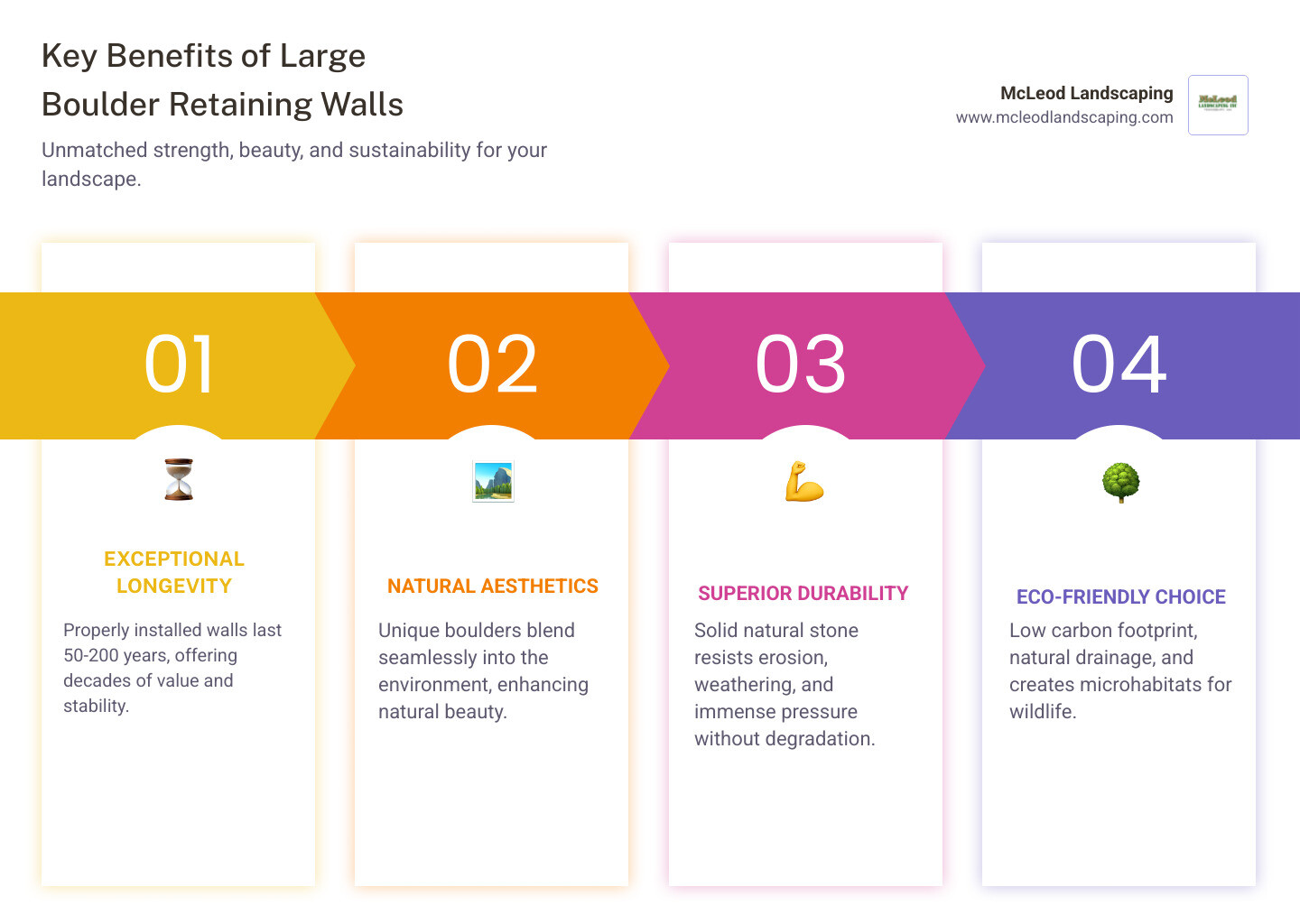
When choosing a retaining wall, large boulder retaining walls offer a unique combination of raw strength, natural beauty, and longevity that manufactured materials can’t match.
First, their durability is best. Boulders are solid, natural stone tested by nature for millions of years. They resist erosion, weather extremes, and immense pressure. A correctly installed boulder wall can last 50 to 200 years—a true legacy structure.
Next is the aesthetic appeal. Each boulder has unique textures, colors, and shapes, meaning your wall will be one-of-a-kind. Boulders blend seamlessly into the landscape, creating a perfect transition between your home and the natural world.
Finally, consider the environmental benefits. Boulder walls support local ecosystems by creating microhabitats in their nooks and crannies for beneficial insects and small wildlife, enhancing local biodiversity.
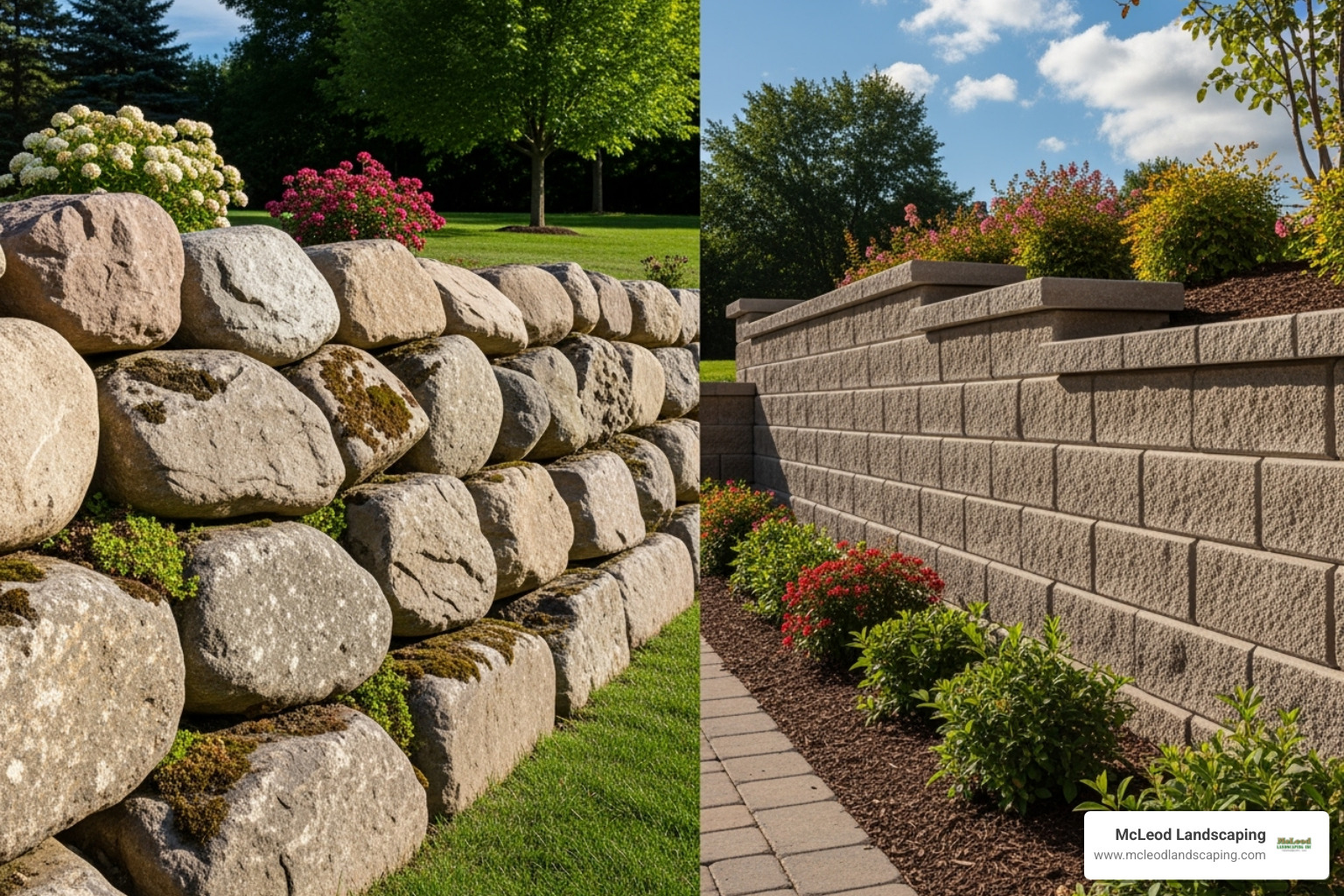
Let’s see how boulders stack up against other popular materials:
| Material Type | Cost (Avg. per sq ft)* | Lifespan (Avg. Years) | Appearance | Maintenance |
|---|---|---|---|---|
| Boulder Walls | $25 – $90+ | 50 – 200 | Natural, organic, unique, blends with landscape | Very low, occasional inspection |
| Concrete Block | $15 – $50 | 30 – 70 | Uniform, manufactured look, various colors | Moderate, can require cleaning/repairs |
| Gabion Walls | $10 – $40 | 50 – 100 | Industrial, cage-like, filled with stone | Low, can settle over time |
| Dry-Stack Stone | $20 – $85 | 50 – 100+ | Rustic, natural, no mortar | Low, can shift if not properly installed |
*Note: These are average cost ranges based on internet data and not actual costs for McLeod Landscaping. Project costs vary significantly based on site conditions, material availability, and design complexity.
While concrete blocks may cost less upfront, they require replacement decades sooner. When you factor in the minimal maintenance and exceptional lifespan of boulder walls, they often prove more cost-effective over time.
For more information on various retaining wall options, check out our dedicated page on Landscape Retaining Walls. For insights into the materials, the Stone Wikipedia article is a great resource.
Choosing the right boulder type affects both structural integrity and appearance. In the Merrimack Valley, we have access to beautiful varieties.
The endless color and texture variations allow us to match the stone to your home and landscape. For ideas, browse these visual inspiration for boulder walls on Pinterest.
Installing a large boulder retaining wall is an environmentally responsible choice.
The success of a large boulder retaining wall depends on careful planning. Every site in the Merrimack Valley is unique, and we assess each one thoroughly before building.
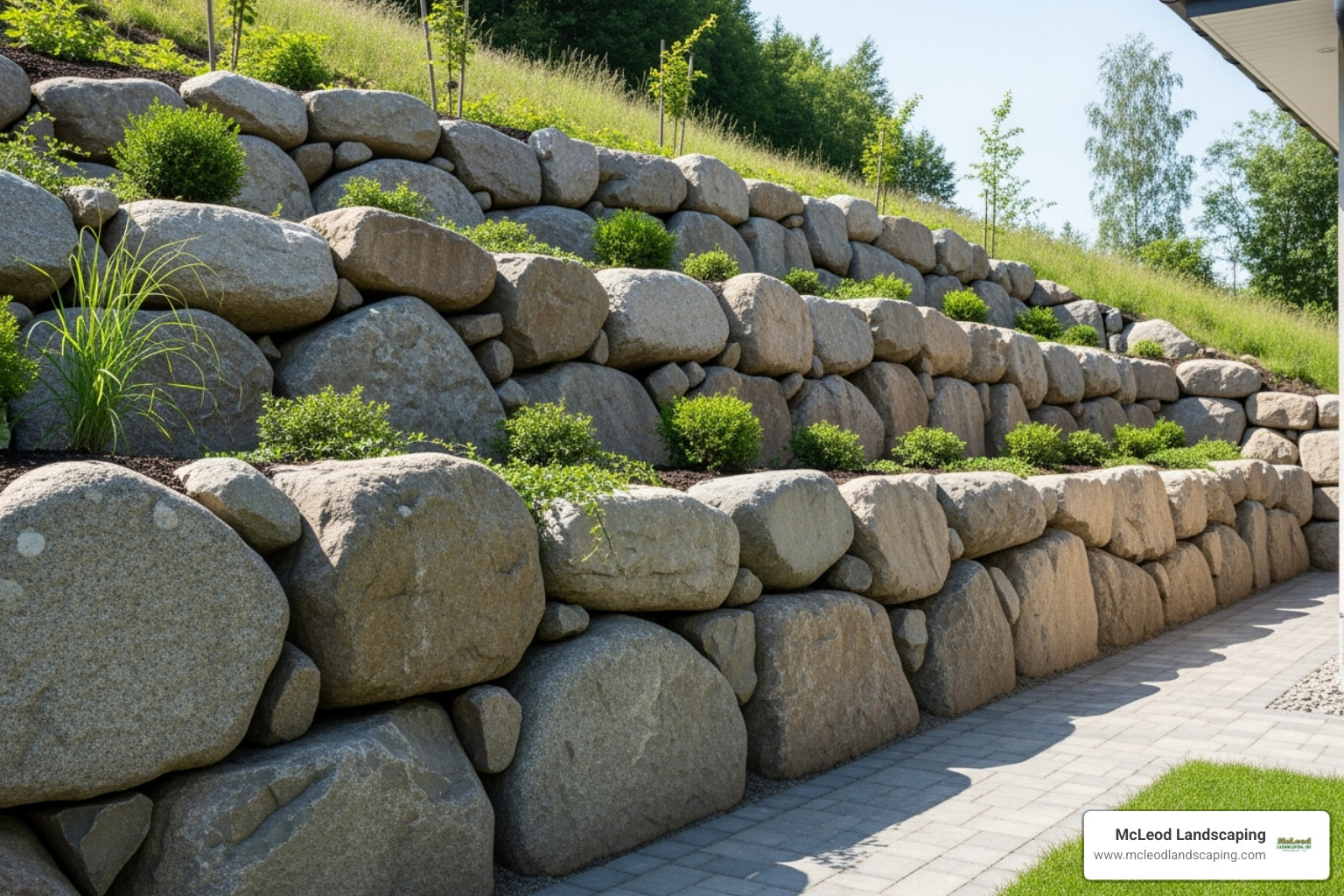
Our site assessment includes:
For more on construction principles, explore our Building a Retaining Wall guide.
Estimating materials is a multi-step process:
In communities like Chelmsford and Tewksbury, local building codes govern retaining wall construction.
Attempting a large wall without proper permits and engineering is risky and can lead to wall failure, property damage, or legal issues. Professional expertise is essential for a large boulder retaining wall that will stand the test of time. For help finding qualified professionals, visit our page on Retaining Wall Contractor services.
Let’s discuss the investment for a large boulder retaining wall. Every project is unique, so costs vary. Disclaimer: The prices below are based on general internet data, not actual quotes from McLeod Landscaping. We provide detailed, custom quotes for every project to ensure accuracy.
Several factors shape the final price:
Based on industry averages, here’s what you might expect to invest. Actual costs can vary dramatically.
Unstable soil may require geogrid reinforcement, which can increase labor costs but is vital for long-term stability.
While the upfront investment for large boulder retaining walls can be substantial, it’s a one-time cost for a permanent landscape feature. Spread over a 50 to 200-year lifespan with minimal maintenance, the value is exceptional. For help finding the right professional, learn more about choosing a Retaining Wall Contractor.
Building a large boulder retaining wall is a satisfying process, but it’s not a DIY project. It requires skill, precision, and specialized equipment. At McLeod Landscaping, we’ve spent over 30 years perfecting our installation process, understanding that the details determine if a wall lasts 50 years or 200.
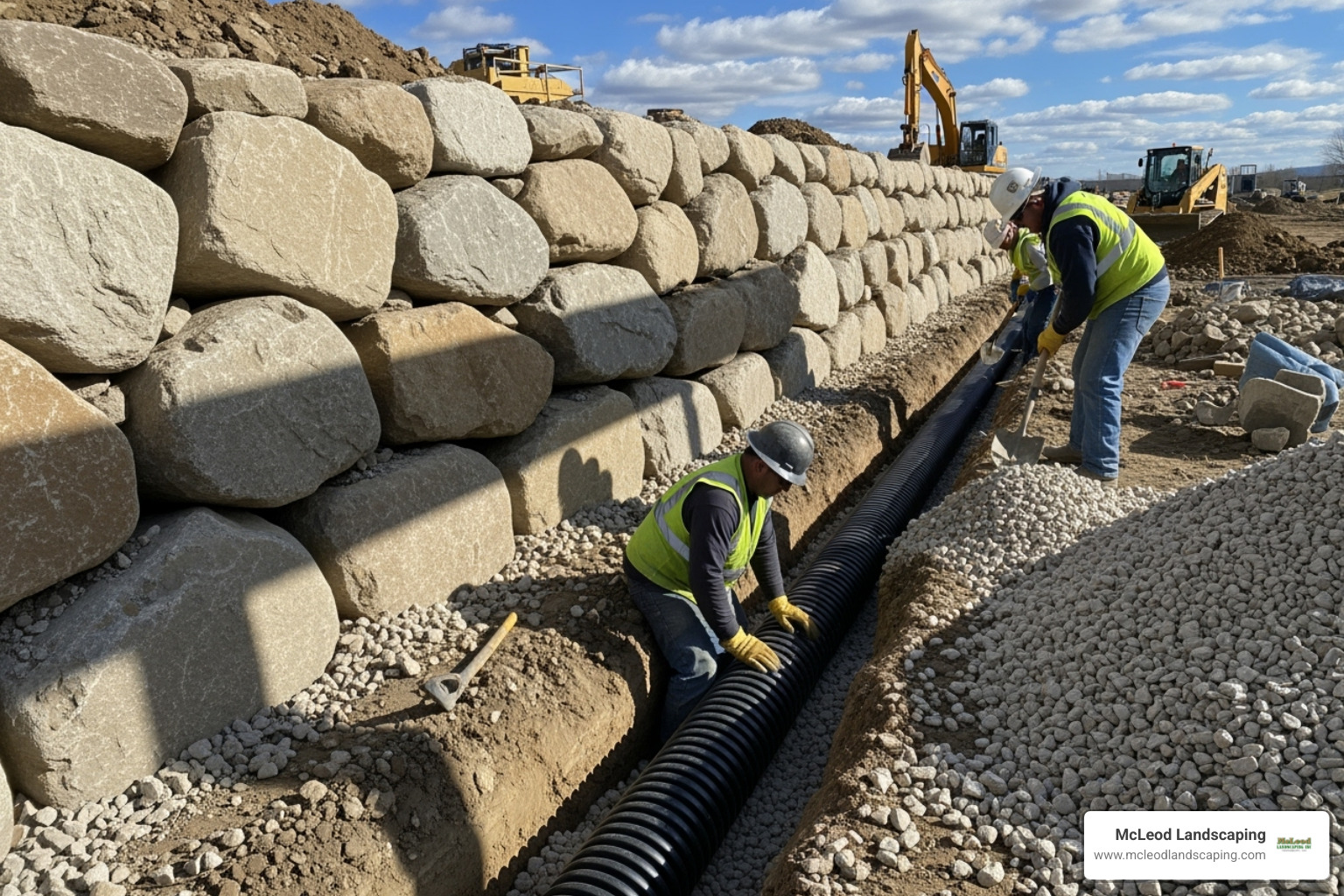
Safety is paramount when moving stones weighing hundreds of pounds. Our trained operators use clear communication, and all personnel wear proper safety gear. For professional hardscaping, explore our Hardscape Installation Services.
Properly installed large boulder retaining walls are remarkably low-maintenance. However, a few simple steps ensure maximum longevity:
With proper installation and minimal care, a large boulder retaining wall can easily last 50 to 200 years, making it a multi-generational investment in your property.
We often receive questions from property owners in the Merrimack Valley about large boulder retaining walls. Here are answers to the most common inquiries.
Proper drainage is the lifeline of your wall. Without it, trapped water creates hydrostatic pressure, a powerful outward force that can cause the wall to bulge, crack, or fail. In our Massachusetts climate, this water can freeze and expand, causing even more damage.
Poor drainage also leads to saturated soil, which is heavier and weaker, and can cause erosion that undermines the wall’s foundation. A comprehensive drainage system—including gravel, a perforated pipe, and filter fabric—is essential. It allows water to pass through harmlessly, preventing pressure buildup and ensuring the wall’s longevity.

While a small garden wall might be a DIY project, most large boulder retaining walls require professional installation. You need a professional if:
Professionals understand the nuances of interlocking boulders, creating the correct batter angle, and designing effective drainage. These skills are honed over years of experience and are critical for a safe, long-lasting wall.
A properly installed large boulder retaining wall can last from 50 to 200 years, making it one of the most durable hardscaping investments.
Where a wall falls in that range depends on several factors:
Compared to other materials that may need replacement every 30-50 years, the incredible lifespan and minimal maintenance of boulder walls make them a cost-effective choice over the long term.
A well-built large boulder retaining wall is a unique structure, combining natural beauty with engineering strength to create a feature that can outlast most buildings. These walls do more than hold back soil; they transform unusable slopes into functional, neat outdoor spaces.
As we’ve covered, large boulder retaining walls are a remarkable investment due to their 50 to 200-year lifespan, minimal maintenance, and natural aesthetics. They are also an environmentally sound choice. However, their success hinges on thorough site assessment, proper drainage, and professional installation, which is essential for safety and longevity.
At McLeod Landscaping, we have over 30 years of experience building these magnificent structures across the Merrimack Valley, from Andover to Westford. Our expertise in residential and commercial hardscaping ensures we can design and build a wall that is not only strong but also perfectly suited to your landscape.
If you’re ready to solve an erosion problem, create terraced gardens, or add a stunning natural focal point to your property, a large boulder retaining wall is an excellent solution. These walls add lasting value and beauty for generations.
Request a consultation for your Retaining Wall Installation today, and let’s build a lasting legacy for your landscape.
Contact McLeod Landscaping today at (978) 640-0957 or click here to schedule a consultation for retaining wall installation. Let our experienced team design and install a functional and visually appealing retaining wall that enhances your landscape.


1881 Main St Unit 1, Tewksbury, MA 01876