
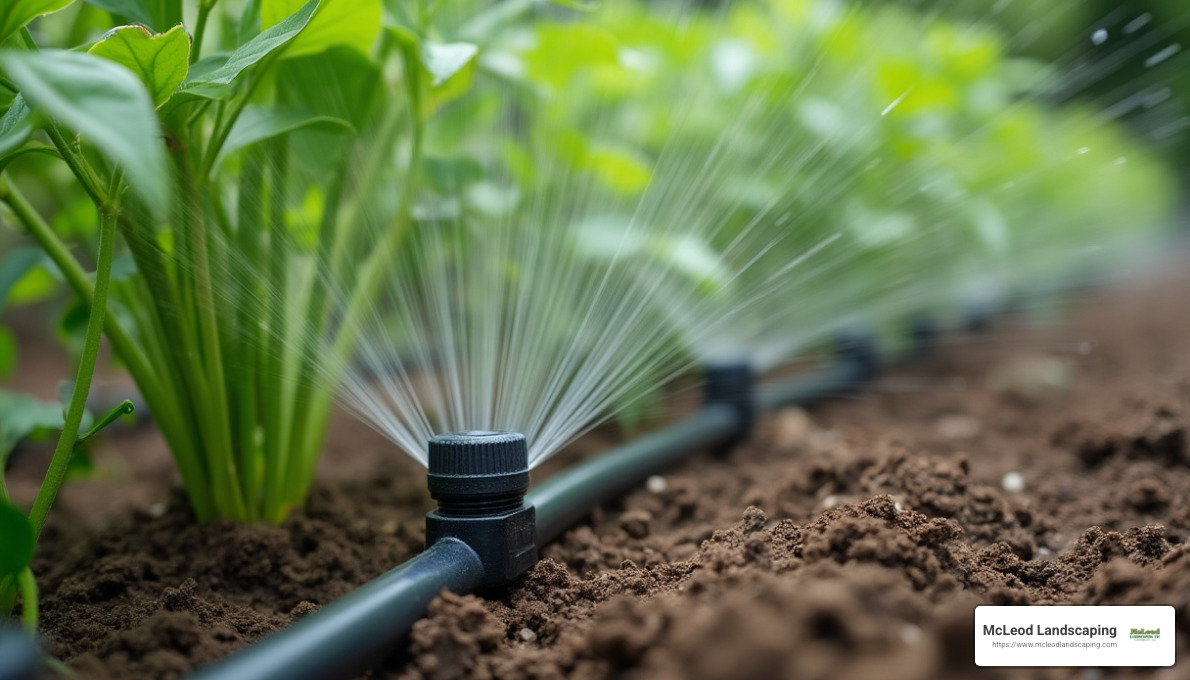
Lawn drip irrigation system is a powerful solution for achieving efficient watering and water conservation in your landscape. Instead of soaking the entire area, it delivers water right where plants need it most – at the roots. This targeted approach can save up to 50% more water compared to traditional methods, leading to healthier plants and lower water bills. Here’s a quick overview:
By choosing drip irrigation, you’re committing to a smarter, more sustainable approach to maintaining your lawn and garden.
My name is Scott McLeod, and as the owner of McLeod Landscaping, I’ve spent over 30 years helping clients find the right technologies like the lawn drip irrigation system to improve their landscapes. Our team is dedicated to providing solutions that ensure both beauty and sustainability. Let’s explore how these systems can revolutionize your lawn care in our next segment.
Lawn drip irrigation system word roundup:
– types of lawn irrigation systems
– best irrigation system for lawns
– how does a lawn irrigation system work
A lawn drip irrigation system consists of several key components that work together to deliver water efficiently and directly to the roots of your plants. Understanding these components is crucial for maximizing the benefits of your system.
Switching to a lawn drip irrigation system comes with numerous advantages that can transform your lawn care routine.
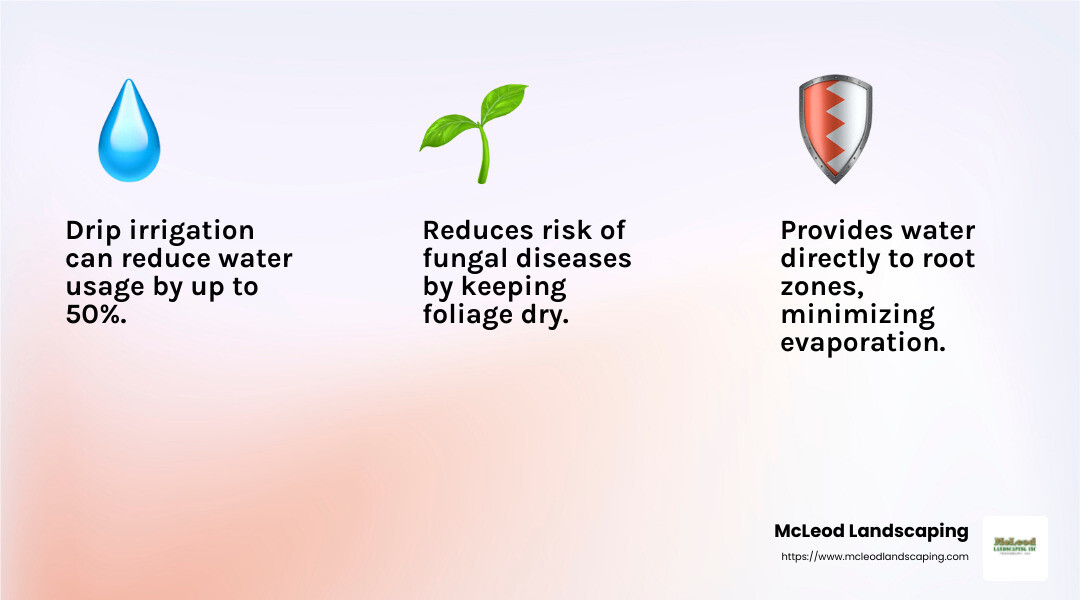
Drip irrigation not only saves water but also promotes a healthier lawn by preventing common issues associated with over-watering. Embracing this technology is a step towards a more sustainable and environmentally friendly landscape.
In the next section, we’ll dig into the installation and maintenance of these systems, offering insights into both DIY approaches and professional services.
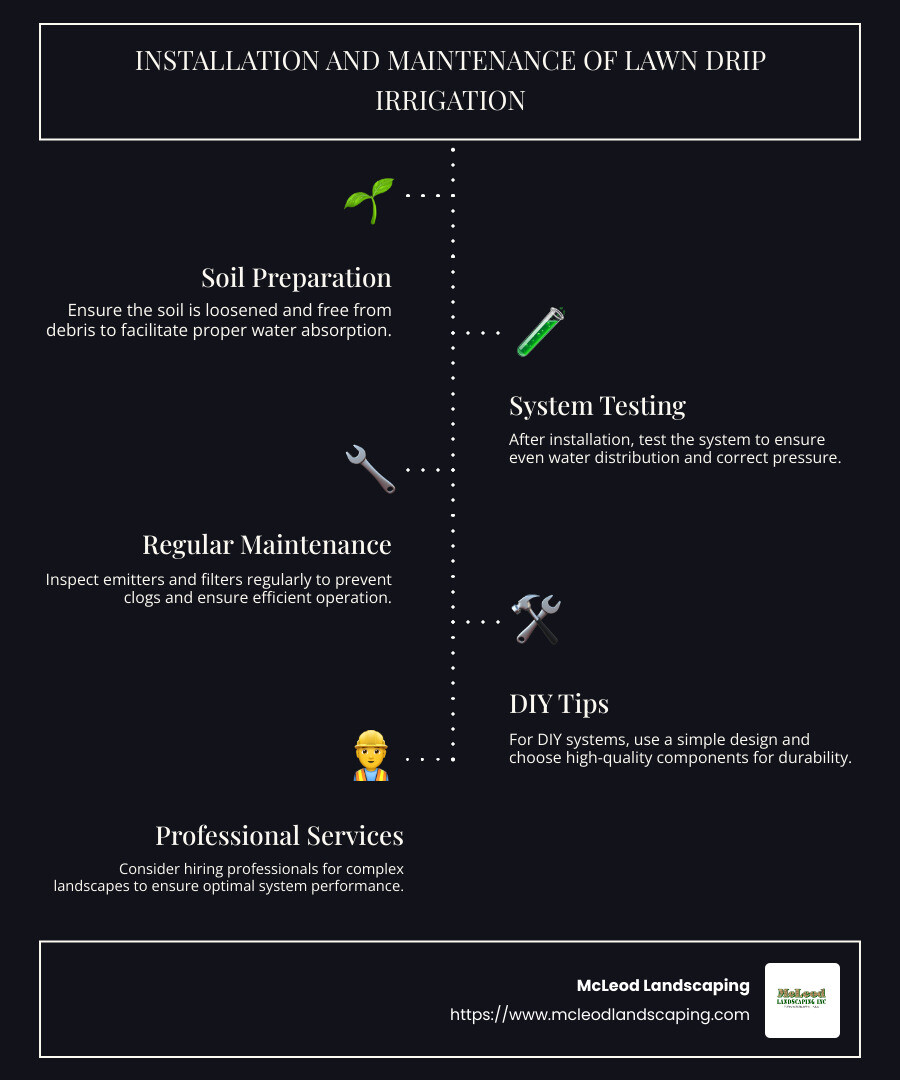
Installing a lawn drip irrigation system can be a rewarding project, whether you choose to do it yourself or hire a professional. Let’s explore the options and what each entails.
Soil Preparation
Before installing your system, proper soil preparation is key. Make sure the soil is free of debris and has good drainage. This will ensure that water from the drip system reaches plant roots efficiently. Testing your soil’s pH and nutrient levels can also help in making adjustments for optimal plant health.
System Testing
Once installed, it’s crucial to test your system. Check for even water distribution and ensure there are no leaks. Adjust the emitters and pressure regulators as needed to achieve the desired flow rate. Regular testing prevents future issues and ensures the system operates effectively.
Regular Maintenance
Maintenance of your drip system is straightforward but important. Regularly inspect emitters for clogs and clean filters to prevent blockages. Keep an eye on the pressure regulators and ensure they are functioning correctly. This will prolong the life of your system and maintain its efficiency.
DIY Tips
For those opting for a DIY installation, here are a few tips:
Professional Services
Hiring a professional can save time and ensure a flawless installation. Professionals bring expertise and experience, which can be especially beneficial for complex landscapes. They can also offer advice on system design and future expandability.
Cost Considerations
The cost of installing a lawn drip irrigation system varies. DIY projects can be more budget-friendly, but they require time and effort. Professional installations may cost more, but they offer peace of mind and often come with a warranty. Consider your budget and the complexity of your landscape when making a decision.

Choosing between DIY and professional installation depends on your comfort level with the project and your specific needs. Both options can lead to a successful and efficient irrigation system that conserves water and supports a healthy lawn.
In the next section, we’ll address some frequently asked questions about lawn drip irrigation systems, including tips on maintenance and troubleshooting common issues.
The 30/30 rule is a handy guideline for setting up your lawn drip irrigation system. It suggests that you run your system for 30 minutes and then wait 30 minutes. This helps you observe how well the water is absorbed by the soil. If you notice water pooling or runoff, you might need to adjust the flow rate or emitter placement.
Drip Lines and Flow Rate
Drip lines are the backbone of your system, distributing water directly to the plant roots. The flow rate, often measured in gallons per hour (GPH), determines how much water is delivered. It’s crucial to select emitters with the right flow rate for your soil type and plant needs. For example, clay soil, which drains slowly, may require lower flow rates, while sandy soil may need higher rates to ensure adequate moisture.
Maintaining a subsurface drip irrigation (SDI) system is key to its longevity and effectiveness. Regular inspections are vital. Here’s what to focus on:
Despite their efficiency, drip irrigation systems can face some common issues:
By staying proactive with inspections and maintenance, you can ensure your lawn drip irrigation system delivers water efficiently, saving you time and resources while keeping your lawn lush and healthy.
Next, we’ll explore more on how McLeod Landscaping can assist with expert installation and water stewardship.
At McLeod Landscaping, we understand that a well-designed lawn drip irrigation system is more than just a convenience—it’s a commitment to water stewardship and the health of your landscape. Our team of experts is dedicated to providing top-notch installation services that ensure your system is efficient and effective, helping you conserve water while maintaining a vibrant lawn.
With over 30 years of experience, our professionals have honed their skills in designing and installing irrigation systems custom to your specific needs. We use the latest technology and high-quality materials to guarantee a system that will stand the test of time. Our meticulous process includes careful soil preparation, precise system testing, and thorough regular maintenance, ensuring your lawn receives the perfect amount of water with minimal waste.
Water is a precious resource, and at McLeod Landscaping, we take our responsibility seriously. By choosing a lawn drip irrigation system, you’re not only investing in your landscape but also making a conscious choice to reduce water usage. Our systems are designed to minimize evaporation and runoff, delivering water directly to the roots where it’s needed most. This approach not only conserves water but also helps prevent plant diseases by keeping foliage dry.
Whether you’re considering a DIY installation or opting for professional services, McLeod Landscaping is here to guide you every step of the way. Our commitment to excellence and sustainability makes us the trusted choice for irrigation solutions in the Merrimack Valley.
Ready to transform your landscape with a water-efficient irrigation system? Contact us today to schedule a consultation and learn more about our expert services. Let’s work together to create a greener, more sustainable future.
Contact McLeod Landscaping today at (978) 640-0957 or click here to schedule a consultation for retaining wall installation. Let our experienced team design and install a functional and visually appealing retaining wall that enhances your landscape.


1881 Main St Unit 1, Tewksbury, MA 01876