
Lawn irrigation system service is essential for maintaining a healthy, lush landscape while conserving water and saving money. If you’re looking for professional irrigation service, here’s what you need to know:
A properly maintained irrigation system doesn’t just keep your lawn green—it protects your landscape investment while reducing water waste and preventing costly repairs.
Modern irrigation systems are sophisticated technology requiring specialized knowledge to maintain. From smart WiFi controllers that adjust watering based on weather forecasts to precise drip irrigation that delivers water directly to plant roots, today’s systems offer remarkable efficiency—but only when properly serviced.
I’m Scott McLeod, owner of McLeod Landscaping, and I’ve been providing professional lawn irrigation system service to residential and commercial properties throughout the Merrimack Valley for over three decades, helping clients maintain beautiful landscapes while maximizing water efficiency.
Lawn irrigation system service further reading:
– how does a lawn irrigation system work
– lawn irrigation system repair
– types of lawn irrigation systems
Ever wondered how those sprinklers know exactly when to pop up and keep your lawn looking lush? A lawn irrigation system might seem magical, but it’s actually a cleverly designed network that delivers water right where your landscape needs it.
At its heart, a lawn irrigation system service involves understanding a system that’s essentially a team of components working together. Water travels from your home’s supply through a backflow preventer (keeping your drinking water safe), then journeys through underground pipes to reach different areas of your yard.
Think of your controller as the brain of the operation—it sends signals to open valves in specific zones, allowing water to flow exactly where and when it’s needed. This precision is what makes modern irrigation so efficient compared to dragging hoses around your yard!

Water pressure is crucial to your system’s success. Too little pressure and those sprinkler heads won’t perform their cheerful pop-up dance. Too much pressure can damage components and send water spraying where it shouldn’t go. Most home systems work best between 30-50 PSI—just right for effective watering without waste.
Today’s systems have gotten incredibly smart! Modern irrigation can include rain sensors that tell your system to skip watering when it’s raining, soil moisture sensors that measure exactly how thirsty your soil actually is, and weather-based controllers that adjust watering based on evapotranspiration rates.
For more detailed information about irrigation system components and functionality, check out the Irrigation Association’s consumer resources.
Think of zones as neighborhoods in your irrigation community. Each zone waters a specific area with similar needs—your thirsty vegetable garden won’t be on the same schedule as your drought-tolerant native plants.
A well-designed zone includes several key players working together. The main line carries water from your source, connecting to a valve that controls when water flows. From there, smaller lateral lines branch throughout the zone, ending at sprinkler heads that distribute water to your plants.
This zoning strategy recognizes that your lawn has different needs than your flower beds. Your lawn might need frequent, shallow watering, while your shrubs prefer deeper, less frequent drinks—zones make this customization possible.
The journey water takes from source to sprinkler is a choreographed dance of timing and pressure. Your controller sends an electrical signal to a specific zone’s solenoid valve, which opens to allow water flow. As water pressure builds, it forces sprinkler heads to pop up from their hiding spots in your lawn.
Each sprinkler head delivers water at a specific precipitation rate—measured in inches per hour—ensuring even coverage without wasteful runoff. After the programmed run time, the controller closes the valve, pressure drops, and sprinkler heads retreat back into the ground until their next performance.
This entire process happens automatically, keeping your landscape hydrated with remarkable precision. When properly maintained through regular lawn irrigation system service, this engineering marvel can provide decades of reliable performance while conserving our precious water resources.
Let’s explore the wonderful world of irrigation options for your lawn! Whether you’re considering a new system or upgrading an existing one, understanding the different types available will help you make the best choice for your landscape’s specific needs.
Traditional hand-watering with a hose might seem cost-effective initially, but it’s incredibly time-consuming and often leads to inconsistent results. Portable above-ground sprinklers are affordable but create obstacles for mowing and rarely provide even coverage.
Most homeowners eventually graduate to in-ground sprinkler systems, the gold standard for residential irrigation. These systems feature underground pipes and pop-up sprinkler heads that disappear when not in use, offering beautifully even coverage while operating automatically.

For garden beds and landscaped areas, drip irrigation systems deliver water directly to plant roots through small tubes with emitters. The benefits include up to 50% water savings compared to traditional sprinklers, fewer weeds, reduced disease risk, and precise targeting.
Micro-spray systems combine the best of both worlds, using small spray heads on stakes to deliver a gentle mist to plants—perfect for groundcover areas and dense plantings.
Environmentally conscious homeowners might consider rainwater harvesting systems that collect water from roofs and other surfaces, storing it for irrigation use.
More info about Types of Lawn Irrigation Systems
The right irrigation system for your property depends on several key factors. If you have steep slopes, drip irrigation or micro-sprays will help prevent runoff, while traditional sprinklers work beautifully on flat surfaces.
Your soil type matters too. Sandy soils drain quickly and may need more frequent, shorter watering cycles, while clay soils retain moisture longer but require slower application rates.
Different plants have different water needs, which is why a thoughtful zoning strategy is so important. Grouping plants with similar water requirements together allows for more efficient water use.
More info about Choosing the Right Irrigation System for Your Landscape
The latest irrigation technology isn’t just cool—it’s a smart financial investment. WiFi controllers connect to local weather stations and automatically adjust watering schedules based on rainfall, temperature, and seasonal needs. Many allow you to monitor and control your system from your smartphone.
Advanced systems now offer leak detection capabilities, identifying unusual flow patterns that might indicate problems. These systems can automatically shut down affected zones and alert you before significant damage occurs.
Look for controllers with EPA WaterSense certification, which indicates they meet strict standards for water efficiency. Many local utilities offer rebates for WaterSense-certified equipment, making the upgrade even more affordable.
Smart controllers typically reduce water usage by 20-50% compared to traditional timers, meaning your investment often pays for itself within just a few years.
Think of your irrigation system like your car—regular maintenance keeps it running smoothly and prevents costly breakdowns. Lawn irrigation system service isn’t just a good idea; it’s essential for keeping your landscape lush while protecting your investment.
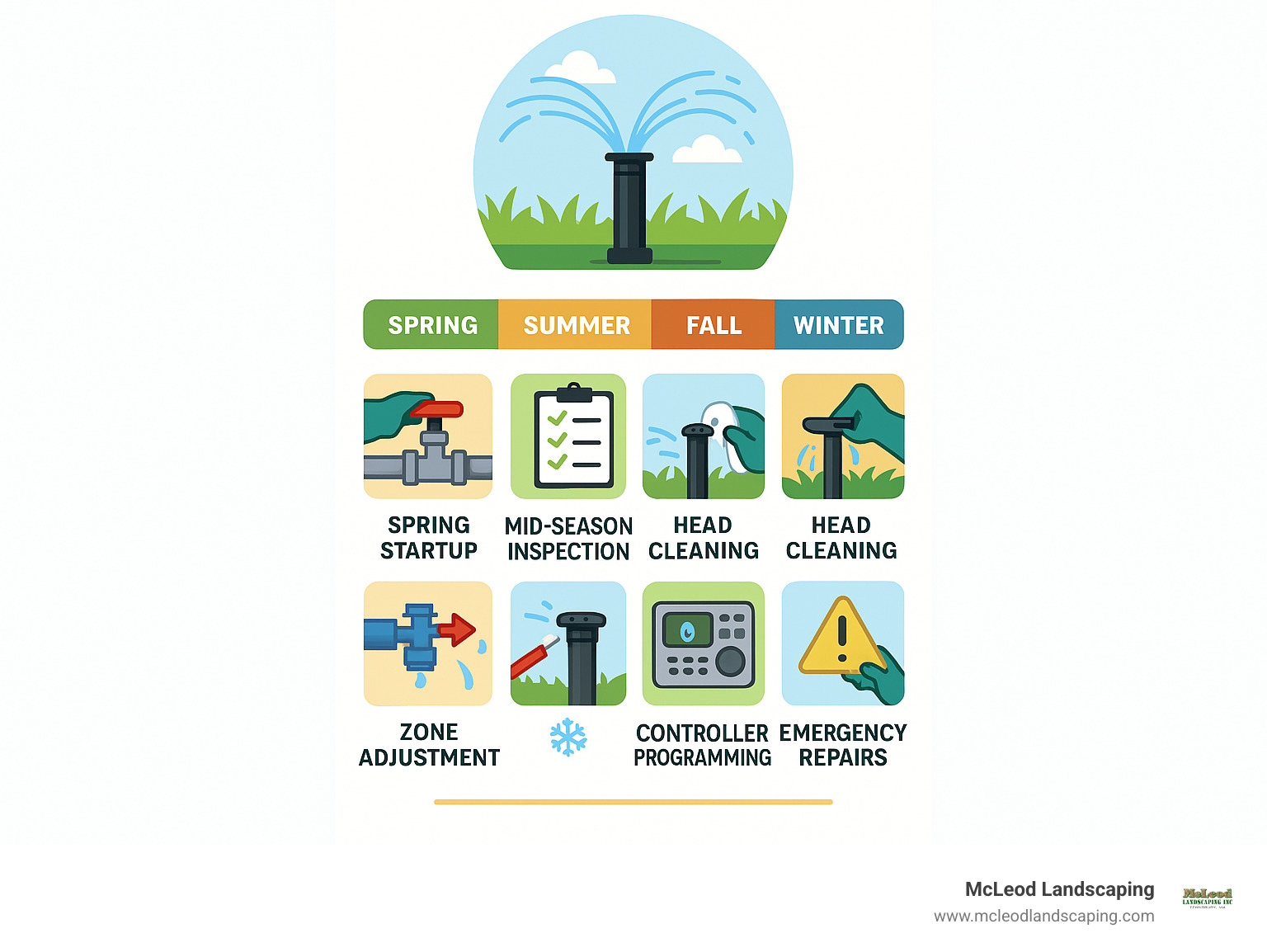
Your irrigation system needs different care as the seasons change. Here’s what a comprehensive maintenance program typically includes:
During Spring Start-Up (March-May), a professional technician will carefully pressurize your system, check for winter damage or leaks, and test each zone. They’ll also clean or replace clogged heads and reprogram your controller for spring conditions.
By mid-summer (June-August), a mid-summer tune-up addresses issues that have developed during the growing season, checking for proper coverage, adjusting heads that may be blocked by growing plants, and fine-tuning run times.
When autumn leaves begin to fall, Fall Winterization (October-November) protects your system from freezing temperatures by shutting down the controller, using compressed air to blow all water from the pipes, and insulating above-ground components.
Don’t forget the annual Backflow Testing required by most municipalities to ensure your drinking water remains protected from potential contaminants.
More info about Lawn Sprinkler System Maintenance
While professional service is essential, there are several things homeowners can do between visits to keep their systems performing optimally.
On a monthly basis, run a manual test cycle and observe each zone in operation. Look for broken or misaligned heads, check for leaks or unusually soggy areas, and clear any debris that might be blocking sprinkler heads.
Quarterly maintenance tasks include cleaning or replacing filters, checking your controller’s battery backup, inspecting valve boxes for water pooling, and adjusting run times based on seasonal weather changes.
Once a year, consider replacing worn washers and seals, checking wiring connections, verifying your rain sensor operation, and inspecting for any root intrusion in pipes.
Industry data shows properly maintained systems typically last 15-25 years, while neglected systems often fail after just 5-10 years.
More info about Irrigation System Services
The backflow preventer might not be the most exciting part of your irrigation system, but it’s arguably the most important for your family’s safety. This device prevents irrigation water from flowing backward into your home’s drinking water supply.
Annual testing of backflow preventers isn’t just good practice; it’s often required by municipal codes. Only certified backflow testers should perform this important safety check.
Beyond protecting your drinking water, proper lawn irrigation system service offers significant environmental benefits. Well-maintained systems apply water at appropriate rates, preventing runoff that can carry fertilizers and chemicals into storm drains and natural waterways. Fixing leaks, adjusting heads, and optimizing run times can reduce water usage by 20-50%, conserving this precious resource while lowering your water bill.
Even the best irrigation systems occasionally need repairs. When your sprinklers start acting up, knowing what to look for and when to call in the experts can save your lawn—and your wallet.
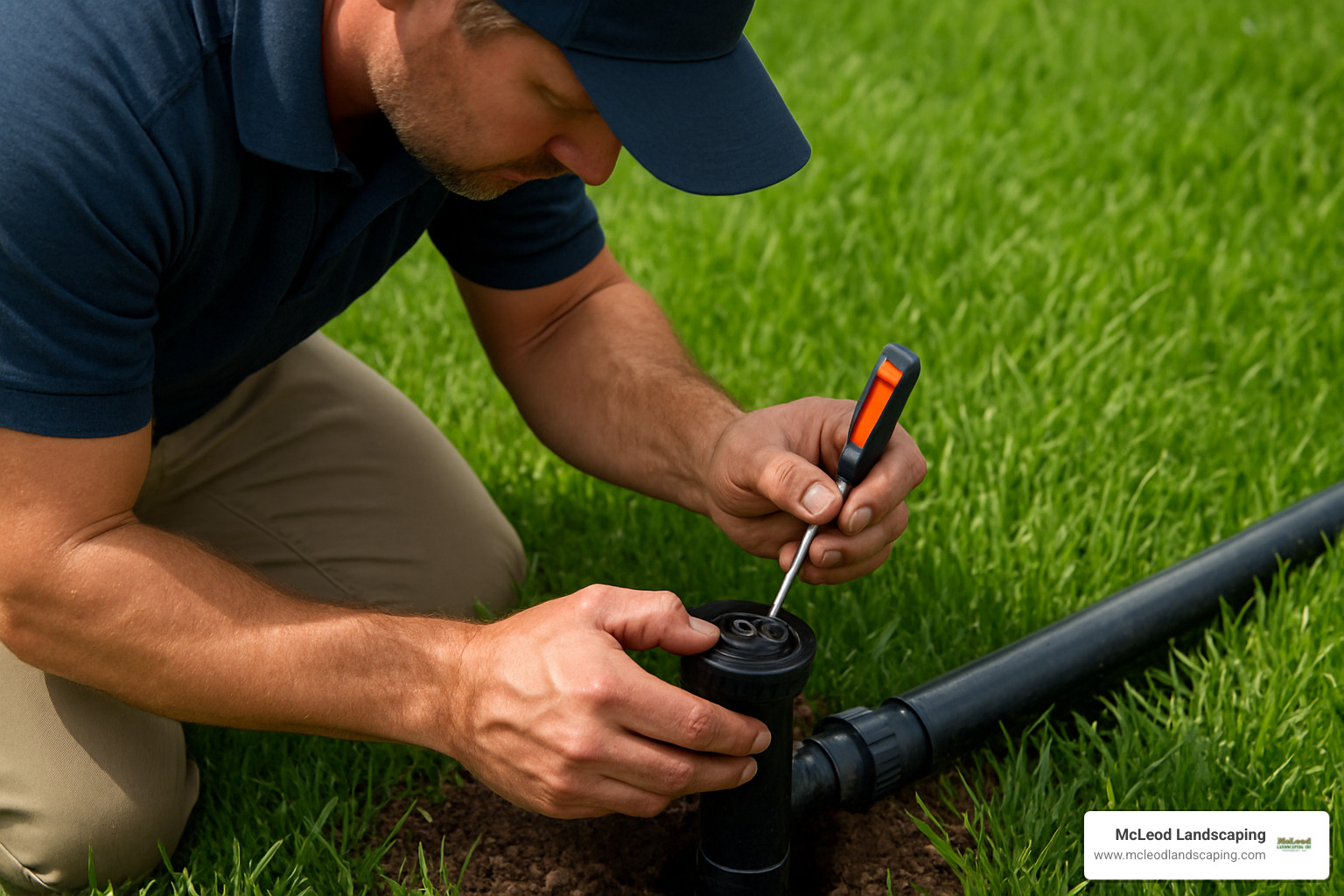
Clogged sprinkler heads are among the most common issues homeowners face. If you notice uneven spray patterns or heads that aren’t spraying at all, dirt or mineral buildup is likely the culprit. This is often a simple fix you can handle yourself—just remove the head, take it apart, give it a good rinse, and reinstall.
When your system suffers from low pressure (weak spray or heads that won’t fully pop up), the cause could be anything from leaky pipes to having too many heads on a single zone. This typically requires professional diagnosis.
Leaking valves announce themselves with water pooling near valve boxes or zones that run when they shouldn’t. The usual suspects are worn diaphragms, debris preventing proper closure, or damaged solenoids.
If zones aren’t activating or your system ignores its schedule, you might need controller reprogramming or replacement.

A well-maintained system should serve you for 15-25 years overall, though individual components have their own timelines. High-quality sprinkler heads might last 10-15 years, while basic models often need replacement after just 2-3 years. Valves typically perform well for 10-15 years, controllers generally need upgrading every 7-10 years, and underground PVC pipes can last 25-50+ years with proper care.
When it’s time for lawn irrigation system service, choosing the right company makes all the difference. Look beyond the lowest price and consider these essential qualifications:
Certifications matter tremendously in the irrigation world. The Irrigation Association (IA) offers respected credentials like Certified Irrigation Technician (CIT) and Certified Irrigation Contractor (CIC) that demonstrate proven expertise.
Always verify insurance and licensing before hiring anyone to work on your property. A reputable company will happily provide proof of liability coverage and any required local licenses.
Experience is perhaps the most valuable qualification. Companies with decades in the field have literally seen and solved thousands of irrigation problems.
Don’t just take a company’s word for their quality—ask for references from current clients with properties similar to yours, and actually contact them.
Finally, inquire about warranty coverage. Professionals who stand behind their work offer solid guarantees on both parts and labor.
More info about Sprinkler System Troubleshooting
When you find water gushing from a broken pipe or sprinkler head, first locate the main shut-off valve for your irrigation system and turn it off. If possible, identify which zone is affected to help your service provider diagnose the problem faster. Take photos to document the issue, then contact a professional irrigation service company right away.
For minor issues you might tackle yourself, start by isolating the problem to a specific zone or component. Dig carefully around buried parts (after marking utility lines), then inspect for damage like cracks or worn components.
More info about Fix Lawn Sprinkler System
Investing in a proper irrigation system is one of the smartest decisions you can make for your landscape’s health and your water bill. Let’s break down what you can expect to pay and how to care for your system throughout the year.
When it comes to installation, the price tag varies considerably based on your property’s unique characteristics. For a small, straightforward setup, average costs start around $350, while more extensive systems for larger properties can exceed $5,000 according to industry data. A typical quarter-acre residential property usually averages around $2,500, while a one-acre property might run approximately $9,800.

Annual service plans typically range from $150-$500 depending on your system’s size and how frequently you need service. Individual visits like spring startup or winterization generally cost between $50-$150 each. When repairs become necessary, costs can range from about $50 for a simple head replacement to $700+ for major valve or pipe issues.
These are industry averages based on internet data—for a personalized assessment of your property’s irrigation needs, it’s always best to consult with experienced professionals like the team at McLeod Landscaping.
With proper professional care, your irrigation system can be quite the long-term companion. A well-maintained system typically lasts 15-25 years overall. Your higher-end sprinkler heads should give you 10-15 years of reliable service, while basic heads might need replacement after 2-3 years.
For optimal results, water 2-3 times weekly rather than daily. This encourages deeper root growth, making your lawn more drought-resistant. Each zone should run for about 10-20 minutes, though this varies based on your soil type and sprinkler head precipitation rate.
Early morning (between 4-10 AM) is the golden time for watering. This minimizes evaporation and reduces the risk of fungal diseases that thrive in prolonged moisture.
Your irrigation system needs different care throughout the year:
In spring, schedule a professional startup before your growing season kicks into high gear. This is the time to inspect for winter damage, clean filters, check valve operation, and make sure your heads are providing proper coverage.
During summer, you’ll likely need to increase watering frequency during hot spells. Keep an eye out for dry spots and adjust coverage as needed.
As fall approaches, reduce your watering frequency as temperatures cool. This is the time to schedule professional winterization before the first freeze hits.
In winter, ensure your system is properly winterized with all water blown out of the lines. Protect any above-ground components from freezing temperatures.
More info about Lawn Sprinkler System Installation Companies Near Me
Your irrigation system is a bit like your car—it needs regular check-ups to run smoothly. At minimum, your system should receive professional attention twice a year:
A spring startup gets everything ready for the growing season, ensuring your lawn gets the hydration it needs right from the start. Then, a fall winterization protects your investment from freeze damage that could lead to costly repairs.
For truly optimal performance, we recommend a more comprehensive schedule:
– Spring startup (March-May)
– Mid-summer checkup (July-August) to adjust for the hottest months
– Fall winterization (October-November)
– Annual backflow testing (as required by local codes)
Your irrigation system often gives clear signals when something’s not right. Think of these as little cries for help that shouldn’t be ignored.
If you notice an unexplained spike in your water bills, that’s your first red flag. Other visible signs include soggy areas or water pooling in parts of your lawn, which often indicate leaks or broken pipes. Conversely, dry patches in an otherwise green lawn suggest certain zones aren’t receiving proper coverage.
Lawn irrigation system service is definitely needed if you observe sprinkler heads not fully popping up, uneven spray patterns, or water misting instead of streaming properly. Water spraying onto sidewalks or driveways isn’t just wasteful—it’s a clear indication that adjustments are needed.

Absolutely! Smart irrigation controllers aren’t just a fancy tech upgrade—they’re genuine water-saving workhorses that can make a significant difference to both your lawn and your wallet.
Weather-based controllers automatically adjust your watering schedule based on local conditions. That means your system won’t run during rainstorms or when soil moisture is already adequate. Flow sensors add another layer of protection by detecting leaks quickly and preventing water waste.
Industry data shows these smart controllers can reduce outdoor water usage by an impressive 20-50% compared to traditional timers. Many water utilities offer rebates for WaterSense-certified smart controllers, enhancing their return on investment.
For more information on smart irrigation technology, check out the EPA’s WaterSense program resources.
Your lawn irrigation system is more than just pipes and sprinklers—it’s an investment in your property’s beauty and value. Professional lawn irrigation system service ensures this investment continues to pay off through water savings, healthier landscapes, and a system that stands the test of time.
Here at McLeod Landscaping, we’ve spent over three decades helping homeowners and businesses throughout the Merrimack Valley maintain beautiful, water-efficient landscapes. Our team doesn’t just fix broken sprinklers—we partner with you to create irrigation solutions that work for your unique property needs.
When you choose professional maintenance, you’re making a smart decision that typically extends your system’s lifespan from the usual 5-10 years to an impressive 15-25 years. A well-maintained system typically uses 20-50% less water than neglected ones, delivering moisture exactly where and when your plants need it.
Whether you need spring startup service in Andover, system upgrades in Burlington, winterization before the first freeze in Chelmsford, or you’re considering a complete new installation in Tewksbury, our certified technicians bring decades of local experience to every property we service.
Don’t wait until you spot those telltale brown patches or receive a water bill that makes your eyes pop. Preventive maintenance is always more affordable than emergency repairs or premature system replacement.
Take the first step toward irrigation peace of mind today. Your lawn will thank you, your water bill will shrink, and you’ll enjoy the satisfaction of knowing your landscape is receiving exactly the care it needs—no more, no less.
More info about irrigation services & free quote
Contact McLeod Landscaping today at (978) 640-0957 or click here to schedule a consultation for retaining wall installation. Let our experienced team design and install a functional and visually appealing retaining wall that enhances your landscape.


1881 Main St Unit 1, Tewksbury, MA 01876