
Lawn sprinkler system maintenance is essential for keeping your lawn lush, vibrant, and healthy. Proper maintenance ensures efficient irrigation and contributes significantly to water conservation. Here’s what you need to know in a nutshell:
In this guide, we’ll explore why keeping up with sprinkler maintenance is vital for a thriving landscape. Regular care not only prevents costly repairs but also ensures environmentally-friendly water usage that benefits your lawn and the planet.
I’m Scott McLeod, and with over three decades of experience in landscaping and lawn sprinkler system maintenance in the Merrimack Valley area, I’m committed to helping you enjoy a flourishing landscape. Let’s explore the essentials of maintaining your sprinkler system for long-term efficiency.
Explore more about lawn sprinkler system maintenance:
– fix lawn sprinkler system
– how does a lawn sprinkler system work
– how to lawn sprinkler system
Maintaining your lawn sprinkler system is crucial for a vibrant and healthy landscape. Let’s break down the essentials you need to keep your system in top shape.
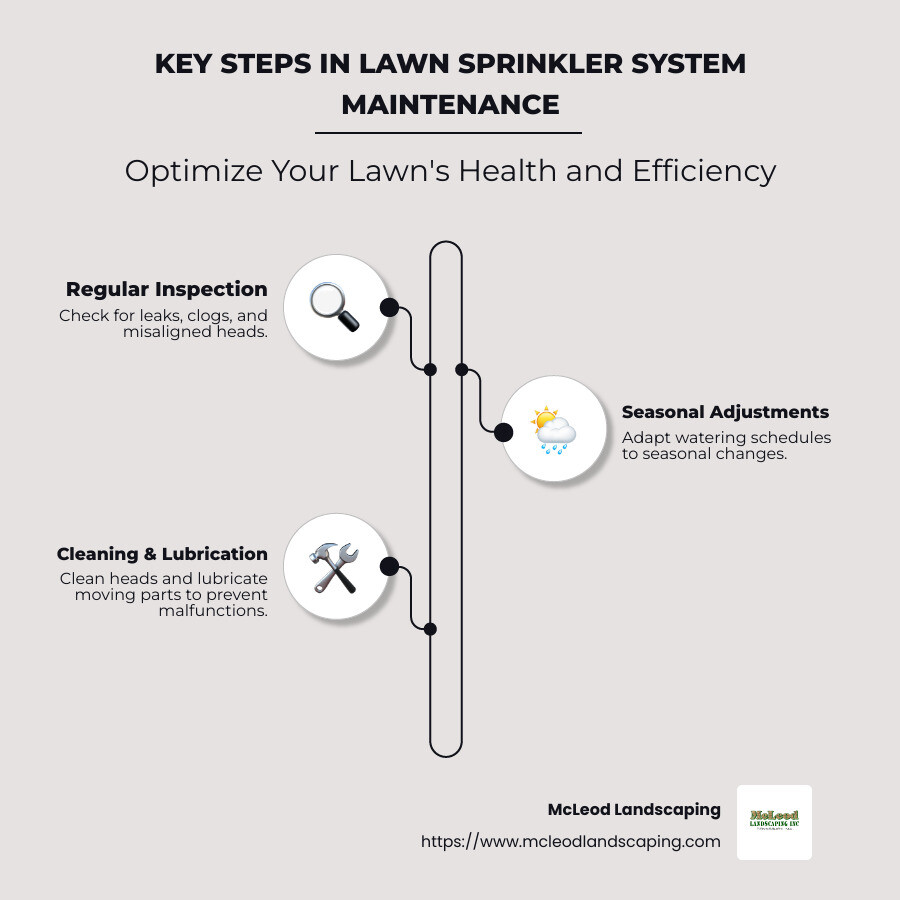
Over time, dirt and debris can clog your sprinkler heads, causing uneven watering. Regular cleaning is key. Simply remove the heads and rinse them under water to clear any blockages. A clean system ensures your lawn gets the water it needs without waste.
Regular inspection is your first line of defense against system problems. Check for leaks, misaligned heads, and damaged parts. An inspection can save you from bigger issues down the road. If you spot a problem like a leaking head or a misdirected spray, fix it promptly to avoid water waste and potential lawn damage.
Sprinkler heads and valves can become stiff over time. A little lubrication goes a long way to keep them moving smoothly. Focus on moving parts during the summer months to prevent jams and ensure optimal performance.
Low water pressure can lead to poor coverage, while high pressure might damage your system. Use a pressure gauge to check your system’s pressure regularly. Adjust the valves as needed to maintain the ideal pressure range. This ensures even watering and prolongs the life of your sprinkler system.
Your lawn’s watering needs change with the seasons. In North Texas, for instance, you might water three to four times a week in summer and just once or twice in winter. Adjust your watering schedule accordingly to avoid over or under-watering your lawn. This not only conserves water but also reduces stress on your system.
By focusing on these lawn sprinkler system maintenance essentials, you’ll keep your system running smoothly and your lawn looking its best. Up next, we’ll dive into seasonal maintenance tips to further improve your lawn care routine.
Maintaining your sprinkler system is a year-round task. Each season brings its own challenges and requirements. Let’s explore how to keep your system in top shape throughout the year.
Before the cold sets in, it’s crucial to winterize your sprinkler system. Freezing temperatures can cause pipes to burst, leading to costly repairs. Drain all the water from the system to prevent freezing. You can use compressed air to blow out any remaining water from the lines. Also, insulate any above-ground pipes and valves to protect them from the cold.
As the frost melts away, spring is the perfect time to check your system for any winter damage. Inspect each sprinkler head for cracks or clogs. Make sure all heads are aligned correctly and test the system for leaks. Spring is also a great time to flush the system, clearing out any debris that may have accumulated during the winter months.
During the hot summer months, your system works harder to keep your lawn lush and green. Keep things running smoothly by lubricating the moving parts of your system. This includes sprinkler heads and valves, which can become stiff or jammed due to increased use. Proper lubrication ensures your system operates efficiently and reduces wear and tear.
As leaves fall and temperatures drop, it’s time to clean your system in preparation for winter. Remove any debris from around the sprinkler heads and clear out the gutters to prevent clogs. A thorough cleaning helps prevent blockages and maintains optimal water flow. This is also a good time to adjust your watering schedule as your lawn’s needs decrease with the cooler weather.

By following these seasonal maintenance tips, you’ll ensure your sprinkler system is ready to face any weather and keep your lawn thriving. Next, we’ll tackle troubleshooting common sprinkler issues to help you address any problems quickly and efficiently.
Even with regular maintenance, sprinkler systems can encounter problems. Knowing how to troubleshoot common issues can save you time and keep your lawn looking great.
Clogs are a frequent issue in sprinkler systems, often caused by dirt and debris accumulating in the sprinkler heads or filters. To address clogs:
Regular cleaning can prevent clogs from becoming a recurring problem.
Leaks can lead to water waste and higher bills. They often occur due to damaged seals or valves. To fix leaks:
Addressing leaks promptly can save water and money.
Misaligned sprinkler heads can cause uneven watering, leaving some areas dry and others soaked. To correct misalignment:
Proper alignment ensures your lawn receives uniform watering.
Low or high water pressure can affect the performance of your system. To troubleshoot water pressure issues:
Maintaining the right water pressure is crucial for efficient irrigation.
By addressing these common issues promptly, you can keep your sprinkler system functioning at its best. Next, we’ll explore advanced maintenance techniques to further improve your system’s performance.
To keep your lawn sprinkler system maintenance routine up-to-date, incorporate advanced techniques that leverage technology and ensure your system’s longevity. Here are some cutting-edge methods that can take your irrigation system to the next level:
Incorporating smart technology into your irrigation system can revolutionize how you manage your lawn. Smart irrigation tools use sensors to monitor weather conditions, soil moisture, and water flow. This data allows the system to adjust watering schedules automatically, optimizing water usage and ensuring your lawn gets exactly what it needs.
You can also control these systems remotely via smartphone apps, making it easier to manage your lawn’s irrigation even when you’re not at home. These tools can alert you to potential issues like leaks or clogs before they become significant problems, saving you time and money in the long run.
Your sprinkler system relies on electricity to function correctly, so it’s important to ensure the electrical components are in good condition. Voltage testing is a straightforward way to check if your system is operating within the optimal range. You’ll need a multimeter for this task.
Testing the voltage annually, especially before the watering season, can help identify electrical issues early.
If your sprinkler system is over a decade old, it might be time to consider upgrades. Newer systems are designed with energy efficiency in mind and often come with improved features like smart controllers and improved sprinkler head designs. These upgrades can not only save water but also reduce energy costs.
Consult with an irrigation specialist to explore available upgrades that suit your lawn’s needs. Investing in modern technology can pay off in the long run, providing better performance and reliability.
By integrating these advanced techniques into your lawn sprinkler system maintenance routine, you can ensure your system remains efficient and effective for years to come. Next, we’ll address frequently asked questions about maintaining your sprinkler system.
A sprinkler system is like any other mechanical system—regular maintenance is key to keeping it running smoothly. Inspection, cleaning, and adjustment are the three pillars of a good maintenance routine:
Flushing your sprinkler system is crucial for removing any trapped debris that could lead to clogs. Aim to flush your system twice a year.
Yes, lubrication is important to prevent jams and ensure smooth operation.
By following these maintenance practices, you can keep your sprinkler system in top condition, ensuring a lush and healthy lawn all year round. Next, we’ll explore some common issues you might encounter and how to troubleshoot them effectively.
A well-maintained sprinkler system is the backbone of a vibrant and healthy lawn. McLeod Landscaping offers expert services to ensure your irrigation system stays in optimal condition, providing long-term savings and peace of mind.
Professional Inspection: Regular professional inspections can catch potential issues before they escalate. With over 30 years of experience, McLeod Landscaping’s specialists are adept at identifying and resolving problems that could lead to inefficient watering or costly repairs. By catching these issues early, you can avoid unnecessary expenses and keep your lawn looking its best.
Long-Term Savings: Investing in regular maintenance not only prolongs the life of your sprinkler system but also leads to significant savings in water bills and repair costs. Efficient systems use water wisely, contributing to both environmental conservation and financial savings.
Expert Support: Whether you need a routine check-up or are considering an upgrade to a smart irrigation system, McLeod Landscaping is here to help. Their irrigation systems services ensure that your lawn receives the care it deserves, changing your landscape into a thriving oasis.
By partnering with McLeod Landscaping, you can enjoy a lush, green lawn while benefiting from the expertise and dedication of a trusted local company.
Contact McLeod Landscaping today at (978) 640-0957 or click here to schedule a consultation for retaining wall installation. Let our experienced team design and install a functional and visually appealing retaining wall that enhances your landscape.


1881 Main St Unit 1, Tewksbury, MA 01876