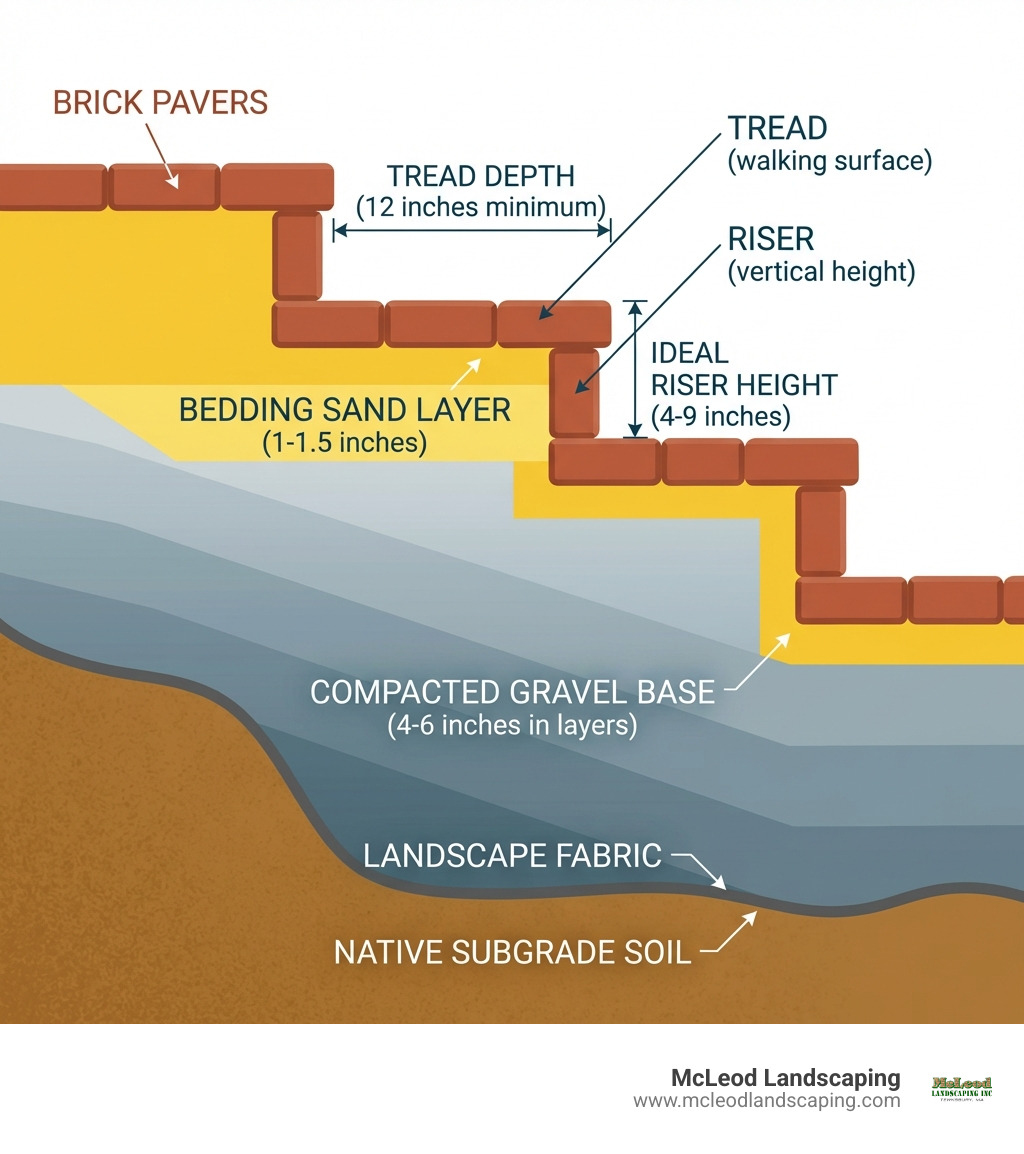
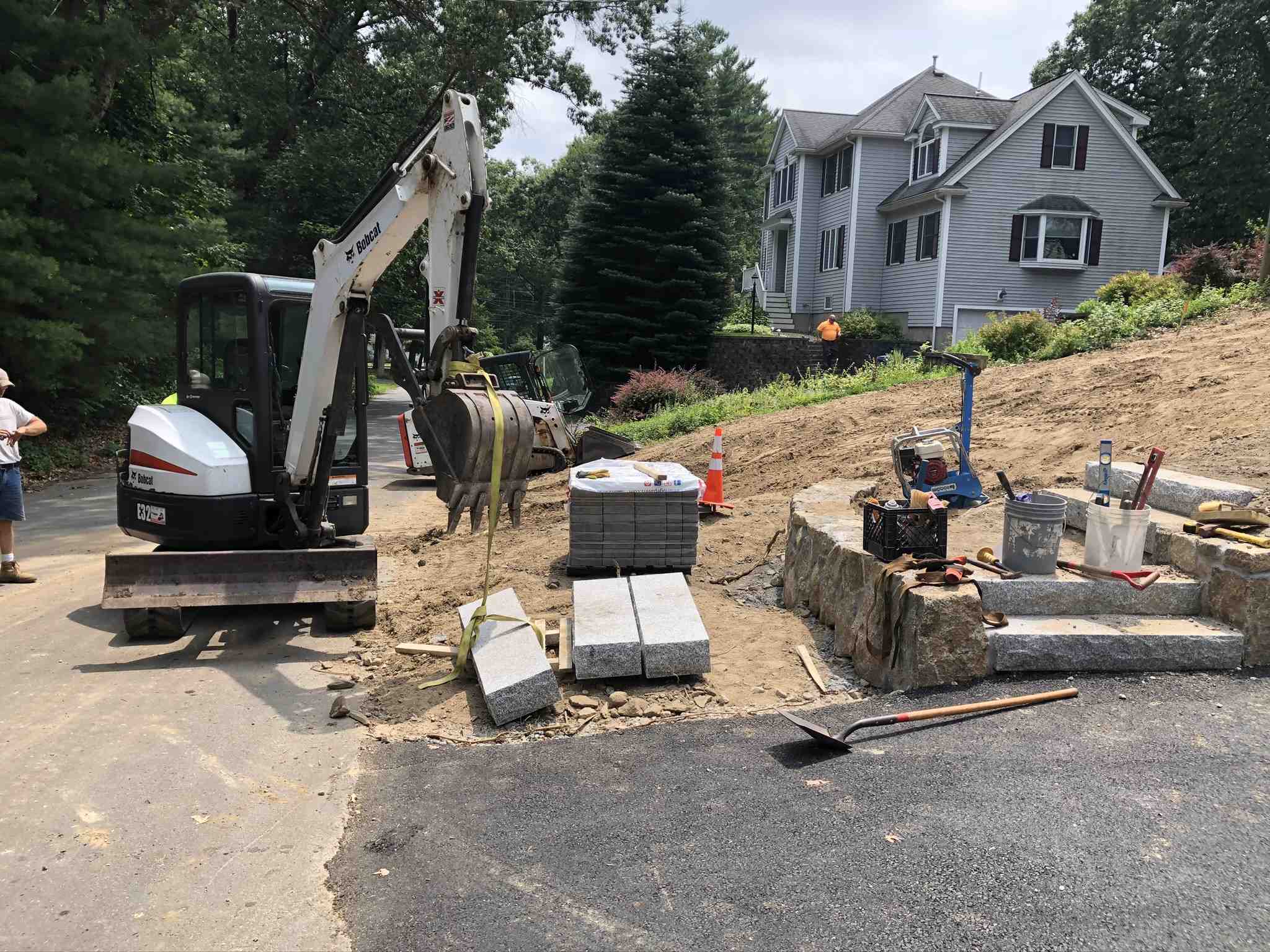
Brick paver steps are outdoor stairs constructed using individual paver units (brick or concrete) set on a compacted gravel base and bedding sand, creating a durable and attractive transition between different elevations in your landscape. They offer a versatile alternative to poured concrete or natural stone, combining visual appeal with practical benefits.
Quick Overview: Building Brick Paver Steps
Plan your design – Measure slope, determine number of steps needed (riser height 4-9″, tread depth ~12″)
Easy repair – Individual damaged pavers can be replaced without redoing the entire structure
Design flexibility – Available in countless colors, patterns, and styles
No cracking – Unlike poured concrete, pavers flex slightly with ground movement
Immediate use – No curing time required, unlike concrete steps
The installation process requires careful planning and physical effort, but it’s achievable for determined DIYers willing to invest the time. The key to long-lasting brick paver steps lies in proper base preparation, which accounts for roughly 80% of the project’s success.
I’m Scott McLeod, owner of McLeod Landscaping, and over the past 30 years I’ve designed and installed countless brick paver steps for both residential and commercial properties throughout the Merrimack Valley. I’ve seen how a well-built set of paver steps can transform not just the functionality of outdoor spaces, but also significantly boost curb appeal and property value—and I’ve also learned from projects where shortcuts in base preparation led to costly repairs down the road.
Planning Your Project: Design, Materials, and Costs
Before digging, thorough planning is the most crucial step. A solid blueprint for your brick paver steps project will save you headaches and ensure your new steps are a beautiful, lasting addition to your home in Tewksbury, Wilmington, or Andover.
Designing Your Brick Paver Steps
Your design should complement your home’s architecture and existing landscape. For inspiration, see resources like Designing Beautiful Landscape Steps.
Key design elements include:
Shape: Straight steps offer a formal look, while curved steps feel more organic.
Landings: For long or steep slopes, landings add resting points and visual interest.
Patterns: Popular choices include classic Running Bond or intricate, strong Herringbone.
Borders: Use a contrasting paver to define edges and add sophistication.
Lighting: Integrate low-voltage lighting in risers for safety and ambiance.
Functional dimensions are crucial for safety and comfort. Aim for a riser height of 4-9 inches (6 inches is ideal) and a tread depth of at least 12 inches. A comfortable width is 35-40 inches.
Brick Pavers: See our guide on Paver Stones for selection.
Paver Base: 3/4-inch dense-grade crushed stone.
Bedding Sand: Coarse ASTM C33 concrete sand (not play sand).
Paver Edging: Plastic or metal edging with stakes.
Landscape Fabric: Heavy-duty geotextile fabric.
Construction Adhesive: Recommended for securing risers.
Polymeric Sand: For filling and locking joints.
Understanding the Costs
The cost of brick paver steps varies based on a DIY vs. professional approach, project complexity, and material choices.
Please note: The following are average costs based on general internet data and are not actual costs for McLeod Landscaping. For a precise quote, please contact us.
DIY Costs: Your main expenses are materials and tool rentals (plate compactor, masonry saw). Expect to spend anywhere from $25 to $80+ per square foot.
Professional Installation Costs: This includes labor, materials, and expertise for a guaranteed result. Professional installation can range from $50 to $150+ per square foot, depending on design complexity and site conditions.
Key Factors Affecting Cost:
Paver Choice: Brand, size, and style of pavers.
Project Complexity: Straight vs. curved steps, landings, integrated walls.
Site Conditions: Accessibility, slope, and soil type.
The Step-by-Step Installation Guide for Brick Pavers Steps
With planning complete, it’s time to build. Precision during this stage is key, as a well-built foundation ensures your steps will last for decades, even through harsh New England winters.
Step 1: Site Preparation and Excavation
Proper site preparation is crucial for a long-lasting installation.
Mark the Layout: Use stakes and string lines to outline the step’s perimeter. For curves, use a garden hose as a guide before marking with spray paint.
Calculate Slope & Rise: Measure the total vertical height (rise) and horizontal distance (run) to determine the number of steps. Use stakes and a level string line. For guidance, see SF Gate’s Home Guide.
Ensure Drainage: The steps must have a slight forward slope of 1-2% (1/8 to 1/4 inch per foot) to shed water away from structures.
Excavate: Dig deep enough for a 4-6 inch compacted base, 1-1.5 inches of bedding sand, and the paver’s height (typically about 12 inches total). Excavate the perimeter wider than the steps for support.
Compact the Subgrade: Use a plate compactor to thoroughly compact the native soil at the bottom of the excavation to prevent settling.
Step 2: Building a Solid Foundation
A stable, well-drained base is the key to longevity.
Lay Landscape Fabric: Place heavy-duty geotextile fabric over the compacted subgrade, overlapping seams by 12-18 inches. This separates the base from the soil while allowing drainage.
Install Paver Base: Add a 4-6 inch layer of crushed stone base (up to 8 inches in high-traffic or frost-prone areas).
Compact in Layers (Lifts): Spread the base material in 3-4 inch layers, compacting each layer thoroughly with a plate compactor before adding the next. Lightly misting with water can aid compaction.
Create the First Riser: Use Retaining Wall Blocks for a sturdy, level foundational riser. Ensure it is perfectly level and seated on the compacted base.
Level the Base: Continuously check for levelness and the correct drainage slope as you build the base.
Step 3: Laying the Pavers and Building Up
Now it’s time to lay the pavers.
Add Bedding Sand: Spread a uniform 1 to 1.5-inch layer of coarse bedding sand over the compacted base. Do not compact the sand.
Screed the Sand: Use a straight 2×4 or metal pipe (screed board) to level the sand to a smooth, even surface, maintaining the correct slope.
Lay the First Tread: Gently place pavers on the sand, starting from an edge. Do not slide them. Lightly tap with a rubber mallet to set them, checking for level as you go.
Build Subsequent Steps: Repeat the process for each step:
Secure riser blocks on the previous tread with construction adhesive.
Backfill behind the riser with compacted base material.
Add and screed a new layer of bedding sand.
Lay the pavers for the next tread, staggering joints for strength.
Cut Pavers: Use a masonry saw with a diamond blade for cuts needed at edges or for patterns. Always wear safety gear.
Install Edge Restraints: Secure plastic or metal paver edging along all exposed sides, nailing it into the base to prevent pavers from shifting.
Fill Joints with Polymeric Sand: Spread polymeric sand over the dry paver surface and use a stiff broom to sweep it into every joint until full.
Compact the Surface: Run a plate compactor (with a protective mat) over the pavers. This settles the pavers and vibrates sand into the joints. Sweep in more sand if needed and repeat.
Activate the Sand: Gently mist the surface with water to activate the polymeric sand, following the manufacturer’s instructions. This hardens the sand, locking the pavers together.
Ensuring Longevity: Maintenance and Common Pitfalls
To ensure your brick paver steps last for decades, especially through Massachusetts’ freeze-thaw cycles, follow these maintenance tips and avoid common installation mistakes.
How to Maintain Your Brick Paver Steps
Consistent care is straightforward and effective:
Routine Cleaning: Regularly sweep away debris and rinse with a garden hose. Use mild soap and a stiff brush for tougher grime.
Weed Control: Pull any weeds that emerge. Re-sanding joints as needed helps prevent future growth.
Top Up Joint Sand: Annually inspect joints and re-apply polymeric sand where it has eroded, activating it with water.
Stain Removal: Clean spills immediately. Use appropriate cleaners for specific stains like oil or rust, testing on a small area first.
Monitor for Frost Heave: A proper base is the best defense. Minor heaving can be fixed by re-leveling individual pavers. For significant issues, consult our Brick Stair Repair Ultimate Guide.
Common Mistakes to Avoid
Most paver failures stem from installation shortcuts. Avoid these pitfalls:
Inadequate Base Preparation: The #1 cause of failure. Never skimp on excavation depth or compaction. The base is 80% of the project’s success.
Forgetting Drainage Slope: A 1-2% slope is essential to prevent water pooling, ice hazards, and frost heave.
Not Compacting in Layers: Always compact the base in 3-4 inch lifts for maximum stability.
Improper Joint Sanding: Incompletely filled joints lead to loose pavers, weeds, and pests.
Skipping Edge Restraints: Edging is crucial to prevent pavers from shifting and spreading.
Using Wrong Sand: Only use coarse ASTM C33 sand for the bedding layer, not play sand or stone dust.
Not Calling 811: Always call 811 to locate underground utilities before you dig.
Deciding whether to tackle the installation of brick paver steps yourself or to hire a professional is a significant decision. It depends on several factors, including your comfort level, the complexity of the project, and your available time.
Project Scale: For a small, simple set of straight steps on relatively level ground, a DIY approach can be rewarding if you’re prepared for the physical labor.
Skill Level: While the steps are outlined, hardscaping requires a good understanding of grading, compaction, and precision. If you’re new to serious DIY projects, this might be a steep learning curve.
Time Commitment: Installing brick paver steps is not a weekend project. It often takes several days, if not longer, especially when accounting for material delivery, tool rental, and proper base preparation. If your time is limited, a professional might be a better choice.
When to Call a Professional:
Complex Designs: If you envision intricate curves, multiple landings, integrated lighting, or complex paver patterns, a professional has the experience and specialized tools to execute your vision flawlessly.
Steep Slopes: Significant changes in elevation or very steep slopes require advanced grading techniques, potentially retaining walls, and specialized engineering to ensure stability and safety. This is where professional expertise is invaluable.
Structural Concerns: If your steps need to support heavy loads, connect to a foundation, or integrate with a larger hardscape project, a professional will ensure all structural requirements and local building codes are met.
Guaranteed Results: A professional hardscaping contractor offers warranties on their work, providing peace of mind that your investment is protected.
For professional results on complex projects, an experienced Hardscaping Contractor like McLeod Landscaping can ensure your steps are beautiful and built to last. We’ve been installing brick paver steps and other hardscape features across the Merrimack Valley, from Lowell to Concord, for over 30 years. We understand the local climate and soil conditions, which is crucial for building durable outdoor structures.
Frequently Asked Questions about Building Brick Paver Steps
How long do brick paver steps last?
With proper installation and diligent maintenance, brick paver steps can last for an impressive 25 to 50 years or even longer. The longevity often surpasses that of many other outdoor step materials, thanks to their interlocking design and flexible nature, which allows them to withstand freeze-thaw cycles better than rigid concrete. The key factors are a well-prepared, compacted base and consistent joint maintenance.
Can you build brick paver steps over existing concrete steps?
Yes, this is a common and popular project known as a concrete overlay or veneering. It involves adhering brick pavers directly over an existing structurally sound concrete step. However, it’s crucial that the underlying concrete steps are in good condition, without significant cracks, crumbling, or settling. The process typically involves cleaning and preparing the concrete surface, applying a strong bonding agent, and then adhering the pavers with a high-strength construction adhesive. It can be a great way to update the look of your home without fully demolishing existing steps. For more specific details, you can explore our page on Brick Over Concrete Steps.
What is the best base material for paver steps?
The best base material for brick paver steps is a compacted layer of dense-grade crushed stone or gravel, often referred to as “3/4-inch minus” or “Type 2” aggregate. This material consists of various sized crushed rocks, including fines, which allow it to interlock and compact tightly. This provides a stable, load-bearing foundation that is permeable, allowing water to drain through, which is critical for preventing frost heave and settling, especially in our Massachusetts climate. We typically recommend a compacted depth of 4-6 inches for pedestrian steps, and sometimes more depending on the subgrade and expected traffic.
Conclusion: Step Up Your Home’s Curb Appeal
Installing brick paver steps is a significant investment that pays dividends in both aesthetics and functionality. Whether you choose the rewarding path of DIY or opt for the expertise of professionals, these steps offer best durability, design versatility, and a classic charm that improves any landscape. They provide safe, inviting transitions, boost your home’s curb appeal, and can significantly increase your property value.
The journey from initial design to enjoying your finished steps is one of careful planning, meticulous execution, and a little bit of elbow grease. But the result—a beautiful, lasting feature that welcomes you home—is truly worth it.
For homeowners in the Merrimack Valley seeking a professional touch for their hardscape projects, including custom brick paver steps, retaining walls, or patios, explore our Exterior Brick Stairs services to get a quote from our expert team. We’re here to help you create the outdoor space of your dreams, built to withstand the test of time and weather.
Contact Us Today
Contact McLeod Landscaping today at (978) 640-0957 or click here to schedule a consultation for retaining wall installation. Let our experienced team design and install a functional and visually appealing retaining wall that enhances your landscape.