
Planting on top of a retaining wall transforms a functional structure into a beautiful, living landscape feature. The key is selecting plants with shallow root systems that thrive in hot, dry conditions while avoiding species with aggressive roots that could damage the wall.
Best Plant Types for Retaining Wall Tops:
Critical Spacing Requirements:
Retaining walls create unique microclimates. The top is hot, dry, and windy—tough conditions for many plants. But the right plants will thrive, creating a stunning feature that also helps stabilize soil and prevent erosion.
With over 30 years of experience in the Merrimack Valley, I’m Scott McLeod, owner of McLeod Landscaping. I’ve seen how proper planting on top of a retaining wall transforms a functional structure into a landscape focal point. The principles are the same for any project: select resilient plants, respect structural needs, and plan for success.
Easy planting on top of retaining wall glossary:
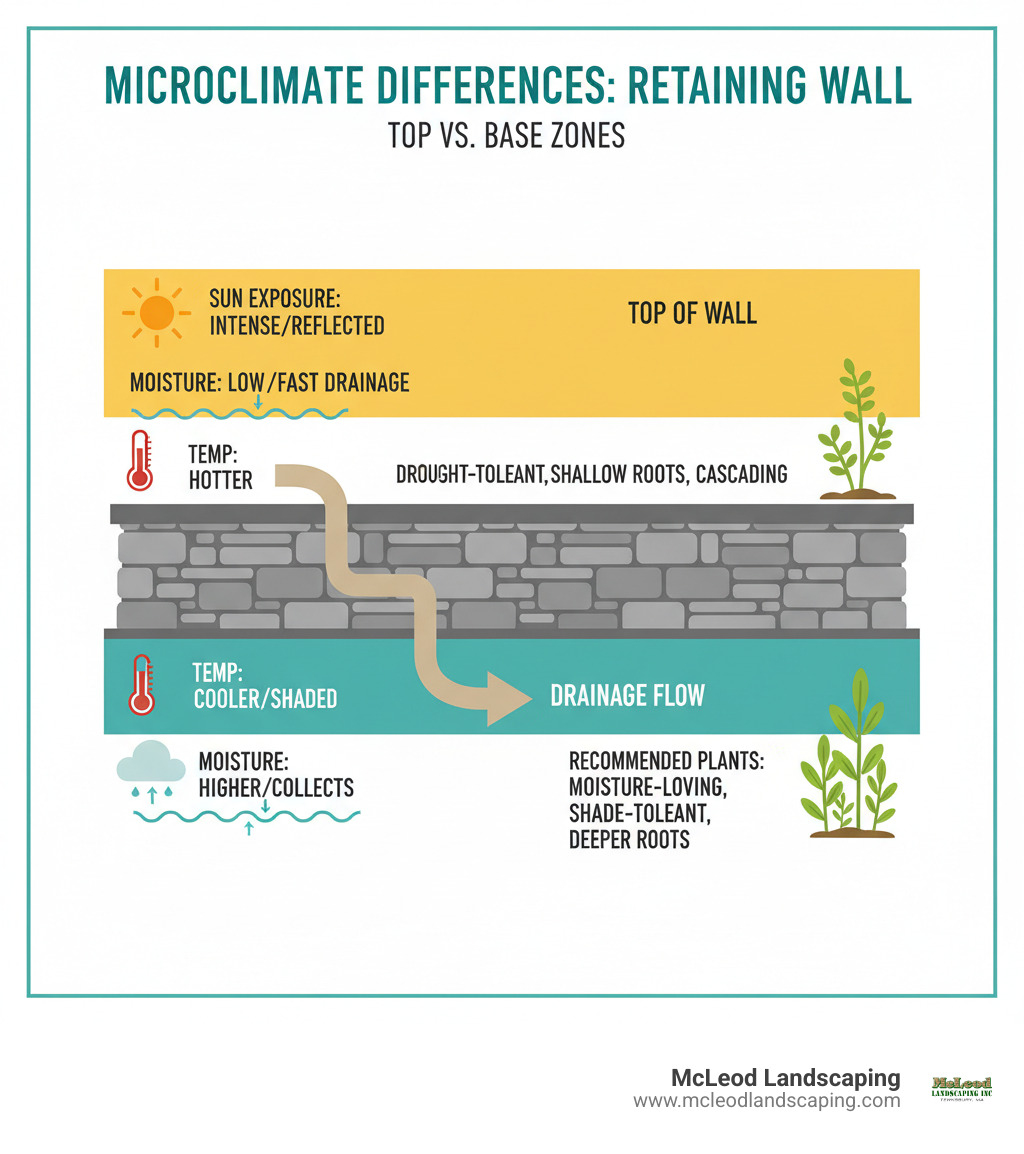
Retaining walls do more than hold back soil; they create unique microclimates. In my work with clients across the Merrimack Valley, from Andover to Wilmington, I explain how these small pockets have different temperatures, moisture, and sunlight than the surrounding yard. Understanding these conditions is key to successful planting on top of a retaining wall and creating a thriving garden.
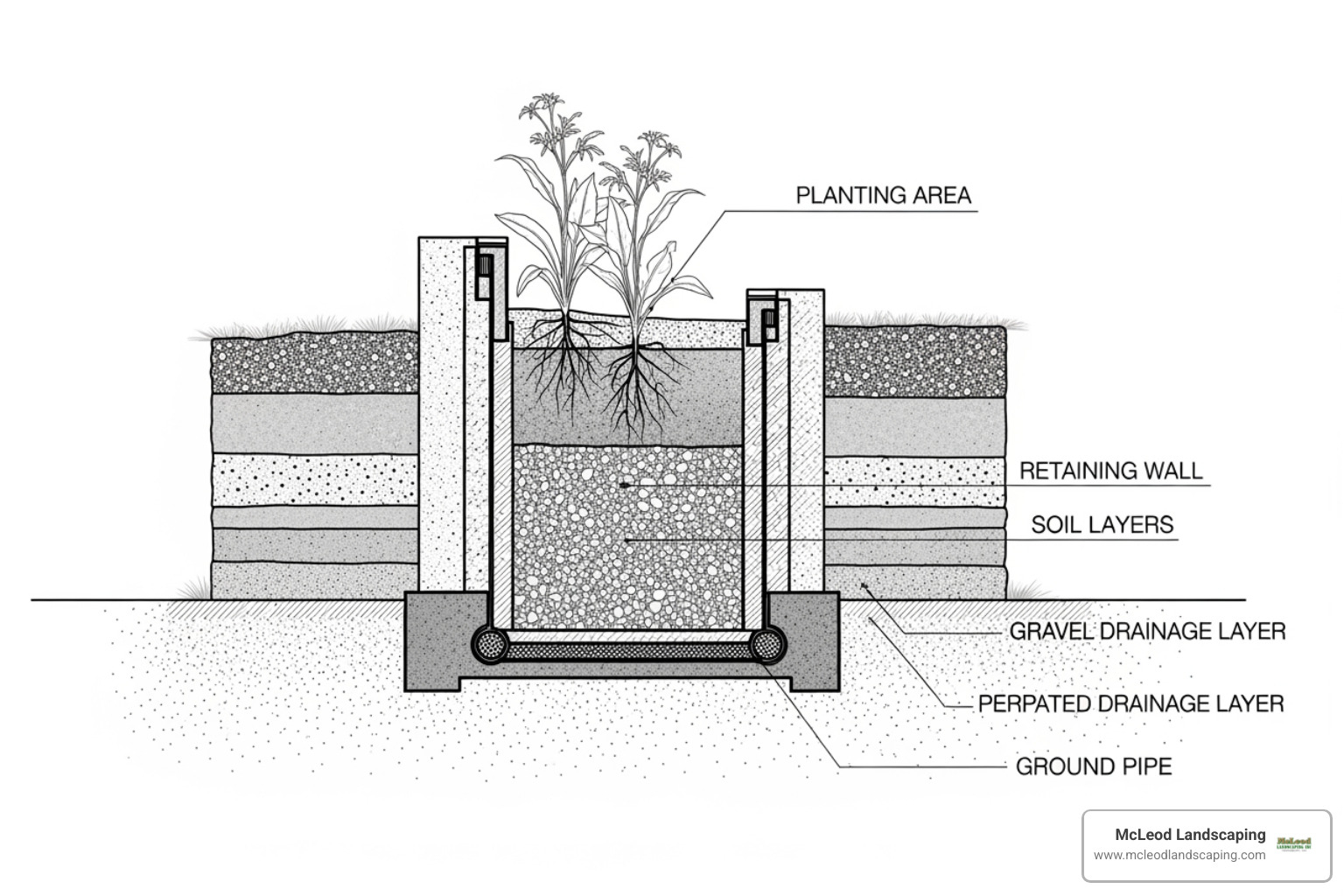
At McLeod Landscaping, we know that integrating a wall means understanding its effect on sun, wind, soil, and temperature. This protects your hardscape and your plants. Learn more in our guide on landscape wall construction.
The top and base of a retaining wall are two different gardens.
The top of your wall is hot, dry, and exposed. The wall material absorbs and radiates heat, making it much warmer than the rest of the landscape. Combined with shallow soil, fast drainage, full sun, and wind, the conditions are harsh. But they are perfect for tough, drought-tolerant plants.
The base of the wall is the opposite: cooler, shadier, and more sheltered from wind. Runoff collects at the base, keeping the soil moist. This is ideal for plants that like cooler, damper conditions, such as hostas and ferns.
Your wall material directly influences plant choices.
Concrete blocks absorb and radiate significant heat, making them ideal for heat-loving plants like sedum and lavender. They can also make soil more alkaline over time. Quality blocks from manufacturers like Belgard have predictable heat properties, which helps in plant selection.
Natural stone also radiates heat, with the effect varying by stone type (e.g., granite vs. limestone). The main factor remains heat reflection.
Wood or timber walls are less common and durable. They absorb less heat than masonry and can acidify the soil. We typically recommend more durable materials.
When planting on top of a retaining wall, always match your plants to the heat generated by your wall material. A sun-baked concrete wall is perfect for succulents, while a shadier spot might support other species.
Planting on top of a retaining wall means gardening in a tough spot: it’s hot, dry, windy, and has shallow soil. The good news is that many plants thrive in these conditions.

The key is to choose plants with shallow roots, drought tolerance, and overall toughness. In my 30 years of experience in areas like Burlington and Chelmsford, I’ve seen the right plants transform a wall.
Top 5 Plant Categories for Retaining Walls:
Cascading plants gracefully spill over a wall’s edge, softening its hard lines and blending the structure with nature.
While specialty plants like the drought-tolerant Yareena™ Myoporum are options, always verify their hardiness for the Merrimack Valley climate.
For low-maintenance options, choose succulents and tough groundcovers. They are built for hot, dry conditions.
As with any specialty plant like Blue Horizon™ Eremophila, confirm it’s suitable for Massachusetts winters before committing.
For structure and year-round interest, use compact shrubs and ornamental grasses. They add texture and height without threatening the wall.
Again, when considering tough ground cover shrubs like Mundi™ Westringia, always verify climate compatibility for our area.
Success with planting on top of a retaining wall comes from matching plants to the extreme conditions. Choose species that thrive in heat, drought, and shallow soil for a beautiful, long-lasting display.
Planting on top of a retaining wall isn’t just for looks; it helps the wall function better. In my 30 years of building hardscapes from Lowell to Tewksbury, I’ve seen how the right plants add beauty and stability.
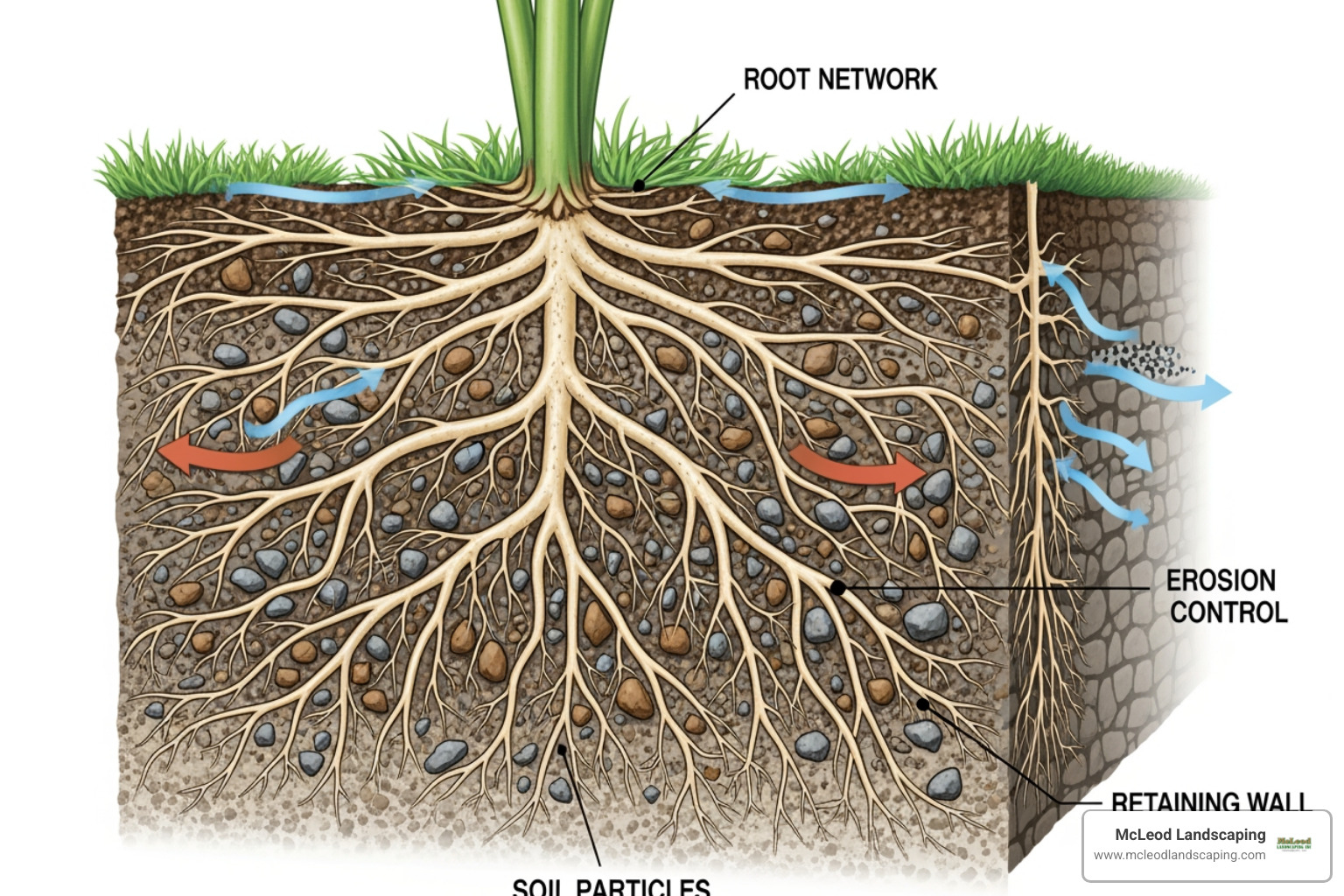
Plants are a wall’s best friend: they hold soil, reduce runoff, and soften hard edges. It’s a win-win for function and beauty. See more ideas in our residential landscaping services.
Plant roots work to keep the soil behind your wall stable. The roots, especially the fibrous root systems of grasses and perennials, create an underground mesh that binds soil particles.
Plant foliage slows rainfall, allowing it to soak into the soil instead of causing erosion. Roots also create channels for water infiltration, reducing runoff. This stabilization protects the wall’s backfill, changing loose soil into a cohesive mass. They even work with geogrid reinforcement, improving the entire soil structure once established. The result is a stronger, more stable wall.
Thoughtful plantings transform a stark wall into an inviting, living feature.
The goal is a “living wall” where plants seem to grow from the structure itself. This turns a functional wall into a beautiful focal point for your entire outdoor space.
Successful planting on top of a retaining wall requires careful planning, from soil prep to long-term care, to ensure plant health and wall stability. Our commercial hardscaping services in Concord and Westford, MA, cover these details for lasting results.
It’s critical to avoid plants with aggressive root systems that can damage your wall over time. Large trees are the biggest threat, as their roots can exert enough pressure to crack or topple a wall. Vigorous plants like Wisteria and running bamboo should also be avoided.
Shallow-rooted perennials and groundcovers like sedum can be planted much closer, even directly on top of the wall. For everything else, follow these minimum distances.
| Plant Type | Minimum Recommended Distance from Retaining Wall |
|---|---|
| Large Trees | 15 feet |
| Small Trees | 6 feet |
| Small Shrubs | 3 feet |
| Perennials & Groundcovers | 1-2 feet, or directly on top if shallow-rooted |
Proper spacing between plants is essential to prevent overcrowding, which leads to competition for resources and disease. For trees and shrubs above a wall, space them at least 5 feet apart (center to center), or more based on the plant’s needs. This 5-foot minimum also applies between the root ball’s edge and the wall face, creating a crucial buffer zone.
Staggered planting creates a more natural look, improves soil coverage, and increases air circulation, which helps prevent fungal diseases in humid New England summers.
For existing large trees or complex situations, Consult an ISA certified arborist® for large trees. They can provide expert guidance on root management to protect both the tree and the wall.
For comprehensive solutions to manage your landscape’s water needs, explore our irrigation system services.
Clients across the Merrimack Valley, from Andover to Billerica, often ask about planting on top of retaining wall structures. Here are some common questions and answers.
Not every wall is suitable for planting; it depends on the wall’s construction and design.
If you’re unsure, get a professional assessment. McLeod Landscaping can evaluate your wall and recommend modifications.
Yes, but with careful planning. The main concern is mature root systems exerting pressure on the wall.
Choose trees with non-aggressive root systems. The safest approach is to plant only shallow-rooted species near the wall and keep trees at a safe distance. For existing trees, consult an ISA certified arborist® for advice on root management.
The base of a retaining wall is cooler, shadier, and moister than the top. This microclimate is perfect for plants that like moisture and shade.
Choosing the right plants for both the top and base creates a dynamic, layered garden that is both beautiful and functional.
By planting on top of a retaining wall with the right strategy, you transform a functional structure into a living part of your landscape. This guide has covered how to select plants for the unique microclimates of a wall while respecting its structural integrity.
Success relies on a few key principles: choose the right plant for the right place, respect the wall’s structural integrity by maintaining safe planting distances, and accept the aesthetic benefits of softened edges and year-round interest.
Beyond beauty, these plants are functional. They act as living anchors to reduce erosion, slow runoff, and turn a stark structure into a beautiful garden feature.
With over 30 years of experience in the Merrimack Valley, McLeod Landscaping designs and builds hardscapes that balance form and function. Our team can help you create a retaining wall that is both structurally sound and beautifully integrated into your landscape.
For expert design and construction of functional and beautiful hardscapes that are built to last, explore our retaining wall installation services. We’ll work with you to create a retaining wall that not only solves your slope management needs but becomes a true focal point of your outdoor space—a living masterpiece that you’ll enjoy for years to come.
Contact McLeod Landscaping today at (978) 640-0957 or click here to schedule a consultation for retaining wall installation. Let our experienced team design and install a functional and visually appealing retaining wall that enhances your landscape.


1881 Main St Unit 1, Tewksbury, MA 01876