
Planting trees near retaining walls requires careful planning to protect your landscape’s beauty and structural integrity. While trees and retaining walls are both valuable assets, they can conflict without proper foresight, leading to costly damage to both.
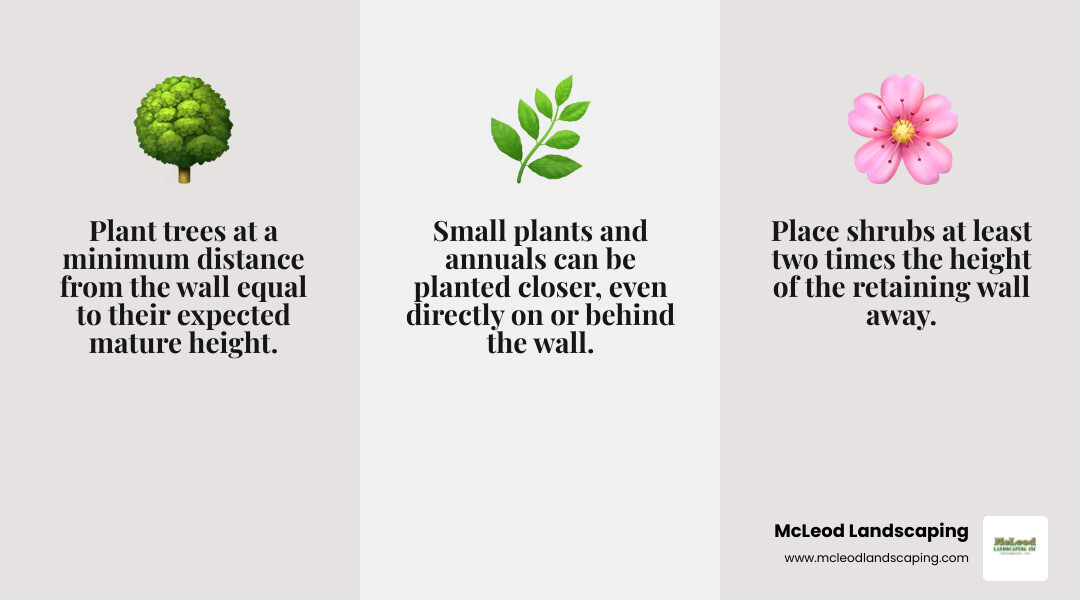
To quickly determine safe planting distances:
This guide will explain why these distances are critical, detail the risks involved, and help you choose the right plants for a beautiful and structurally sound landscape that lasts.
I’m Scott McLeod, owner of McLeod Landscaping. With over 30 years of experience in the Merrimack Valley, my team specializes in landscape design and installation, including the careful placement of trees near retaining walls for commercial and residential clients.
Planting trees near retaining walls terminology:
Many property owners don’t realize that when planting trees near retaining walls, the risk is mutual. It’s not just about roots damaging your wall—the wall can also harm your trees. Understanding this dynamic is critical before you plant or build.
Tree roots are surprisingly powerful. As they grow, they exert enough pressure to crack concrete, shift stone, and cause wall failure. The real challenge is that roots extend much farther than people assume—typically 1 to 3 times the tree’s height. A 30-foot-tall tree can have roots reaching 30 to 90 feet from its base. Since about 90% of a tree’s root system is in the top 12 to 18 inches of soil, this shallow, extensive network can easily undermine a retaining wall’s foundation.

Beyond direct pressure, large trees create surcharge weight—extra load on the soil behind your wall. When that soil becomes saturated with water, the combined weight dramatically increases hydrostatic pressure. This added stress can push a wall past its design limits, leading to bulging or collapse. For more information about building walls that can withstand these pressures, check out our guide on retaining wall design.
While we worry about roots damaging walls, the reverse is also true. Retaining walls can harm trees by causing:
The bottom line is that planting trees near retaining walls requires managing a delicate balance to protect both elements. With proper planning, you can create a landscape where they coexist beautifully for decades. For tips on protecting existing trees during landscaping projects, visit our page on landscaping around established trees.
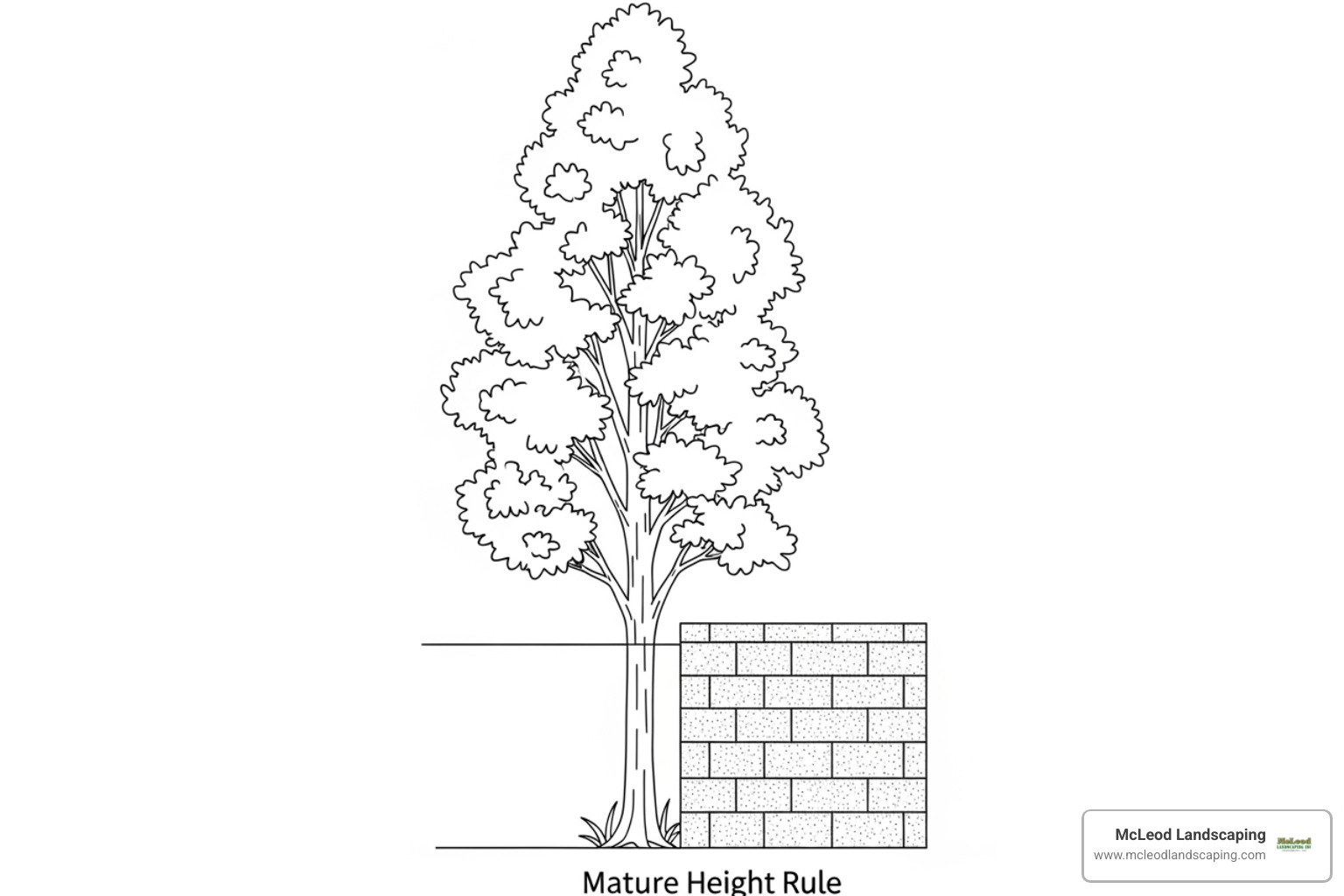
Determining the “safe zone” for planting trees near retaining walls is a critical step for long-term success. It ensures both your trees and walls remain healthy and structurally sound. We use time-tested guidelines to find the right spot.
Giving trees and shrubs enough space from your retaining wall is key. Our goal is to keep powerful tree roots from interfering with your wall’s foundation.
These general rules offer a fantastic starting point for any landscape wall construction project where trees are involved.
While general rules are helpful, every landscape is unique. Several factors can alter the ideal planting distance:
By considering these variables, we can create a landscape that is stunning, sustainable, and structurally sound.
Choosing the right species is critical when planting trees near retaining walls. The right tree leads to a thriving landscape, while the wrong one can cause frustration and expense. Understanding which trees are ‘wall-friendly’ will save you future headaches.
When selecting trees, we focus on several key factors:
Thoughtful tree selection, combined with proper installation, ensures your landscape retaining walls and trees complement each other.
Decades of experience have shown us which trees work and which spell trouble. On the “good” side, Japanese Maples are stars due to their compact, fibrous root systems. Dogwoods, Serviceberry trees, and Eastern Redbuds are other excellent choices that offer seasonal beauty without aggressive roots. Crape Myrtles work well in warmer zones, and dwarf conifers provide evergreen structure without the root problems of their full-sized cousins.
Now for the troublemakers. Silver Maples, Willows, and Poplars have notoriously aggressive, water-seeking roots that will damage walls over time. American Elms and some larger Oak species develop extensive root systems that can undermine foundations. We also advise against Bradford Pears and Sweetgum trees due to their aggressive roots and other issues like weak structure or large size.
| Good Trees (Non-Invasive, Smaller Roots) | Trees to Avoid Near Retaining Walls (Aggressive Roots) |
|---|---|
| Japanese Maple (Acer palmatum) | Silver Maple (Acer saccharinum) |
| Dogwood (Cornus florida) | Willow (Salix spp.) |
| Serviceberry (Amelanchier spp.) | Poplar (Populus spp.) |
| Eastern Redbud (Cercis canadensis) | American Elm (Ulmus americana) |
| Crape Myrtle (Lagerstroemia indica) | Bradford Pear (Pyrus calleryana ‘Bradford’) |
| Dwarf Conifers | Oak (some larger species with aggressive roots) |
| Ornamental Grasses | Sweetgum (Liquidambar styraciflua) |
Always research the specific cultivar you’re considering, as characteristics can vary. When in doubt, consult with a professional who understands both tree biology and structural requirements.
Even with the right tree, proper planting and care are essential when planting trees near retaining walls. Success often comes down to these fundamental practices.
Before planting, ensure the soil drains well to prevent waterlogged conditions that stress roots and increase pressure on the wall. After planting, apply a 2- to 4-inch layer of organic mulch, keeping it a few inches from the trunk to prevent rot. Water deeply but infrequently to encourage roots to grow downward, away from the wall’s foundation.
Proper drainage is absolutely critical. A retaining wall without an adequate drainage system is a disaster waiting to happen, as trapped water creates immense hydrostatic pressure. For detailed information, see our guide on retaining wall drainage. Drainage is always a top priority during our retaining wall installation projects.
Building a new wall near an existing mature tree is tricky. First, we assess the tree’s health and map its Protected Root Zone (PRZ), the area beneath the canopy where critical feeder roots live. We then design the wall to avoid major roots, sometimes by curving the wall or using techniques like “root bridging.” Excavation near trees should always be done carefully by hand.
Soil compaction from heavy equipment is a silent killer, so we use physical barriers and thick mulch layers to protect the PRZ.
A common question is: should you cut tree roots to build a retaining wall? The short answer is no. Removing even one large structural root can eliminate 5-20% of the tree’s root system, starving it of water and nutrients and making it unstable. The damage may not appear for years, by which time the tree may be beyond saving. If you must build near roots, professional help is essential. An ISA certified arborist can evaluate the tree’s health and recommend protective measures.
The area on top of or directly behind a wall is perfect for plants with shallow, non-invasive roots. Consider these options:
When working with Segmental Retaining Walls (SRWs), combining them with vegetation helps control erosion. Choose small species and follow the distance guidelines we covered earlier to ensure the plant thrives without threatening the wall’s integrity.
We often hear similar questions from our clients in the Merrimack Valley when they’re considering planting trees near retaining walls. Here is our expert advice on the most common concerns.
The safest distance is to plant a new tree at a minimum distance from the wall equal to its expected mature height. For example, a tree that will grow 30 feet tall should be planted at least 30 feet away. For shrubs, a general rule is to plant them at a distance of at least twice the wall’s height. For Segmental Retaining Walls (SRWs), maintain a minimum of 5 feet from the tree’s root ball to the wall face.
The best options have non-invasive, fibrous root systems and a smaller mature size. These types of roots are much less likely to cause structural issues. Excellent choices include:
Always check the specific cultivar’s mature size before planting to ensure it aligns with safe planting distances.
Cutting tree roots is extremely risky and not recommended. Removing even one major root can eliminate 5-20% of the root system, which can destabilize the tree and starve it of nutrients, leading to decline or death. The symptoms might not appear for years, when it’s too late.
If you must build near an existing tree, it’s crucial to consult qualified professionals. An ISA certified arborist can assess the tree’s health, and a professional retaining wall contractor like our team at McLeod Landscaping can explore safer alternatives like rerouting the wall or bridging over roots.
Creating a landscape where trees and retaining walls thrive together isn’t about luck—it’s about thoughtful planning. By understanding how these elements interact and following best practices for planting trees near retaining walls, you can create a beautiful, structurally sound outdoor space that lasts for generations.
Answering key questions early—about a tree’s mature size, root spread, and the wall’s structural needs—saves you from future problems like a buckled wall or the removal of a beloved tree.
The rewards are significant. A well-planned landscape adds value, with trees providing shade and ecological benefits, while a sturdy retaining wall prevents erosion and creates usable space. When these elements work in harmony, you get a beautiful and functional landscape.
After three decades of working on landscapes throughout the Merrimack Valley, we’ve learned that the most successful projects are those where hardscaping and softscaping are designed as partners. At McLeod Landscaping, we take pride in creating these harmonious spaces where stone and wood complement living, growing plants.
Whether you’re planning a new retaining wall near existing trees or designing a complete landscape from scratch, professional guidance makes all the difference. For a professionally engineered and installed wall that coexists beautifully with your landscape, explore our retaining wall installation services. Let’s work together to create a landscape that brings you joy for years to come.
Contact McLeod Landscaping today at (978) 640-0957 or click here to schedule a consultation for retaining wall installation. Let our experienced team design and install a functional and visually appealing retaining wall that enhances your landscape.


1881 Main St Unit 1, Tewksbury, MA 01876