

When it comes to putting in a lawn sprinkler system, there are multiple paths you can take. Whether you choose to DIY or opt for professional installation, both have their own sets of advantages. DIY installation, which involves laying out the system yourself, can be more cost-effective. With a little time and effort, you can save money while customizing your lawn’s watering needs. On the other hand, professional installation offers a stress-free experience as experts handle the planning and setup, often providing a warranty for peace of mind. However, this option typically involves a higher upfront cost.
Planning and deciding which route to go is crucial. You need to consider:
As the owner of McLeod Landscaping, I’ve seen the transformative power of a well-installed sprinkler system. With over 30 years of experience, my team and I specialize in putting in a lawn sprinkler system that suits both residential and commercial properties in Tewksbury, MA, and the surrounding areas. Let’s dive deeper into what these options entail and decide what works best for you.

Putting in a lawn sprinkler system terms you need:
– cost to install lawn sprinkler system
– how to lawn sprinkler system
– lawn sprinkler system maintenance
Before you start putting in a lawn sprinkler system, it’s important to understand your home’s water system. This means knowing the water pressure, flow rate, and sizes of your water meter, well, and service line.
Water Pressure and Flow Rate
Water pressure, measured in pounds per square inch (PSI), is crucial for a sprinkler system to work effectively. You’ll need at least 30 to 35 PSI for optimal performance. To measure your home’s water pressure, attach a pressure gauge to an outdoor faucet. Make sure all other faucets are turned off to get an accurate reading.
Flow rate, measured in gallons per minute (GPM), tells you how much water your system can deliver. To calculate this, fill a container with water from your spigot, record the time it takes, and use the formula:
[ \text{Flow Rate (GPM)} = \left(\frac{\text{Container Size (gallons)}}{\text{Time (seconds)}}\right) \times 60 ]
Water Meter, Well, and Service Line Size
Knowing the size of your water meter or well pump is essential. Water meters are typically 5/8 inch, 3/4 inch, or 1 inch. Check your meter for size information or consult your utility bill. For well systems, refer to the owner’s manual for pump size details.
The service line size determines how much water can be delivered to your system. Wrap a string around the pipe and measure its length to determine the diameter. This will help you choose the right irrigation pipe size.
Once you’ve got a handle on your water system, it’s time to design your irrigation plan. This involves sketching your layout, zoning, and using tools like Google Maps or Google Earth to mark your zones.
Sketching Your Layout
Begin by drawing a scaled map of your yard. Include existing features like trees, flower beds, and hardscapes. This will help you visualize where to place sprinkler heads and pipes.
Zoning Your Yard
Divide your yard into zones based on water needs. Turf, trees, and shrubs have different requirements. A well-planned zone ensures efficient watering and reduces waste. Make sure each sprinkler head’s spray overlaps by 50% with its neighbor for even coverage.
Using Google Maps and Google Earth
Use technology to improve your planning. Access your property on Google Maps or Google Earth to get an aerial view. Print a map to help you accurately mark zones and features.
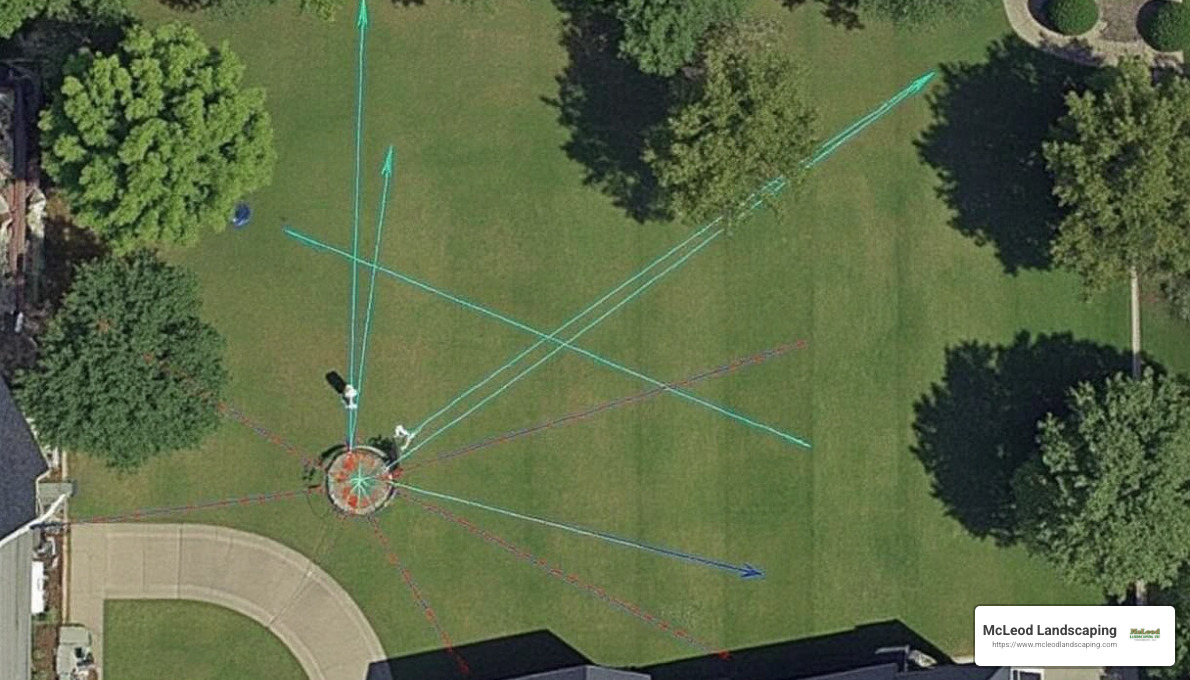
With these steps, you’re well on your way to a successful sprinkler system plan. Next, we’ll discuss choosing the right sprinkler heads for your zones.
When it comes to putting in a lawn sprinkler system, you have several choices. You can go the DIY route, hire a professional, or even use a sprinkler system kit. Each option has its own pros and cons, so let’s break them down.
DIY Installation
Installing a sprinkler system yourself can save money. On average, parts cost around $1,500 or less. Plus, you can work on your own schedule. However, be prepared for some heavy lifting and troubleshooting. You’ll need to rent equipment and deal with any malfunctions yourself.
Professional Installation
Hiring a professional means less physical work for you. A professional will design and install the system, and it often comes with a warranty. However, this convenience comes with a higher upfront cost. Scheduling can also be tricky, as contractors may have long wait times.
Sprinkler System Kits
For small to medium-sized lawns, a sprinkler system kit might be the perfect fit. These kits are easy to set up and often come with everything you need. However, they may not offer much customization, which can be a limitation for more complex landscapes.
Custom Systems
If you have a larger or uniquely shaped yard, a custom system might be necessary. This allows for custom zoning and sprinkler head placement. While more complex, a custom system ensures each area of your yard gets the right amount of water.
Selecting the right sprinkler heads is crucial for efficient watering. Here’s a quick guide:
Dividing your yard into zones is a key step. Each zone runs one at a time, ensuring optimal water pressure and flow rate.
Water Pressure and Flow Rate
Know your water pressure and flow rate to determine how many heads you can run per zone. On average, a zone can handle five to six rotary heads or eight to 10 spray heads.
Zone Capacity
Be careful not to overload a zone. Too many heads can lead to low pressure, reducing the spray distance. For example, if your water capacity is 10 GPM, you can run five multiple stream heads that consume 2 GPM each.
With these insights, you’re ready to start your installation journey. Next, we’ll guide you through the step-by-step process of setting up your sprinkler system.
Once you’ve decided on the type of system and sprinkler heads, it’s time to get your hands dirty. Here’s a detailed guide to help you steer every step of the installation process.
Trenching and Pipe Laying
First, mark the locations for trenches and sprinkler heads using stakes or flags. Then, rent a gas-powered trenching machine to dig trenches 4 to 12 inches deep, as recommended for your area.
Lay the PVC pipes in the trenches according to your layout plan. Join pipe sections with couplings and PVC cement. Remember to splice in tee fittings wherever a pipe branches off to a sprinkler head.
Connecting Water Supply
You have two main options for connecting your system to water: via a spigot or the main line.
Attach pop-up sprinklers to the flexible piping. Push the barbed fitting into the pipe; no glue is needed. Remove the cap and install the appropriate spray nozzle. Ensure the sprinklers are flush with the soil level.
Control Box and Timer Setup
Mount the control box on an exterior wall near a power source. Use a waterproof pipe to wire it to the control valves, following the manufacturer’s instructions. If you’re not comfortable with electrical work, consider hiring a licensed electrician.
Testing Zones
Before backfilling the trenches, test each zone to make sure everything works properly. Turn on the water and use the timer to activate each zone. Check for leaks or irregular spray patterns. Adjust the heads as needed to ensure even coverage.
After testing, cover the pipes with soil and replant any sod you removed. Congratulations, you’ve just completed the installation of your lawn sprinkler system!
Now, let’s tackle some common questions about lawn sprinkler systems to help you maintain and optimize your new setup.
Yes, you can! Putting in a lawn sprinkler system yourself is possible with the right tools and a bit of patience. It’s a cost-effective option if you’re handy and enjoy DIY projects. Start by evaluating your yard and sketching a detailed plan. Make sure to measure your water pressure and flow rate. These will guide your system’s design and ensure it works efficiently.
However, if you’re short on time or not comfortable with plumbing and electrical tasks, professional help is available. A contractor can handle everything from design to installation. When choosing a professional, ask about their experience and whether they have the necessary permits to install the system.
The cost of installing a sprinkler system varies widely based on several factors, including the size of your yard and the complexity of the system. On average, costs can range from a few hundred to several thousand dollars. That regional differences may also affect pricing. For instance, areas with higher labor costs might see higher installation fees.
While DIY kits can be more budget-friendly, they might require multiple kits for larger areas. Hiring professionals might cost more upfront but can save you time and ensure a more reliable installation.
Trench depth is crucial for protecting your sprinkler lines. Typically, trenches should be dug 6 to 8 inches deep. In regions with colder climates, you might need to dig deeper to prevent the lines from freezing during winter. Always check local guidelines to ensure compliance.
Safety is key when digging trenches. Before you begin, call 811 to have utility lines marked. This will help you avoid damaging underground utilities and ensure a safe installation process.
By understanding these FAQs, you’re better equipped to make informed decisions about your lawn sprinkler system, whether you’re tackling it yourself or hiring a pro.
Installing a lawn sprinkler system can transform your landscape, making it lush and vibrant with minimal effort. Whether you choose to tackle this project yourself or enlist professional help, the benefits are clear: efficient water use, time savings, and a healthier lawn.
Benefits of a Sprinkler System
A well-designed sprinkler system ensures consistent water distribution. This means no more dragging hoses or dealing with uneven watering. Your lawn gets the right amount of water, reducing waste and promoting healthy growth.
Automated systems can be set to water at optimal times, even when you’re away. This not only saves time but also helps maintain your lawn’s curb appeal without constant monitoring.
Maintenance Tips
To keep your system running smoothly, regular maintenance is key. Check your water pressure at the start of each season. This will help you spot issues like leaks or clogged heads early on. Adjust the spray patterns as needed and inspect for any signs of wear or damage.
Winterizing your system is essential in colder climates. Drain the lines to prevent freezing, and turn off the timer to avoid accidental water flow.
Why Choose McLeod Landscaping?
At McLeod Landscaping, we bring over 30 years of expertise to every project. Our team in Tewksbury, MA, understands the unique needs of your landscape and offers custom solutions for irrigation system installation and maintenance. We ensure your sprinkler system is not only efficient but also improves the beauty of your property.
Ready to enjoy the ease and benefits of a well-maintained sprinkler system? Contact McLeod Landscaping today to explore our comprehensive irrigation services. Let us help you achieve the lush, green lawn you’ve always wanted.
Contact McLeod Landscaping today at (978) 640-0957 or click here to schedule a consultation for retaining wall installation. Let our experienced team design and install a functional and visually appealing retaining wall that enhances your landscape.

1881 Main St Unit 1, Tewksbury, MA 01876