

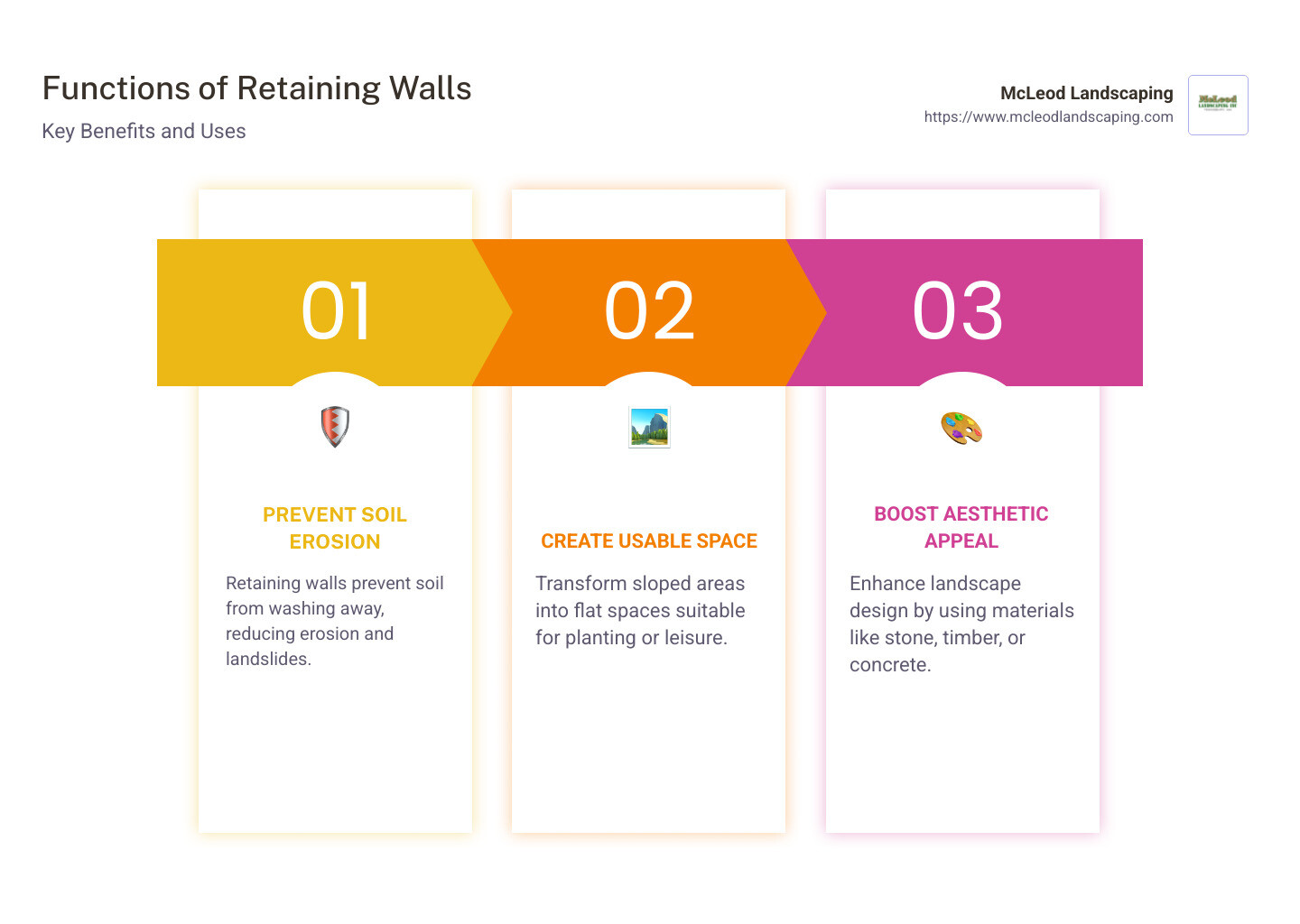
A retaining wall is a crucial feature in landscape design, offering both functional and aesthetic benefits. Whether you are managing soil retention on a sloped yard, preventing erosion, or simply aiming to improve your property’s visual appeal, a retaining wall can be the perfect solution. Here’s what retaining walls do:
I’m Scott McLeod, owner of McLeod Landscaping Inc. With over three decades of experience in landscaping and hardscaping, I’ve been at the forefront of designing and installing retaining walls that meet both functional needs and aesthetic desires. Let’s explore what makes retaining walls indispensable in modern landscape design.
Related content about retaining wall:
– retaining wall drainage
– retaining wall design
– retaining wall ideas
When it comes to landscaping, retaining walls play a vital role in ensuring stability and beauty. These structures provide essential lateral support to keep soil in place, especially on sloped terrains. The pressure from the soil, known as lateral earth pressure, is something every retaining wall must withstand. This pressure increases with depth and can push the wall forward or even overturn it if not properly addressed.
1. Gravity Walls
Gravity walls rely on their mass to resist the pressure exerted by the soil behind them. They are usually made of heavy materials like stone or concrete. The weight of these materials helps the wall stay upright. For smaller projects, mortarless stone or segmental concrete units are often used.
2. Cantilever Walls
Cantilever walls are a popular choice for retaining larger amounts of soil. They consist of a vertical arm that holds the soil and a horizontal base that extends under the soil. This design uses the weight of the soil on the base to provide additional stability. Cantilever walls are more complex than gravity walls but offer greater strength.
3. Diaphragm Walls
Diaphragm walls are constructed by using reinforced concrete. They are often used in deep excavations and are known for their strength and durability. These walls are built in situ, meaning they are constructed directly in the place they will stand.
4. Sheet Piling
Sheet piling involves driving thin sheets of steel into the ground to form a wall. This type of retaining wall is often used in tight spaces or for temporary structures. It provides good resistance to water and is relatively easy to install.
5. Bored Pile Walls
Bored pile walls are created by drilling holes into the ground and filling them with concrete. This method is suitable for supporting heavy loads and is often used in urban areas where space is limited. The piles can be reinforced with steel for added strength.
6. Anchored Walls
Anchored walls use cables or rods driven deep into the soil behind the wall. These anchors provide additional support, making this type of wall suitable for high loads or when the wall must be thin. Anchored walls are versatile and can be used with other types of retaining walls for added stability.
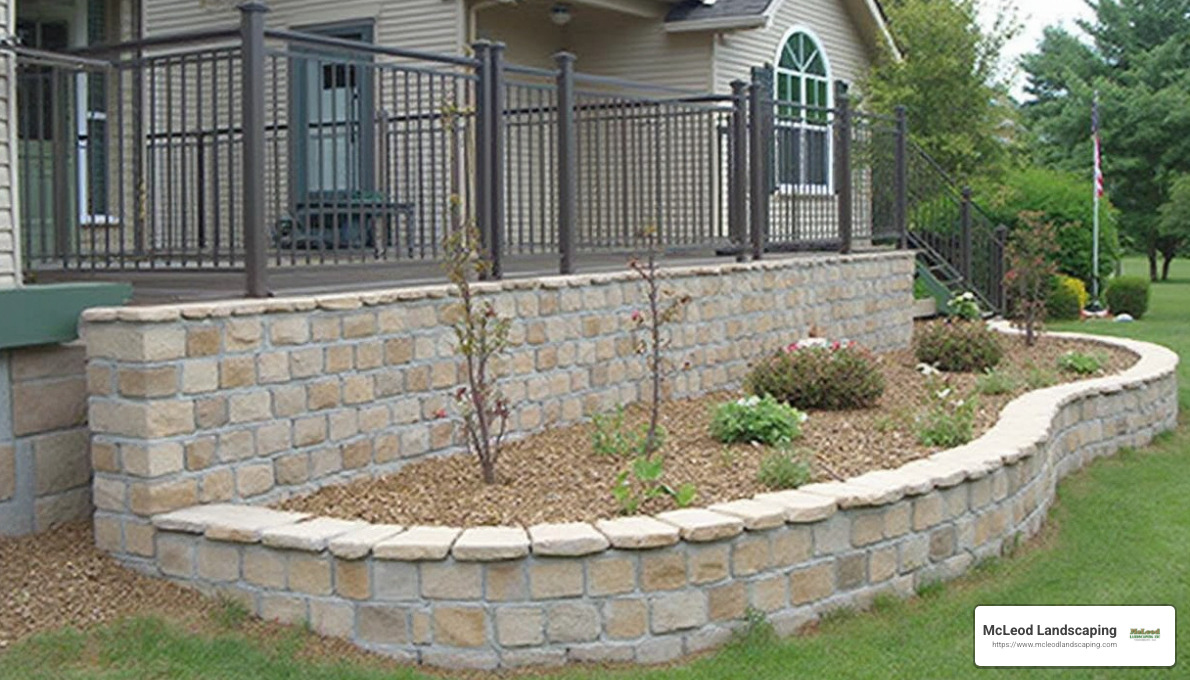
Each type of retaining wall has its own strengths and is suited for different situations. The choice of wall depends on factors like soil type, slope, and the amount of space available. Understanding these options can help you select the right wall for your needs.
Next, we’ll explore how to build a retaining wall, including the materials and tools you’ll need.
Building a retaining wall can be a rewarding DIY project that transforms your landscape. Using concrete blocks, you can create a sturdy and attractive structure. Here’s how you can do it, step by step.
Before you start, gather the necessary tools and materials. Here’s what you’ll need:
Essential tools include:
Building a retaining wall is a labor-intensive but rewarding project. With proper planning and execution, you can improve your landscape’s beauty and functionality. Next, let’s look at the cost considerations for building a retaining wall.
When planning to build a retaining wall, understanding the cost factors is crucial. Here’s a breakdown of what to consider:
The materials you choose significantly impact the overall cost. Common options include:
Each material has its own price range, and the choice will depend on your aesthetic preferences and budget.
Labor costs can vary based on location, the complexity of the project, and the experience of the contractor. Hiring professionals ensures proper installation, which is crucial for the wall’s longevity and safety. However, if you’re taking the DIY route, you’ll save on labor costs but need to invest your time and effort.
The cost per linear foot is influenced by:
While exact pricing can vary, understanding these factors will help you budget effectively for your project.
Building a retaining wall involves various cost considerations, from materials to labor. By planning carefully and choosing the right options, you can create a beautiful and functional addition to your landscape. Next, we’ll explore alternatives to retaining walls on McLeod Landscaping’s website.
Not every landscape requires a retaining wall. Sometimes, alternative solutions can provide the support and aesthetic you need without the traditional structure. Let’s explore some popular alternatives:
Sloped landscaping is a natural way to manage elevation changes in your yard. By grading the land into gentle slopes, you can control erosion and water runoff without the need for a wall. This approach can be visually appealing, especially when combined with plants and pathways. It’s also a great way to create a seamless transition between different areas of your garden.
Vegetated walls, also known as green walls, are an eco-friendly option that combines functionality with beauty. These walls are covered with plants, which help stabilize the soil and prevent erosion. The greenery not only improves the aesthetic appeal but also improves air quality and provides a habitat for wildlife. Vegetated walls require careful planning to ensure proper plant selection and maintenance.
Gabion walls are made from wire cages filled with rocks or other materials. They provide excellent drainage and stability while offering a rugged, natural look. Gabion walls are versatile and can be used in various settings, from gardens to commercial spaces. They are relatively easy to construct and can be a cost-effective alternative to traditional retaining walls.
Soil nailing is a technique that reinforces soil using steel bars inserted into the slope. These bars are then grouted in place, providing lateral support. This method is ideal for stabilizing steep slopes and can be combined with other techniques, such as shotcrete, for additional strength. Soil nailing is a complex process that usually requires professional expertise but offers a reliable solution for challenging terrain.
When considering alternatives to traditional retaining walls, evaluate your landscape’s specific needs and conditions. Each option has its own benefits, and choosing the right one can improve both the functionality and beauty of your outdoor space.
When it comes to building a retaining wall, cost is often a major consideration. The cheapest options typically include:
The cost of building a 2-foot retaining wall can vary widely, depending on several factors:
If you’re looking for alternatives to a traditional retaining wall, consider these options:
Choosing the right solution depends on your specific landscape needs and aesthetic preferences. Each option offers unique benefits and can improve the functionality and beauty of your outdoor space.
At McLeod Landscaping, we understand that a retaining wall is more than just a functional structure—it’s a vital component of your landscape’s design and health. With over 30 years of experience, our team is dedicated to changing your outdoor spaces into stunning and functional extensions of your home or business.
Located in the heart of the Merrimack Valley, we provide comprehensive services that cater to both residential and commercial clients. Whether you’re looking to prevent soil erosion, create a terraced garden, or define space within your property, our expertise ensures that your retaining wall will be both beautiful and durable.
Our commitment to quality craftsmanship and attention to detail sets us apart. We use only high-quality materials and innovative techniques to ensure long-lasting results. From the initial consultation to the final installation, we work closely with you to bring your vision to life.
If you’re in the Merrimack Valley and need a reliable partner for your landscaping needs, contact us at McLeod Landscaping today. Let us help you create an outdoor space that not only meets your needs but also improves the beauty and value of your property.

Contact McLeod Landscaping today at (978) 640-0957 or click here to schedule a consultation for retaining wall installation. Let our experienced team design and install a functional and visually appealing retaining wall that enhances your landscape.


1881 Main St Unit 1, Tewksbury, MA 01876