

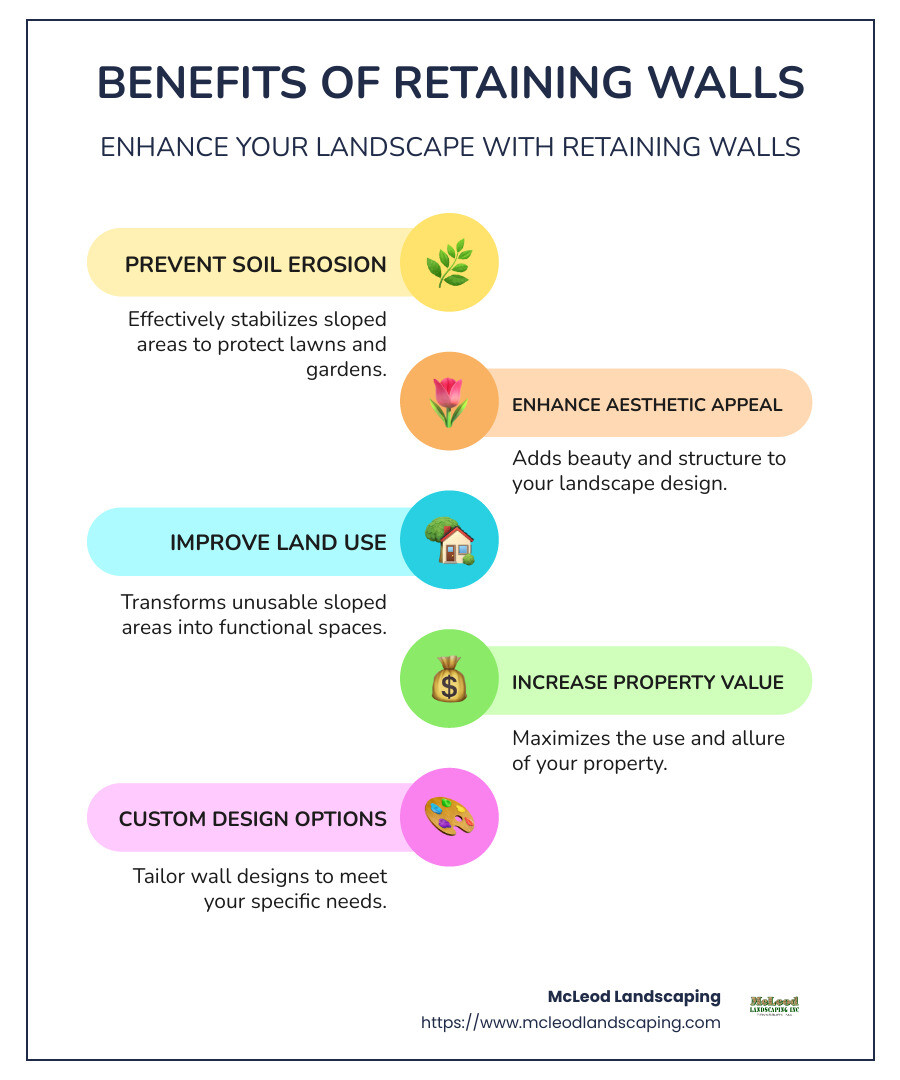
A retaining wall contractor plays a crucial role in changing landscapes, especially in areas with sloped terrain. These experts help design and construct retaining walls that serve multiple purposes:
As Scott McLeod, owner of McLeod Landscaping, I bring over three decades of expertise to your landscaping projects. Our team is dedicated to delivering top-notch services custom to your aesthetic and functional requirements. Now, let’s explore how to choose the right retaining wall contractor.
Retaining wall contractor word list:
– retaining wall design
– retaining wall drainage
– retaining wall ideas
Selecting the right retaining wall contractor is crucial for ensuring your project is both beautiful and durable. Here are some key factors to consider:
Experience and Reputation
Look for contractors with a proven track record in retaining wall construction. Experienced contractors have faced diverse challenges and developed the skills to handle them effectively. A contractor with a solid reputation, backed by positive client testimonials, is more likely to deliver quality results.
Certifications and Credentials
Check if the contractor has the necessary certifications. Certifications often indicate a commitment to high standards and continuous learning. Additionally, ensure they have comprehensive liability insurance and worker’s compensation coverage to protect you from potential liabilities.
Portfolio of Past Projects
Review the contractor’s portfolio to gauge their craftsmanship and the variety of projects they have completed. This visual evidence can help you decide if their style aligns with your vision. Look for projects similar to yours to see how they tackled specific challenges.
Client Testimonials
Client feedback can provide insights into a contractor’s reliability, communication skills, and overall performance. Positive testimonials indicate satisfaction and trustworthiness, while negative reviews may highlight potential red flags.
Understanding of Local Soil and Weather
A contractor with local expertise will understand the regional soil characteristics and weather patterns. This knowledge is crucial for designing a retaining wall that can withstand local environmental conditions. For instance, in areas prone to heavy rainfall, the contractor must incorporate effective drainage solutions to prevent wall failure.
Compliance with Local Building Codes
Local contractors are familiar with regional building codes and regulations. Compliance with these codes is essential to avoid legal issues and ensure your retaining wall is safe and durable. A contractor well-versed in these requirements will streamline the permitting process, saving you time and potential headaches.
Local Knowledge and Community Ties
Contractors with strong community ties are often more invested in maintaining their reputation. They are likely to provide excellent service to uphold their standing in the community. Moreover, they might have established relationships with local suppliers, potentially leading to cost savings for you.
Choosing the right retaining wall contractor involves more than just comparing prices. By considering experience, reputation, certifications, and local expertise, you can ensure your project is in capable hands.

When it comes to choosing the right retaining wall for your landscape, understanding the different types available is crucial. Each type offers unique benefits in terms of materials, design, and functionality. Let’s explore some of the most common types:
Durability and Cost-Effectiveness
Concrete retaining walls are known for their strength and longevity. They can last up to 100 years, making them a cost-effective choice in the long run. Poured concrete walls are simple and durable, providing a clean, modern look to any landscape. They are especially suitable for areas prone to heavy rain, as they can be designed to include effective drainage systems.
Materials and Design
Concrete walls can be constructed using several methods, including poured concrete and stacked concrete blocks. The choice between these methods can affect both the cost and the visual appeal of the wall. Poured concrete offers a seamless finish, while block walls can be more versatile in terms of design, allowing for curves and varied heights.
Aesthetic Appeal and Longevity
Natural stone retaining walls bring a timeless beauty to any landscape. They are often chosen for their aesthetic appeal, blending seamlessly with natural surroundings. While they can be more expensive than other options, their durability and classic charm often justify the higher cost.
Materials and Functionality
These walls are typically constructed with materials like granite or limestone, which are known for their strength and resistance to weathering. Natural stone walls are not only beautiful but also functional, providing excellent support for soil retention and erosion control.
Cost and Maintenance Needs
Wooden retaining walls are an attractive option for those on a budget. They are generally less expensive than stone or concrete walls, making them an accessible choice for homeowners. However, they do require more maintenance to prevent rot and insect damage, especially in damp climates.
Materials and Design
Typically made from pressure-treated lumber, wooden walls offer a rustic charm that can complement a variety of landscape styles. They are relatively easy to install, which can further reduce costs. Despite their lower upfront cost, it’s important to factor in the potential need for repairs or replacement over time.
When selecting a retaining wall type, consider not only the initial cost but also the long-term benefits and maintenance needs. The right choice will depend on your specific landscape requirements, aesthetic preferences, and budget constraints.
When planning a retaining wall, understanding the costs involved is key. From material costs to labor expenses and project complexity, each factor plays a role in shaping your budget. Let’s dive into how to effectively budget for your retaining wall project and explore some cost-effective solutions.
Estimating Costs
The cost of a retaining wall can range widely based on its size, materials, and design. On average, installing a retaining wall can cost between $1,000 and $10,000 for a typical 4-foot by 25-foot wall. It’s crucial to get a detailed estimate that includes all potential expenses, such as materials, labor, and any additional features like drainage systems.
Planning for Contingencies
Unexpected challenges can arise during construction, such as difficult soil conditions or weather delays. It’s wise to set aside an additional 10-20% of your budget to cover these contingencies. By planning ahead, you can avoid surprises and keep your project on track financially.
When it comes to building a retaining wall, choosing the right materials can significantly impact your budget. Here are some cost-effective options to consider:
Concrete Blocks
Concrete blocks are a popular choice due to their durability and affordability. They cost between $10 and $100 per square foot, including materials and labor. These blocks are versatile and can be used to create a variety of designs, from straight lines to curves, making them a flexible option for many landscapes.
Timber Sleepers
For those seeking a natural look, timber sleepers offer a rustic charm at a lower cost. They are generally cheaper than stone or poured concrete walls but require regular maintenance to prevent rot and insect damage. Timber walls can be an excellent choice for smaller projects or areas with less severe erosion issues.
Gabion Walls
Gabion walls, made from wire cages filled with rocks, are another cost-effective solution. They cost between $14 and $35 per square foot. Gabions are easy to install and adapt well to shifting landscapes, making them ideal for areas prone to erosion. Their unique design also adds a distinct visual appeal to any garden.

By carefully considering these cost-effective materials and planning for potential contingencies, you can build a retaining wall that fits both your landscape and your budget.
In the next section, we’ll explore the importance of professional installation and maintenance tips to ensure your retaining wall stands the test of time.
Building a retaining wall is more than just stacking bricks or stones. It requires precise engineering and an understanding of the landscape to ensure stability and longevity. Professional installation is crucial for preventing failures like wall collapse or erosion.
Why Choose Professional Installation?
If you’re considering a retaining wall, hiring a retaining wall contractor ensures that your wall is built to last.
Once your retaining wall is installed, regular maintenance is key to keeping it in top shape. Here are some simple tips to ensure your wall remains strong and attractive.
Inspection Routines
Repair Strategies
Long-term Care
By following these maintenance tips, you can extend the life of your retaining wall and preserve the beauty and functionality of your landscape.
Next, we will address some frequently asked questions about retaining walls to help you make informed decisions about your project.
Retaining walls can be costly due to several factors. First, the materials used, such as natural stone or concrete, can significantly affect the price. Natural stone, for instance, is prized for its beauty and durability but often comes with a higher price tag. Concrete, while more affordable, requires skilled labor to ensure proper installation.
Labor costs also play a big role. Building a retaining wall involves precise engineering, especially on sloped terrain. Professionals must account for drainage systems and structural integrity, which adds to the complexity and cost.
Lastly, project complexity can increase expenses. Walls that need to accommodate specific landscape features or those built in challenging conditions may require additional resources and time, driving up the cost.
Poured concrete is often considered the most cost-effective option for retaining walls. It’s durable and can be installed relatively quickly, reducing labor costs. Concrete blocks are another affordable choice, offering a balance of strength and ease of installation.
Timber sleepers can also be a budget-friendly option, especially for shorter walls. They provide a rustic look but may require more maintenance over time compared to concrete.
For those looking to save, DIY installation can reduce costs significantly, but ensure proper techniques are followed to avoid structural issues.
A leaning retaining wall can be a sign of underlying problems, such as inadequate drainage or poor construction. Addressing this issue promptly is crucial to prevent further damage.
Steps to Fix a Leaning Wall:
By addressing these common questions, you’ll be better prepared to plan and maintain your retaining wall project.
Choosing the right contractor for your retaining wall project is crucial, and McLeod Landscaping stands out as a trusted retaining wall contractor with over 30 years of experience. Our comprehensive services cover everything from initial design to installation and maintenance, ensuring that your landscape not only looks beautiful but also functions effectively.
We understand the unique challenges that come with landscaping in the Merrimack Valley, and our local expertise ensures that we comply with regional building codes and adapt to local weather patterns. This local knowledge is key to crafting retaining walls that are both durable and aesthetically pleasing.
Our team at McLeod Landscaping is committed to providing personalized solutions custom to your specific needs. Whether you’re interested in a concrete wall for its cost-effectiveness and durability, or a natural stone wall for its timeless beauty, we have the skills and materials to bring your vision to life.
For those considering a retaining wall, it’s important to factor in the costs of materials, labor, and project complexity. We offer a range of cost-effective solutions, including concrete blocks and timber sleepers, which can help you achieve your landscaping goals within budget.
Professional installation is vital to the longevity and success of your retaining wall. Our skilled team ensures that every wall is built to withstand the test of time, preventing common issues like leaning or cracking.
Ready to transform your outdoor space with a reliable retaining wall? Contact McLeod Landscaping today to schedule a consultation and let us help you create an outdoor environment that you and your family will enjoy for years to come.
Contact McLeod Landscaping today at (978) 640-0957 or click here to schedule a consultation for retaining wall installation. Let our experienced team design and install a functional and visually appealing retaining wall that enhances your landscape.


1881 Main St Unit 1, Tewksbury, MA 01876