
Retaining wall contractors are the specialists who turn steep, unusable slopes into level, functional spaces. They handle everything from the first site visit to the final sweep-up, ensuring every wall is safe, code-compliant, and attractive.
What a pro brings to the table:
At McLeod Landscaping, we know that retaining walls are complex structures designed to hold back immense soil pressure. When they fail, repairs can cost far more than building the wall correctly the first time. With over 30 years of experience in the Merrimack Valley, our seasoned contractors know how to manage soil pressure, drainage, and local regulations so your investment lasts.
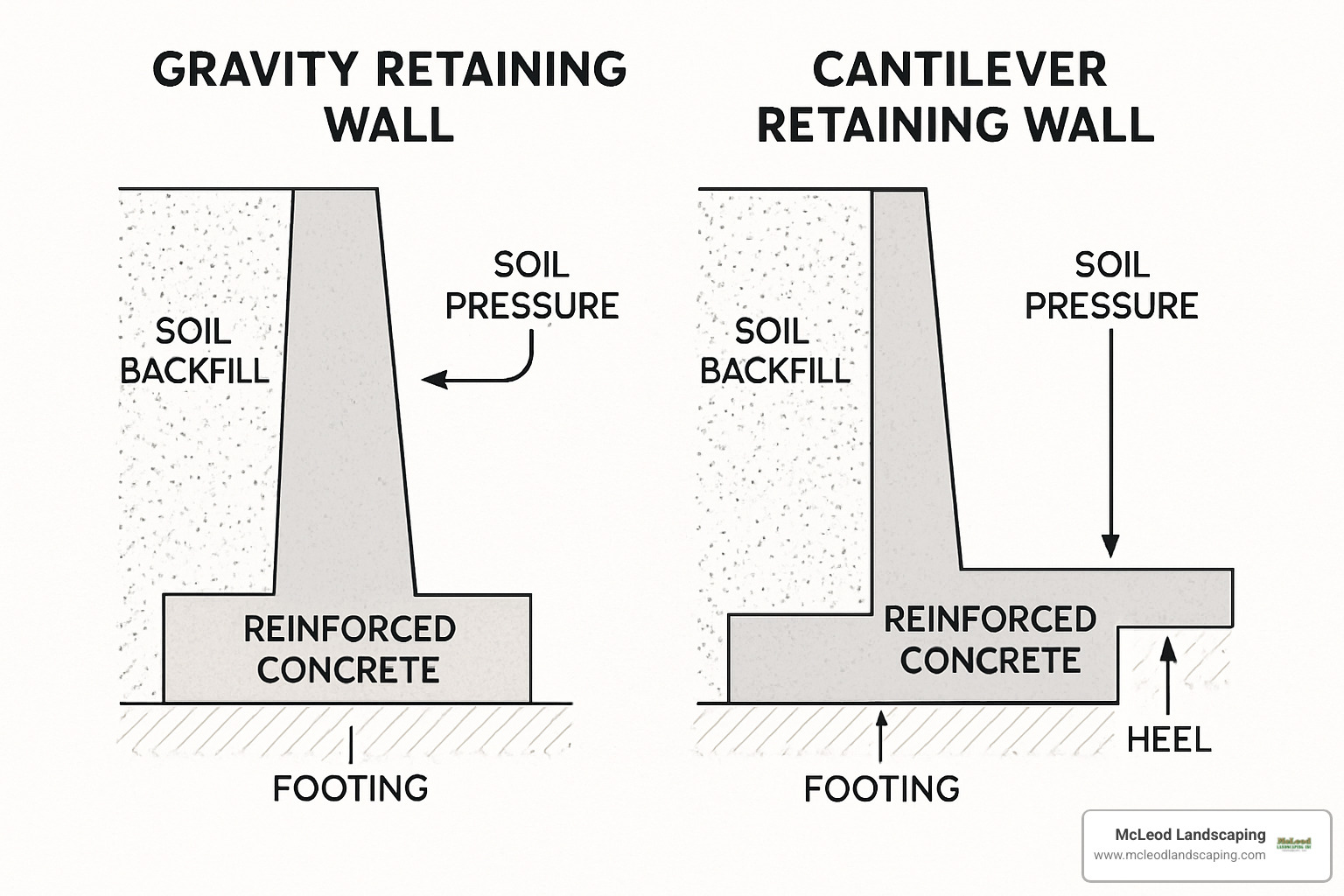
Choosing the right wall is like choosing the right tool—it must suit the job, budget, and site. A retaining wall restrains soil that would not naturally stay put, but the way it’s built makes all the difference.
Need ideas? Browse our Retaining Wall Ideas gallery.
At McLeod Landscaping, we act as your project manager, engineer, and craftsman in one. We coordinate every phase of your retaining wall project to ensure a seamless process and an exceptional result.

A retaining wall is only as good as the team that builds it. Specialists who focus on walls—rather than generalists—bring the soil, drainage, and structural know-how your project demands.

Clear, detailed answers signal you’ve found a pro you can trust.
Understanding the components of a retaining wall estimate helps you budget appropriately and evaluate proposals effectively. Because every property is unique, costs can vary significantly based on your specific project requirements, site conditions, and material choices.
For detailed cost information specific to your project, visit our How Much Does a Landscape Retaining Wall Cost? resource, which provides comprehensive cost breakdowns for different wall types and project complexities. The best way to get an accurate price is to schedule a consultation with our team.
Wall size is the most obvious cost factor, with both height and length affecting the total price. Taller walls require more materials and often more complex engineering, while longer walls simply require more linear feet of materials and labor.
Height considerations are particularly important because walls over certain heights (typically 3-4 feet) may require engineering analysis and permits, adding to project costs. Taller walls also require stronger foundations and may need reinforcement or different construction methods.
Material choice significantly impacts cost, with natural stone typically being the most expensive option, followed by high-end concrete blocks, standard concrete blocks, and timber. However, material cost should be balanced against longevity and maintenance requirements.
Site accessibility affects labor costs and equipment requirements. Sites that are difficult to access with machinery may require hand-digging or special equipment, increasing labor costs substantially.
Slope complexity influences both design requirements and construction difficulty. Steep slopes or unstable soil conditions may require special engineering solutions or additional stabilization measures.
Engineering requirements for complex projects can add significant costs but are essential for ensuring structural integrity and safety. Professional contractors will recommend engineering when necessary rather than cutting corners.
Permit fees vary by location but are typically a small percentage of total project cost. However, the time and expertise required to obtain permits should be factored into project timelines.
Drainage systems are essential for wall longevity but add to material and labor costs. Proper drainage installation includes gravel backfill, perforated pipes, and geotextile fabric, all of which represent additional materials and labor.
While a custom quote is the only way to get an accurate price, projects generally fall into one of three tiers based on complexity and materials.
Simple gravity walls using basic concrete blocks represent a more budget-friendly option. These are typically shorter walls with straightforward installation requirements on an easily accessible site.
Mid-range projects often involve quality interlocking blocks with comprehensive drainage systems. These walls may be taller or longer, requiring more extensive excavation and site preparation.
Complex engineered walls represent a premium investment. These projects may use high-end materials like natural stone, require stamped engineering plans due to height or soil conditions, or be built on challenging, difficult-to-access slopes.
The wide variation in project scope is why professional retaining wall contractors provide detailed, on-site estimates. The best approach is to get a custom proposal from a qualified contractor who can assess your specific situation and provide accurate pricing.
Longevity assumes proper drainage and installation—skimp on either and even premium materials fail early.
Yes. Gravel backfill, weep holes, and a perforated pipe relieve hydrostatic pressure that would otherwise push the wall over. Proper drainage is a small part of the project budget but is the number one defense against wall failure.
Many towns in the Merrimack Valley, including Tewksbury, Andover, and Chelmsford, require permits for walls over 3–4 ft or any wall supporting a driveway, building, or steep slope. As experienced local contractors, we handle the entire permitting process to ensure your project is fully compliant.
When you invest in professional retaining wall contractors, you’re making a decision that will benefit your property for decades to come. The right contractor doesn’t just solve today’s slope problems – they create lasting solutions that improve your property’s functionality, beauty, and value.
Throughout this guide, we’ve explored the comprehensive services that skilled contractors provide, from initial site assessment and engineering through installation and long-term maintenance. The project lifecycle reveals why professional expertise matters so much: proper drainage systems, engineered foundations, and quality materials all work together to create walls that stand the test of time.
The investment in professional installation makes financial sense when you consider the alternatives. A poorly constructed retaining wall can fail within just a few years, potentially causing property damage and requiring expensive reconstruction. Professional contractors bring the specialized knowledge needed to handle complex soil conditions, drainage requirements, and local building codes that ensure your wall performs reliably for generations.
Material selection and construction methods vary widely based on your specific needs and site conditions. Whether you choose interlocking concrete blocks, natural stone, or engineered solutions, professional contractors help you select the right approach for your property’s unique challenges. They understand that a gravity wall might be perfect for one situation while a cantilever wall is needed for another.
The comprehensive service approach that quality contractors provide extends far beyond just installation. From handling permits and engineering requirements to providing warranty coverage and maintenance support, professional contractors take responsibility for every aspect of your project. This end-to-end service ensures that nothing falls through the cracks and that you have ongoing support for your investment.
At McLeod Landscaping, our three decades of experience serving the Merrimack Valley has taught us that the best retaining wall projects result from careful planning, open communication, and skilled craftsmanship. We’ve seen how proper installation transforms challenging slopes into beautiful, functional spaces that families enjoy for years.
Whether you’re dealing with erosion issues, want to create terraced garden areas, or need to maximize usable space on a sloped lot, professional retaining wall contractors can provide solutions that combine structural integrity with aesthetic appeal. The key is choosing contractors who understand both the technical requirements and the visual impact of their work.
Your property deserves the confidence that comes with professional installation. When you work with experienced contractors who stand behind their work with solid warranties and ongoing support, you’re not just solving today’s problems – you’re creating lasting value that improves your property for decades to come.
Contact McLeod Landscaping today at (978) 640-0957 or click here to schedule a consultation for retaining wall installation. Let our experienced team design and install a functional and visually appealing retaining wall that enhances your landscape.


1881 Main St Unit 1, Tewksbury, MA 01876