
When searching for a Retaining Wall Installer, you need a professional who understands that these structures must withstand incredible lateral earth pressure while creating beautiful, functional outdoor spaces. A properly built wall can deliver an average 105% value recovery on your landscape investment, but an improper one can fail catastrophically during heavy rains.
Key qualifications for a contractor include being certified (e.g., NCMA), licensed, insured, and having expertise in drainage and local building codes. Red flags include uncertified builders, skipped drainage systems, and a lack of engineering for walls over four feet.
Modern composite and concrete materials are designed to last a lifetime, far surpassing the 10-15 year lifespan of older wood products. However, the material is only as good as the installation, which is why choosing the right contractor is paramount.
I’m Scott McLeod, owner of McLeod Landscaping. With over three decades of experience as a Retaining Wall Installer, I’ve seen how professional techniques make the difference between a wall that lasts for decades and one that fails in years. Let me share what to look for when choosing your installation team.
Retaining Wall Installer helpful reading:
A retaining wall installer doesn’t just build walls—they create possibilities. While the functional benefits of erosion control and slope stabilization are crucial, a retaining wall is the backbone for changing a challenging hillside into something more. It can create terraced gardens for planting, add architectural structure to your landscape, and even provide extra seating.
By defining outdoor rooms, retaining walls can carve out an intimate fire pit area, a spacious dining patio, or a quiet reading nook. This aesthetic and functional improvement is what surprises and delights homeowners the most. The goal is to create spaces where your family naturally gravitates. For inspiration, check out our collection of Retaining Wall Ideas.
The numbers tell an impressive story. According to the National Association of Realtors’ Outdoor Remodeling Impact Report, landscape redesign projects deliver an impressive 105% value recovery, meaning the project often pays for itself. Buyers value functional outdoor spaces, and a well-executed retaining wall signals a thoughtfully improved property.
The lifestyle returns are just as compelling. Three-quarters of homeowners report an increased desire to be home after a landscape project and a major feeling of accomplishment. Retaining walls create the level ground needed for other hardscaping features, turning an unusable slope into the perfect spot for a patio, outdoor kitchen, or a flat lawn where kids can play. They truly open up the potential of your outdoor space with custom hardscaping. After 30 years, I’ve seen that this change often starts with a single, well-placed retaining wall.
Successful projects start with thorough planning long before the first shovel hits the dirt. As an experienced Retaining Wall Installer, I can tell you that a proper plan prevents costly mistakes.

Key planning steps include:
The need for an engineer goes beyond simple height.
An engineering consultation provides peace of mind by ensuring your wall’s design meets or exceeds all safety standards. For complex Building a Retaining Wall projects, we work closely with structural engineers. When in doubt, consulting an engineer is a small investment that protects a much larger one.
Choosing the right material is a critical decision for the longevity and look of your wall. As a trusted Retaining Wall Installer, I know that the cheapest option upfront often becomes the most expensive in the long run due to repairs or replacement.

Here’s how common materials compare:
| Material Type | Lifespan | Average Cost (per sq ft)* | Maintenance | Best Use Cases |
|---|---|---|---|---|
| Concrete Block (Segmental) | Lifetime | $15 – $45 | Low | Residential landscaping, terraces, garden beds, structural support |
| Natural Stone (Dry Stack/Mortared) | Lifetime | $30 – $90 | Low | Neat, natural aesthetics, garden beds, property boundaries |
| Boulder | Lifetime | $25 – $75 | Very low | Rustic, natural look, sloped terrains, large-scale projects |
| Timber/Wood | 10-15 years | $10 – $30 | High (rot, termites, warping) | Low-height walls, garden beds, rustic appearance (short-term solution) |
| Concrete Sleeper | Lifetime | $20 – $60 | Low | Strong, durable, can mimic timber/stone, residential/commercial properties |
*Please note: These are average costs based on internet data and not actual costs for McLeod Landscaping. Prices can vary widely based on material quality, project complexity, site access, and geographic location. Expect variations, with high-end projects potentially costing 3x or more than the average.
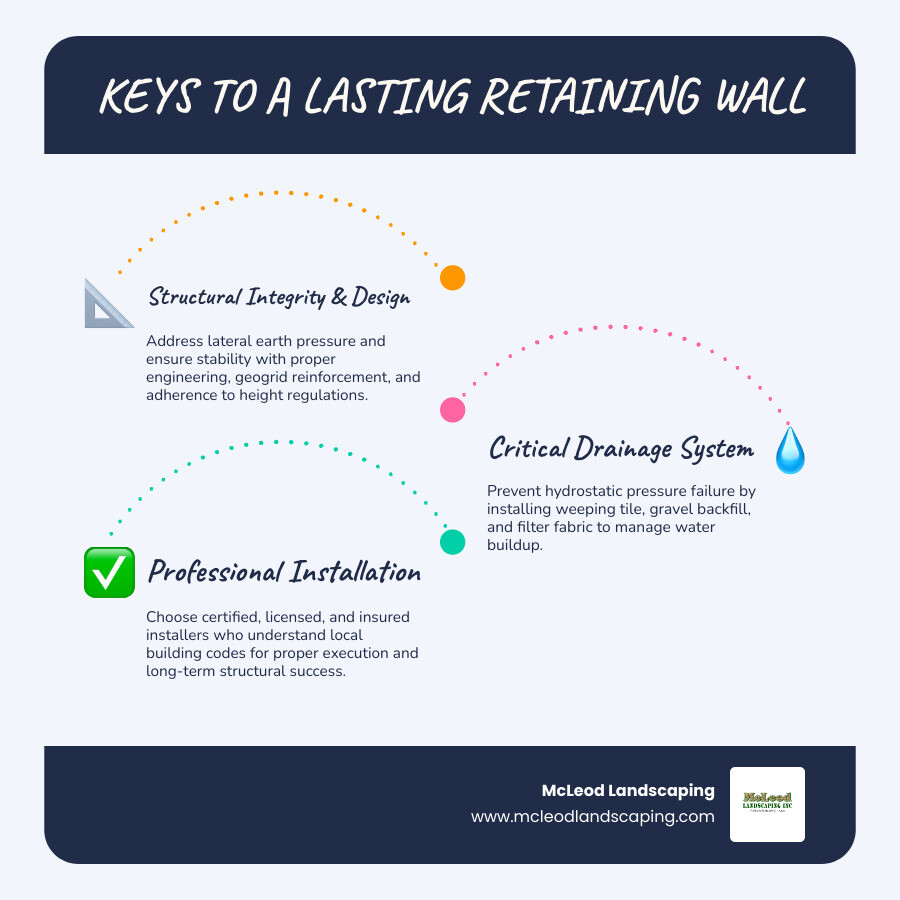
A retaining wall is only as good as its drainage system. Without it, hydrostatic pressure—the force of water-saturated soil—will cause even the strongest wall to fail. A professional installation is non-negotiable and includes:
Our expertise in Landscape Wall Construction ensures these vital systems are built correctly from the start, protecting your investment for decades.
While a small garden wall might seem like a manageable DIY project, building a structural retaining wall is far more complex. The risks of improper installation are significant, from wall failure to safety hazards.
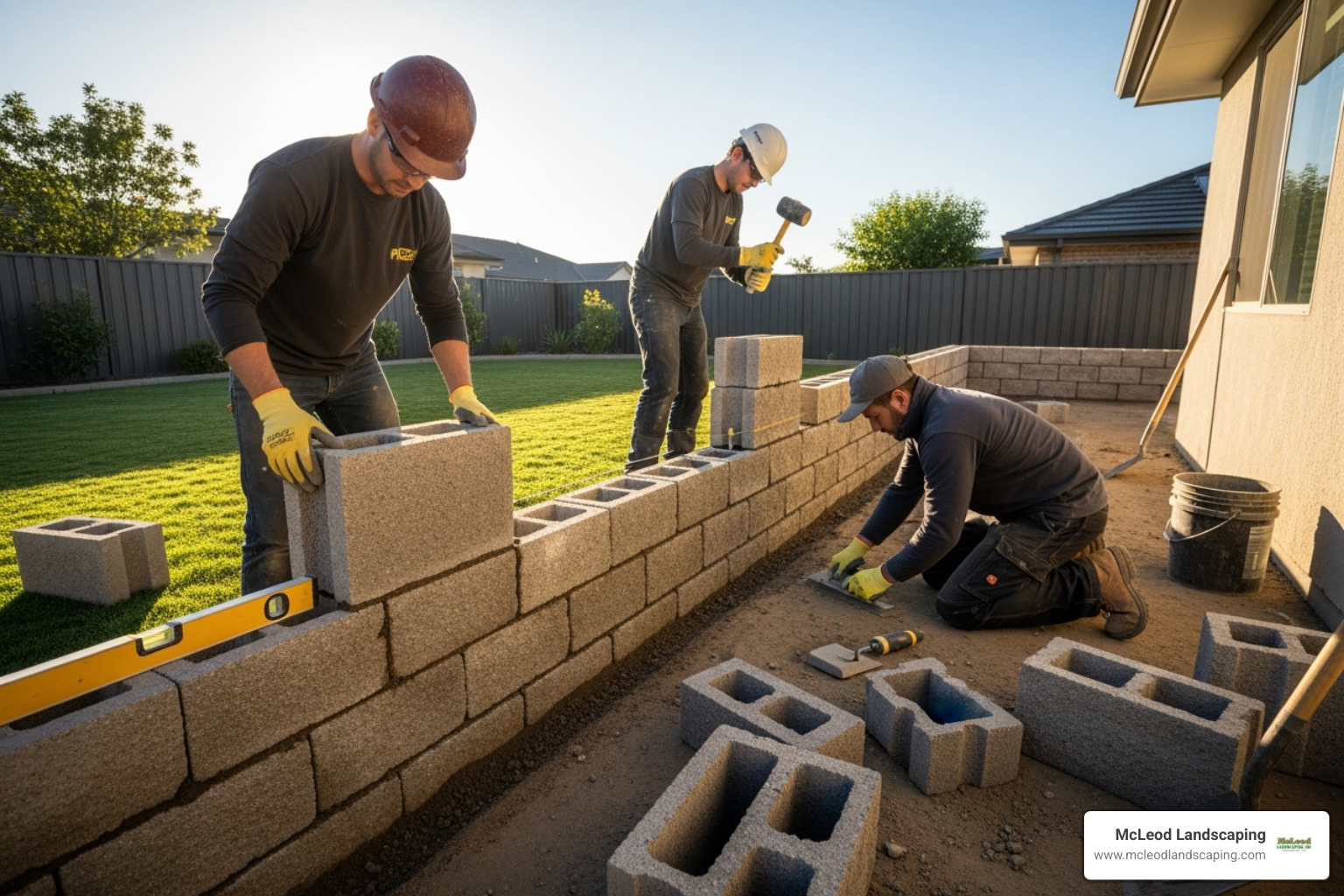
Shockingly, many municipalities don’t require specific training or certification to build retaining walls. This means anyone can call themselves a contractor. A certified Retaining Wall Installer, however, understands the physics and engineering required for long-term stability. Professionals also use specialized equipment safely and carry full insurance and licensing, protecting you from liability. Learn more about our standards on our Retaining Wall Contractors page.
Don’t just choose the lowest bid. To ensure your investment lasts, look for a contractor with:
For help finding a qualified pro, see our guide on the Best Retaining Wall Contractors Near Me.
The cost of a professional installation reflects the expertise, equipment, and materials needed for a wall that lasts a lifetime. Key factors include labor, materials, equipment fees, permits, and site accessibility.
Please note: The following are average costs based on internet data and not actual costs for McLeod Landscaping.
Based on industry averages, professional installation can range from $15 to $80 per square foot. Complex projects with premium materials and engineering could reach $100-150 per square foot or more. While a DIY or cut-rate job seems cheaper, it often leads to failure and a much more expensive replacement down the road. Investing in a professional installation provides long-term value and peace of mind. For a detailed breakdown, visit our guide on How Much Does a Retaining Wall Cost?.
Over three decades, I’ve answered countless questions from homeowners. Here are some of the most common ones.
Lifespan depends on two things: material choice and installation quality. While a wood wall might last 10-15 years, modern materials like concrete blocks, natural stone, and boulders can last 50-100 years or more. However, even the best materials will fail without proper drainage and professional installation. A wall built to industry standards by a qualified Retaining Wall Installer is a lifetime investment.
It depends on the cause of the failure. Minor cosmetic issues can sometimes be patched. However, if a wall is leaning, bulging, or shifting, it’s usually a sign of a systemic problem like poor drainage or a failed base. In these cases, patching is a temporary fix at best, and a full rebuild is often the only safe, long-term solution. If you have concerns, consult a professional to assess the root cause. We can help with our retaining wall repair services.
The first step is an initial consultation to discuss your vision and goals. From there, our process includes:
Our comprehensive Hardscaping Services ensure you have one point of contact from start to finish. The first step is simply reaching out to us.
Choosing the right Retaining Wall Installer is one of the most important investments you can make in your outdoor space. It’s not about the lowest bid; it’s about finding a partner who will build a wall that performs flawlessly for generations.
Professional installation provides long-term stability and peace of mind, knowing your wall can withstand heavy rains and freeze-thaw cycles. Beyond stability, a well-built wall delivers a significant aesthetic and financial return, enhancing your property’s value and your daily enjoyment of it.
With over 30 years of experience, McLeod Landscaping understands the fundamentals that ensure longevity: proper base preparation, adequate drainage, and skilled installation. We bring this expertise to communities throughout the Merrimack Valley, including Andover, Billerica, Burlington, Carlisle, Chelmsford, Concord, Lowell, Tewksbury, Westford, and Wilmington, MA.
Your retaining wall should be built once and built right. Don’t let your landscape dreams be held back by an inexperienced builder. When you work with certified professionals, you’re investing in decades of worry-free performance and beautiful outdoor living.
Contact us for your retaining wall installation project today, and let’s build a wall that will stand the test of time.
Contact McLeod Landscaping today at (978) 640-0957 or click here to schedule a consultation for retaining wall installation. Let our experienced team design and install a functional and visually appealing retaining wall that enhances your landscape.


1881 Main St Unit 1, Tewksbury, MA 01876