
Patio grout cleaning in Lowell is a professional service that removes dirt, mold, algae, and staining from the joints between your patio tiles or pavers — restoring your outdoor space and protecting it from long-term damage.
Quick answer for Lowell homeowners and property managers:
| What you need to know | Details |
|---|---|
| What it is | Deep cleaning of grout lines and joints between patio tiles, pavers, brick, or stone |
| Why it matters | Prevents mold growth, weed intrusion, joint erosion, and freeze-thaw damage |
| How often | At least once a year, ideally in spring or early summer |
| Who does it | Local hardscaping and outdoor cleaning professionals |
| Typical cost | Ranges from $100 to $1,500+ depending on patio size, condition, and services selected (see cost section below) |
Your patio takes a beating year-round. Lowell’s cold winters, wet springs, and humid summers create the perfect conditions for grout lines to trap dirt, grow mold, and slowly deteriorate. Over time, what started as a beautiful outdoor space can start looking dingy — and the damage isn’t just cosmetic.
Dirty grout holds moisture. Moisture plus Lowell’s freeze-thaw cycles leads to cracking, shifting pavers, and costly repairs down the road.
The good news? A professional grout cleaning can turn it all around — and faster than you’d expect.
I’m Scott McLeod, owner of McLeod Landscaping Inc., and with over 30 years of hardscaping experience serving Lowell and the Merrimack Valley, patio grout cleaning in Lowell is one of the most impactful maintenance services I recommend to both homeowners and commercial property managers. In the sections below, I’ll walk you through everything you need to know to make the right call for your property.
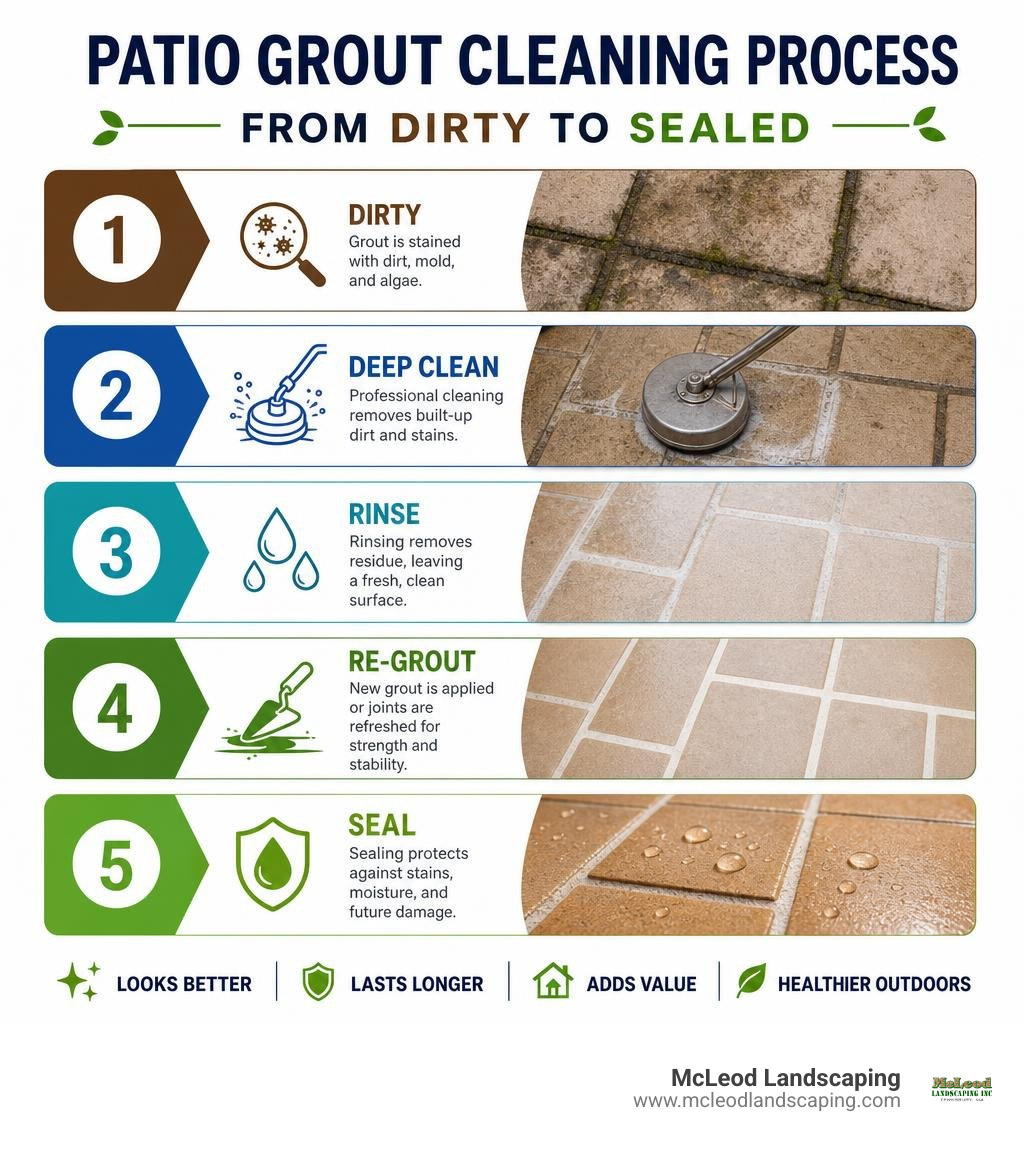
Simple Patio grout cleaning Lowell word guide:
To understand why your patio grout looks dark, dingy, or green, it helps to understand what is actually sitting between your stones or pavers. In hardscaping, “grout” can refer to a few different materials. The most common are polymeric sand (a specialized sand that hardens when activated with water) and traditional cementitious grout or mortar (often used for natural stone or wet-laid tile patios).
Unlike the smooth tiles in your indoor bathroom, outdoor patio joints are highly porous and rough. This texture is fantastic for traction, but it acts like a magnet for environmental debris.

When we design and install Hardscaping in Lowell MA, we prepare for the harsh New England weather. Our local climate in Lowell, MA, is particularly brutal on outdoor surfaces. The constant shift from freezing winter temperatures to warm, humid summer months causes stone, concrete, and grout to expand and contract. This “freeze-thaw cycle” creates tiny, microscopic fissures in the grout lines. For a general overview of how freezing water can fracture porous materials, see this explanation of frost weathering. Once these cracks open up, they trap moisture, organic matter, and soil, creating an ideal breeding ground for mold, mildew, and stubborn green algae.
If you take a close look at your patio right now, you are likely seeing the cumulative effects of several outdoor elements:
When homeowners notice their patio looking a bit worse for wear, the immediate reaction is often to head to the local home improvement store, rent a pressure washer, or buy heavy-duty chemical cleaners to tackle the job over the weekend. However, outdoor grout lines require a delicate touch that balances cleaning power with structural preservation.

Professional hardscape care standards are vastly different from the typical DIY approach. While a homeowner might spend hours on their hands and knees scrubbing with a wire brush, professionals utilize specialized commercial equipment and chemistry designed to lift stains without degrading the joints.
For instance, professional hard surface restoration services rely on hot-water extraction and specialized rotary surface cleaners. These systems apply controlled pressure while simultaneously vacuuming up the dirty slurry, preventing dirty water from settling back into the porous grout.
It is a common misconception that renting a high-psi pressure washer from a local hardware store is the ultimate solution for a dirty patio. In reality, standard, high-pressure washing can cause more harm than good when applied directly to patio joints.
Opting for professional patio grout cleaning provides several key advantages that keep your outdoor living area beautiful and structurally sound:
Understanding the financial investment required for professional patio cleaning helps you plan your seasonal home maintenance budget.
The table below outlines the average pricing structures for patio cleaning and restoration services in our region.
Please note: The rates listed in this table are average costs based on internet data and are not the actual costs or project estimates for McLeod Landscaping.
| Service Type | Average Cost Range (Internet Data) | High-End / Complex Project Range | What’s Included |
|---|---|---|---|
| Basic Patio Cleaning | $100 – $300 | $900+ | Basic surface washing, sweeping, and light debris removal for small to medium patios. |
| Deep Grout Cleaning | $200 – $500 | $1,500+ | Hot-water extraction, targeted stain removal, mold/algae sanitization, and deep joint scrubbing. |
| Pressure / Soft Washing | $150 – $400 | $1,200+ | Controlled pressure washing or soft washing tailored to the specific stone or paver material. |
| Sealing & Protective Coatings | $50 – $150 | $450+ | Application of commercial-grade joint stabilizers or protective sealants after a thorough cleaning. |
For homeowners looking for specialized local cleanings, professional hard surface care providers can provide context on indoor-to-outdoor hard surface care pricing.
No two patios in Lowell are exactly alike. When a professional evaluates your hardscape to provide an estimate, several variables will determine the final price:
Once your patio grout has been professionally cleaned and restored, you will want to keep it looking pristine for as long as possible. Proper post-clean care protects your investment and minimizes the need for frequent deep cleanings.
The absolute best way to protect your freshly cleaned grout is to apply a high-quality sealer. Sealing creates an invisible, water-resistant barrier over the grout and pavers. This prevents water, oil, leaf tannins, and dirt from penetrating the pores of the material.
To ensure your patio remains in top-tier shape, we highly recommend setting up a regular Hardscape maintenance service. Professional maintenance ensures minor issues are caught before they turn into major structural failures.
In between professional visits, you can perform these simple maintenance tasks:
We recommend scheduling a professional patio cleaning at least once a year, ideally in late spring or early summer. This timing allows you to wash away the harsh salt, grime, and debris left behind by New England’s winter snow and spring rains, leaving your outdoor space perfect for summer entertaining.
If your patio is heavily shaded or sits directly beneath large trees, a quick autumn maintenance check is also wise to prevent falling leaves from staining the grout lines over the winter.
Yes, absolutely. Clean, healthy grout joints are vital to the structural integrity of your entire patio. When grout or joint sand degrades, water is allowed to seep directly beneath the pavers. In Lowell, our freezing winter temperatures turn that trapped water into ice.
As ice expands, it pushes the pavers upward and outward—a process known as frost heaving. This leads to uneven stones, tripping hazards, and cracked materials. Keeping your joints clean and sealed prevents this water infiltration. If you already have shifting stones, you should look into Patio repairs near me to level the surface before cleaning.
While they are often performed together, they are two entirely different processes:
Yes, when performed by experienced professionals who understand material science. Different hardscape materials—such as concrete pavers, clay brick, granite, and blue flagstone—require different pressure settings and cleaning solutions.
For example, while we might use a slightly higher pressure on rugged concrete, natural flagstone requires a gentle soft-wash approach to prevent the stone from flaking. If you have a stamped or poured concrete patio, consulting a specialized concrete contractor or local surface experts can help ensure the correct cleaning protocols are followed for your specific surface.
A beautiful patio is the heart of your outdoor living space, providing the perfect backdrop for weekend barbecues, morning coffee, and family gatherings. However, dirty, weed-filled, or moldy grout lines can quickly turn your backyard retreat into an eyesore.
By investing in professional patio grout cleaning in Lowell, you aren’t just improving your home’s curb appeal—you are protecting your hardscape from the destructive New England freeze-thaw cycles and avoiding costly structural repairs down the road.
At McLeod Landscaping, we bring over 30 years of hardscaping and property maintenance experience to homeowners and commercial clients throughout Lowell and the surrounding Merrimack Valley. Whether you need a deep restorative clean, joint re-sanding, or are ready to design a brand-new outdoor oasis with our Patio installation services, our team is here to deliver exceptional results.
Ready to bring your patio back to life for the 2026 season?
Contact McLeod Landscaping today at (978) 640-0957 or click here to schedule a consultation for retaining wall installation. Let our experienced team design and install a functional and visually appealing retaining wall that enhances your landscape.


1881 Main St Unit 1, Tewksbury, MA 01876