
A snow and ice management plan turns a commercial property into a sequence of decisions before the first storm arrives. It identifies what must remain accessible, where snow may be stored, who authorizes service, how changing conditions are reported, and what gets documented after each event.
The plan should complement the service contract, not repeat it. The contract defines the business agreement; the operating plan shows how the property will function during a winter event.
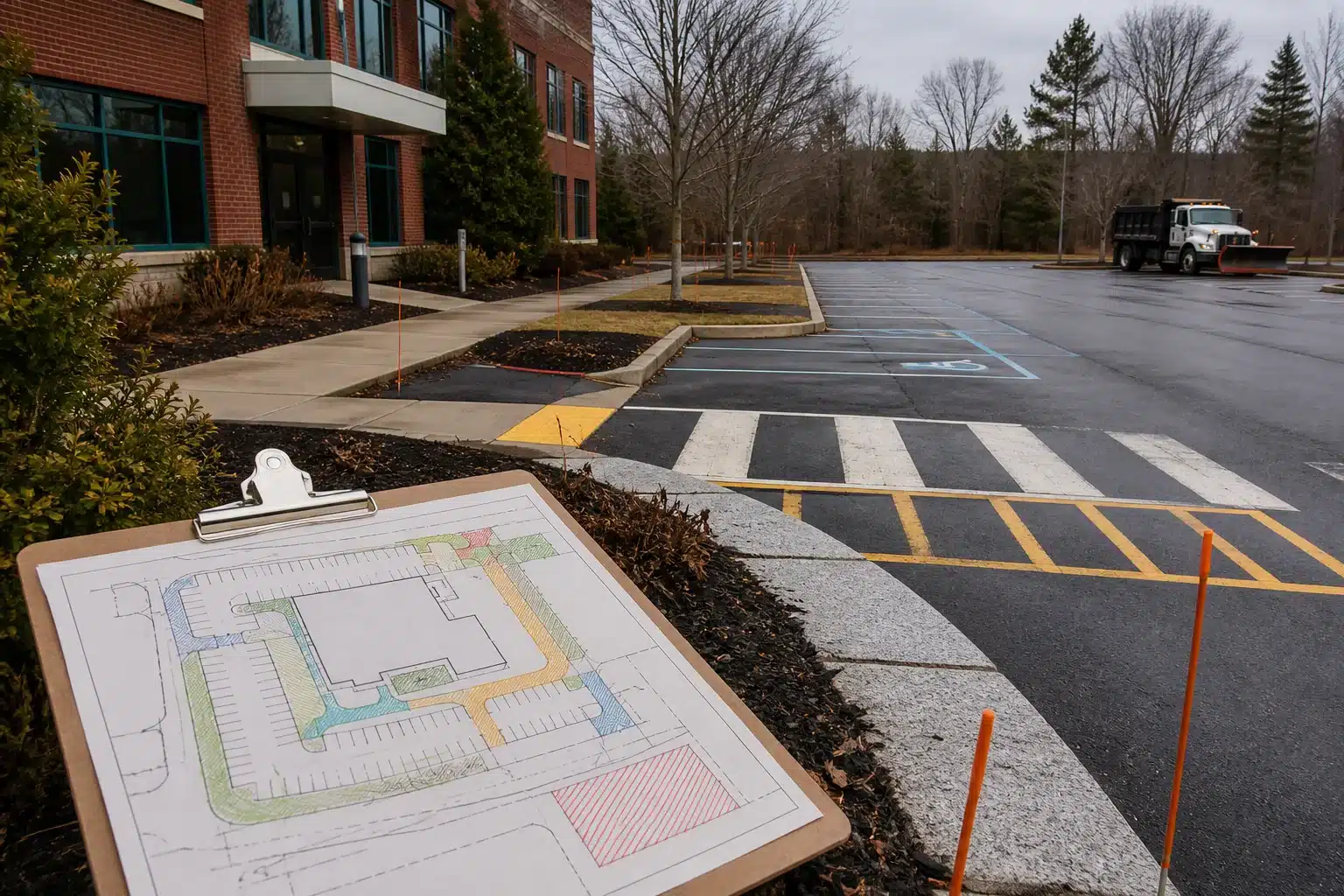
Use a current site plan or marked aerial image. Walk the property with the people responsible for facilities, security, deliveries, and snow service. Record physical constraints while they are visible.
Install visible edge markers where appropriate and update the map whenever construction, striping, access, or tenant operations change.
Not every surface can be treated at once. The plan should establish an order tied to actual property use rather than relying on an informal “do the front first” instruction.
| Priority | Typical zones | Plan decision | Completion record |
|---|---|---|---|
| Life-safety access | Fire lanes, emergency access, required exits | Keep routes identifiable and coordinate conflicts | Time, condition, action, exception |
| Arrival routes | Main drive, accessible route, primary entrance | Sequence for opening time and site traffic | Time opened and follow-up needed |
| Operations | Loading, service doors, employee access | Coordinate with delivery and shift schedules | Access status and contact notified |
| Secondary areas | Overflow parking, low-use walks, remote edges | Define when they enter the sequence | Completion time or approved deferral |
Property-specific priorities should be reviewed with the appropriate facilities, safety, insurance, and legal contacts. Nationwide’s risk-management guidance notes that owners, managers, tenants, and contractors need to understand who is responsible for snow and ice work, and that the written contract defines included duties. See Snow and ice removal: What you need to know.
Document how service is activated under the contract and who may approve additional work. The operating plan should name a primary and backup property contact, the service contact, the communication channel, and the update cadence during long or changing events.
Use one consistent event record for the property. Include the date, time, observed conditions, areas inspected, work completed, materials or equipment used when relevant, exceptions, photos when useful, and the person making the entry. Nationwide’s recordkeeping guidance identifies operational logs—including snow and ice removal logs—as records that can document recurring work and due diligence.
A log is most useful when it captures decisions, not just a single “complete” checkbox. If a loading area stayed open for a delivery or a snow-storage zone became full, note the reason, the temporary response, and the next action.
Use a short post-storm review to keep the plan current:
McLeod Landscaping’s commercial snow removal service is the primary service reference for a Tewksbury-area property. Share your annotated map and operating priorities when you request an estimate so the service discussion begins with the same site information your team uses.
Contact McLeod Landscaping today at (978) 640-0957 or click here to schedule a consultation for retaining wall installation. Let our experienced team design and install a functional and visually appealing retaining wall that enhances your landscape.

1881 Main St Unit 1, Tewksbury, MA 01876