
Awesome outdoor fire pits turn any backyard into a destination — a place where people linger, conversation flows, and evenings stretch long past sunset.
Here’s a quick look at the most popular types to help you find the right fit:
| Fire Pit Type | Best For | Fuel | Effort Level |
|---|---|---|---|
| Wood-burning pit | Rustic feel, s’mores, crackling ambiance | Wood | Medium |
| Smokeless fire pit | Cleaner burn, less smoke, cooking | Wood | Low–Medium |
| Propane fire table | Easy entertaining, push-button flame | Propane | Very Low |
| Natural gas fire table | Permanent setup, always-on convenience | Natural gas | Very Low |
| Built-in stone or paver pit | Custom look, permanent feature | Wood or gas | Low (once built) |
| Concrete or GFRC fire bowl | Modern style, sculptural centerpiece | Gas | Very Low |
| Fire pit dining table | Meals around the flame, dual-purpose use | Propane or gas | Very Low |
Whether you want a cozy gathering spot, a cooking station, or a bold design feature, there’s a fire pit style that fits your space and lifestyle.
Fire pits have become one of the most requested backyard additions — and it’s easy to see why. They extend the outdoor season into cooler months, create a natural focal point for seating, and add real value to a property’s outdoor living space. From portable smokeless models that weigh under 25 pounds to luxury gas fire tables that double as coffee tables or grills, the options in 2026 span a wide range of styles, materials, and price points.
This list covers seven of the best fire pit ideas — from simple wood burners to full outdoor kitchen setups — along with everything you need to know about materials, sizing, safety, and installation.
I’m Scott McLeod, owner of McLeod Landscaping Inc., and over my 30+ years designing and building outdoor living spaces across the Merrimack Valley, I’ve helped countless homeowners integrate awesome outdoor fire pits into custom patios, hardscape surrounds, and full backyard transformations. Whether you’re planning a built-in stone pit or a gas fire table, the guidance below draws on real project experience to help you make the right call.
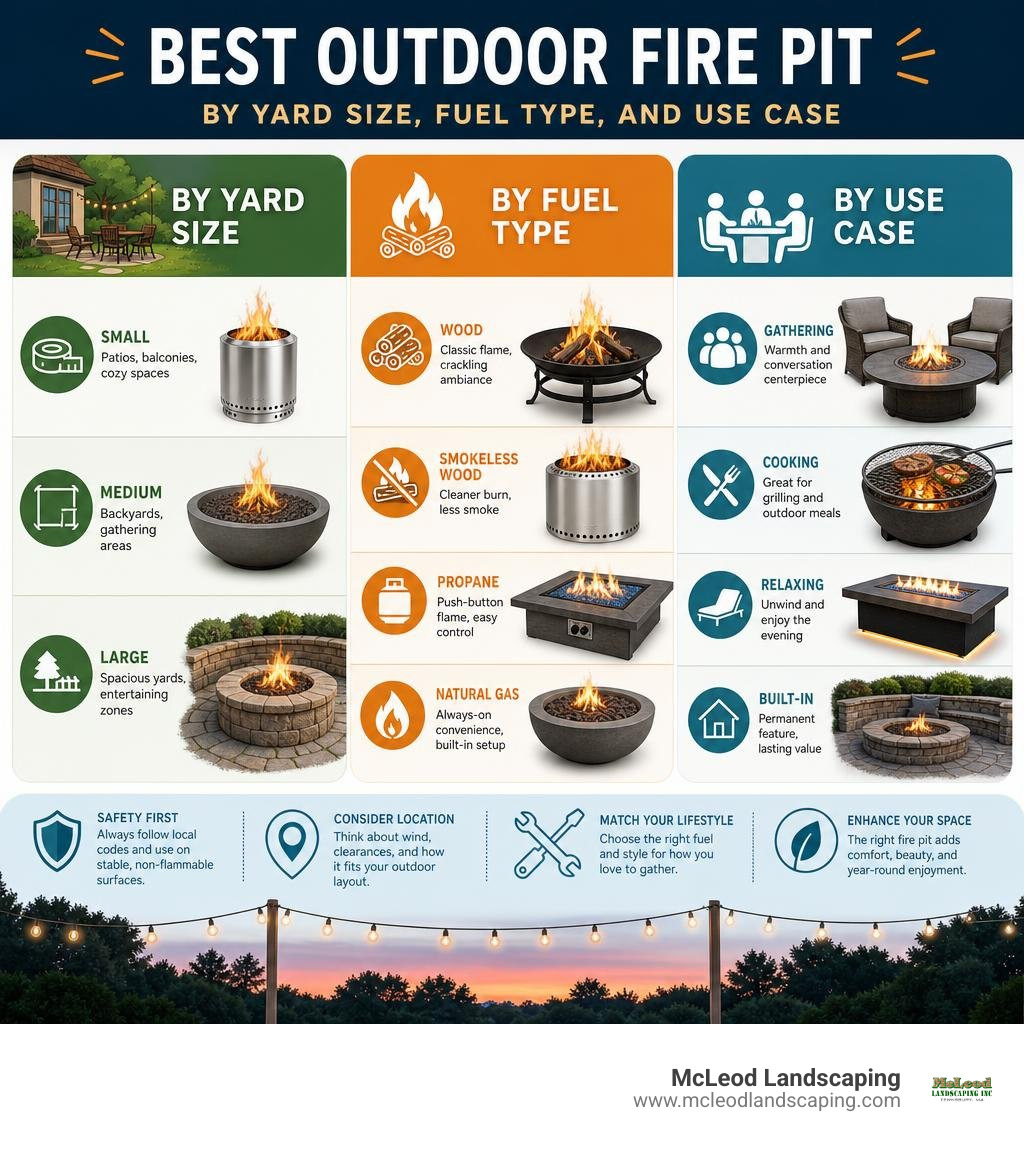
When you are exploring fire pit ideas, it helps to understand how different styles serve different backyard functions. Whether you want to establish separate entertaining zones, install a permanent hardscape feature, or enjoy a portable cooking model, there is a design suited for your layout.
For many homeowners, nothing beats a Wood Burning Fire Pit. The crackle of seasoned oak, the dancing natural flames, and the nostalgic aroma of wood fuel create an unmatched rustic style. It is the quintessential setup for roasting marshmallows with the family on a cool autumn evening in Billerica or Carlisle.
However, classic wood pits require some effort. You will need a dedicated firewood storage area to keep your logs dry, and you must stay on top of ash cleanup to prevent moisture buildup and rust. Safety is also a priority: always use a spark screen to catch escaping embers, and check your local municipal guidelines. For instance, towns in our service area have specific rules regarding open burning and setbacks from property lines.
If you love the heat of real wood but hate shuffling your chair to escape shifting plumes of smoke, a smokeless fire pit is a game-changer. These units use a clever double-wall design to facilitate a “secondary burn.”

As the fire burns, cool air is pulled into the bottom vents. It travels up through the double-walled chamber, gets superheated, and exits through top vents inside the rim. This superheated oxygen ignites the smoke particulates before they can escape, resulting in a cleaner, hotter, and brighter flame that burns up to 3x faster than traditional fire bowls.
Premium models, like the New Zealand-designed KiwiFire – Ultimate Outdoors Bundle – KiwiFire by Smokelis® , are crafted from heavy-duty Corten steel and double as incredible live-fire grills. To maximize efficiency, always burn dry, kiln-dried wood and use a removable ash pan for easy cleaning.
If instant ambiance is your goal, a Outdoor Table with Firepit is the way to go. These systems run on either a standard 20-lb liquid propane tank hidden inside the base or a direct natural gas line. With a simple push-button ignition and precise flame control, you can have a beautiful, warm fire going in seconds—and turn it off just as quickly when it is time to go inside.
Gas fire tables also serve a dual purpose. When the burner is turned off, many models include a flush-fit lid that transforms the unit into a functional coffee table for drinks and appetizers. When shopping, look for safety-certified models with a CSA listing, such as the LayinSun 44-Inch Propane Gas Rectangle Fire Pit Table 55000 BTU Firepi . This unit provides 55,000 BTUs of heat, comes with a tempered glass wind guard, and instantly elevates patio seating areas.
For a seamless hardscape integration, a built-in paver or stone fire pit is the gold standard. This permanent feature is constructed directly onto a concrete or compacted gravel base with a dedicated drainage layer to prevent water pooling. You can match the stone veneer or paver surround to your existing patio, walkways, or retaining seat walls.
A built-in Backyard Fire Pit creates a natural, permanent gathering hub. We often design these with curved stone retaining seat walls built right around the pit, providing permanent seating that stands up to New England winters. If you are interested in a permanent focal point, you can explore professional installation options via our Custom Fire Pit Installation services.
For a clean, minimalist aesthetic, concrete fire bowls offer sculptural shapes that look like modern works of art. Today’s premium bowls are made from Glass Fiber Reinforced Concrete (GFRC). By mixing concrete with high-strength glass fibers, manufacturers create a material that is 50% lighter than traditional precast concrete while offering superior crack resistance, chip resistance, and weatherproofing.
These bowls typically feature linear or circular burners surrounded by neutral-colored fire glass or lava rock. A prime example is the Palo Fire Pit – in GFRC Concrete Wood Grain 48″ – Fire Goddess , which features an elegant H-shaped design inspired by stacked wood beams. It delivers 20,000 BTUs of clean-burning warmth, combining rustic textures with a striking modern footprint.
Why separate the dining area from the fire lounge? An Outdoor Firepit Dining Table brings them together, allowing you to enjoy cozy dinners directly around a controlled flame. These tables are designed at standard dining or counter height and feature a wide ledge around the center burner, providing plenty of room for plates, glassware, and serving dishes.
For ultimate versatility, look for premium options like the OuterStone Fire Pit – Rectangular | Outer . Priced at $5,335, this 3-in-1 design functions as an ambient fire pit, a spacious coffee table, or an outdoor cooktop. It features a non-porous sintered stone top that is highly resistant to heat, scratches, and stains, and comes with reversible cast iron griddle pans that redirect heat outward to keep your guests warm while cooking.
If you want to create the ultimate backyard retreat, pair an Outdoor Kitchen with Firepit. This layout establishes a complete outdoor culinary and entertainment zone. You can prep and cook at your grill station, serve meals at an adjacent counter, and then transition the crowd over to the fire pit lounge for dessert and drinks.

When designing a full destination layout, traffic flow is critical. You want enough space between the cooking zones and the fire seating so guests can move safely without bottlenecking. Incorporating built-in hardscape steps, pathways, and professional accent lighting ties the spaces together beautifully.
Selecting the right fire pit involves balancing aesthetics, functionality, and budget. Let’s break down the core decisions you will need to make.
The material of your fire pit dictates its durability, weight, heat retention, and maintenance requirements.
Your choice of fuel impacts your installation costs, maintenance schedule, and how you use the fire pit.
| Feature | Wood-Burning | Propane (LPG) | Natural Gas (NG) |
|---|---|---|---|
| Convenience | Low (requires wood, lighting, ash cleanup) | High (push-button start, portable tanks) | Very High (always-on, no tanks to refill) |
| Average Cost | Low to Moderate | Moderate | High (requires professional gas line installation) |
| Maintenance | High (ash removal, soot cleaning) | Low (wipe down, cover burner) | Low (inspect burner, clear debris) |
| Heat Output | High (variable based on wood load) | Moderate (typically 40,000–60,000 BTUs) | High (can range up to 125,000+ BTUs) |
| Installation | Simple (place and burn) | Simple (connect tank) | Complex (licensed plumber required) |
Note on Local Regulations: Wood-burning pits are subject to local open burning bans during dry summer spells. Propane and natural gas models are generally permitted year-round because they can be shut off instantly.
Yes, especially if you plan to use your fire pit frequently for family gatherings or outdoor dining. Traditional fire pits often leave you smelling like campfire smoke and limit where you can sit. Smokeless models eliminate up to 90% of smoke once they reach secondary combustion temperatures (which takes about 8 to 10 minutes).
They also burn hotter and more efficiently, meaning you get more heat out of every log. While they carry a premium price tag compared to cheap big-box store bowls, their high-grade stainless steel or Corten construction means they will outlast budget steel alternatives by years.
To ensure safety and comfort, follow these sizing and clearance rules:
Your fire pit should complement your home’s architectural style and landscape design.
For more inspiration on matching hardscape elements, check out our guide on how to Turn Up the Heat with These Custom Outdoor Fire Pit Designs.
A fire pit is a beautiful addition to your home, but it is also a powerful heating appliance. Proper safety, professional installation, and routine maintenance are essential.
When shopping for gas fire pits, never skip safety certifications. Look for units that are CSA, UL, ULC, or CE listed. These certifications prove the burner system has been rigorously tested for gas safety, wind resistance, and structural integrity.
Key safety features include:
Before installing any fire feature, check your specific town ordinances. Municipalities in the Merrimack Valley have distinct regulations:
Generally, gas-fired tables have much more lenient clearance requirements than wood-burning units because they do not produce flying sparks.
For a built-in pit, a level, non-combustible base is mandatory. We recommend a minimum 6-inch compacted gravel base topped with hardscaping sand and durable concrete pavers.
If you are running a natural gas line, always hire a licensed gas professional or plumber to run the line and make the final connections. Gas lines must be buried at code-compliant depths, pressure-tested, and equipped with accessible shut-off valves. Additionally, propane gas is 1.5 times heavier than air; therefore, propane fire tables must have proper ventilation built into the base to prevent gas from pooling in the bottom of the unit.
To explore how professional installation simplifies this process, read our guide on how to Ignite Your Outdoor Space Professional Fire Pit Installation Made Easy.
To keep your fire feature looking and performing like new, follow this routine maintenance schedule:
The right accessories turn a simple fire pit into a versatile cooking station and a comfortable outdoor living room.
Investing in a few key add-ons can dramatically improve your fire pit experience:
To maximize comfort, surround your fire pit with high-quality hardscaping and cozy seating.
A custom paver patio provides a stable, fire-safe foundation. Incorporating curved stone seat walls creates a permanent, wind-blocking barrier that frames the space beautifully. Complete the look with comfortable Adirondack chairs, weather-resistant sectional cushions, and low-voltage hardscape lighting under the seat wall caps to guide guests safely after dark.
If you are starting from scratch, check out our comprehensive options for a Custom Outdoor Fire Pit patio layout.
When it comes to fire pits, the old saying holds true: buy it nice, or buy it twice.
Budget fire bowls from mass retailers often use thin, painted carbon steel that can rust through in just one or two New England winters. They also lack safety certifications and use low-efficiency burners that produce weak, flickering flames.
In contrast, premium fire features use thick-gauge 304 stainless steel, marine-grade aluminum, or high-strength GFRC concrete. They feature advanced burner technology (like the high-BTU burners found in The Outdoor Plus Sedona Wide Ledge Concrete Fire Pit + Free Cover – Distinct Designs ) that produces fuller, taller, and more natural-looking yellow flames. They also come with robust multi-year warranties and certified safety valves, giving you peace of mind for years to come.
To make your fire pit feel like a natural extension of your home, try these design strategies:
For most homeowners, the choice comes down to lifestyle. If you love the hands-on experience of building a fire, roasting marshmallows, and smelling real wood smoke, a high-quality smokeless wood-burning fire pit is the best choice. If you prioritize convenience, clean air, and instant ambiance for spontaneous weeknight hangouts, a propane or natural gas fire table is the clear winner.
You can easily place a fire pit on a concrete, paver, or natural stone patio. However, placing a fire pit on a wood or composite deck requires extreme caution. Never burn wood on a wooden deck due to the risk of flying sparks and heat transfer. Gas fire tables are safe for decks if they are certified for deck use and elevated on a non-combustible base or protective heat pad. Always consult the manufacturer’s clearances and your local fire department first.
Note: The following pricing ranges represent broad average industry costs based on national internet data and do not reflect actual costs, estimates, or quotes for McLeod Landscaping. Final project pricing depends on the specific site, materials, design complexity, utilities, and installation requirements.
Fire pit costs vary widely depending on materials, fuel type, and installation requirements:
An outdoor fire pit is more than just a source of warmth—it is the heart of your outdoor living space. Whether you choose a portable smokeless burner, a modern concrete fire bowl, or a fully integrated custom stone fire pit, investing in a high-quality fire feature will completely transform how you enjoy your backyard.
At McLeod Landscaping, we have spent over 30 years helping homeowners across the Merrimack Valley design and build beautiful, functional, and long-lasting outdoor retreats. From custom paver patios and retaining seat walls to professional gas fire pit installations, our team handles every step of the process with precision and care.
Ready to bring your backyard dreams to life? Start planning a custom outdoor fire pit with McLeod Landscaping today! We proudly serve Andover, Billerica, Burlington, Carlisle, Chelmsford, Concord, Lowell, Tewksbury, Westford, and Wilmington, MA. Contact us to schedule your professional design consultation.
Contact McLeod Landscaping today at (978) 640-0957 or click here to schedule a consultation for retaining wall installation. Let our experienced team design and install a functional and visually appealing retaining wall that enhances your landscape.


1881 Main St Unit 1, Tewksbury, MA 01876