
Automatic Lawn Sprinklers are the most efficient way to maintain a healthy, lush lawn without the constant hassle of manual watering. These systems deliver water precisely when and where your grass needs it most.
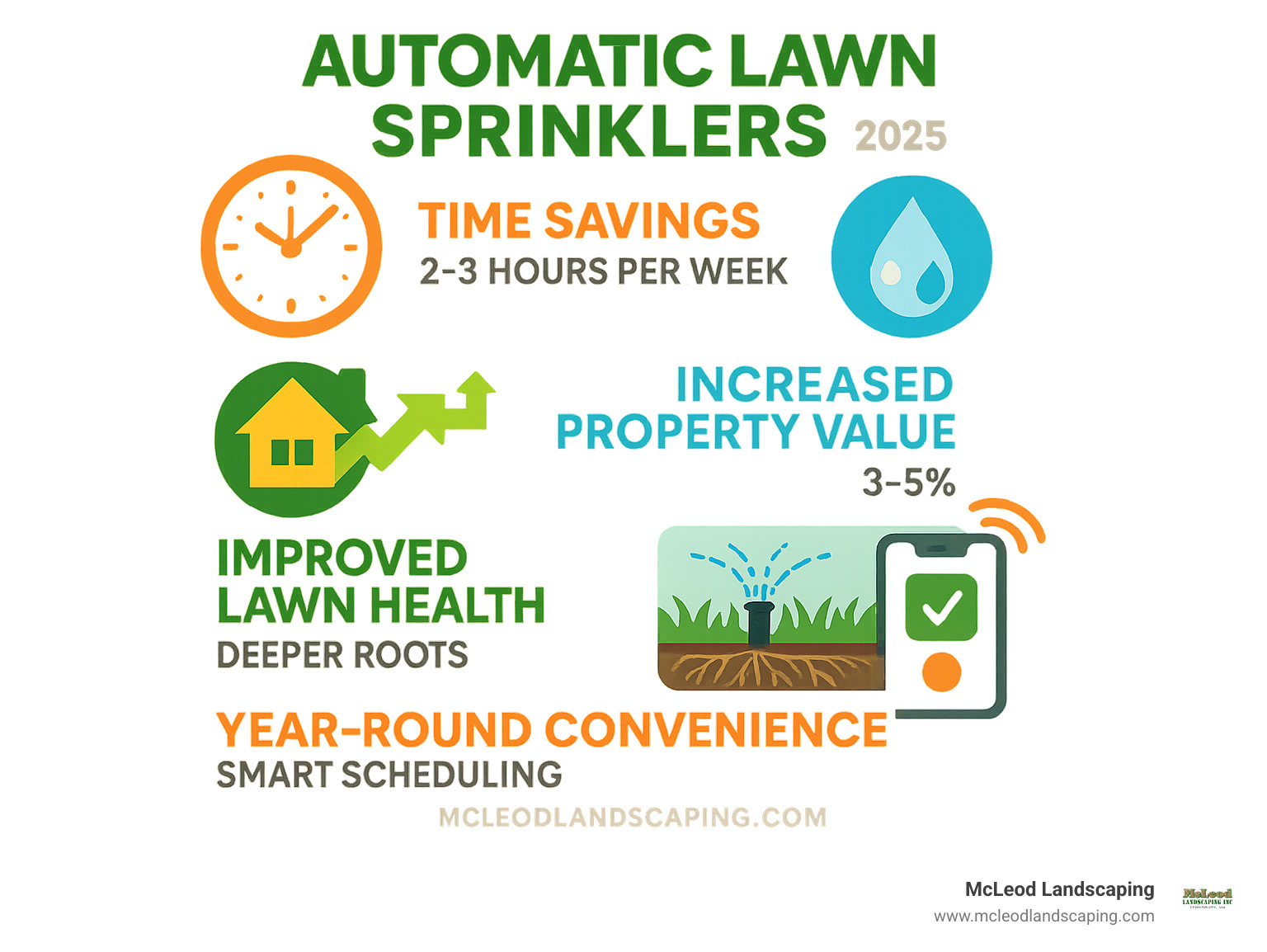
Key benefits of automatic lawn sprinklers:
Research shows that automatic systems can save homeowners $300-$600 per year through reduced water usage and improved efficiency. The Rain Bird 32ETI system, for example, covers 1,000-3,000 square feet and uses patented Rain Curtain™ technology to minimize overspray and water waste.
Whether you choose a simple timer-based system or advanced smart controllers with weather sensors, automatic sprinklers eliminate the guesswork from lawn care. They water during optimal times (typically early morning) to reduce evaporation and ensure your grass gets exactly what it needs.
I’m Scott McLeod, owner of McLeod Landscaping, and over my 30+ years in the landscaping industry, I’ve seen how Automatic Lawn Sprinklers transform properties from struggling lawns to vibrant landscapes that homeowners and commercial property managers can be proud of. My team has designed and maintained irrigation systems across the Merrimack Valley, helping clients achieve healthier turf while reducing their water costs and maintenance time.
Automatic Lawn Sprinklers vocab explained:
Think of Automatic Lawn Sprinklers as your lawn’s personal assistant – one that never takes a day off, never forgets, and works around the clock to keep your grass looking its best. When you invest in an automatic system, you’re not just buying convenience (though that’s a huge perk). You’re making a smart financial decision that pays dividends in multiple ways.
The most immediate benefit you’ll notice is the time savings. No more Sunday mornings spent dragging heavy hoses across your yard or setting phone alarms to remind you to move the sprinkler. Instead of spending 2-3 hours each week on watering duties, you can enjoy your coffee on the patio while your system does the work.
But here’s where it gets really interesting – Automatic Lawn Sprinklers actually boost your property value. A professionally installed irrigation system signals to potential buyers that the property has been well-maintained. Real estate experts consistently rank lush, healthy lawns among the top factors for curb appeal, and that translates directly into higher home values.
The magic happens through consistent watering. Your grass gets exactly what it needs, when it needs it, leading to healthier turf that’s naturally more resistant to weeds, disease, and drought stress. This consistent care promotes deep root growth, creating a lawn that can weather whatever Mother Nature throws at it.
Here’s something that might surprise you – Automatic Lawn Sprinklers are actually water-saving champions. While it might seem counterintuitive, these systems can reduce your outdoor water use by up to 50% compared to manual watering methods.
The secret lies in smart scheduling. Your system waters during the cool morning hours when evaporation is minimal, ensuring more water actually reaches your grass roots instead of disappearing into thin air. Modern systems also feature targeted watering capabilities, delivering water precisely where your lawn needs it rather than wastefully spraying sidewalks and driveways.
Advanced controllers take conservation even further with weather-based adjustments. These smart systems monitor local weather conditions and soil moisture levels, automatically skipping watering sessions when it’s raining or when your lawn already has plenty of moisture. Some systems even include leak detection features that can catch problems early, preventing both water waste and costly repairs.
The result? Lower water bills and genuine environmental benefits. Research shows that smart irrigation systems can save thousands of gallons annually while maintaining healthier lawns. It’s a win-win situation that aligns perfectly with sustainability initiatives and helps protect our water resources.
Let’s be honest – life is busy enough without having to worry about whether you remembered to water the back corner of your lawn. Automatic Lawn Sprinklers offer true set-it-and-forget-it convenience. Program your system once, and it handles everything from there.
Planning a vacation? Your lawn will look just as green when you return as when you left. Working late? No problem – your sprinklers are already on the job. This reliability ensures uniform coverage across your entire landscape, eliminating those brown patches that seem to appear whenever you rely on manual watering.
The consistent moisture promotes healthy growth patterns and deep root development, creating a lawn that’s naturally more resilient. No more dry spots or uneven growth – just consistently beautiful grass that becomes the envy of the neighborhood.
For homeowners ready to transform their outdoor spaces, our Residential Landscaping services can help design a complete landscape solution. And if you’re curious about the technical details, check out our guide on How Does a Lawn Sprinkler System Work?.
Choosing the right Automatic Lawn Sprinklers for your property starts with understanding what options are available. Think of it like choosing the right tool for the job – each system type has its own strengths and ideal applications.
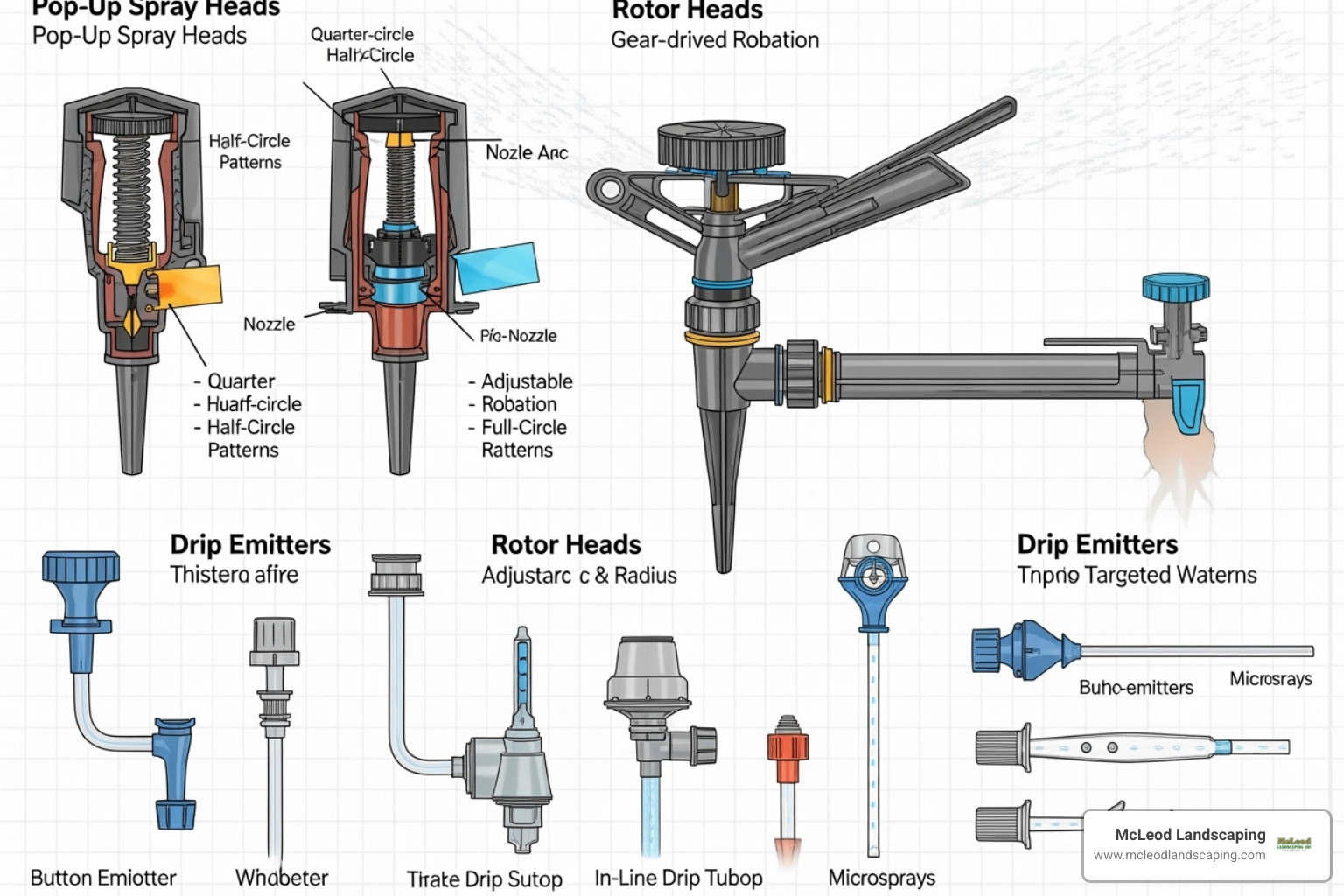
The three main categories you’ll encounter are in-ground systems, above-ground systems, and drip irrigation. Each serves different needs, from expansive lawns to delicate garden beds. Smart technology has also revolutionized all these categories, adding features that would have seemed like science fiction just a few years ago.
For a comprehensive breakdown of all your options, check out our detailed guide on Types of Lawn Irrigation Systems.
When most people picture Automatic Lawn Sprinklers, they’re thinking of in-ground systems. These are the workhorses of lawn irrigation – a network of underground pipes that feed various types of sprinkler heads strategically placed across your property.
The magic happens with the different types of sprinkler heads. Pop-up heads are perfect for smaller areas and tight spaces, delivering water in fixed patterns like quarter-circles or full circles. They’re compact, typically covering 8-10 feet, and work great around flower beds or irregular lawn shapes.
For larger areas, rotor heads are the champions. These rotating heads cover much more ground – sometimes up to 65 feet apart – by sending streams of water in sweeping arcs. They’re less affected by wind and deliver water more slowly, allowing better soil absorption.
Spray heads round out the family, offering precise water distribution for specific applications. The beauty of in-ground systems lies in their professional appearance and durability. When not in use, everything disappears below ground level, leaving your lawn looking pristine and making mowing effortless.
While in-ground systems excel at watering lawns, drip irrigation and soaker hoses are the precision tools for everything else. These systems take a completely different approach – instead of spraying water through the air, they deliver it drop by drop directly to plant roots.
This direct-to-root watering method is incredibly efficient for garden beds, shrubs, and trees. You’re not losing water to evaporation or wind drift, and you’re not accidentally watering weeds between your plants.
The high water efficiency of drip systems is remarkable. Because water goes exactly where it’s needed, waste is minimal. Plus, keeping water off plant leaves helps prevent fungal diseases that thrive in moist conditions.
These systems shine in areas where traditional sprinklers would be wasteful or impractical – think narrow planting strips, container gardens, or areas with dense plantings where overhead watering can’t reach the soil effectively.
Here’s where Automatic Lawn Sprinklers get really exciting. Smart technology has transformed these systems from simple timers into sophisticated water management tools that think for themselves.
Wi-Fi controllers are the brains of modern systems, connecting to your home network and putting complete control in your smartphone. Imagine adjusting your watering schedule from your office or starting a cycle while you’re on vacation – it’s all possible with intuitive smartphone apps.
The real game-changer is weather-based adjustments. Smart systems monitor local weather conditions and automatically modify their schedules. Rain in the forecast? The system skips that day’s watering. Heat wave coming? It extends watering times. This isn’t just convenient – it’s incredibly efficient.
Soil moisture sensors take precision even further. These devices actually measure how much moisture is in your soil, only triggering watering when plants truly need it. No more guessing or watering on autopilot.
Zone control allows you to treat different areas of your property according to their unique needs. Your sunny front lawn might need more water than the shaded area under your oak tree, and smart systems handle these differences automatically.
Perhaps most impressive is leak detection technology. These systems can identify problems before they become expensive disasters, alerting you to issues and even shutting off water flow to prevent damage.
For detailed guidance on selecting the perfect system for your specific needs, explore our comprehensive guide on the Best Irrigation System for Lawns.
Selecting the right Automatic Lawn Sprinklers system for your property is like finding the perfect pair of shoes – it needs to fit just right. What works beautifully for your neighbor’s compact yard might be overkill for your sprawling lawn, or vice versa.

When I help clients choose their system, we start with the basics. Your lawn size and yard shape are the foundation of everything else. A compact Rain Bird 32ETI system works wonderfully for medium-sized lawns up to 3,000 square feet, while larger properties might need multiple zones or advanced systems like Irrigreen, where a single head can cover up to 2,800 square feet.
Water pressure is another critical piece of the puzzle. Most systems need at least 40-50 PSI to work properly – think of it like having enough oomph to push water through all those pipes and out the sprinkler heads effectively. If you’re on a private well (like about 15% of Americans), we’ll also consider your well’s capacity and any special water treatment needs.
Your soil type matters more than you might think. Sandy soil drinks up water quickly, like a sponge, so it needs shorter, more frequent watering sessions. Clay soil, on the other hand, is more like a slow sipper – it prefers longer, less frequent watering to really soak in without running off.
Climate considerations and budget round out the main factors. If you live where winters freeze, winterization becomes essential. And let’s be honest – your budget will help determine whether you go with a basic timer system or splurge on smart technology with all the bells and whistles.
The million-dollar question most homeowners ask is: “Should I install this myself or call in the pros?” It’s a fair question, and the answer depends on your comfort level with getting your hands dirty – literally.
| Feature | DIY Installation | Professional Installation |
|---|---|---|
| Cost | Lower upfront investment, with basic systems starting under $200. You save on labor but invest your own time. | Higher initial cost due to professional expertise and labor, but often includes warranties and ongoing support. |
| Skills Needed | Requires plumbing knowledge, basic electrical work for controllers, and physical stamina for digging trenches. You’ll need tools like pipe cutters and trenching equipment. | No special skills required from you – just the ability to write a check and point out where you want the sprinklers. |
| Time Investment | Even “weekend projects” like the Rain Bird 32ETI can stretch longer than expected, especially if you hit unexpected rocks or tree roots. | Professional teams work efficiently, typically completing installation in a day or two without disrupting your weekend plans. |
| Reliability | Success depends entirely on your skill level. Mistakes in design or installation can lead to soggy spots, dry patches, or expensive water waste. | Higher reliability due to professional experience, proper equipment, and knowledge of local soil conditions and regulations. |
| Support | You’re on your own for troubleshooting – though manufacturer warranties still apply to the equipment itself. | Often includes installation warranties plus ongoing maintenance support when issues arise. |
Installing Automatic Lawn Sprinklers yourself can be rewarding, but it’s definitely not a casual weekend project. You’ll be trenching (digging channels 6-12 inches deep for pipes), pipe fitting with PVC cement that doesn’t forgive mistakes, valve manifold assembly to create your water distribution hub, controller wiring to connect the system’s brain, and thorough system testing to ensure everything works perfectly.
Systems like the Rain Bird 32ETI are designed with DIY installation in mind, complete with step-by-step instructions. But even these “homeowner-friendly” systems require patience, the right tools, and a willingness to troubleshoot when things don’t go exactly as planned.
For those who prefer a stress-free experience with optimal results, professional installation makes sense. Our team has years of experience with Lawn Sprinkler System Installation throughout the Merrimack Valley. We handle everything from permits to final testing, ensuring your system is designed specifically for your property’s unique needs.
If you’re leaning toward the DIY route, our guide on How to Install an Irrigation System provides valuable insights to help you succeed.
Let’s talk numbers – because everyone wants to know what they’re getting into financially. Automatic Lawn Sprinklers costs vary dramatically based on system complexity, property size, and installation method.
Please note: These cost estimates are based on national averages from various internet sources and do not reflect specific pricing for McLeod Landscaping.
DIY installations can range from budget-friendly to surprisingly expensive. Basic above-ground systems using garden hoses and timers might cost $200 to $1,500, depending on your yard size and component quality. More ambitious underground DIY projects using PVC pipes typically run $1,000 to $5,000 for materials alone – and that’s assuming you already own the necessary tools.
Professional installation costs generally range from $2,500 to $15,000 for most residential properties. Average-sized lawns (around 1/4 acre) typically fall in the $3,000 to $10,000 range, while larger properties or those wanting advanced smart features can reach $10,000 to $30,000 or more.
The long-term ROI often justifies the initial investment. Many systems pay for themselves within 3-5 years through water savings of $300-$600 annually, plus the added convenience and property value boost.
For a detailed cost breakdown custom to different scenarios, check out our comprehensive guide: How Much Does a Lawn Irrigation System Cost?.
Taking care of your Automatic Lawn Sprinklers is like maintaining your car – a little attention goes a long way toward preventing big problems down the road. Regular maintenance keeps your system running efficiently, saves water, and protects your investment for years to come.

The most critical maintenance tasks revolve around seasonal checks, particularly preparing your system for winter and bringing it back to life in spring. Throughout the year, you’ll also want to keep an eye on cleaning nozzles and adjusting heads to ensure optimal coverage. For comprehensive guidance, check out our detailed resource on Lawn Sprinkler System Maintenance.
Think of maintenance as insurance for your lawn and your wallet. A well-maintained system can last 15-20 years, while a neglected one might need major repairs or replacement in just a few seasons.
If you live in an area where temperatures drop below freezing, winterization isn’t optional – it’s essential. Water has a nasty habit of expanding when it freezes, creating pressure that can exceed 100,000 psi. That’s enough force to burst pipes, crack sprinkler heads, and destroy valves, leaving you with expensive repairs come spring.
The winterization process starts with turning off the water supply at the main shut-off valve, usually located near your water meter or main outdoor faucet. Next, you’ll want to shut down your controller by switching it to “rain mode” or turning it off completely. Don’t forget to remove any backup batteries to prevent the system from accidentally activating during winter.
Draining the pipes is where things get serious. You have three main options: manual drain valves (if your system has them), automatic drain valves that open when pressure drops, or the blowout method. The blowout method is the gold standard because it removes virtually all water from the system using compressed air.
Here’s where we strongly recommend calling in professionals. Using an air compressor incorrectly can cause serious injury or damage your system. We’ve seen homeowners try to save a few dollars only to end up with cracked pipes or worse.
Protecting the backflow preventer is another crucial step. This device keeps your drinking water safe by preventing contaminated water from flowing back into your home’s supply. It needs to be properly drained and sometimes insulated or removed entirely for winter storage.
When warmer weather returns, resist the urge to just flip the switch and hope for the best. A proper spring start-up prevents damage and ensures your system is ready for another season of keeping your lawn green.
Start with a gradual water turn-on – slowly opening the main valve prevents “water hammer,” a sudden pressure surge that can damage pipes and fittings. Think of it like easing into a cold swimming pool rather than jumping in all at once.
Once water is flowing, become a detective and start checking for leaks. Walk around your property looking for soggy spots, puddles, or any visible damage to pipes and sprinkler heads. Winter can be tough on irrigation systems, and catching problems early saves money and water.
Inspecting sprinkler heads is next on your list. Make sure they pop up properly, aren’t clogged with debris or overgrown with grass, and don’t have cracks from freezing. A simple cleaning can often restore a head that’s not performing well.
Testing zones individually lets you verify that each area of your system is working correctly. Run through each zone, watching for proper coverage, rotation, and spray patterns. This is also a good time to make any needed adjustments to ensure your lawn gets even coverage.
Finally, controller programming brings everything together. Spring is the perfect time to update your watering schedule for the new growing season. Consider the changing daylight hours, rainfall patterns, and your lawn’s emerging needs after winter dormancy.
Throughout the growing season, take a few minutes each month to observe your system in action. Look for uneven coverage, dry spots, or areas that seem too wet. These simple checks can prevent small issues from becoming big headaches. If you do spot problems, our team specializes in Irrigation System Repair to get your Automatic Lawn Sprinklers back to peak performance.
Over my 30+ years helping homeowners and commercial property managers in the Merrimack Valley, I’ve heard just about every question you can imagine about Automatic Lawn Sprinklers. Let me share the most common ones and give you the straight answers based on real-world experience.
Absolutely, and here’s why I’m so confident saying that. Underground automatic lawn sprinklers deliver significant long-term value that goes far beyond just convenience. You’re looking at water savings that can cut your outdoor water usage by up to 50%, which translates to real money back in your pocket every month.
The improved lawn health you’ll see is remarkable. I’ve watched struggling lawns transform into lush, green carpets within a single growing season once they start getting consistent, deep watering. This isn’t just about looks either – a healthy lawn increases your property value by 3-5% on average.
But honestly, what most of my clients love most is the convenience. No more rushing home to move sprinklers or worrying about your lawn dying while you’re on vacation. The system does the work while you sleep, watering at optimal times when evaporation is minimal.
The consistent, efficient watering that Automatic Lawn Sprinklers provide is simply impossible to achieve manually. Even the most dedicated homeowner can’t match the precision and reliability of a well-designed automatic system.
This is probably the question I get asked most, and my answer is always honest: it depends on you and your situation. DIY installation is possible if you have strong plumbing and electrical skills, the right tools, and plenty of patience. Some systems, like smaller above-ground setups, are definitely within reach for handy homeowners.
However, I’ll be straight with you – it’s a labor-intensive project. We’re talking about digging trenches, connecting pipes with precision, setting up timers, and placing sprinklers exactly where they need to be for optimal coverage. Even the “easy to install” kits marketed for weekend projects can quickly become week-long ordeals if you hit unexpected challenges.
Here’s what I’ve learned from three decades in this business: while DIY can save money upfront, professional installation often pays for itself through proper design and reliable performance. We know how to account for your property’s unique water pressure, soil type, and drainage patterns. We also handle all the permits and ensure everything meets local codes.
If you’re considering DIY, start small with a simple zone and see how it goes. But for a whole-property system that you’ll depend on for years, professional installation usually makes the most sense.
This might surprise you, but Automatic Lawn Sprinklers are actually one of the best tools for water conservation when properly designed and programmed. I know it seems counterintuitive – how can adding more sprinklers save water? The answer lies in precision and timing.
Optimal timing is huge. These systems water during the early morning hours when evaporation is minimal and winds are calm. This means more water actually reaches your grass roots instead of evaporating into thin air. Manual watering rarely happens at these ideal times because, let’s face it, most of us aren’t getting up at 5 AM to water the lawn.
The uniform application that automatic systems provide prevents the feast-or-famine watering that’s so common with manual methods. No more drowning one area while missing another completely. Every square foot gets exactly what it needs.
Modern smart technology takes conservation even further. Rain sensors automatically skip watering cycles when it’s raining (why water in the rain?), while soil moisture sensors only trigger watering when the ground actually needs it. Weather-based controllers adjust schedules based on temperature, humidity, and seasonal needs.
I’ve seen clients reduce their outdoor water usage by 30-50% after switching from manual watering to a properly programmed automatic system. The key is working with professionals who understand how to design and program these systems for maximum efficiency rather than just maximum coverage.
Automatic Lawn Sprinklers truly transform how you care for your landscape. Throughout this guide, we’ve explored how these systems save you precious time while delivering superior results that manual watering simply can’t match.
The benefits are clear: consistent watering that promotes healthier, deeper root growth, significant water conservation that reduces your monthly bills, and the peace of mind that comes with knowing your lawn is being cared for even when you’re away on vacation.
From smart controllers with weather sensors to precision drip irrigation for garden beds, modern sprinkler systems offer solutions for every property type and budget. Whether you choose a basic timer system or invest in cutting-edge technology with smartphone controls, you’re making a smart investment in your property’s value and your own quality of life.
The key to long-term success lies in proper installation and regular maintenance. Winterization protects your investment during cold months, while spring start-ups and seasonal adjustments keep everything running smoothly year after year.
For homeowners and commercial property managers in the Tewksbury, MA area, the experienced team at McLeod Landscaping brings over 30 years of expertise to every project. We understand the unique challenges of New England’s climate and soil conditions. Our team designs and installs systems custom to your property’s specific needs – from small residential lawns to large commercial landscapes.
We handle everything from the initial design and trenching to controller programming and ongoing maintenance. No more worrying about proper water pressure calculations or zone timing adjustments – we take care of the technical details so you can simply enjoy the results.
Ready to transform your landscape? Explore our professional irrigation and sprinkler services to find how we can help you achieve the lush, healthy lawn you’ve always wanted. Your dream landscape is just a phone call away.
Contact McLeod Landscaping today at (978) 640-0957 or click here to schedule a consultation for retaining wall installation. Let our experienced team design and install a functional and visually appealing retaining wall that enhances your landscape.


1881 Main St Unit 1, Tewksbury, MA 01876