
A crib retaining wall is a gravity-based structure built from interlocking timber or precast concrete elements. These form a cellular framework, which is filled with crushed rock or granular material to create a stable, weight-bearing mass. For over a century, these walls have stabilized slopes, controlled erosion, and created usable terrain on challenging sites.
Quick Overview: Crib Retaining Wall Essentials
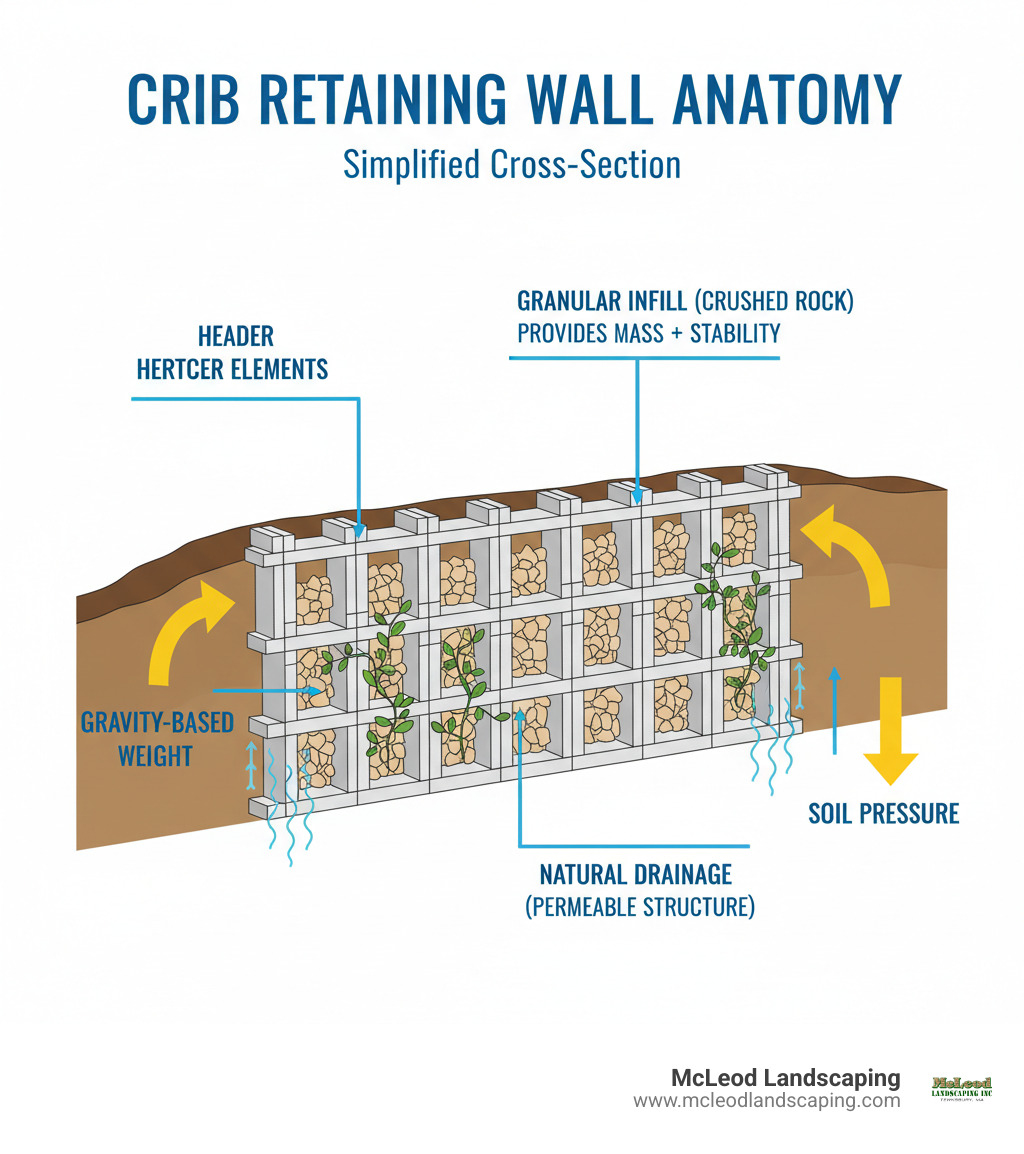
As one of the oldest gravity wall systems, crib walls resist soil pressure through their collective mass. The open-faced design allows water to drain freely, reducing hydrostatic pressure—a common cause of retaining wall failure. This permeability also makes them ideal for planting, creating a softer, more integrated landscape.
Valued for their flexibility, these walls can accommodate complex curves and adapt to various site conditions. Their modular nature allows for quick assembly with minimal excavation, making them cost-effective for projects from residential gardens to highway embankments.
I’m Scott McLeod, owner of McLeod Landscaping. For over 30 years, I’ve helped property managers and homeowners in the Merrimack Valley design and install durable hardscaping, including crib retaining walls. Understanding the fundamentals of crib walls will help you make an informed decision for your project, whether it’s a commercial property or a residential renovation.
Related content about crib retaining wall:
A crib retaining wall consists of interlocking “header” and “stretcher” elements that form open cells. These cells are filled with crushed rock or gravel, creating a heavy, stable mass that uses its own weight to hold back soil. Headers run perpendicular to the wall face into the hillside, while stretchers run parallel, connecting the structure. This grillage framework is both strong and permeable, getting its strength from mass rather than reinforcement. These interlocking elements are the fundamental Retaining Wall Blocks that define crib walls.
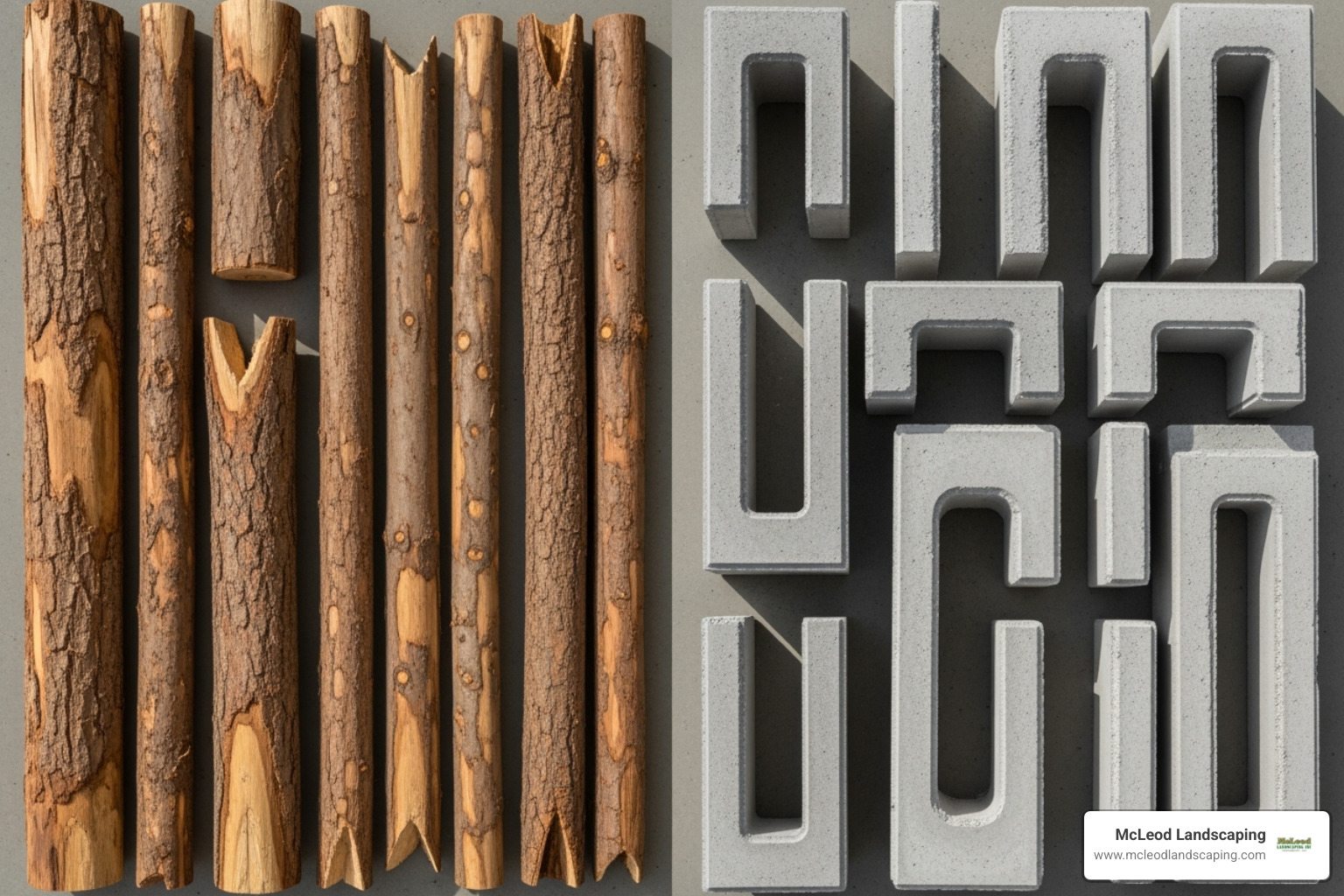
The materials chosen for a crib retaining wall determine its longevity, appearance, and performance.
Timber was the original material and remains popular for its natural aesthetic, which blends well into wooded or garden settings. Today’s timber crib walls use pressure-treated wood that resists rot, insects, and decay. With proper treatment, these walls can last 30 to 50 years or more.
Precast concrete became the modern standard in the early 1900s. These factory-made units offer precise dimensions, consistent quality, and an interlocking design for a strong framework. They are incredibly durable, resistant to fire and weather, and can last 75 to 120 years.
Recycled polymers are the newest generation of crib wall materials. Systems like TensarTech® EcoCrib use 100% recycled waste polymer for facing elements that resist UV damage, moisture, and fungal growth. With design lives up to 120 years and the ability to contribute to LEED® certification, they are a sustainable option that reduces a project’s carbon footprint.
Infill materials are critical. The open cells are filled with free-draining materials like crushed rock, gravel, or coarse sand. This granular fill provides the necessary mass for stability and allows water to drain freely, preventing hydrostatic pressure buildup. For more on this, see our guide on Retaining Wall Drainage. It’s crucial to use durable, non-degradable materials that won’t erode, freeze, swell, or react chemically with the wall.
Crib retaining wall design follows proven specifications based on engineering principles.
Height typically ranges from 6 to 20 feet. Taller walls up to 25 feet are possible but require professional engineering. Specific configurations have their own limits; for example, a single-depth wall with crushed rock backfill may be limited to 13 feet on level ground or 8 feet on a descending slope.
Depth is also important for stability. Typical depths run from 2.5 to 6.5 feet, providing the necessary leverage for the gravity structure to remain stable.
Batter is the wall’s backward lean, typically 10 to 20 degrees. This engineered feature reduces soil pressure against the wall, increasing stability. A common specification is a 1H:4V ratio (about 14 degrees).
Structural spacing between interlocking elements typically ranges from 2.5 to 6.5 feet, depending on the design. Individual block heights usually measure between 8 and 20 inches.
| Feature | Timber Crib Walls | Concrete Crib Walls |
|---|---|---|
| Typical Height | 6-15 ft (1.8-4.5 m) | 6-20 ft (1.8-6.1 m) |
| Overall Depth | 2.5-5 ft (0.76-1.5 m) | 2.5-6.5 ft (0.76-1.98 m) |
| Batter Angle | 10-20 degrees (e.g., 1H:4V) | 10-20 degrees (e.g., 1H:4V) |
| Block Height | Variable, often 6-12 inches | 8-20 inches (20.3-50.8 cm) |
| Longevity | 30-50+ years (treated timber) | 75-120+ years |
For detailed specifications, resources like More on crib wall dimensions provide standards to ensure your wall performs as designed.
Crib retaining walls are a standout option, offering a unique combination of strength, beauty, and flexibility. Their modular design handles curves, irregular terrain, and challenging slopes with ease. Crib walls are particularly well-suited for uneven ground, as detailed in our guide on how to Build a Retaining Wall on a Slope.
Crib retaining walls deliver several key benefits that make them a worthy consideration.
Excellent drainage is a key advantage. The open, rock-filled cellular structure is naturally permeable, allowing water to flow through. This prevents the buildup of hydrostatic pressure, a common cause of retaining wall failure.
The aesthetic appeal is a major draw. Timber versions offer a natural feel for rustic settings, while concrete walls can be softened with color or vegetation. The open cells serve as planting pockets for vines or shrubs, making them ideal for Landscape Retaining Wall Ideas that integrate greenery.
Sustainability is another benefit. Systems using recycled polymers or sourced timber reduce environmental impact. Some use 100% recycled materials, cutting the carbon footprint. Adding vegetation promotes biodiversity and helps the wall blend into the landscape.
Crib retaining walls are cost-effective, especially for heights of 6 to 25 feet. Modular components allow for rapid construction with minimal excavation, reducing labor and equipment costs. They can also be dismantled and rebuilt, making them practical for temporary use. This efficiency helps control project budgets, a topic covered in our guide on How Much Does a Retaining Wall Cost?.
The flexibility of these walls is remarkable. They can curve gently, steer corners, and adapt to irregular slopes that would challenge rigid systems. This adaptability opens up possibilities on difficult sites.
The versatility of crib retaining walls makes them suitable for everything from major civil engineering projects to residential gardens.

In transportation infrastructure, crib walls are used for highway embankments, railway cuts, and roadway stabilization. They can support massive loads at heights of 30 feet or more, providing reliable support for roads carved through hillsides.
For commercial and residential landscaping, these walls transform slopes into usable spaces like tiered gardens, raised beds, or support for patios. By integrating with plantings, they improve the landscape, making them a practical solution for many Landscape Walls applications.
Erosion and slope control is another area where crib retaining walls prove their worth. They stabilize unstable hillsides, eroding riverbanks, and slopes vulnerable to washout. The permeable structure helps manage water flow, reducing erosion.
Ideal projects for crib walls include: stabilizing road cuts, creating level building pads, terracing for agriculture, residential and commercial landscape transitions, riverbank erosion control, supporting recreational facilities on grades, and temporary earth retention.
Building a crib retaining wall requires a balance of engineering and craftsmanship. Success depends on understanding geotechnical factors and following installation best practices. The foundation of a durable wall is knowledge and attention to detail. For a broader overview, see our Retaining Wall Installation Guide.
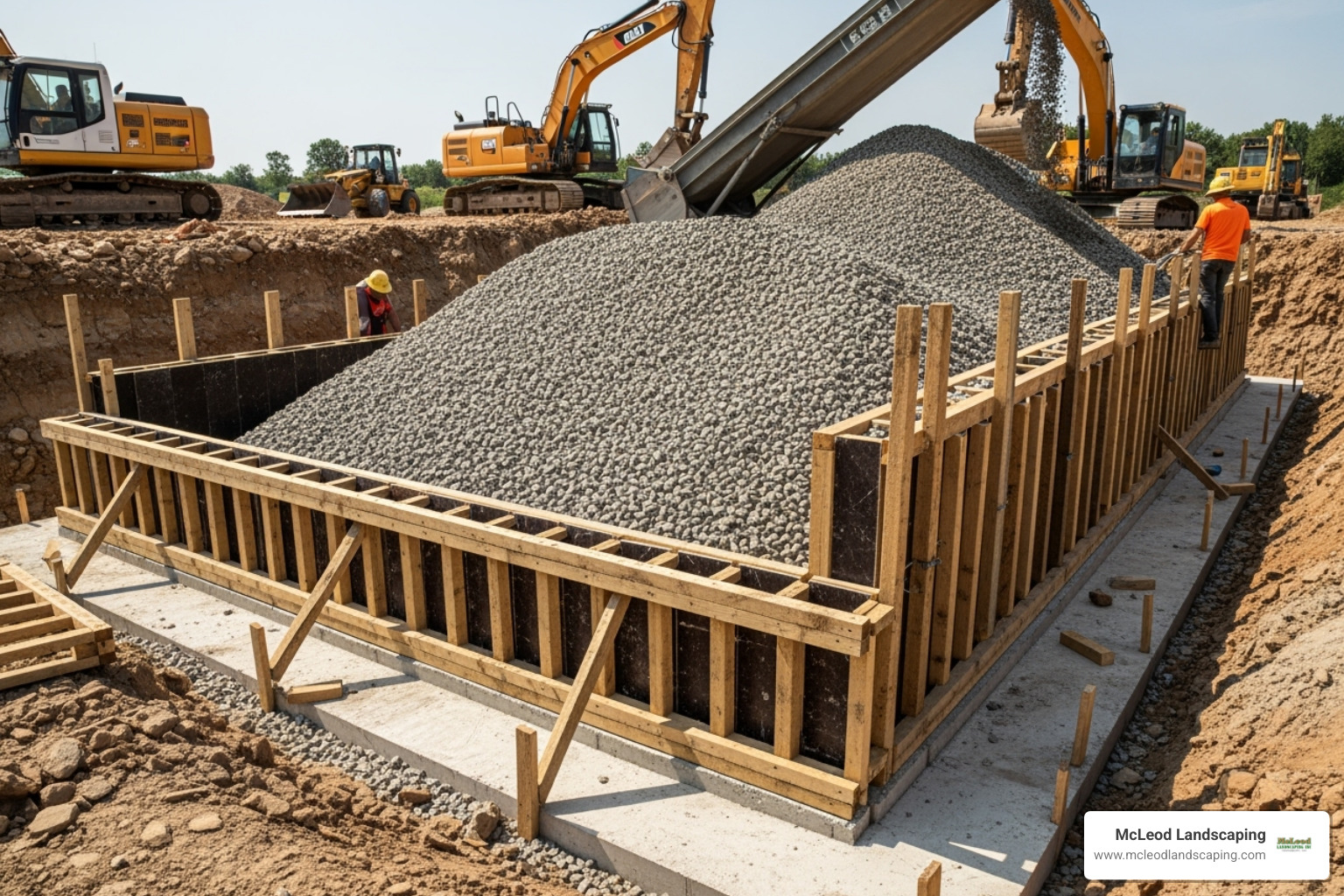
Several critical factors must be considered before construction begins.
The foundation is critical. A stable wall cannot be built on soft ground. We excavate to firm soil and pour a concrete footing to create a level base that prevents uneven settling. On severe slopes, deeper caissons may be needed.
The backfill material is crucial, as the wall’s strength comes from its weight. We use free-draining granular materials like crushed rock or gravel for mass and drainage. Proper compaction of each layer is essential to prevent settling. Never use native soil, especially clay-rich soil, as infill. Wet clay can hydrocompress (swell and then compress), causing the wall to deflect and crack.
Drainage systems may need improvement. While crib walls drain well, significant groundwater or impermeable soil may require geotextiles to prevent clogging. Directing surface water away from the top of the wall is also important.
The batter, or backward slope (typically 10-20 degrees), is an engineered feature that reduces soil pressure and increases stability.
Any crib retaining wall over a few feet tall or supporting a critical load requires professional Retaining Wall Design by a qualified engineer. They will analyze soil, calculate loads, and ensure the design meets safety standards.
When built correctly, crib retaining walls are durable and low-maintenance.
Durability: Modern precast concrete and recycled polymer systems have design lives of up to 120 years, with excellent resistance to UV, water, and fungal growth. Pressure-treated timber offers 30 to 50 years of service.
Maintenance is minimal, usually requiring only periodic inspections for settlement, erosion of infill, or damage. Planted walls require routine plant care.
Common Failures to avoid include:
Prevention is key. Avoiding failure requires proper engineering and quality Retaining Wall Installation. This includes a geotechnical investigation, correct design calculations, an adequate foundation, proper backfill and drainage, and meticulous construction.
When investing in a retaining wall, cost and long-term value are key. Crib retaining walls are often economical to install and deliver impressive returns through longevity and low maintenance.
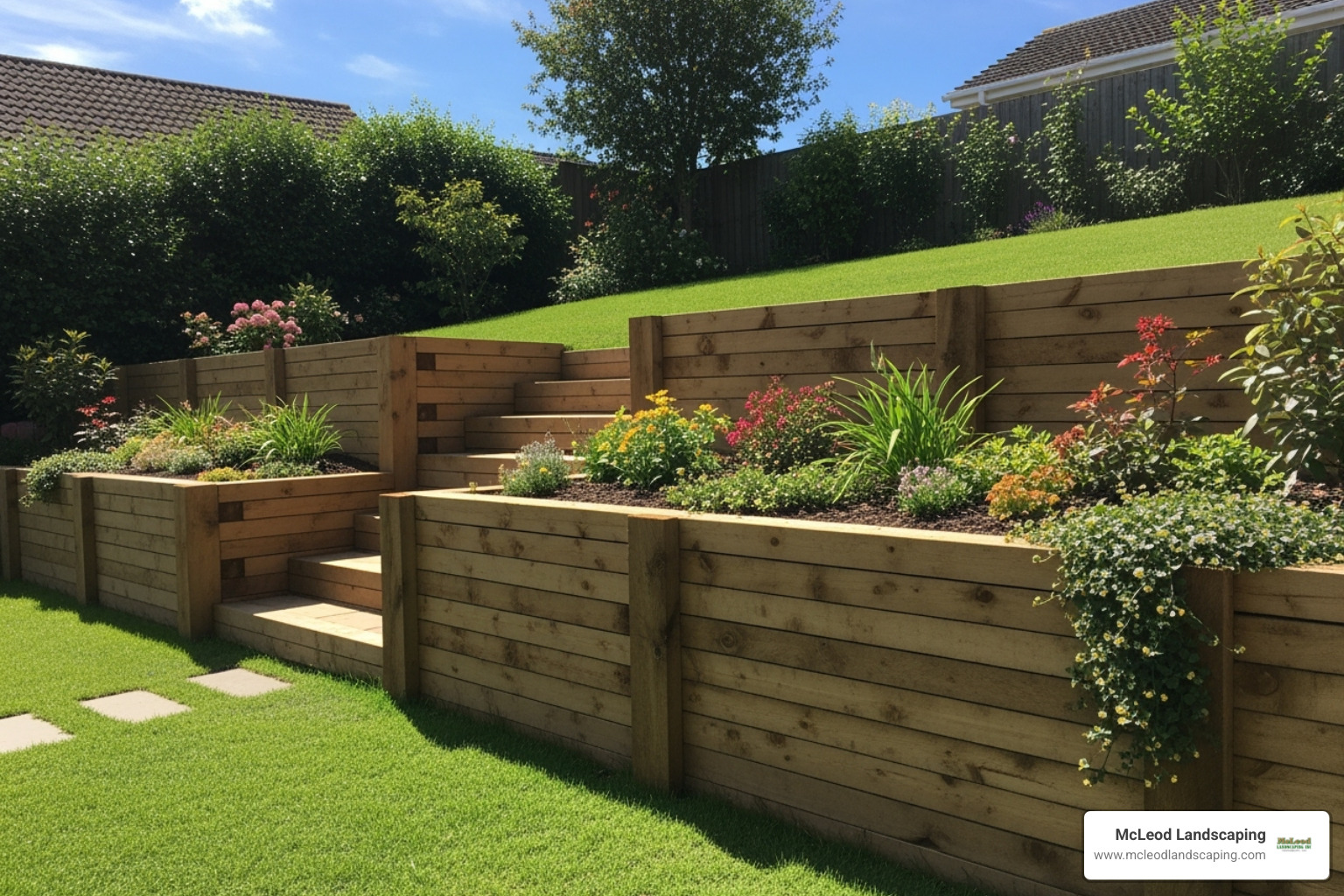
Several factors influence the final price of a crib retaining wall.
Material Costs vary. Timber is typically the most affordable. Precast concrete costs more but offers superior durability. Recycled polymer systems may have the highest initial cost but provide a 120-year lifespan and environmental benefits.
Labor and Installation costs are often lower due to efficiency. The modular, interlocking design allows for rapid construction, which reduces labor costs.
Site Preparation includes excavation, foundation work, and grading. Costs depend on site conditions, with steep or hard-to-access slopes being more expensive to prepare.
Average Cost: Based on internet data for typical crib retaining wall installations, you’re looking at a range of $25 to $100+ per square foot, with some complex projects reaching even higher. These are average costs based on internet data and not actual costs for McLeod Landscaping. Your specific project cost will depend on height, length, material choice, site conditions, and design complexity. For a more comprehensive look at retaining wall pricing, check out our guide on How Much Does a Landscape Retaining Wall Cost?.
The real value of a crib retaining wall unfolds over decades.
Longevity is a compelling economic benefit. A properly installed concrete or polymer crib wall can last 75 to 120 years. This durability makes it a multi-generational investment with a very low cost per year of service.
Low Maintenance provides ongoing savings. A well-built crib wall requires only occasional inspections, unlike other systems that may need regular repairs or resealing.
Increased Property Value is another key benefit. A professional crib wall transforms unusable slopes into functional, attractive spaces and prevents erosion. It adds curb appeal and usable area, making it a smart investment.
Here are answers to the most common questions we receive about crib retaining walls.
Typical crib retaining walls are built between 6 and 20 feet tall. With proper engineering, they can be cost-effective up to 25 feet. Specific limits apply; for example, a single-depth wall with crushed rock backfill may reach 13 feet on level ground. However, any wall over 4 feet tall, or one supporting a critical load, requires a professional engineer to ensure safety and stability based on site-specific conditions.
Yes, planting in a crib retaining wall is one of its best features. The open-faced cells act as perfect planting pockets. Filled with soil, they can host vines, cascading plants, or small shrubs, changing the wall into a living feature that blends with the landscape. This “green wall” approach is a great way to soften hardscapes. For inspiration, see our Garden Wall Retaining ideas.
While an experienced DIYer might tackle a small garden wall under 4 feet that isn’t supporting a critical load, most crib retaining walls are not a DIY project. Any wall over 4 feet, holding back a significant slope, or supporting a structure requires professional expertise. Proper installation involves complex engineering for foundation, drainage, and soil pressure that, if done incorrectly, can lead to dangerous failure. For safety and longevity, we always recommend hiring a professional Retaining Wall Contractor.
Crib retaining walls offer a unique combination of strength, flexibility, superior drainage, and natural aesthetics. Their gravity-based design has proven effective for over a century. They are versatile enough to stabilize steep slopes, create terraced gardens, accommodate curves, and adapt to difficult terrain. Modern systems using recycled materials also offer a sustainable option.
Economically, crib walls are a strong choice. They offer long design lives of 75-120 years, require minimal maintenance, and can increase property value. Rapid construction often leads to lower labor costs, making them cost-effective for walls up to 25 feet high.
However, crib walls aren’t for every situation. Inherently unstable slopes or walls over 25 feet may need other solutions. Except for small garden walls, professional design and installation are essential. Geotechnical factors like foundation, backfill, and drainage are critical for a long-lasting, safe structure.
At McLeod Landscaping, our 30+ years of experience in the Merrimack Valley helps clients balance structural needs, aesthetics, budget, and maintenance. We can determine if a crib retaining wall or another solution is the best fit for your project.
Our goal is to provide a solution that is correctly engineered, built to last, and improves your property. For expert guidance on your commercial or residential project, we invite you to explore our retaining wall installation services. Let’s work together to find the best approach and build a durable, beautiful reality for your property.
Contact McLeod Landscaping today at (978) 640-0957 or click here to schedule a consultation for retaining wall installation. Let our experienced team design and install a functional and visually appealing retaining wall that enhances your landscape.


1881 Main St Unit 1, Tewksbury, MA 01876