
Outdoor stairs and walkways not lifts are increasingly becoming the preferred access solution for property owners seeking a blend of reliability, aesthetics, and cost-effectiveness. While mechanical lifts offer accessibility, traditional hardscaping provides seamless integration with your landscape, requires less maintenance, and improves property value without the mechanical complexities.
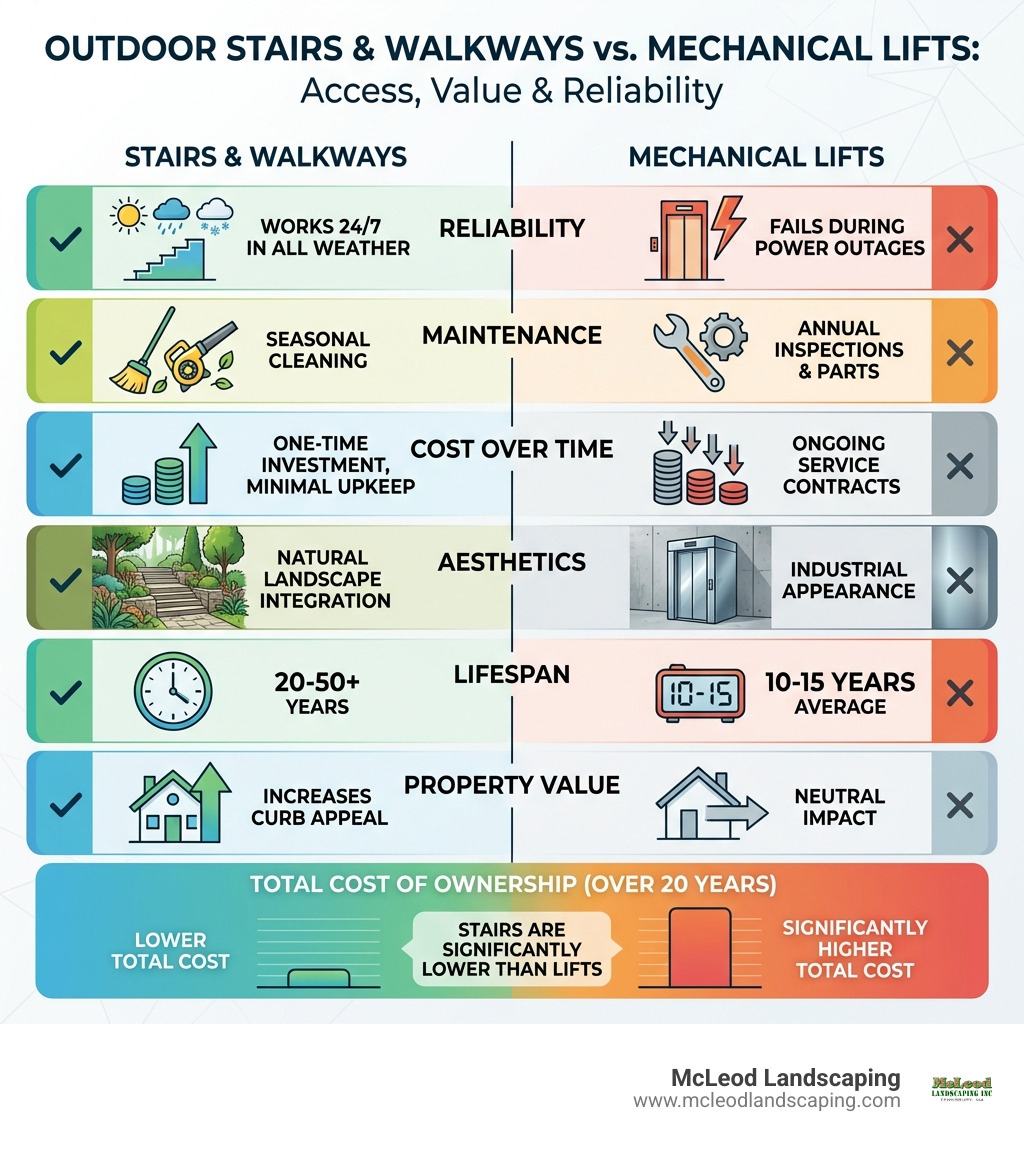
Quick Comparison: Stairs/Walkways vs. Mechanical Lifts
| Factor | Stairs & Walkways | Mechanical Lifts |
|---|---|---|
| Initial Cost | Moderate to High | Very High |
| Maintenance | Low (seasonal cleaning, occasional repairs) | High (regular inspections, parts replacement) |
| Weather Reliability | Excellent (always accessible) | Fair (can fail in power outages or extreme weather) |
| Aesthetics | Integrates naturally with landscape | Industrial appearance |
| Lifespan | 20-50+ years with proper materials | 10-15 years average |
| Property Value | Increases curb appeal and value | Neutral to negative impact on aesthetics |
Creating safe, attractive access to your property doesn’t require complex machinery. Whether you’re a commercial property manager ensuring tenant safety or a homeowner looking to improve your outdoor living space, well-designed stairs and walkways provide reliable year-round access that mechanical lifts simply can’t match. They don’t break down in winter, require annual inspections, or need replacement parts that take weeks to arrive.
The research is clear: properly constructed outdoor stairs and walkways offer superior long-term value. According to OSHA and ADA standards, when designed correctly with uniform riser heights, adequate handrails, and slip-resistant surfaces, they provide safe access that meets all building codes without the ongoing maintenance headaches of mechanical systems.
As Scott McLeod, owner of McLeod Landscaping, I’ve spent over 30 years designing and installing hardscape solutions throughout the Merrimack Valley, and I’ve seen how quality outdoor stairs and walkways not lifts transform properties while providing dependable access in all seasons. From commercial complexes to residential entrances, the right hardscaping solution combines safety, beauty, and practicality in ways that mechanical alternatives simply cannot achieve.
Quick outdoor stairs and walkways not lifts definitions:
When considering access solutions for your property in the Merrimack Valley, the choice between outdoor stairs and walkways not lifts often comes down to a blend of practical benefits and aesthetic preferences. While lifts serve a specific accessibility need, for general property access, stairs and walkways offer a superior, more integrated solution.
Aesthetics and Landscape Integration
One of the most compelling reasons to opt for stairs and walkways is their ability to seamlessly integrate with your existing landscape design. Unlike the often industrial appearance of mechanical lifts, custom-designed hardscaping can improve the natural beauty of your property. We believe that your outdoor spaces should be both functional and beautiful, complementing your home or commercial building. Our expertise in hardscaping vs landscaping and designing the landscape allows us to create inviting and attractive access points that become a natural extension of your property.
Reliability in All Weather
The Merrimack Valley experiences a wide range of weather conditions, from heavy snow and ice in winter to summer downpours. Mechanical lifts, with their electrical and moving parts, are susceptible to breakdowns during power outages or extreme weather. Outdoor stairs and walkways not lifts, when properly designed and constructed, offer unwavering reliability. They are always accessible, providing safe passage regardless of the elements, making them a dependable choice for year-round access.
Cost-Effectiveness Over Time
While the initial investment in high-quality stairs and walkways can be significant, their long-term cost-effectiveness often surpasses that of mechanical lifts. Lifts require regular maintenance, inspections, and eventual costly repairs or replacements of complex components. Stairs and walkways, on the other hand, typically demand far less ongoing expenditure, making them a sound financial decision for any property owner.
Lower Maintenance Requirements
The maintenance demands of outdoor stairs and walkways not lifts are generally far lower than those of mechanical systems. Routine cleaning, occasional repairs, and seasonal checks are usually sufficient to keep them in top condition. This contrasts sharply with the specialized, often expensive, maintenance schedules required for lifts, saving you time and money in the long run.
Increased Property Value
A well-designed and impeccably maintained set of outdoor stairs and walkways significantly boosts your property’s curb appeal and overall value. They speak to quality, thoughtful design, and a welcoming environment. This investment pays dividends, whether you’re enjoying your property or preparing it for sale.
Creating safe and durable outdoor stairs and walkways not lifts begins with meticulous design and construction practices. A beautiful walkway or staircase is only as good as its foundation and adherence to safety standards.
Solid Foundation, Proper Site Preparation, and Water Management
The cornerstone of any long-lasting hardscape feature is a solid foundation. This involves thorough site preparation, including excavation, compaction of the sub-base, and the installation of appropriate granular materials. Proper site preparation prevents settling, shifting, and uneven surfaces, which are primary safety concerns and common causes of damage.
Water management is equally crucial. The design must effectively channel water away from the structure and prevent pooling, which can lead to erosion, freeze-thaw damage, and slippery conditions. As experts in hardscaping, we understand the importance of these foundational steps. You can learn more about our approach to comprehensive hardscape projects in The Ultimate Guide to Understanding Hardscaping Services.

Ensuring our outdoor stairs and walkways not lifts meet or exceed local building codes and accessibility standards is paramount for safety and compliance. In the Merrimack Valley, we adhere to stringent guidelines that protect everyone using these access points.
Stair Angle: According to OSHA regulations, stairs should be installed between 30° and 50° from horizontal to ensure a safe and comfortable ascent or descent.
Uniform Riser Height and Minimum Tread Depth: Uniformity is key to preventing trips and falls. ADA standards specify that all steps on a flight must have uniform riser heights within a range of 4” to 7”. Similarly, tread depths must be uniform, with a minimum depth of 11 inches. Variations in riser height or tread depth should not exceed ¼-inch in any stairway system. Additionally, open risers are generally prohibited, or if perforated, openings must not allow passage of a sphere larger than ½ inch in diameter.
Handrail Requirements: Handrails are vital safety features. OSHA requires handrails and a stairrail system along each unprotected side or edge for stairways having four or more risers or rising more than 30 inches. Handrail heights should be between 30 and 37 inches from the upper surface to the tread, while stairrails (guardrails) for new installations (after March 15, 1991) must be at least 36 inches high. The ADA further mandates handrails on both sides of stairs, continuous within the full length of each flight, with specific extensions at the top (12 inches minimum horizontal) and bottom (at least one tread depth beyond the last nosing). These requirements ensure a continuous grasp for users.
Adequate Lighting: Effective lighting is essential, especially during darker months or evenings in our region. Building codes often recommend at least 50 lux illumination at the tread surface to ensure visibility and prevent missteps.
Slip-Resistant Surfaces: Given our New England weather, slip resistance is non-negotiable. Walking surfaces must have adequate slip-resistant properties under all conditions of normal use. Tread surfaces, particularly those subject to wet conditions, must be designed to prevent water accumulation.
For more detailed information on accessibility, we often refer to the Guide to the ADA Accessibility Standards. Our commitment to safety and compliance extends to every project, from residential entrances to commercial pathways. Learn more about our approach to front stairs and step installation.
Effective drainage is not merely a recommendation; it’s a critical component in the longevity and safety of outdoor stairs and walkways not lifts, especially in the Merrimack Valley where we face significant precipitation and freeze-thaw cycles.
Preventing Erosion and Avoiding Water Pooling
Without proper drainage, water can accumulate, leading to soil erosion beneath the structure. This erosion can destabilize the base, causing steps to sink or shift, and walkways to become uneven—creating dangerous tripping hazards. Water pooling on surfaces also presents a direct slip hazard, particularly when wet or icy.
Proper Grading and Cross-Falls
Our designs incorporate proper grading and cross-falls (a slight slope across the width of a surface) to direct water away efficiently. While cross-falls are crucial for drainage, they must be subtle enough not to cause stability or control problems for users. The goal is to ensure surface water is taken away in suitable drains and never allowed to discharge directly down steps and ramps, which would accelerate wear and create hazardous conditions.
Channel Drains and Impact of Freeze-Thaw Cycles
For areas with significant water flow, channel drains can be integrated to collect and divert water effectively. In the Merrimack Valley, the freeze-thaw cycle is a major concern. When water seeps into cracks or beneath surfaces and then freezes, it expands, causing significant damage like heaving, cracking, and structural compromise. Robust drainage solutions mitigate this by minimizing the amount of water available to freeze. This thoughtful water management is also essential for the stability of surrounding features, such as retaining walls, as detailed in our guide on retaining wall drainage.
Selecting the right materials for your outdoor stairs and walkways not lifts is a decision that balances durability, maintenance, cost, and aesthetics. Each material offers a unique set of characteristics that can impact the overall look and feel of your property in the Merrimack Valley.

Concrete remains a popular choice for outdoor access due to its strength and adaptability.
For those considering concrete, we specialize in concrete stairs and walkways. Should existing concrete stairs show signs of wear or sinking, our concrete step repair services can often restore them effectively.
Brick offers a timeless and traditional appeal that complements many architectural styles.
If you’re considering a brick entrance, our guides on brick stairs and walkway and brick stair repair offer valuable insights.
Natural stone offers unparalleled beauty and an organic feel, making each installation unique.
We are proud to offer services for bluestone stairs and walkway and can assist you in finding stone patio contractors near me for other natural stone needs.
Pavers provide a flexible and often more contemporary alternative to poured concrete or solid stone.
Explore our options for a backyard paver walkway or consider driveway paver installation for a cohesive look.
Ensuring the longevity and safety of your outdoor stairs and walkways not lifts requires a commitment to regular maintenance and timely repairs. Proactive care can prevent minor issues from escalating into costly problems, especially with the weather extremes we experience in the Merrimack Valley.
Regular Inspections, Proactive Cleaning, and Seasonal Care
We recommend routine visual inspections to catch early signs of wear or damage. This could be as simple as checking for loose bricks, widening cracks, or unstable handrails. Proactive cleaning, such as sweeping away debris, leaves, and dirt, prevents organic matter from breaking down and staining surfaces or impeding drainage. Seasonal care, particularly before and after winter, is crucial. Clearing snow and ice promptly and avoiding harsh chemicals can significantly extend the life of your hardscapes. Our hardscape maintenance service can help keep your outdoor access points in prime condition.
Understanding what causes damage helps in preventing it. Here are some common culprits:
When these issues arise, our hardscape repair services are here to help restore safety and aesthetics.
Wooden stairs, while charming, can become incredibly slippery, especially during wet or icy conditions. This is a significant safety concern, particularly in winter. Here are several effective methods to improve traction:
For temporary solutions during icy spells, spreading sand, ash, or wood chips can provide immediate traction. Always be mindful of the type of ice melt used, as some can be detrimental to wood or surrounding landscaping.
Knowing when your outdoor stairs and walkways not lifts need attention can prevent accidents and save you money in the long run. Here are the key signs that indicate it’s time for repair or replacement:
Addressing these issues promptly can prolong the life of your outdoor stairs and walkways not lifts. For specific repairs like filling gaps between concrete elements, refer to our guide on filling gap between concrete stairs and concrete walkway.
While some minor repairs or aesthetic upgrades might seem like DIY projects, the design, installation, and significant repair of outdoor stairs and walkways not lifts are best left to professionals. Especially in the Merrimack Valley, where challenging weather and specific local codes apply, professional expertise is invaluable.
Code Compliance: Building codes and accessibility standards (like ADA) are complex and constantly evolving. A professional hardscape contractor ensures that your project adheres to all local regulations in Andover, Billerica, Burlington, Carlisle, Chelmsford, Concord, Lowell, Tewksbury, Westford, and Wilmington, MA, avoiding costly fines or future reconstruction. We are well-versed in these requirements, from stair dimensions to handrail specifications.
Safety Assurance: Incorrectly installed stairs or walkways can be serious safety hazards. Professionals understand proper grading, foundation work, and material selection to create stable, slip-resistant, and structurally sound access points that minimize the risk of trips and falls.
Quality Materials and Craftsmanship: An expert contractor has access to higher-quality materials and possesses the specialized skills and experience to execute the design flawlessly. This includes proper cutting, setting, and finishing techniques for various materials like concrete, brick, natural stone, and pavers. Our hardscape installation services are backed by decades of experience.
Long-Term Value: While a professional installation might have a higher upfront cost than a DIY attempt, it represents a superior long-term investment. Quality craftsmanship and adherence to best practices result in a durable, beautiful hardscape that requires less maintenance and lasts for decades, ultimately saving you money and enhancing your property’s value. When you work with experienced hardscape contractors like us, you’re investing in peace of mind and lasting quality.
The cost to install an outdoor walkway can vary significantly based on several factors, including the material chosen, the length and width of the walkway, the complexity of the site (e.g., grading, curves), and labor rates in your specific area of the Merrimack Valley.
Disclaimer: These are average costs based on internet data and do not represent actual costs for McLeod Landscaping. For an accurate estimate for your specific project, a site inspection is required. For more details on paver costs, see our guide on paver patio cost installed.
Generally, handrails are required for outdoor stairs with four or more risers or a total height exceeding 30 inches. However, local building codes are the final authority and can have specific requirements. We strongly recommend checking the regulations in your specific Merrimack Valley town (Andover, Billerica, Burlington, Carlisle, Chelmsford, Concord, Lowell, Tewksbury, Westford, or Wilmington, MA) to ensure full compliance. Even if not legally required, installing a handrail is always a good idea for added safety and comfort. You can find more information on handrail safety from sources like faulty handrail accidents and OSHA stairway regulations.
Yes, it is often possible to put new stairs over old concrete steps, especially if the underlying concrete structure is sound and stable. This process typically involves applying a veneer of new material, such as stone or brick veneer, over the existing concrete. This is a popular method for updating the aesthetic of an entrance without the need for a full demolition and reconstruction. However, it’s crucial that the old concrete steps are structurally intact, free from significant cracks or crumbling, and have proper drainage. Any structural issues with the original steps must be addressed before applying a new surface.
Choosing outdoor stairs and walkways not lifts is a decision that prioritizes safety, beauty, and lasting functionality for your property. From the seamless integration with your landscape to their unwavering reliability in the Merrimack Valley’s diverse weather, stairs and walkways offer a superior, more natural access solution. By understanding building codes, focusing on proper drainage, selecting the right materials, and committing to regular maintenance, you ensure these essential hardscapes serve you well for decades.
At McLeod Landscaping, we bring over 30 years of experience to designing and building custom hardscapes that not only meet but exceed expectations for durability and aesthetic appeal. We understand the unique challenges and opportunities presented by our local climate and landscape.
Ready to improve your property with a beautiful and durable walkway or staircase? Contact us today to learn more about our Walkway Installation Services and let us help you create safe, stylish, and seamless access that improves your outdoor living experience.
Contact McLeod Landscaping today at (978) 640-0957 or click here to schedule a consultation for retaining wall installation. Let our experienced team design and install a functional and visually appealing retaining wall that enhances your landscape.


1881 Main St Unit 1, Tewksbury, MA 01876