
Front yard walkway design is more than just a path to your door—it’s the first thing guests see and the element that shapes your home’s curb appeal. Whether you own a home or manage a commercial property, the right walkway creates a welcoming entrance while providing safe, functional access.
Key Elements of Effective Front Yard Walkway Design:
As one landscaping expert notes, “Your front yard is like a giant outdoor welcome mat. It offers a first impression of your home and property. It says something about you.” A thoughtfully designed walkway does more than guide foot traffic—it improves safety, prevents shortcuts through your lawn, and adds substantial value to your property.
The materials you select matter too. From classic brick pavers and neat flagstone to modern poured concrete and casual gravel paths, each option offers distinct advantages in cost, durability, and maintenance. The right choice depends on your home’s architectural style, your budget, and how much upkeep you’re willing to handle.
Common walkway materials range from gravel and decomposed granite (the most budget-friendly options) to naturally set fieldstone like bluestone or granite, brick, and mortar-set stone (the most expensive but longest-lasting). Width also plays a crucial role—while four feet allows comfortable single-file passage, five feet creates a more substantial, welcoming feel and lets two people walk side-by-side.
I’m Scott McLeod, owner of McLeod Landscaping, and over the past 30+ years, I’ve designed and installed countless walkways that perfectly balance front yard walkway design principles with each client’s unique needs. Our team specializes in creating hardscape features that improve both residential and commercial properties throughout the Merrimack Valley.
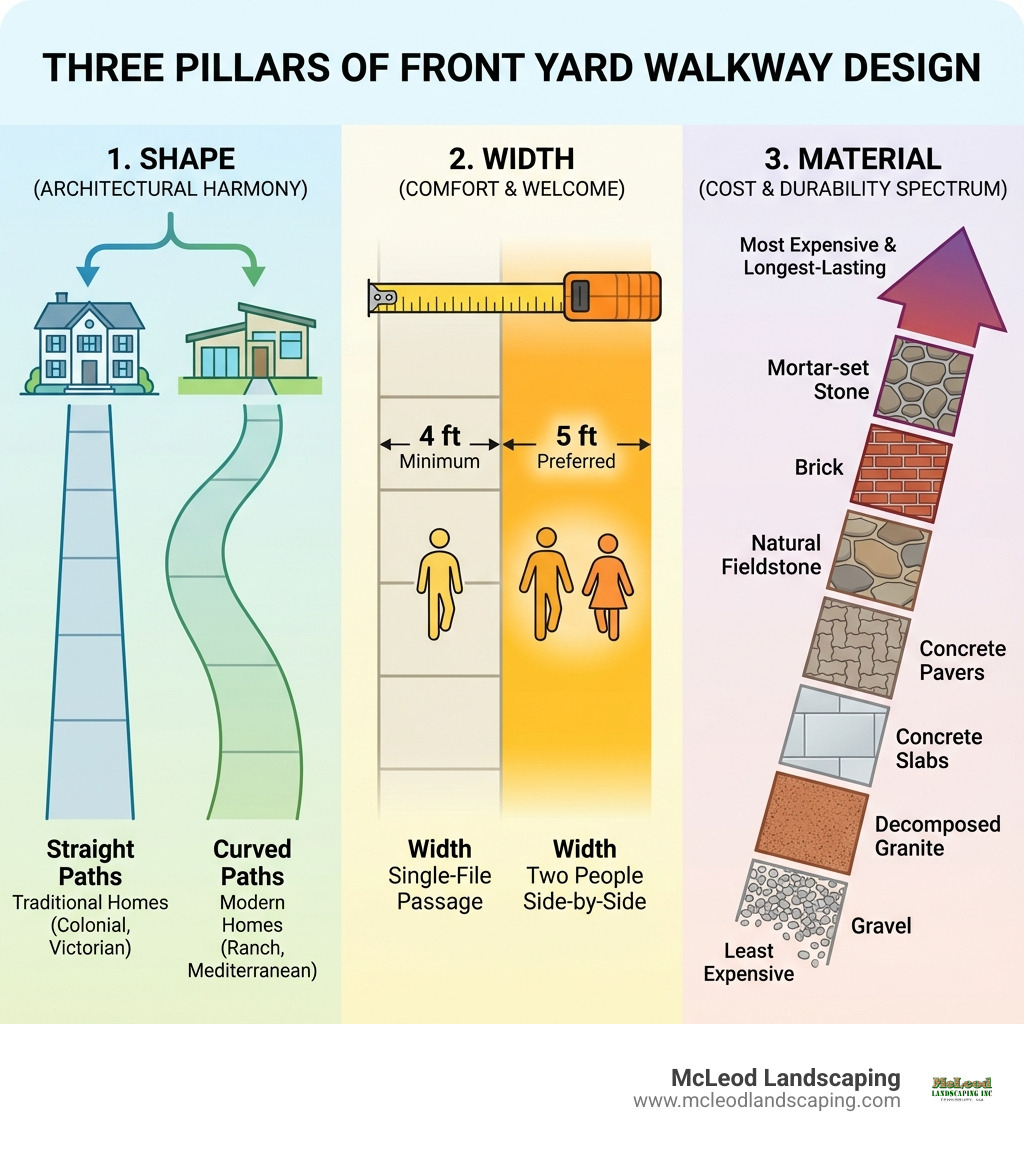
When we approach a front yard walkway design project, our primary goal is to create a path that is not only functional but also improves your home’s aesthetic and curb appeal. The walkway is often the first interaction visitors have with your property, setting the stage for what lies beyond. Therefore, careful consideration of its width, shape, and how it aligns with your home’s overall style is paramount.
One of the most fundamental design considerations is walkway width. We recommend a minimum width of four feet for a front walkway. This allows a single person to walk comfortably without feeling cramped. However, for a truly welcoming and comfortable passage, a width of five feet is preferred. This generous dimension ensures that two people can walk side-by-side without jostling, fostering a more inviting atmosphere as they approach your home. For larger homes or those with expansive facades, even wider paths—up to six feet—can create a more substantive and grand entrance, provided they remain in proportion with the entry. We believe that proper scaling is key to successful Hardscape Design that feels integrated and natural.
The shape of your path—whether straight or curved—is another critical decision that significantly impacts the overall feel of your Front Yard Landscape Design. A straight path conveys formality and directness, often emphasizing the front door as a focal point. In contrast, a curved path introduces an element of natural grace and can guide the eye gently through the landscape, creating a more relaxed and organic journey to the entrance. The choice between these shapes should always be informed by your home’s architectural style and the layout of your yard.
The architectural style of your home should be the guiding principle for your front yard walkway design. For homes with a traditional colonial or Victorian style, a formal, straight path is often the best option. These architectural styles are characterized by symmetry and classic lines, and a straight walkway beautifully complements this formality, creating a grand and direct approach to the front door. It reinforces the home’s stately presence and offers a clear, neat welcome.
However, if your home boasts a ranch or Mediterranean style, an informal, curved path is typically a more harmonious choice. These styles often feature more relaxed lines and a closer connection to nature, and a meandering path improves this natural feel. Curved front yard walkway ideas tend to feel more organic, helping to guide the eye toward the entryway in a softer, more inviting manner. They can also add much-needed design interest to a large front garden, preventing the landscape from appearing too stark or uninspired. Even if you prefer a straight path for a formal facade, we can soften its appearance by edging a gravel or decomposed granite path with low-growing perennials, creating an inexpensive yet attractive border that blends with the landscape. This approach allows us to incorporate elements of Modern Landscape Design while respecting traditional aesthetics.
Selecting the right scale and proportions for your front walkway is crucial for both aesthetics and functionality. The path’s width, as discussed, should align with the size and prominence of your home. For large-scale facades, we advocate for paths that are five or even six feet wide, often incorporating a generous landing at the front door or steps. This wider approach not only feels more substantial but also provides ample space for guests to gather comfortably before entering.
A well-designed walkway also plays a vital role in guiding foot traffic effectively and preventing unwanted shortcuts across your lawn. People naturally gravitate towards the quickest route, and if your paved sidewalk doesn’t offer the most direct path, they’re likely to cut across your grass. Our goal in Designing the Landscape is to make the desired route both clear and inviting. By creating a path that leads directly to the front door, or by subtly curving it to accept a focal point like a garden feature, we can naturally direct visitors while enhancing the visual journey. A well-placed walkway acts as a clear way-finding system, ensuring that visitors know exactly where to go and creating a positive first impression of your property.
Choosing the right material for your front yard walkway design is a significant decision, impacting everything from the cost and durability to the overall aesthetic of your home’s entrance. At McLeod Landscaping, we work with a variety of materials to suit diverse styles and budgets for properties across Andover, Billerica, Burlington, Carlisle, Chelmsford, Concord, Lowell, Tewksbury, Westford, and Wilmington, MA. To give you a clearer picture, here’s a comparison of common walkway materials:
| Material Type | Average Cost (per sq ft installed)* | Durability | Maintenance | Best-Suited Styles |
|---|---|---|---|---|
| Gravel/Decomposed Granite | $5 – $25 | Moderate (requires replenishment) | Low to Moderate (raking, occasional replenishment) | Casual, natural, rustic, cottage, drought-tolerant landscapes. Great for softening formal facades. |
| Poured Concrete | $8 – $30+ | High | Low (occasional cleaning, sealing) | Modern, minimalist, contemporary, industrial. Can be stamped or colored to mimic other materials. |
| Concrete Pavers | $12 – $40+ | High (interlocking system, flexible) | Low (occasional cleaning, joint sand replenishment) | Versatile: traditional, modern, transitional. Wide range of colors, shapes, and textures. |
| Natural Stone (Flagstone, Bluestone) | $20 – $70+ | Very High (especially mortar-set thick stones) | Low (occasional cleaning, weeding for dry-laid) | Formal, rustic, traditional, Mediterranean, natural. Each stone is unique, offering character. |
| Brick | $15 – $50+ | High (durable, classic look) | Moderate (joint sand replenishment, occasional repair) | Traditional, colonial, Victorian, historic, rustic. Offers a warm, inviting feel. |
*Note: All average costs referenced in this article are based on publicly available internet data and do not reflect actual costs for McLeod Landscaping. For a personalized estimate, please contact us directly.
For detailed service information in your area, please visit our Walkways Andover MA page.
Pavers, whether made of concrete or traditional brick, are incredibly popular for front yard walkway design due to their versatility and durability. These manufactured units come in a vast array of sizes, colors, and finishes, making them adaptable to almost any architectural style. Concrete pavers, for instance, are designed to interlock, creating a flexible surface that can withstand the freeze-thaw cycles common in Massachusetts without cracking. They offer a clean, uniform look and can be laid in countless patterns, from simple running bonds to intricate herringbone designs.
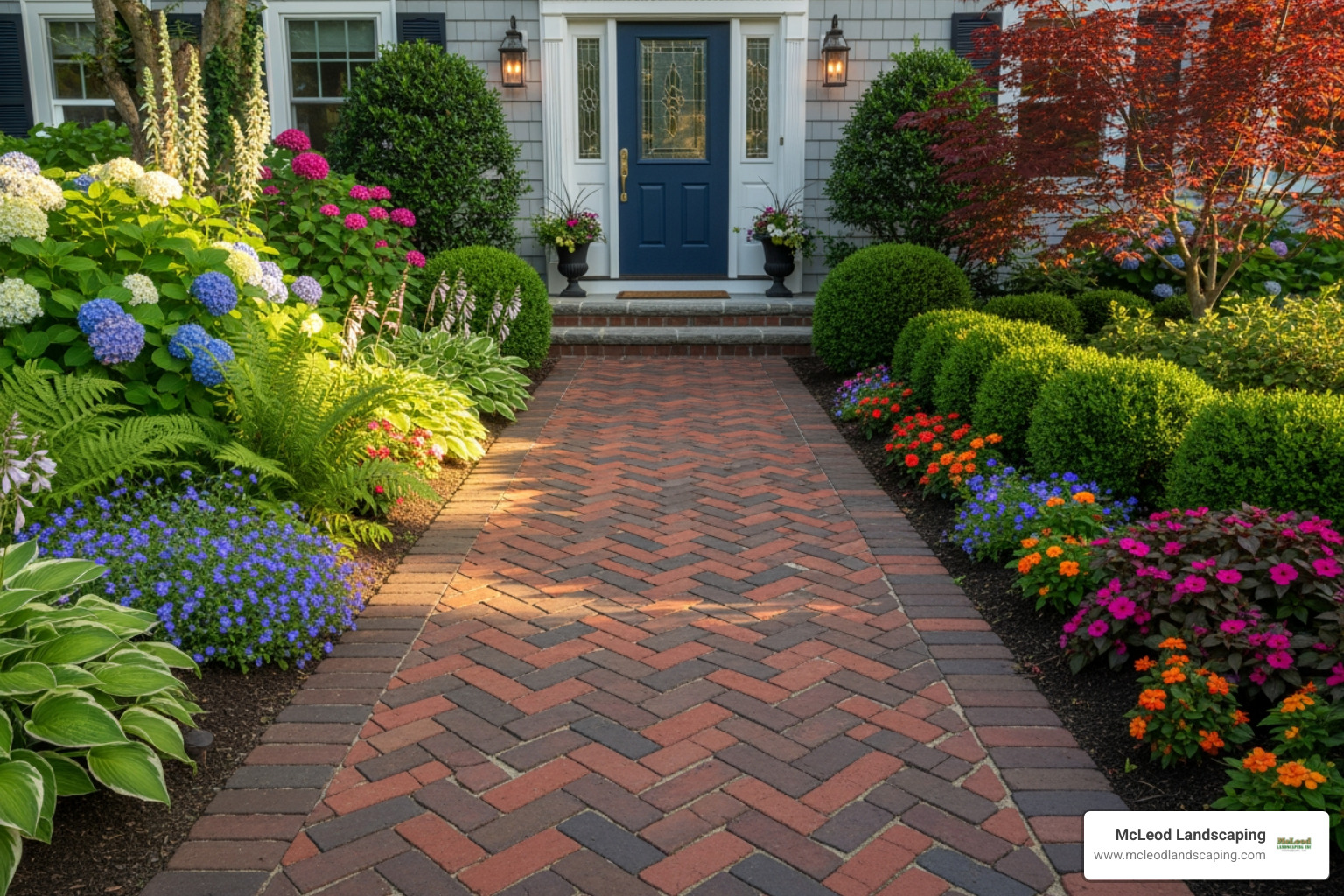
Brick pavers offer a timeless charm and warmth that is hard to replicate. Their rich, earthy tones and classic rectangular shape lend themselves beautifully to traditional, colonial, and rustic home styles. Laying brick in a herringbone pattern, for example, creates a strong, visually appealing surface that is both durable and neat. A soldier course border can further define the edges of a brick walkway, adding a touch of sophistication. Both concrete and brick pavers are highly durable, standing up well to heavy foot traffic and the elements. While installation can be labor-intensive, the longevity and aesthetic appeal make them a worthwhile investment. We also offer Brick Walkway Repair services to keep your existing brick paths looking their best. For larger areas, consider a Backyard Paver Walkway or explore options with Landscape Pavers Near Me.
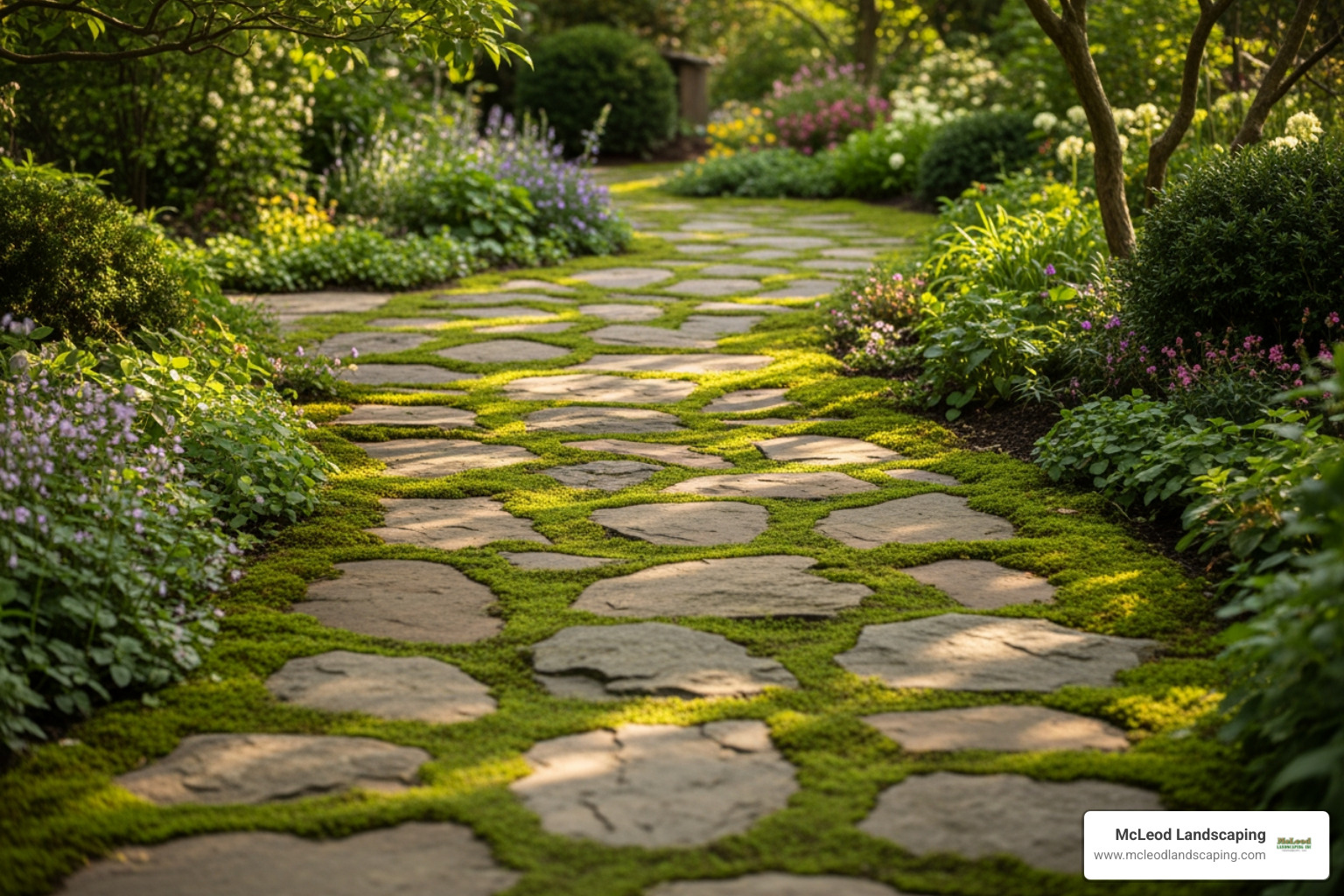
For a walkway that exudes natural elegance and high-end aesthetic, natural stone is an unparalleled choice. Materials like flagstone, bluestone, sandstone, and granite offer unique textures, colors, and organic shapes that integrate beautifully with the surrounding landscape. Flagstone, with its irregular, flat pieces, can create a charming, rustic path, especially when moss or low-growing groundcover is allowed to grow between the stones. This organic look is perfect for homes seeking a connection to nature and a softer, more informal approach.
Bluestone, a type of sandstone, is particularly prized for its dense composition and beautiful blue-gray hues. It can be cut into thermal (smooth, uniform) or irregular shapes, offering options for both formal and informal designs. Mortar-set bluestone, if the stones are thick enough, requires very little maintenance and offers exceptional durability, lasting for decades. While natural stone can be a higher initial investment, its longevity and timeless appeal make it a valuable addition to your property. We specialize in working with these materials, from creating neat Bluestone Stairs and Walkway to robust Stone Brick Stairs that blend seamlessly with your home’s exterior.
Poured concrete offers a sleek, modern, and often cost-effective solution for front yard walkway design. Its ability to be molded into various shapes and sizes makes it incredibly versatile for contemporary homes seeking a minimalist aesthetic. A wide, smooth concrete walkway with sharp, clean lines can create a striking contrast to a traditional entryway, or blend seamlessly with a modern facade.
Beyond its basic form, concrete can be transformed through various techniques. Stamped concrete can mimic the look of more expensive materials like brick, flagstone, or even wood, adding texture and visual interest without the higher cost. Textured finishes can also improve grip, making the walkway safer in wet conditions. While concrete is generally durable, proper installation, including adequate base preparation and expansion joints, is crucial to prevent cracking. Its low maintenance requirements—typically just occasional cleaning and sealing—make it a practical choice for many homeowners. We frequently install Concrete Stairs and Walkways that complement our concrete walkway designs.
For a more casual, natural, or budget-friendly front yard walkway design, loose materials like gravel and decomposed granite, or the use of stepping stones, are excellent options.
Gravel paths offer a distinct crunch underfoot and a charming, rustic appeal. They are relatively inexpensive and easy to install, making them a popular choice for cottage gardens or informal settings. Decomposed granite (DG) is a finer, more stable material than gravel, compacting to create a firmer surface that is easier to walk on. Both gravel and DG provide excellent drainage, which is a practical benefit, especially in areas prone to heavy rainfall. However, they may require periodic replenishment every eight to ten years and can sometimes be tracked indoors if not separated from the house by another material. To soften their appearance, we often edge these paths with low-growing perennials or shrubs.
Stepping stones, whether made of concrete, fieldstone, or other natural materials, create an organic and inviting path. They are particularly effective in making smaller yards appear more spacious, especially when grass, moss, or thyme is grown between the stones. To ensure safety and ease of walking, it’s crucial that stepping stones are set no more than six inches apart, as a wider gap can become a tripping hazard. Stepping stones are ideal for less frequently used paths or for integrating seamlessly into a garden landscape. For more ideas on how to incorporate these into your outdoor space, check out the inspiration on Walkways.
A successful front yard walkway design doesn’t exist in isolation; it’s an integral part of your overall landscape. We view walkways as key elements in creating cohesive outdoor rooms and defining spaces within your property. Integrating your walkway means harmonizing it with both the hardscaping (patios, retaining walls, driveways) and softscaping (plants, lawns, garden beds) to achieve a unified and inviting exterior. Our Hardscaping Services are designed to ensure all these elements work together seamlessly, enhancing your home’s appeal and functionality. Similarly, our comprehensive Residential Landscaping services ensure that your walkway is perfectly complemented by the surrounding greenery.
Lighting plays a pivotal role in front yard walkway design, serving both practical and aesthetic purposes. Properly placed lighting significantly improves safety by illuminating the path at night, preventing trips and falls. Beyond safety, lighting creates a warm, welcoming ambiance, making your home feel inviting after dusk. We often use soft LED lights or built-in light strips to create this effect, highlighting the path’s contours and textures.
When designing lighting, we carefully consider placement to avoid a “runway effect,” where lights are lined up too uniformly. Instead, we recommend staggering path lighting on alternating sides of the walkway. This approach creates a more natural, subtle glow that guides visitors without being overly bright or distracting. Solar lighting can also be a convenient and eco-friendly option for adding illumination. Thoughtful lighting design ensures that your walkway is not only safe but also a beautiful feature that extends your home’s curb appeal into the evening hours. For more on ensuring safety around your home’s exterior, refer to our Stairs and Walkways Safety guide.
For properties with uneven terrain or sloped yards, front yard walkway design presents unique challenges and opportunities. Navigating slopes and elevation changes often requires incorporating steps or terracing into the design. Steps can be crafted from various materials, including natural stone, concrete, or pavers, to match your walkway and home’s style. When designing steps, safety is paramount; we ensure consistent rise and run, adequate tread depth, and durable, slip-resistant materials. For steeper inclines, terracing with retaining walls can create a series of level platforms, making the ascent more gradual and visually appealing.
Integrating a Retaining Wall Installation with your walkway can create visual interest while providing structural support for sloped areas. These walls can be built from stone, concrete blocks, or timber, and can be designed to complement the walkway material. In cases where the slope is significant, handrails may also be necessary to ensure safe passage, especially for children or those with mobility challenges. By thoughtfully incorporating steps and terracing, we transform what might be a difficult incline into an neat and functional entry point. Learn more about Front Stairs and Step Installation and how to Build a Retaining Wall on a Slope.
The softscaping that surrounds your walkway is just as important as the hardscape itself. Thoughtful landscaping and edging can soften the lines of a paved path, integrate it with your garden, and improve its overall aesthetic. We often design planting beds along the sides of walkways, using a variety of plants to add color, texture, and fragrance.
Low-growing perennials, such as hostas, creeping thyme, or lavender, are excellent choices for defining walkway borders without obstructing views or encroaching on the path. Shrubs, like dwarf boxwood, can provide a more formal, structured edge. These plantings not only improve the beauty of your walkway but also help to prevent people from straying off the path and trampling garden beds. For a casual gravel or decomposed granite path, edging with low-growing perennials is an inexpensive yet attractive way to create definition. The goal is to create a harmonious blend of hard and soft elements, making your walkway feel like a natural part of your home’s outdoor environment. Explore more ideas on our Landscape Design Ideas page.
A front walkway should be a minimum of four feet wide to allow one person to walk comfortably. However, a width of five feet is preferred, as it allows two people to walk side-by-side, creating a more welcoming entrance. For larger homes with grand facades, paths can be even wider, up to six feet, to maintain appropriate scale.
Materials like natural stone (such as granite, bluestone, or thick mortar-set fieldstone) and high-quality concrete pavers are among the most durable options for walkways. When installed correctly by a professional Hardscape Contractor with a proper base, they can withstand heavy foot traffic and the harsh New England climate for many decades with minimal maintenance.
This depends on your home’s architectural style and your yard’s layout. A straight path offers a formal, direct look that complements traditional, colonial, or Victorian homes, emphasizing the front door as a focal point. A curved path feels more natural and informal, working well with ranch, Mediterranean, or modern styles and larger front yards where it can add visual interest and guide the eye gently. The path should clearly indicate the route to the front door, regardless of its curvature.
A well-designed front yard walkway design is truly a critical investment in your home. It’s not just about getting from point A to point B; it’s about making a statement, enhancing safety, and reflecting your personal style. A thoughtfully crafted walkway boosts your home’s curb appeal, creates a welcoming first impression, and ensures comfortable, safe passage for everyone who approaches your door.
With over 30 years of experience, our team at McLeod Landscaping understands the unique challenges and opportunities presented by properties throughout the Merrimack Valley, including Andover, Billerica, Burlington, Carlisle, Chelmsford, Concord, Lowell, Tewksbury, Westford, and Wilmington, MA. We pride ourselves on delivering professional installation and design expertise, ensuring that your new walkway perfectly complements your home’s architecture and your landscape vision.
Ready to transform your home’s entrance and boost its curb appeal?
Request an expert walkway installation estimate today!
Note: All average pricing referenced in this article is based on publicly available internet data and does not reflect actual costs for McLeod Landscaping. For a personalized estimate, please contact us directly.
Contact McLeod Landscaping today at (978) 640-0957 or click here to schedule a consultation for retaining wall installation. Let our experienced team design and install a functional and visually appealing retaining wall that enhances your landscape.


1881 Main St Unit 1, Tewksbury, MA 01876