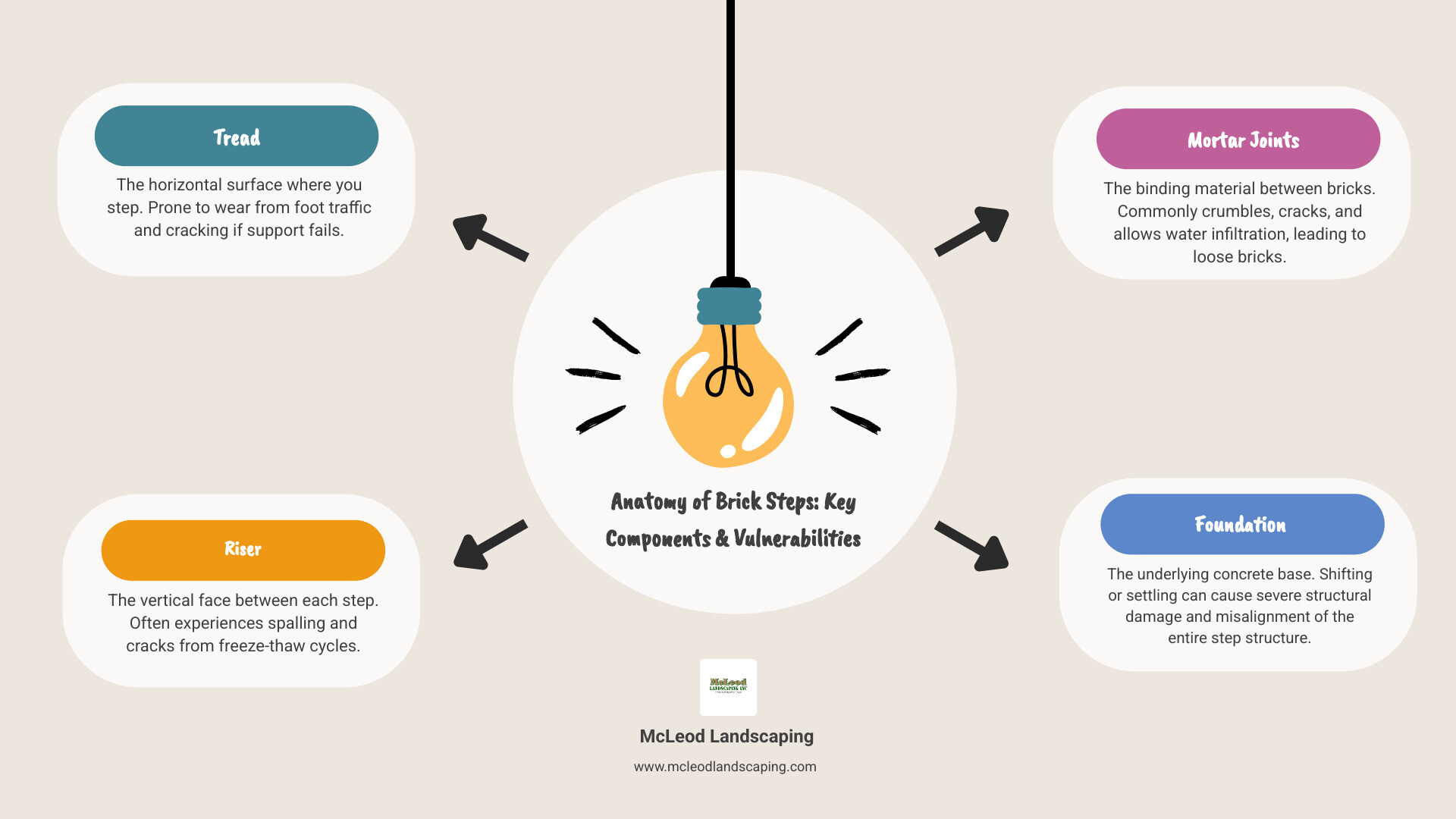
Why Damaged Brick Steps Demand Your Immediate Attention
Rebuilding brick steps is essential when you notice crumbling mortar, loose or missing bricks, or visible cracks that compromise safety and curb appeal. Here’s what you need to know:
Quick Answer: Key Steps for Rebuilding Brick Steps
Assess the damage – Check for loose bricks, crumbling mortar, cracks, and signs of settling
Remove damaged materials – Chisel out old mortar to 3/4-inch depth and extract broken bricks
Prepare the repair area – Clean cavities thoroughly and dampen surfaces
Apply Type N mortar – Mix to proper consistency and use for both repointing joints and setting bricks
Set replacement bricks – Place on 1-inch mortar bed, ensuring level alignment
Finish and cure – Tool joints for weatherproofing, allow 5-7 days to cure before use
Brick steps don’t crumble overnight. Over time, water infiltration and freeze-thaw cycles destroy mortar joints and crack bricks. What starts as a small gap becomes a safety hazard and an eyesore that diminishes your property’s appearance.
Broken brick steps create tripping hazards for residents and visitors and signal neglect to potential buyers. If left unaddressed, minor damage can become a major structural problem requiring complete reconstruction instead of a simple repair.
Fortunately, most brick step damage is repairable. With the right knowledge and tools, you can restore deteriorating steps. Whether you DIY or hire a professional, understanding the process helps you make informed decisions.
I’m Scott McLeod, owner of McLeod Landscaping, and over my 30+ years serving the Merrimack Valley, I’ve seen and successfully restored every type of brick step failure imaginable. From repointing crumbling mortar joints to completely rebuilding brick steps from a solid foundation, my team has the expertise to ensure repairs that last for decades.
First Steps: Assessing Damage and Gathering Supplies
Before rebuilding brick steps, a thorough damage assessment is crucial to determine the project’s scope and required materials. We’ll examine everything from subtle shifts to gaping cracks, understanding that water damage, freeze-thaw cycles, and foundation issues all contribute to deterioration. For more insights on pathway safety, see our guide on stairs and walkways safety.
Common Causes of Brick Step Damage
Brick steps are durable but face constant elemental battles, especially in the Merrimack Valley. Common culprits for their demise include:
Water Infiltration: Water seeps into tiny cracks in mortar and bricks, especially if steps aren’t sealed or drainage is poor.
Freeze-Thaw Expansion: In winter, trapped water freezes and expands, exerting immense pressure that cracks bricks and crumbles mortar. This cycle is a primary cause of structural weakening.
Foundation Settling: Shifting ground can make the entire structure uneven, leading to cracks, leaning, or steps pulling away from the house, often indicating deeper issues.
Heavy Foot Traffic: Constant impact contributes to wear and tear, loosening bricks and grinding down mortar over time.
Spalling: When moisture inside a brick freezes, it can cause the surface to flake, peel, or pop off, creating an unsightly structural problem.
Efflorescence: White, powdery stains on brick are a sign of moisture issues. Water dissolves salts within the masonry and deposits them on the surface as it evaporates, indicating water is moving where it shouldn’t.
How to Assess the Extent of Damage
Determine if you’re facing a minor repair, a major overhaul, or need to call an expert.
Visual Inspection: Look for obvious cracks in bricks or mortar, crumbling or missing mortar, and discolored or spalled bricks.
Wiggle Test for Loose Bricks: Gently try to wiggle each brick. Any movement indicates a loose brick that needs to be reset or replaced. Pay close attention to edges and corners.
Checking for Crumbling Mortar: Poke at mortar joints with a screwdriver. If the mortar is soft, sandy, or flakes away, it needs repointing to a depth of at least three-quarters of an inch.
Identifying Cracks: Look for hairline cracks or larger fractures in or across bricks, which can indicate underlying structural stress.
Looking for Signs of Sinking or Shifting: Stand back and check if the steps are level. Are they lower on one side or pulling away from the house? Significant sinking or shifting can indicate foundation settlement, which requires more than a cosmetic fix. A solid concrete foundation is key to prevent movement. A solid concrete foundation is key to prevent movement
Essential Tools and Materials for the Job
Gathering the right tools makes all the difference for a successful repair.
Here’s what you’ll likely need:
Safety Glasses: Protect your eyes from flying debris.
Work Gloves: Protect hands from rough bricks and caustic mortar.
Dust Mask/Respirator: Essential when grinding or chiseling old mortar.
Mason’s Hammer: For striking chisels and tapping bricks into place.
Cold Chisel: For removing old mortar and freeing bricks.
Trowel (Pointing and Brick): A smaller pointing trowel works mortar into joints; a larger brick trowel is for mixing and applying mortar beds.
Tuckpointing Tool (or Jointer): Compresses and shapes new mortar joints for a weatherproof finish.
Grout Bag: Helps precisely apply mortar into joints.
Wire Brush: For scrubbing away loose debris and mortar residue.
Stiff-bristle Brush: For general cleaning.
Shop Vac: To clean up dust and debris.
Garden Hose with Spray Nozzle: For dampening bricks and cleaning.
Mortar Mix (Type N): Recommended for its balance of strength and flexibility, crucial for withstanding foot traffic and freeze-thaw cycles. Avoid more rigid Type S mortar.
Replacement Bricks: Match the size, color, and texture of existing bricks for a seamless repair.
Large Mixing Bucket or Wheelbarrow: For mixing mortar.
Drill with Mixing Paddle (optional): Makes mixing mortar easier.
Rubber Mallet: For gently tapping new bricks into alignment.
Bubble Level and Straight-edge: To ensure steps are level and plumb.
Masonry Grinder (for extensive repointing): Efficiently removes old mortar.
The Step-by-Step Process for Rebuilding Brick Steps
Now that we’ve assessed the damage and gathered our tools, it’s time to get our hands dirty. Whether we’re tackling a full rebuild or just patching up some wear and tear, understanding the DIY process for rebuilding brick steps is key. We’ll focus on getting that mortar consistency just right and ensuring proper waterproofing to protect our hard work. For more detailed insights on repairing brick stairs, you can visit our comprehensive guide on brick stair repair.
How to Repoint Brick Steps
Repointing is the process of removing deteriorated mortar from between bricks and replacing it with fresh mortar. This is often the most common repair needed for brick steps in the Merrimack Valley.
Removing Old Mortar: This is perhaps the most critical and dusty step. Using your cold chisel and hammer, carefully chip away the old, crumbling mortar from the joints. For larger areas or deeper joints, a masonry grinder is a game-changer. We aim to remove the mortar to a depth of at least three-quarters of an inch. When using a grinder, always wear safety glasses, a dust mask, and consider a vacuum attachment to control the dust. Start with horizontal joints first, then vertical ones.
Cleaning the Joints: Once the old mortar is removed, thoroughly clean out the joints with a wire brush. Use your shop vac to remove all loose debris and dust. The joints must be clean for the new mortar to bond properly.
Dampening the Bricks: Lightly mist the brickwork with your garden hose. The bricks should be damp but not soaking wet, and there should be no standing water. This prevents the dry bricks from rapidly absorbing water from your new mortar, which can weaken the bond.
Mixing Type N Mortar: In your mixing bucket or wheelbarrow, combine the Type N mortar mix with water according to the manufacturer’s instructions. Use your drill with a mixing paddle for the best consistency. We’re looking for a consistency similar to very thick cake frosting – pliable but not soupy. A slightly drier mix usually leads to a stronger bond, but if you’re using a grout bag, a slightly wetter consistency can make application easier. Avoid adding any additives that claim to make mortar stronger; properly mixed mortar is sufficient.
Applying New Mortar with a Grout Bag: For precise application and less mess, fill your grout bag about halfway with the freshly mixed mortar. Squeeze the mortar firmly into the cleaned and dampened joints, ensuring they are completely filled.
Packing and Tooling the Joint: Once the mortar is in the joint, use your pointing trowel or tuckpointing tool to press the mortar firmly into place. This eliminates air pockets and ensures a dense, strong joint. Then, use your tuckpointing tool (or jointer) to shape and smooth the joint to match the existing mortar profile. This “slicking” or tooling is crucial for creating a weatherproof seal that sheds water effectively. Lightly brush off any excess mortar from the brick faces with a wire brush before it fully hardens.
Curing: Once repointed, the mortar needs time to cure. Keep the area damp for several days by lightly misting it with water periodically. This slow drying process helps the mortar achieve maximum strength. Avoid putting any pressure on the newly repointed steps for at least 5-7 days. For a visual guide, this step-by-step guide to repointing brick stairs can be very helpful.
How to Replace Loose or Missing Bricks
Replacing individual bricks is a similar process to repointing but requires a bit more finesse to integrate the new brick seamlessly.
Chiseling Away Old Mortar: If a brick is loose or cracked, we first need to remove all the surrounding mortar that’s holding it in place. Use your cold chisel and hammer to carefully chip away at the existing mortar until the brick is free to move. For a missing brick, simply chisel away any remaining mortar in the cavity.
Removing the Damaged Brick: Once the mortar is cleared, gently pry out the loose or damaged brick. If it’s still stubborn, a few taps with a rubber mallet can help.
Cleaning the Cavity: This step is vital. Using your wire brush, shop vac, and even a garden hose, thoroughly clean out the cavity where the new brick will go. Remove all old mortar fragments, dust, and debris. The cavity should be clean and ready for new mortar.
Soaking the New Brick: Before setting the new brick, soak it in a bucket of water for a few minutes. This prevents the dry brick from absorbing water too quickly from the fresh mortar, which could compromise the bond.
Applying a 1-inch Mortar Bed: With your brick trowel, apply a generous bed of fresh Type N mortar into the bottom of the cleaned cavity. We’re aiming for approximately a 1-inch thick mortar bed. Also, apply a thin layer of mortar to the sides and top of the new brick where it will meet existing bricks.
Setting the New Brick: Carefully insert the soaked replacement brick into the prepared cavity. Wiggle it gently to ensure it settles properly into the mortar bed. Use your rubber mallet to tap it into place until it’s flush and level with the surrounding bricks. Use your bubble level and straight-edge to ensure perfect alignment.
Packing Surrounding Joints: Once the brick is set, use your pointing trowel and tuckpointing tool to firmly pack mortar into all the surrounding joints, ensuring they are completely filled and smoothed for a weatherproof seal. Scrape away any excess mortar.
Curing: Just like with repointing, the newly set brick and mortar need time to cure. Keep the area damp for several days by misting it. Avoid putting any pressure on the new brick for at least a week to allow the mortar to fully harden. For more in-depth instructions, this detailed guide on replacing a damaged brick is an excellent resource.
DIY Repair vs. Hiring a Professional Mason
Deciding whether to tackle rebuilding brick steps ourselves or calling in a professional is a common dilemma. It often comes down to balancing our own skills, available time, and the complexity of the damage. While we at McLeod Landscaping are big proponents of homeowner empowerment, we also know when it’s best to bring in the pros. For all your masonry needs, from minor repairs to large-scale projects, you can learn more about our masonry services across the Merrimack Valley.
Comparing Your Options
Feature
DIY Brick Step Repair
Professional Brick Step Repair
Cost
Materials: $50-$300 (average based on internet data)
From $500 to $5,000+ (average costs based on internet data, not actual McLeod Landscaping pricing)
Time
Labor: 4-8 hours for minor repairs, potentially a weekend or more for extensive DIY
A few days to several weeks, depending on complexity
Tools Required
Purchase or rent specialized masonry tools
Contractor provides all necessary tools
Skill Level
Requires basic masonry skills, attention to detail, and patience
Expert knowledge and extensive experience
Quality of Finish
Can be good for minor repairs, but often lacks professional consistency
High-quality, seamless, and aesthetically pleasing
Longevity
Depends heavily on DIY skill and adherence to best practices
Repairs designed to last decades (25-50 years)
For simple repointing or replacing one or two loose bricks, a DIY approach can be rewarding and cost-effective. We’ve provided plenty of guidance to help you achieve a solid repair. However, it’s important to be realistic about what a DIY project entails. Our time is valuable, and learning new skills can take longer than anticipated.
When to Call a Professional for Rebuilding Brick Steps
There are definite situations where we strongly recommend calling in a professional masonry contractor. These are typically when the damage goes beyond surface-level fixes or when the structural integrity of your steps is compromised:
Extensive Structural Damage: If you notice large cracks running through multiple bricks, significant sections of steps crumbling, or entire steps shifting dramatically, this indicates a structural problem. These issues often require more than just new mortar and bricks; they might involve underpinning or rebuilding entire sections.
Foundation Issues: If your steps are sinking, leaning significantly, or visibly pulling away from your home, it’s a strong sign of underlying foundation or soil settlement problems. A professional can diagnose the root cause and implement comprehensive solutions, such as reinforcing the foundation or addressing drainage. We’ve seen brick steps pull away from porches, and while some specialized solutions like polyurethane foam injection can lift and secure them, this is definitely a job for experts.
Multiple Steps are Sinking or Leaning: When several steps are affected, it points to a systemic issue rather than isolated damage. A professional will have the expertise to level and realign the entire structure correctly.
Lack of Time or Experience: Masonry work, especially rebuilding brick steps, requires patience, attention to detail, and specific techniques. If you don’t have the time, the right tools, or the confidence in your skills, a professional will ensure the job is done right the first time.
Ensuring a Long-Lasting, Safe Repair: A professional masonry contractor, like our team at McLeod Landscaping, has the experience to use the correct materials, apply proper techniques, and ensure the repair not only looks good but also stands the test of time and weather. Our 30+ years of experience in the Merrimack Valley mean we understand the unique challenges our climate poses to brickwork. We ensure a safe, durable, and aesthetically pleasing result that improves your property’s value and curb appeal.
Maintaining Your Repaired Steps for Long-Term Durability
After rebuilding brick steps, consistent preventative maintenance is key to ensuring your hard work lasts. This ongoing care will keep your steps beautiful and safe for decades. For more tips on caring for your outdoor brickwork, explore our guide to exterior brick stairs.
Best Practices for Prevention
Preventing future damage is always easier and cheaper than repairing it. Here are our top tips:
Applying a Breathable Masonry Sealant: After repairs cure, apply a quality, breathable masonry sealant like a silane/siloxane penetrating sealer. This creates a barrier against moisture intrusion without trapping it inside the bricks, preventing freeze-thaw damage. Ensure any sealant used is breathable.
Ensuring Proper Drainage Away from Steps: Direct rainwater and melting snow away from your steps. This may involve grading the surrounding soil, redirecting downspouts, or installing a small drainage channel to prevent water pooling, which causes mortar and brick deterioration.
Regular Cleaning: Regularly sweep steps to remove leaves and dirt that hold moisture and encourage moss growth. For tougher grime, use a hose and stiff brush. If using a pressure washer, use a low-pressure setting to avoid damaging mortar joints.
Promptly Repairing Small Cracks: A hairline crack is an open invitation for water. Inspect your steps annually, especially after winter, and immediately repoint any new cracks or loose mortar to prevent larger, more costly repairs.
Mindful Footwear: Hard-soled shoes like cleats can cause chips and accelerated wear. Being mindful of footwear can contribute to the steps’ longevity.
Seasonal Inspections: Inspect your steps twice a year—in the spring and fall—to look for signs of wear, efflorescence, or shifting.
Frequently Asked Questions about Rebuilding Brick Steps
We often get asked similar questions about rebuilding brick steps, so we’ve compiled some of the most common ones here to help you further.
How much does it cost to rebuild brick steps?
The cost to rebuild brick steps can vary widely depending on the extent of the damage, whether you’re doing it yourself, and if you hire a professional.
For DIY brick step repairs, you can expect material costs to range from $50 for a small repointing job to over $300 if you’re replacing several bricks and buying all new tools. For example, a 10-lb bag of mortar might cost around $3, while a 60-lb bag is less than $6. Please note, these are average costs based on internet data and not actual costs for McLeod Landscaping. Your DIY labor investment typically ranges from 4-8 hours for minor repairs, but can extend to a full weekend or more for larger projects.
When you choose to hire a professional for rebuilding brick steps, the costs will naturally be higher due to labor, specialized equipment, and expertise. Professional rebuilding costs vary significantly based on the extent of damage, materials used, and the complexity of the job. This can range from a few hundred dollars for localized repointing to several thousand dollars for extensive structural repairs or a complete rebuild. For instance, completely redoing brick steps might cost anywhere from $500 to $5,000 or more, depending on the size and scope in the Merrimack Valley. Please note, these are average costs based on internet data and not actual costs for McLeod Landscaping.
How long will repaired brick steps last?
Properly repaired and maintained brick steps can last a remarkable 25-50 years. The longevity depends heavily on several factors: the quality of the initial repair, the local weather conditions (which, in the Merrimack Valley, means enduring significant freeze-thaw cycles), and the diligence of ongoing maintenance. Regular cleaning, prompt sealing of cracks, and ensuring good drainage are all critical for maximizing the lifespan of your newly rebuilt steps.
What is the best mortar for brick steps?
For rebuilding brick steps, we consistently recommend Type N mortar. This type of mortar offers an excellent balance of strength and flexibility, which is crucial for exterior applications like steps. Its flexibility allows it to better withstand the stresses of constant foot traffic and the significant expansion and contraction caused by New England’s freeze-thaw cycles. In contrast, Type S mortar, while stronger, is more rigid and better suited for structural applications like foundations or retaining walls, not typically for brick steps that experience dynamic pressure.
Conclusion
Rebuilding brick steps is more than just a home improvement project; it’s an investment in your property’s safety, aesthetics, and long-term value. By addressing crumbling mortar, loose bricks, and structural shifts, we not only eliminate tripping hazards but also significantly improve your home’s curb appeal. A well-maintained entryway makes a powerful first impression, signaling care and attention to detail.
While many minor repairs are achievable for the dedicated DIY enthusiast, knowing when to call in a professional is a sign of true wisdom. For complex projects, extensive structural damage, or simply to ensure a flawless, lasting finish, the expertise of a seasoned masonry contractor is invaluable.
At McLeod Landscaping, with over 30 years of experience serving the Merrimack Valley, we pride ourselves on delivering exceptional masonry services. Whether it’s a simple repointing job or a complete rebuilding brick steps project, we bring our knowledge and craftsmanship to every task. Trust our team for your front stairs and step installation and experience the peace of mind that comes with a beautifully restored and safe entryway.
Contact Us Today
Contact McLeod Landscaping today at (978) 640-0957 or click here to schedule a consultation for retaining wall installation. Let our experienced team design and install a functional and visually appealing retaining wall that enhances your landscape.