
A retaining wall with steps combines structural necessity with beautiful design, creating both soil stability and safe passage through your landscape. This integrated approach turns challenging slopes into attractive, functional outdoor spaces while preventing erosion and maximizing usable yard area.
Key Benefits of Retaining Walls with Steps:
Essential Components:
Whether you’re dealing with a steep backyard slope or want to create defined levels in your landscape, retaining walls with integrated steps offer an neat solution. The construction requires careful planning for both structural integrity and user safety, with considerations for local building codes and proper drainage.
As Scott McLeod, owner of McLeod Landscaping with over 30 years of experience in the Tewksbury area, I’ve designed and built countless retaining wall with steps projects that transform challenging terrain into beautiful, functional outdoor spaces. My team understands the unique soil conditions and climate challenges of Massachusetts, ensuring every installation provides lasting structural support and aesthetic appeal.
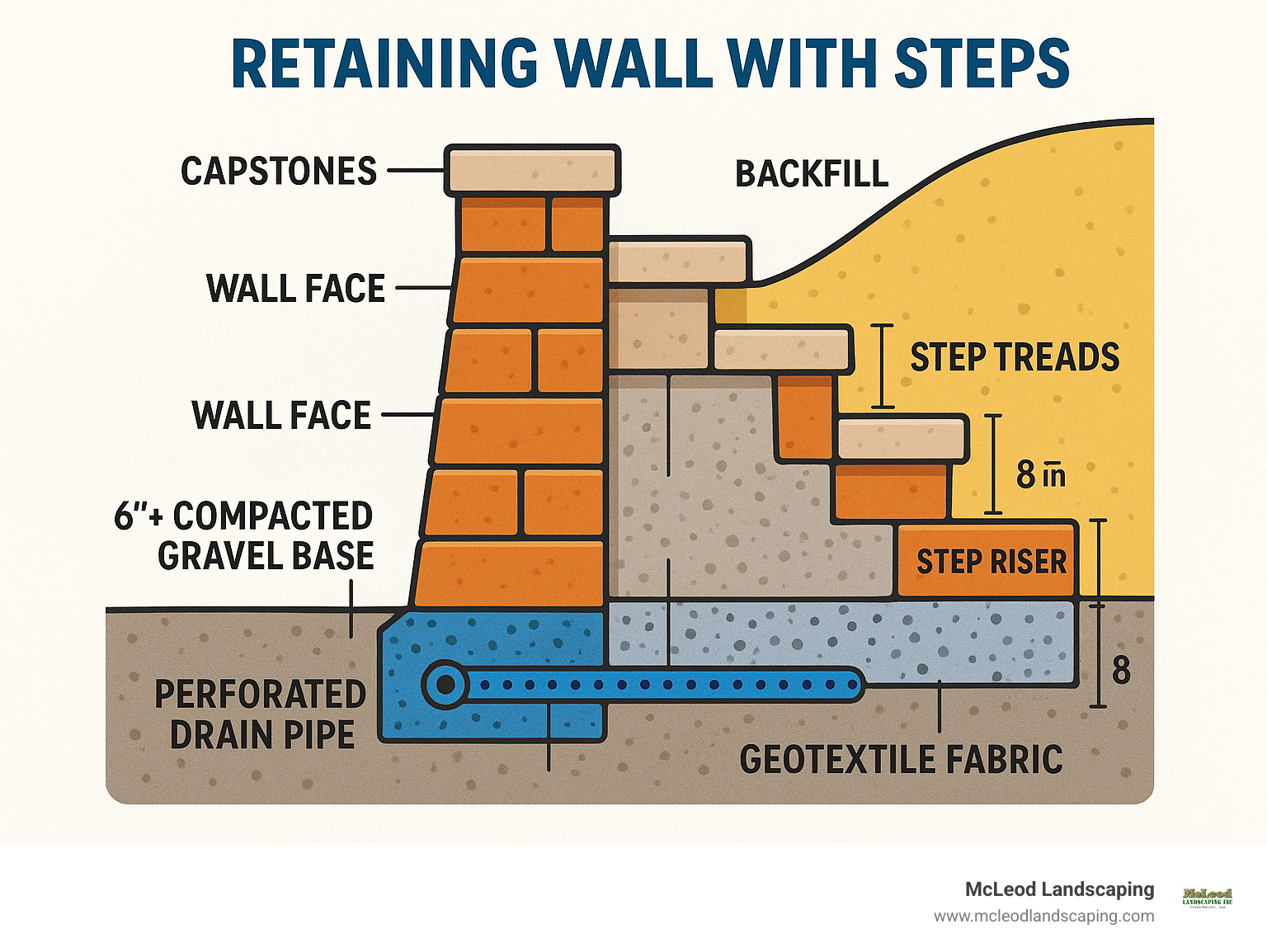
Simple guide to retaining wall with steps terms:
When functionality meets design, a retaining wall with integrated steps doesn’t just solve slope problems—it transforms them into opportunities. Instead of fighting your yard’s natural contours, you work with them to create something beautiful and practical.
The soil erosion control benefits alone make this investment worthwhile. A properly built retaining wall holds back soil, preventing washout during heavy Massachusetts rainstorms. The integrated steps also help reduce lateral pressure against the wall face, strengthening the entire structure.
This approach also creates level, usable space where there was once just a challenging slope. Suddenly, you have room for Backyard Patios or a cozy seating area. Safe navigation of slopes becomes effortless, making your entire property accessible to everyone, from toddlers to grandparents.
A well-designed retaining wall with steps increases property value by showcasing thoughtful planning and quality craftsmanship. It provides seamless landscape integration, tying your yard together with a captivating focal point. Through expert Hardscape and Landscape design, a simple barrier becomes a feature that adds immense visual interest and creates natural gathering spaces.
Picture this: you’ve got a great vision for changing your sloped yard, but where do you start? Proper planning is the foundation of any successful retaining wall with steps project. The planning phase is where we consider your landscape challenges, budget, local building codes, and aesthetic goals. Our Retaining Wall Design expertise helps guide these moving parts to ensure your project turns out exactly as you envisioned.
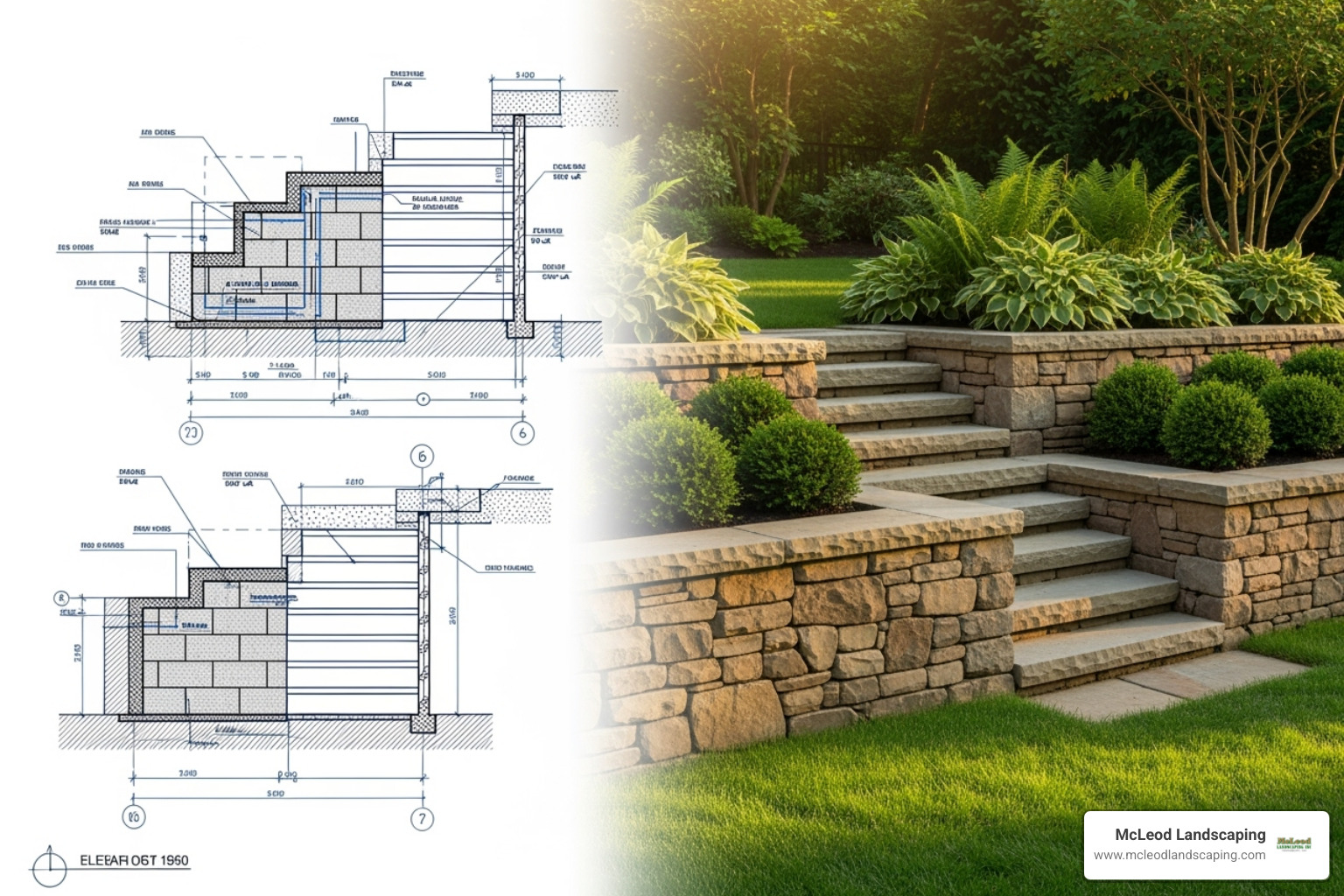
Choosing the right materials will bring your retaining wall with steps to life. Each option has unique strengths that suit different situations.
| Material Type | Durability | Aesthetics | Cost (Relative) | Maintenance |
|---|---|---|---|---|
| Concrete Blocks | High; resists rot & deterioration; strong | Versatile (colors, textures); can mimic stone | Medium | Low; occasional cleaning |
| Natural Stone | Very High; timeless; withstands elements | Organic, natural look; unique variations | High | Low; occasional cleaning |
| Poured Concrete | High; very strong | Customizable (stamping, coloring); modern or traditional | Medium-High | Low; sealing recommended |
| Wood Timbers | Medium (treated lasts 30+ yrs); can rot over time | Rustic, natural; blends with environment | Low-Medium | Medium; can warp, crack, or attract pests |
Concrete blocks are a strong, durable, and incredibly versatile choice. Many of our customers love Concrete Retaining Wall Blocks because they come in many colors and textures, with some mimicking natural stone at a lower cost.
Natural stone offers a timeless, high-end look that appears as if it has always been part of your landscape. A Stone Wall is a significant investment but can last for centuries with proper installation.
Poured concrete provides ultimate design flexibility for custom curves and unique shapes, offering a custom look without the premium price of natural stone.
Wood timbers provide a warm, rustic charm that works well in natural settings. While treated wood can last 30 years or more, it requires more maintenance than stone or concrete. Our guide on How to Build a Retaining Wall with Landscape Timbers covers the details.
Making your retaining wall with steps both beautiful and safe requires careful calculations. Our 30+ years of experience in Massachusetts ensures we account for our unique climate and soil conditions.
Comfortable steps follow standard rise and run calculations. An 8-inch rise (vertical height) paired with a 12-inch run (horizontal depth) feels natural and safe for most people. To determine the number of steps, we measure the slope’s total height and divide by 8 inches. For example, a 32-inch rise would require 4 steps.
Step width is also crucial for safety and comfort. Wider steps are more inviting and safer for carrying items. For longer stairways, we often recommend landings as rest stops to make the journey less daunting.
Safety railings may be required depending on the height of the steps. We always check local Massachusetts building codes during planning. Our Front Stairs and Step Installation team is well-versed in these requirements. For more technical details, see these Important design considerations.
The style you choose can completely transform the feel of your outdoor space.
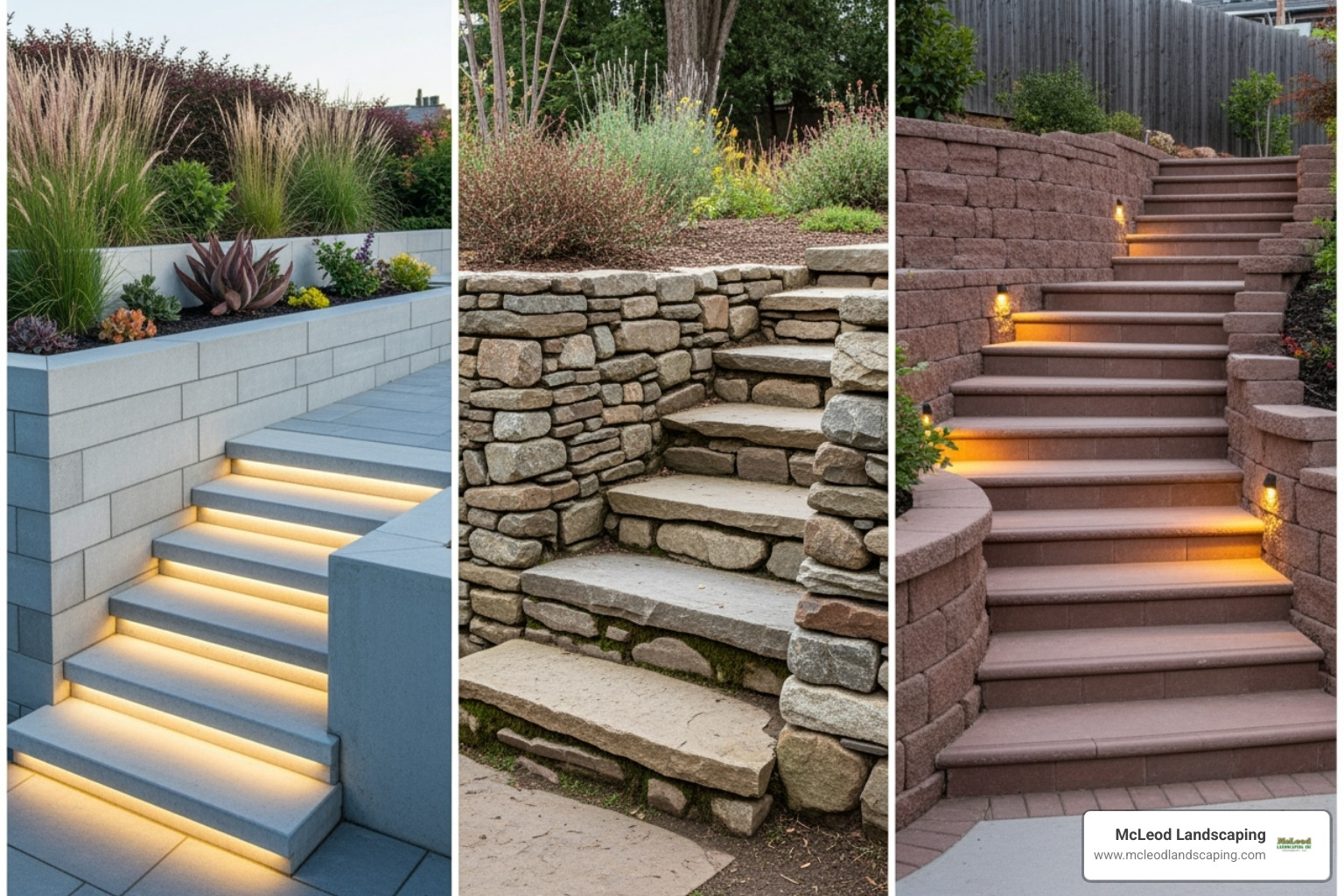
Straight designs create a classic, formal look with strong visual lines. Curved designs feel more organic and welcoming, flowing naturally with the landscape.
The choice between formal and naturalistic aesthetics often depends on your home’s style. Formal designs use uniform materials and precise lines, while naturalistic designs accept irregularity, like dry-stacked fieldstone.
Integrated planters are a popular feature, softening the hardscape with greenery and creating beautiful transitions. For more inspiration, check out these Ideas for Creating Practical and Beautiful Retaining Wall Steps or our own Landscape Design Ideas.
Understanding costs upfront helps you plan your retaining wall with steps project. Please note: the following cost estimates are average costs based on internet data and not actual costs for McLeod Landscaping. Our pricing is always customized to your specific project after a thorough consultation.
Several factors influence the total investment. Material costs vary significantly, with natural stone typically costing more than concrete blocks. Labor considerations often represent the largest portion of the cost, reflecting the skill needed for proper engineering and installation. Project size and complexity also play a major role; a simple, straight wall costs less than a complex terraced system.
Based on industry averages, professional installation of a retaining wall with steps typically ranges from $4,000 to $20,000 or more. However, larger, engineered systems with premium materials and complex designs can easily exceed $30,000. The range is wide because every project is unique.
For more detailed cost information, you can review our comprehensive guide on How Much Does a Landscape Retaining Wall Cost?.
Building a retaining wall with steps is where planning meets skilled craftsmanship. These structures hold back immense weight, and a small installation mistake can lead to costly failures. For walls over three feet tall or with complex designs, we strongly recommend professional Retaining Wall Installation. The initial savings of a DIY project rarely justify the potential repair costs.
Before any work begins, safety comes first. Always call 811 to locate underground utilities. This free, legally required step prevents dangerous accidents.
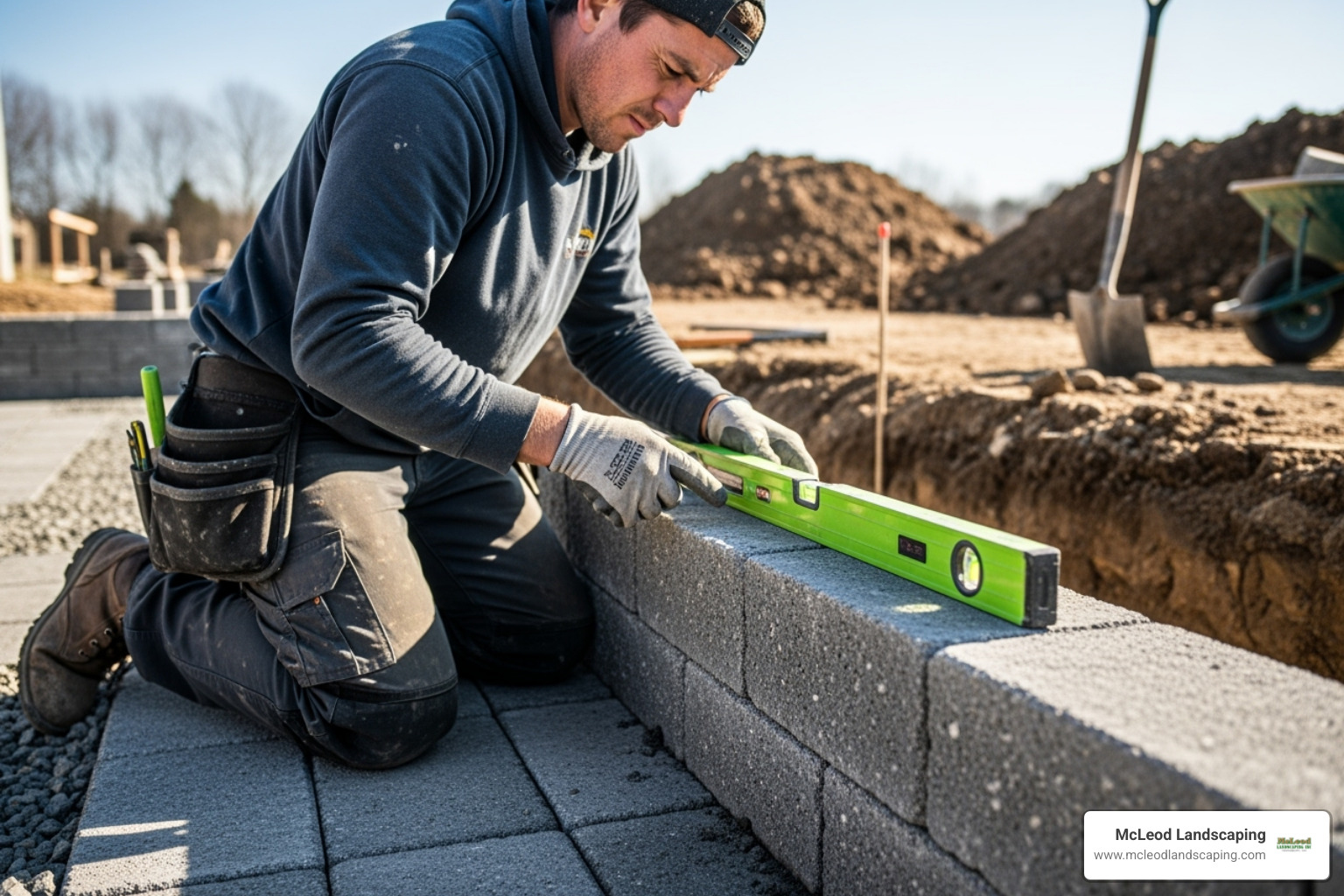
A retaining wall with steps is only as strong as its foundation. This is the most critical part of the build.
With a solid foundation, building the wall is a methodical process.
Water pressure (hydrostatic pressure) is the single biggest threat to a retaining wall. Proper drainage is not optional—it’s critical for long-term stability.
This complete system works together to manage water and prevent the pressure buildup that destroys retaining walls, helping you avoid future Hardscape Repair Services.
Once the main structure of your retaining wall with steps is complete, the finishing touches lift its beauty and functionality. These details add aesthetic appeal, improve safety, and contribute to long-term durability. A reputable Hardscaping Contractor like McLeod Landscaping ensures these final steps are handled with expertise.
Integrated lighting is a game-changer for both aesthetics and safety, changing your wall into a stunning nighttime feature.

Always understand local regulations before starting a retaining wall project.
Over 30 years in the Tewksbury area, we’ve answered many questions about retaining wall with steps projects. Here are some of the most common.
First, measure the total vertical rise of your slope in inches (the height from bottom to top). Then, divide that number by your desired step height. We recommend an 8-inch rise per step for comfort and safety. For example, a 56-inch total rise would require 7 steps (56 ÷ 8 = 7). If the number isn’t exact, we adjust the height of each riser equally to ensure consistency.
Yes, but it depends on the wall’s height. For retaining walls under 4 feet tall, it’s often possible to carefully remove a section and integrate new steps. However, cutting into a taller retaining wall can compromise its structural integrity. For high walls, it is much safer to build the new steps against the existing wall or as a separate nearby feature. A professional assessment is crucial to determine the safest approach.
For New England’s harsh weather, natural stone and high-strength concrete blocks are the most durable options. They withstand freeze-thaw cycles, ice, and heat with minimal wear. Natural stone like granite can last for centuries. High-quality concrete blocks are nearly as durable and offer more design versatility.
While treated wood timbers are a budget-friendly option with a rustic look, they will eventually rot, warp, or attract insects over their 20-30 year lifespan. For the look of wood with maximum durability, consider concrete products that mimic wood grain without the maintenance.
Changing a sloped landscape into a beautiful and functional outdoor living space is a rewarding investment. A well-designed retaining wall with steps provides the perfect blend of form and function, solving erosion problems while adding stunning aesthetics to your property.
From choosing between timeless natural stone and versatile concrete blocks to ensuring proper drainage and a solid foundation, every step in the process is critical. The finishing touches, like integrated lighting, lift these structures from purely functional to truly spectacular, improving both safety and ambiance.
While some smaller projects can be a DIY endeavor, walls with significant height or complex site conditions benefit from professional expertise. In the Merrimack Valley, our clay soils and freeze-thaw cycles require construction techniques that only come with experience.
At McLeod Landscaping, we have over 30 years of experience building retaining walls with steps for homeowners in Tewksbury, Andover, and surrounding communities. We’ve seen how these projects transform not just landscapes, but how families enjoy their outdoor spaces.
Don’t let a challenging slope limit your property’s potential. Request an estimate for your retaining wall project today, and let’s work together to create a functional and beautiful feature that will serve your family for generations.
Contact McLeod Landscaping today at (978) 640-0957 or click here to schedule a consultation for retaining wall installation. Let our experienced team design and install a functional and visually appealing retaining wall that enhances your landscape.


1881 Main St Unit 1, Tewksbury, MA 01876